

When the tire pressure light comes on in your Lexus NX, don’t start by looking for a reset. Check all four tires with a gauge when they’re cold, set them to the pressure on the placard in the driver’s door jamb, and look for a reason one tire is losing air. If the light is solid, that’s usually what it wants from you. If it flashes for a while on startup and then stays lit, that’s a different message, and it points to the monitoring system itself.
The NX has been sold in the US in two generations, the 2015 to 2021 models and the 2022 and newer models. The reset menus, buttons and procedures can differ between them, so this guide explains the logic and tells you where to confirm details in your owner’s manual.
Start With Cold Pressures and a Leak Check
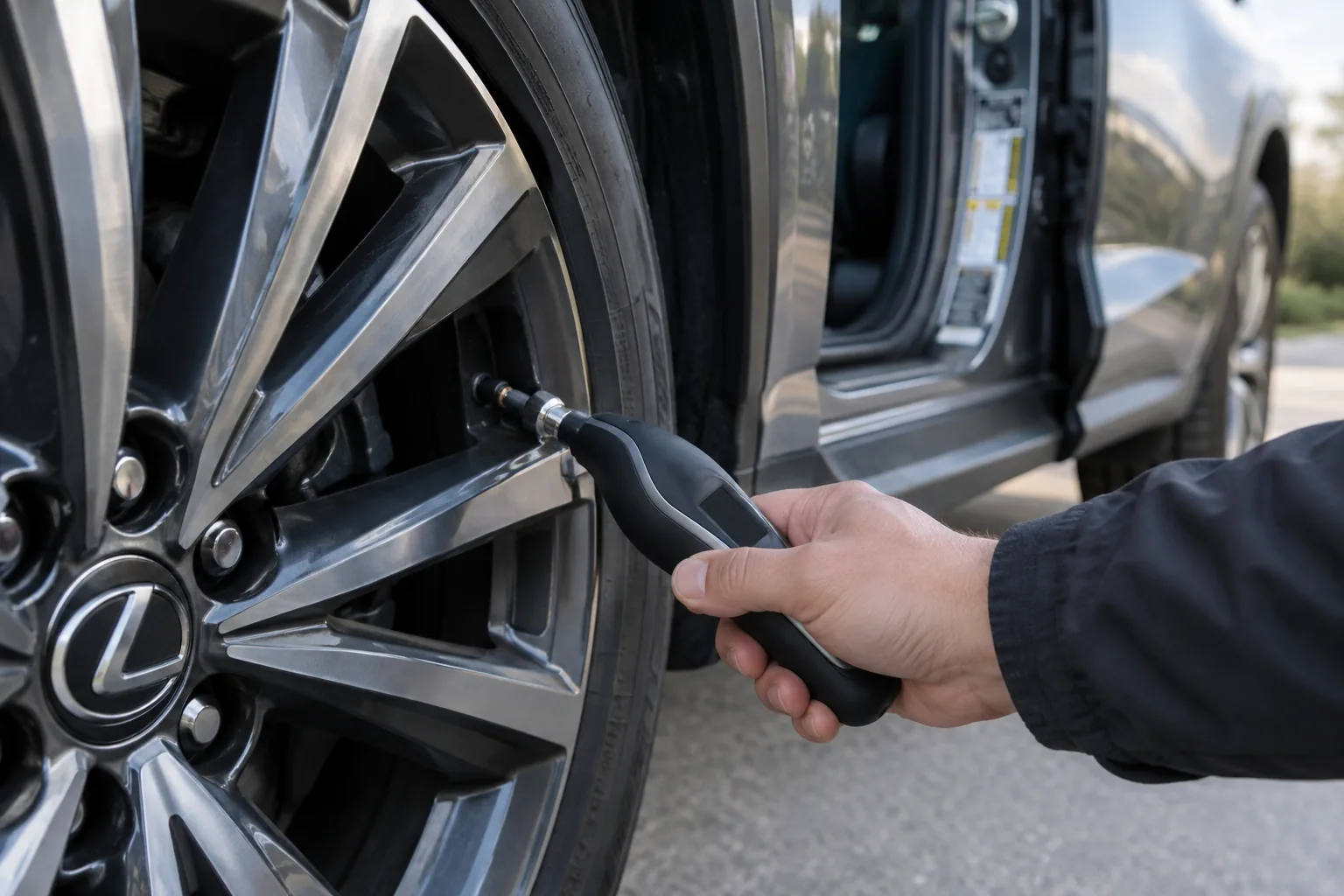
The NX uses a direct tire pressure monitoring system, with a pressure sensor mounted inside each wheel. It reads actual pressure rather than estimating from wheel speed. Confirm that for your exact year in the manual, but it’s the reason a low tire triggers the light so reliably.
Here’s the order I’d work in:
- Find the placard. It’s on the driver’s door jamb and lists the recommended cold pressure. Use that number, not the maximum printed on the tire sidewall.
- Check when the tires are cold. That means the car has sat for a few hours or been driven only a short distance. Pressure rises as tires warm up, so a reading after a highway drive will mislead you.
- Measure all four tires with a real gauge. Don’t trust the dash alone, and don’t rely on a glance at the tire.
- Inflate to the placard value. If a tire was well below spec, recheck it after a day or two.
- Look for the cause. Inspect the tread and sidewalls for nails or screws, check the valve stem and its cap, and look at the wheel bead area. A tire that drops again within days has a leak.
Cold weather is a common trigger. Tire pressure falls roughly 1 psi for every 10 degrees Fahrenheit drop in temperature, so the first cold morning of the season can light the warning with no leak at all.
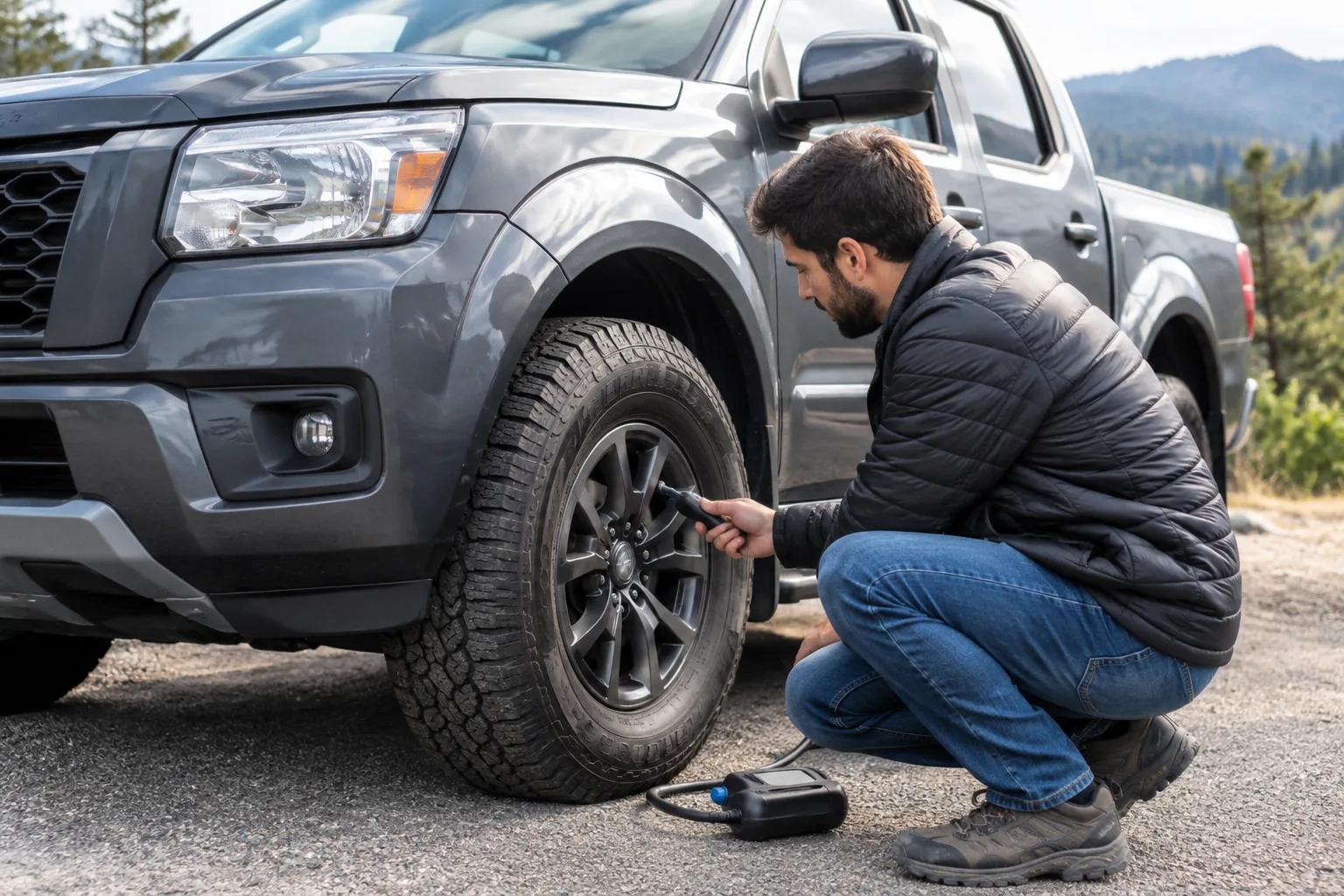
A portable inflator with a built-in gauge makes this easier than a gas station air hose. An portable tire inflator with a digital pressure gauge lets you set each tire to the placard number at home when the tires are cold. It’s optional, and it has nothing to do with resetting or relearning sensors. It just helps you get the pressure right.

Portable Tire Inflator with Digital Pressure Gauge
Handy for topping off each tire to the door-jamb cold pressure at home, but it is only an inflation aid and not a TPMS reset or relearn tool.
If you’re building a basic home kit, a decent gauge is one of the tools covered in 10 must-have tools for every DIY car owner.
Low Pressure Warning vs. System Malfunction
These two indications look similar, but they mean different things.
- Low pressure warning: The tire pressure light comes on and stays on. One or more tires are below the threshold. The fix is correct inflation and finding any leak.
- Malfunction indication: In many Toyota and Lexus vehicles, the light flashes for about a minute after startup and then stays on. That pattern suggests the system can’t read a sensor or has a fault, not that a tire is low. Confirm the exact behavior for your year in the tire pressure monitoring section of the owner’s manual.
The difference matters because inflating tires won’t clear a fault. If you’ve set every tire to spec and the light still flashes then stays lit, stop topping off tires and look at the sensors or the system.
The 2022 and newer NX may also show a message in the instrument cluster display. Read it, since it can tell you which tire or what kind of problem you have. What it displays depends on the model year and trim.
Reset, Initialize, Activate, Relearn, Program: What Each Term Means
People use “reset” for everything, but TPMS work involves several different jobs.
- Pressure initialization (reset): This tells the system that the current pressures are your new baseline after you’ve set them to the placard values. Some Lexus models handle it with a button, and others use a setting in the multi-information display. I won’t guess which applies to your NX. Look in the manual’s tire pressure section for the exact steps, and don’t assume a button exists.
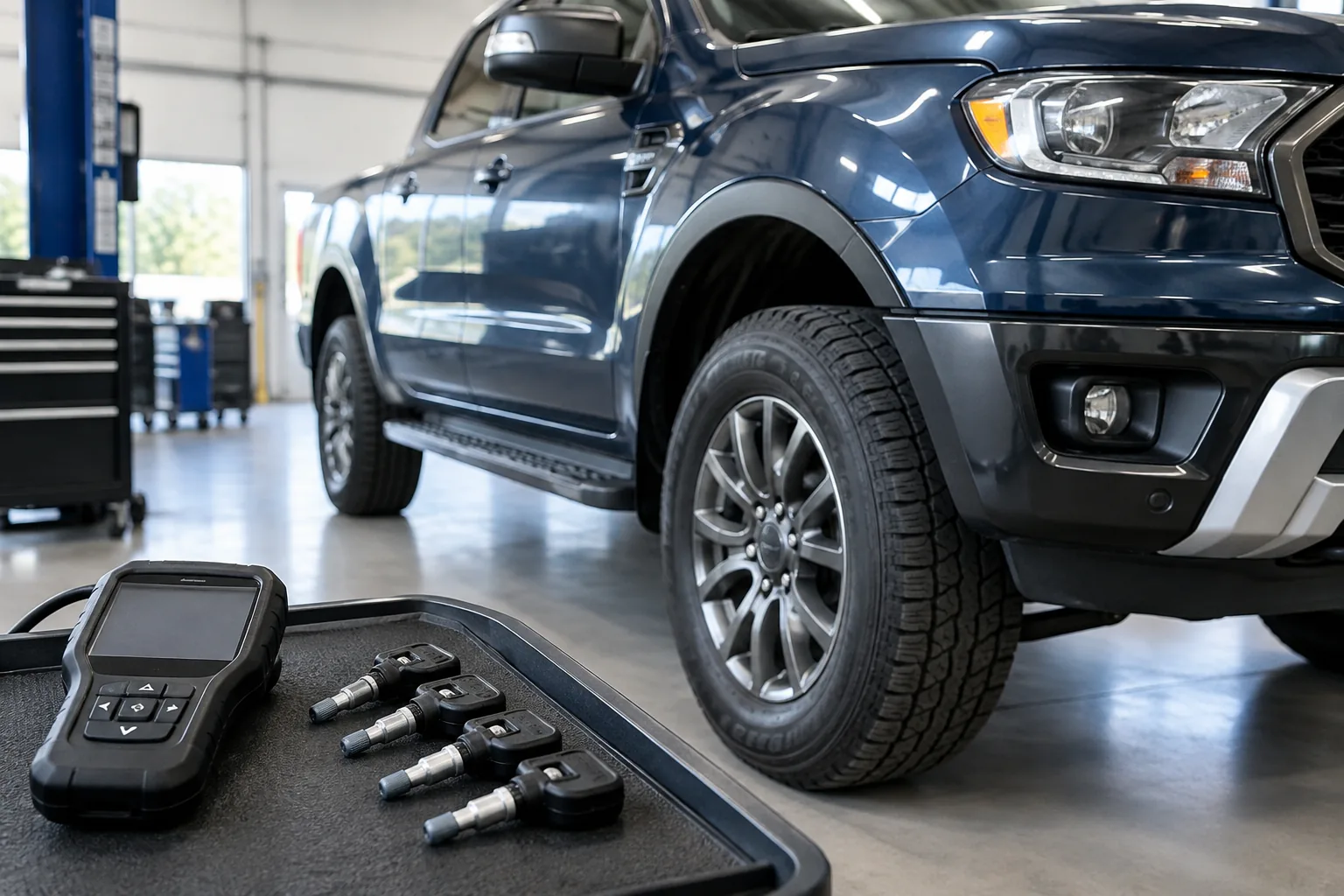
- Sensor activation: A TPMS tool wakes a sensor so it can be read. That’s a shop-level step.
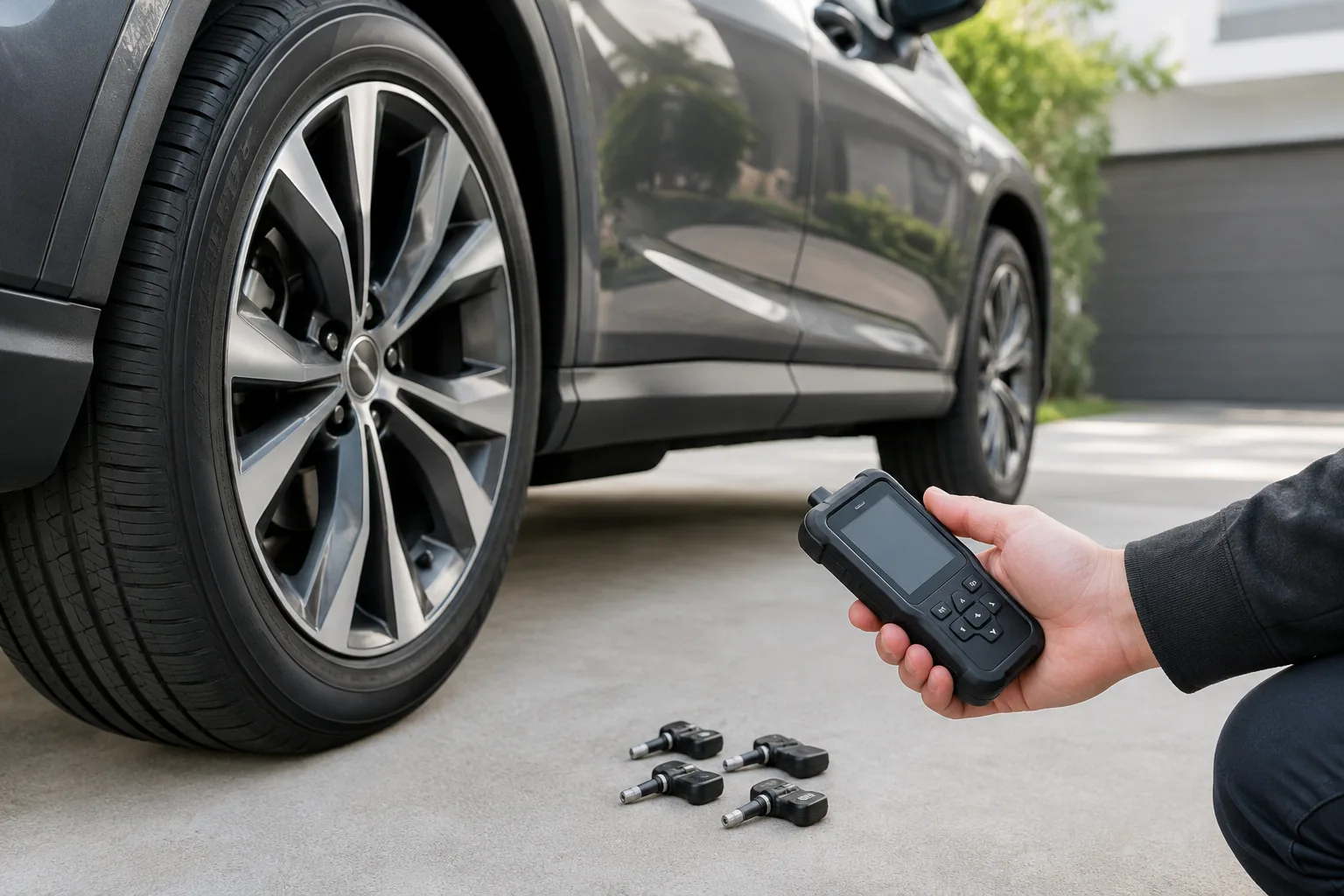
- Sensor ID relearn or registration: The car needs to know the ID of each sensor on its wheels. This comes up after sensor replacement or when you swap to a different set of wheels, such as winter wheels with their own sensors. Depending on the vehicle, it may be done with a compatible tool or through the car’s own procedure.
- Sensor programming: A replacement sensor may need to be programmed with the right protocol or ID before it’s installed. This needs compatible equipment.
- Fault diagnosis: This means reading TPMS-specific data and codes to see which sensor is silent, weak or failing.
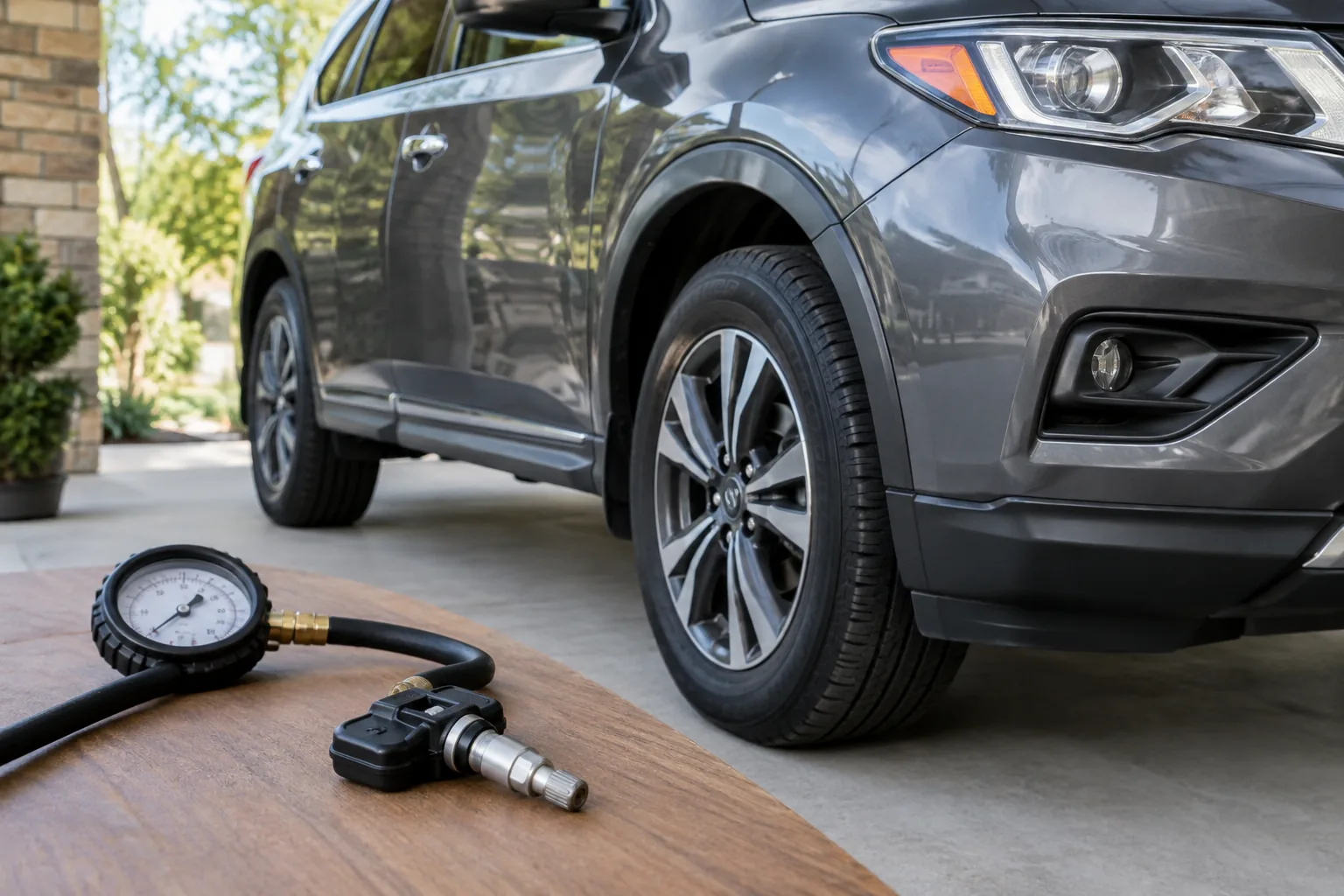
A basic OBD2 code reader isn’t a TPMS programming tool. It’s built mainly for engine and emissions data. Don’t buy one hoping it will register sensors on an NX.
When Sensors Are the Real Problem
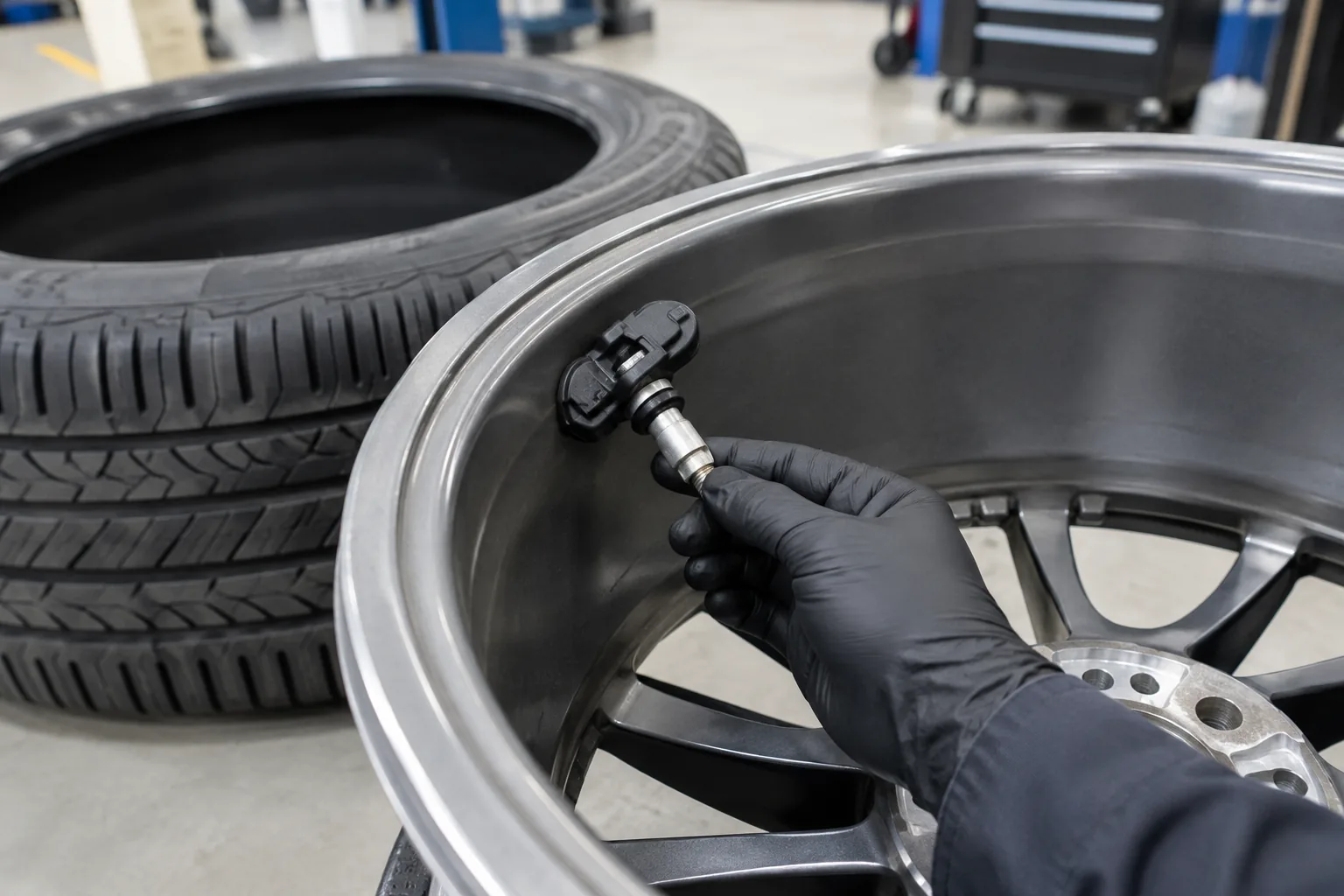
If the tires hold air and the light still behaves badly, a sensor is a common suspect. Each one runs on a sealed battery that eventually wears out. Sensors can also be damaged during a tire change, corrode around the valve stem, or fail after an impact.
Signs that point to a sensor include:
- The malfunction pattern appears, flashing then solid, with all tires at correct pressure.
- The light came on soon after new tires or wheels were installed.
- You recently swapped between summer and winter wheel sets.
- One valve stem is visibly corroded or was disturbed during service.
Your own steps are checking pressures, inspecting for leaks and following the manual’s initialization procedure if your NX has one. Sensor testing, activation, ID registration and programming belong at a tire shop or Lexus dealer with compatible TPMS equipment. Ask them to confirm each sensor reads correctly before you leave.
On tire rotations, check your manual for whether your NX needs any TPMS step afterward. Some systems need initialization or a relearn after rotation and others don’t, and I’d rather you confirm that than assume. If a shop is rotating the tires, ask what they do about the monitoring system.
Don’t ignore a solid light and drive on a soft tire. Underinflation affects handling, braking and tire wear, and it can damage a tire’s structure.
FAQ
Why is my Lexus NX tire pressure light on after I filled the tires?
There are a few likely reasons. You may have filled them when warm and ended up low once they cooled. One tire could still be under spec. The system may need pressure initialization afterward on your model. Or the flashing-then-solid pattern may mean a malfunction rather than low pressure. Recheck all four tires cold against the door-jamb placard, then follow the manual for your year.
Does the Lexus NX have a TPMS reset button?
It depends on the model year and generation. Some Lexus vehicles use a physical switch, and others use a menu in the display. Check the tire pressure section of your owner’s manual for the exact method on your NX instead of hunting for a button that may not exist.
Can I replace a TPMS sensor myself?
Physically replacing one means breaking the tire bead, and the new sensor usually needs to be programmed or registered so the car recognizes it. That requires a tire shop or dealer with compatible TPMS equipment. A basic OBD2 reader won’t do the job.
Leave a Reply