
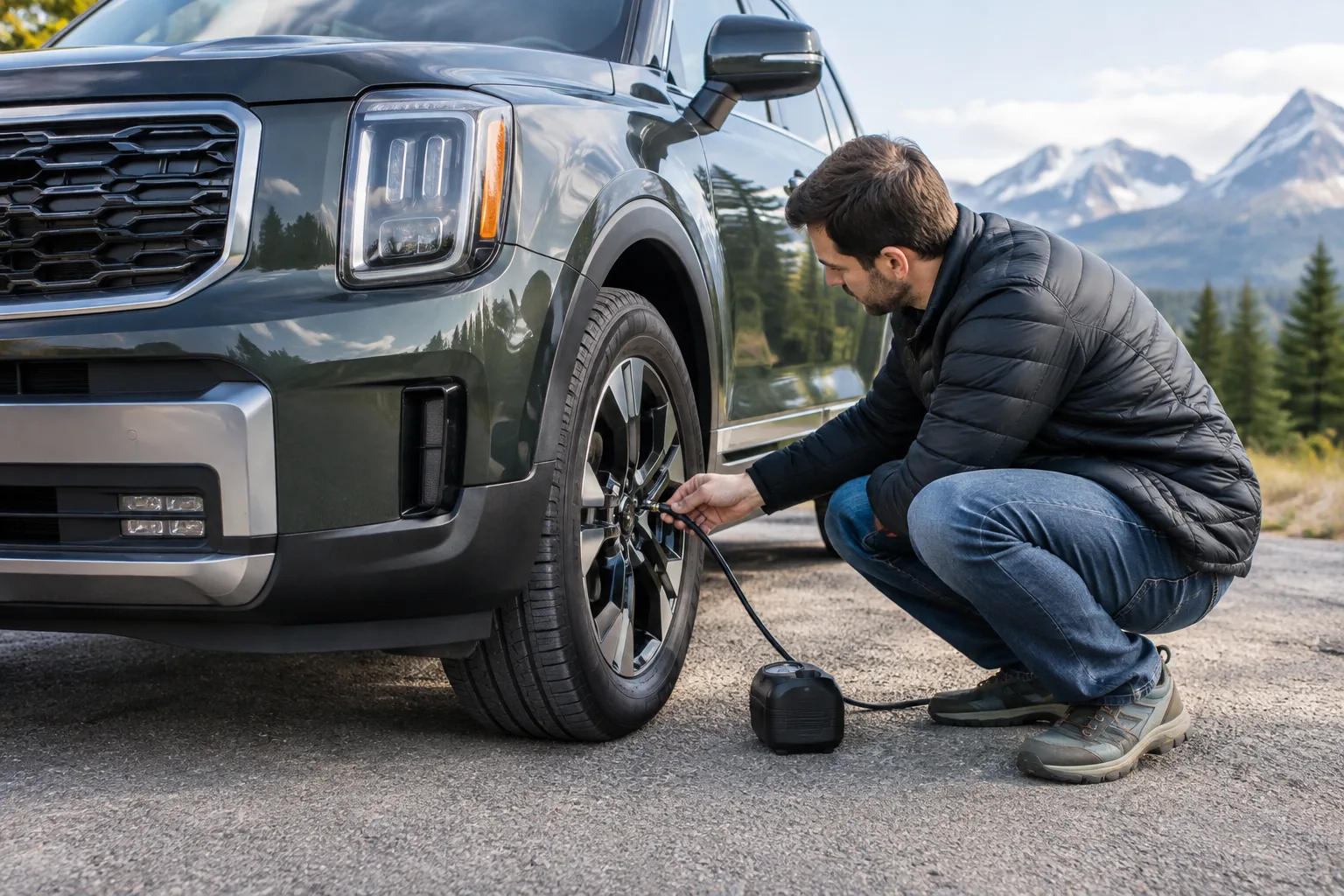
If the TPMS light on your Telluride stays on after you added air, one of four things is usually going on. At least one tire is still below the placard pressure, a tire is leaking, the system hasn’t updated yet, or the light is a sensor malfunction rather than a low-pressure warning. Start with the pressures, because that’s the cheapest thing to rule out.
Step 1: Check Every Tire Cold Against the Placard
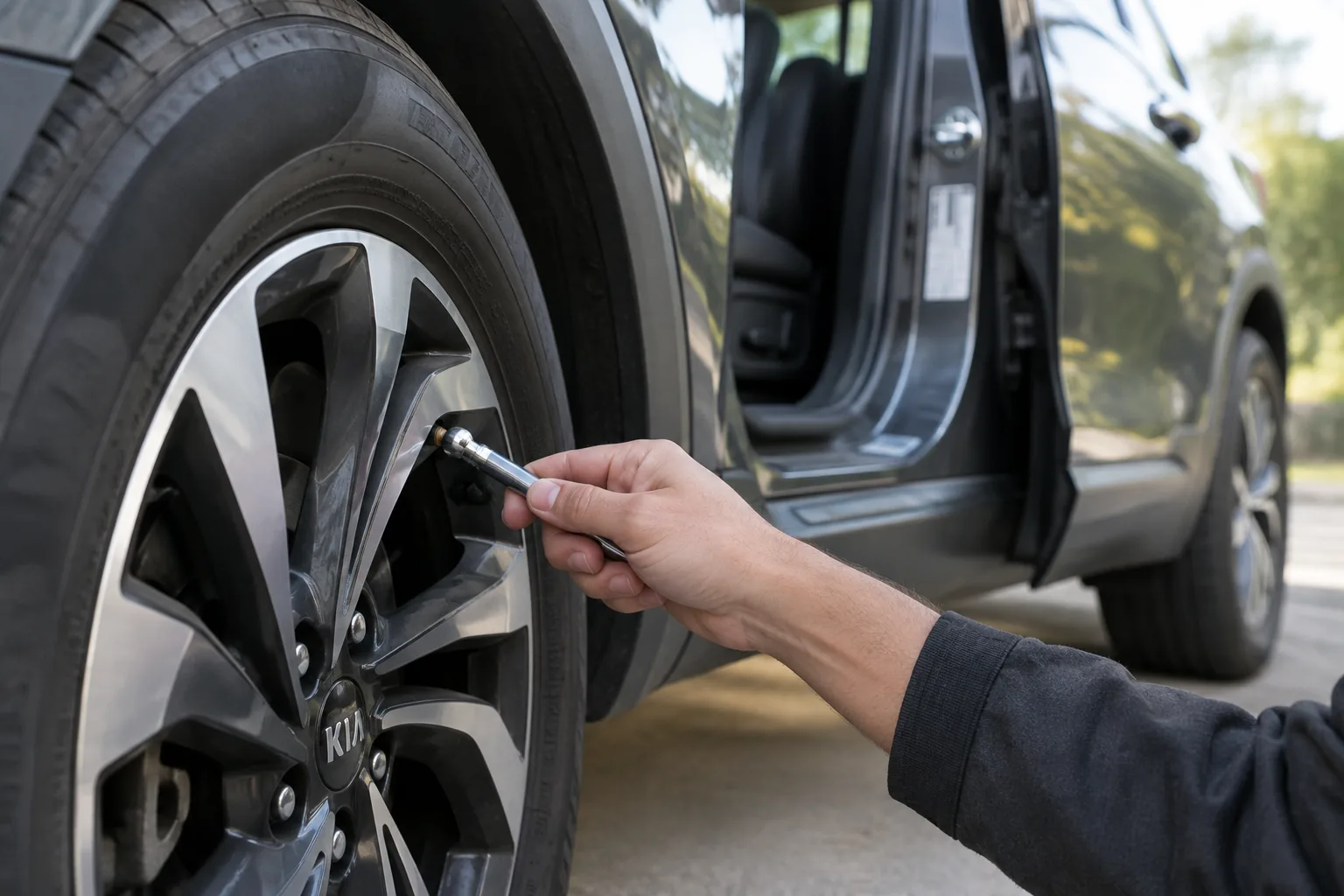
Find the tire placard on the driver’s door jamb. It lists the recommended cold pressure for your exact tire size, and that number matters more than the figure molded into the tire sidewall, which is a maximum.
Check all four tires with a gauge when the vehicle has sat for a few hours or has only been driven a short distance. Don’t just top off the tire you think was low. The warning can be triggered by any tire, and the one you added air to may not be the one the system is complaining about.
- Check the cold reading. Tires that were just driven read higher, so a warm tire that looks fine may be low once it cools.
- Remember temperature swings. A common rule of thumb is that pressure drops roughly 1 psi for every 10°F drop in air temperature, so a cold morning can push a borderline tire back under the threshold.
- Don’t trust the gas station gauge. Built-in gauges on air machines are often off, so you may have stopped short of the real target.
If you don’t own a gauge yet, a digital tire pressure gauge is easy to read and worth keeping in the glove box. If you already have a reliable one, use it and skip the shopping.
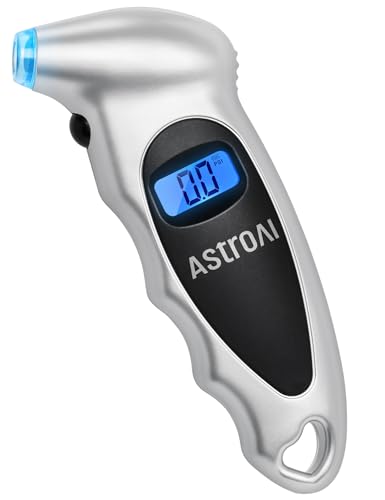
Digital Tire Pressure Gauge
An inexpensive digital gauge gives you a consistent reading on all four tires so you can match the door-jamb placard.
Step 2: Look for a Leak
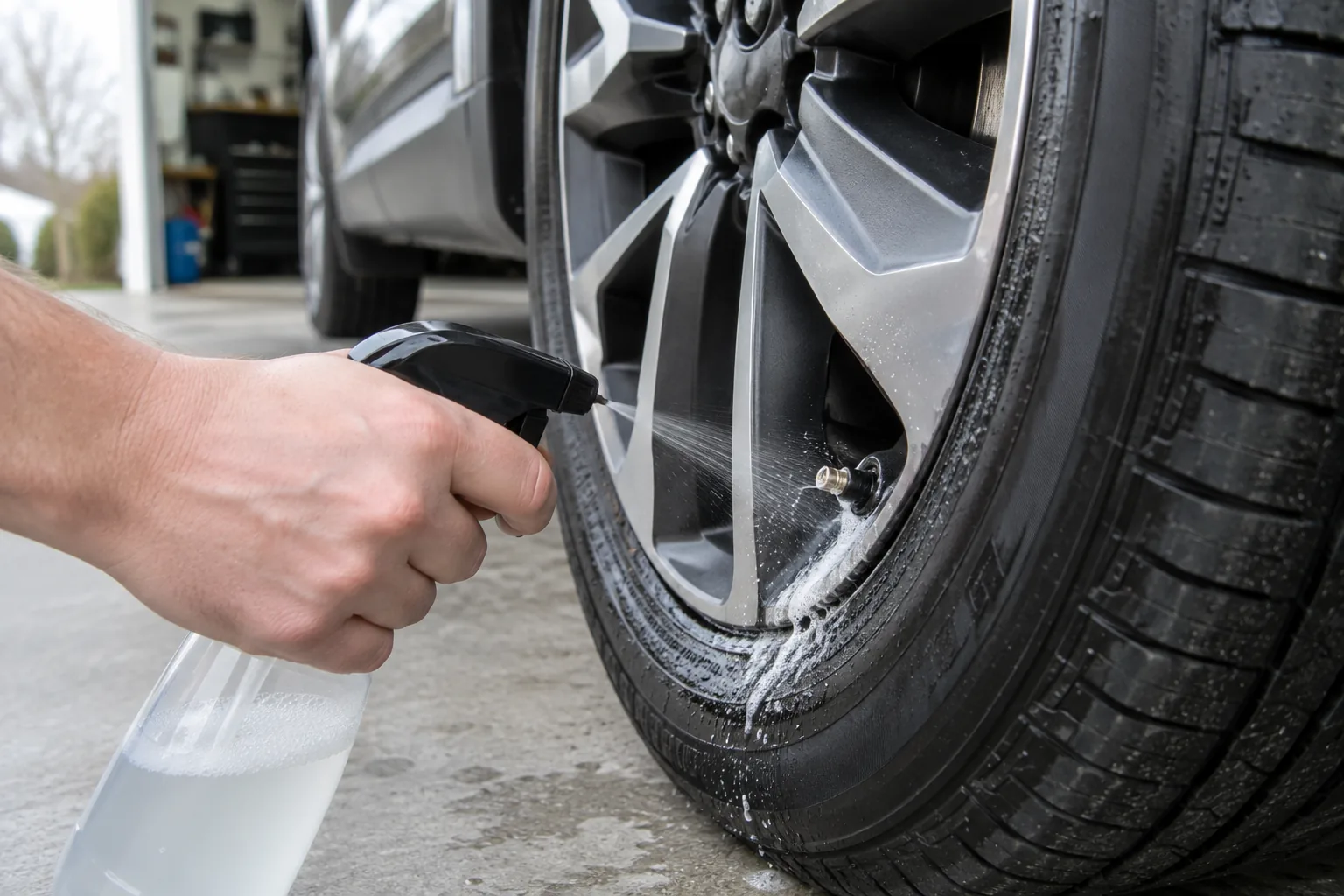
If a tire needed air and the light returns days later, treat it as a leak until proven otherwise. Inspect the tread and sidewalls for nails, screws, or bulges. Check the valve stem and the valve cap, and look around the wheel edge for corrosion.
A simple soapy-water spray on the stem and tread will show bubbles where air is escaping. Any tire that keeps losing pressure should be looked at by a tire shop. A plug or patch needs to be done properly, and a shop can also tell you if the sensor in that wheel was damaged.
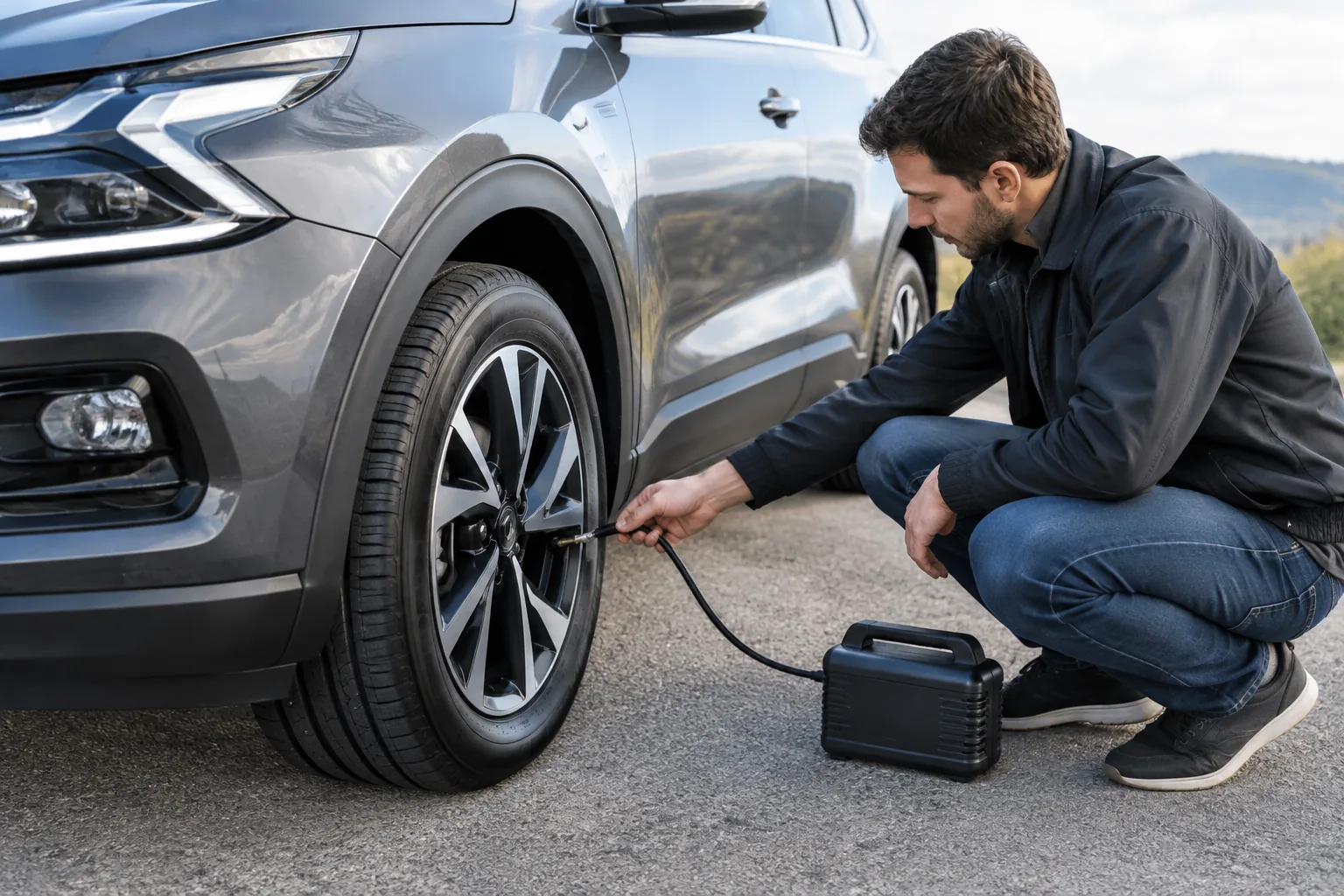
Basic tools like a tread depth gauge and a decent inflator belong in every garage. Our list of must-have tools for every DIY car owner covers the rest.
Step 3: Tell a Low-Pressure Warning From a Malfunction
These are two different problems, and they get mixed up constantly. A low-pressure warning means the system sees a tire under its threshold. A malfunction indication means the system itself has a problem and may not be able to monitor one or more tires at all.
Your owner’s manual explains how the TPMS telltale behaves in each case. On many Kia and Hyundai vehicles, a malfunction shows up differently from a low-pressure warning, often as the light flashing for a period at startup and then staying on, sometimes with a message in the cluster. Confirm the exact behavior for your model year and trim in the tire pressure monitoring section of your owner’s manual rather than relying on that general pattern.
Here’s how to sort out what you’re seeing:
- Pressures correct, light still on: Check the manual for how the system updates after inflation. Some vehicles clear the light on their own after a short time, and some take a bit of driving. Don’t assume a specific procedure or timing.
- Light behaves like a malfunction: Pressure alone won’t fix it. Look for a dead or damaged sensor, a recently installed wheel or tire that the system doesn’t recognize, or a system fault.
- Pressure display available: Many Tellurides can show individual tire pressures in the cluster. Check the manual for the menu name on your vehicle. If one tire shows no reading, that points to a sensor problem.
What You Can Do Yourself and What Needs a Shop
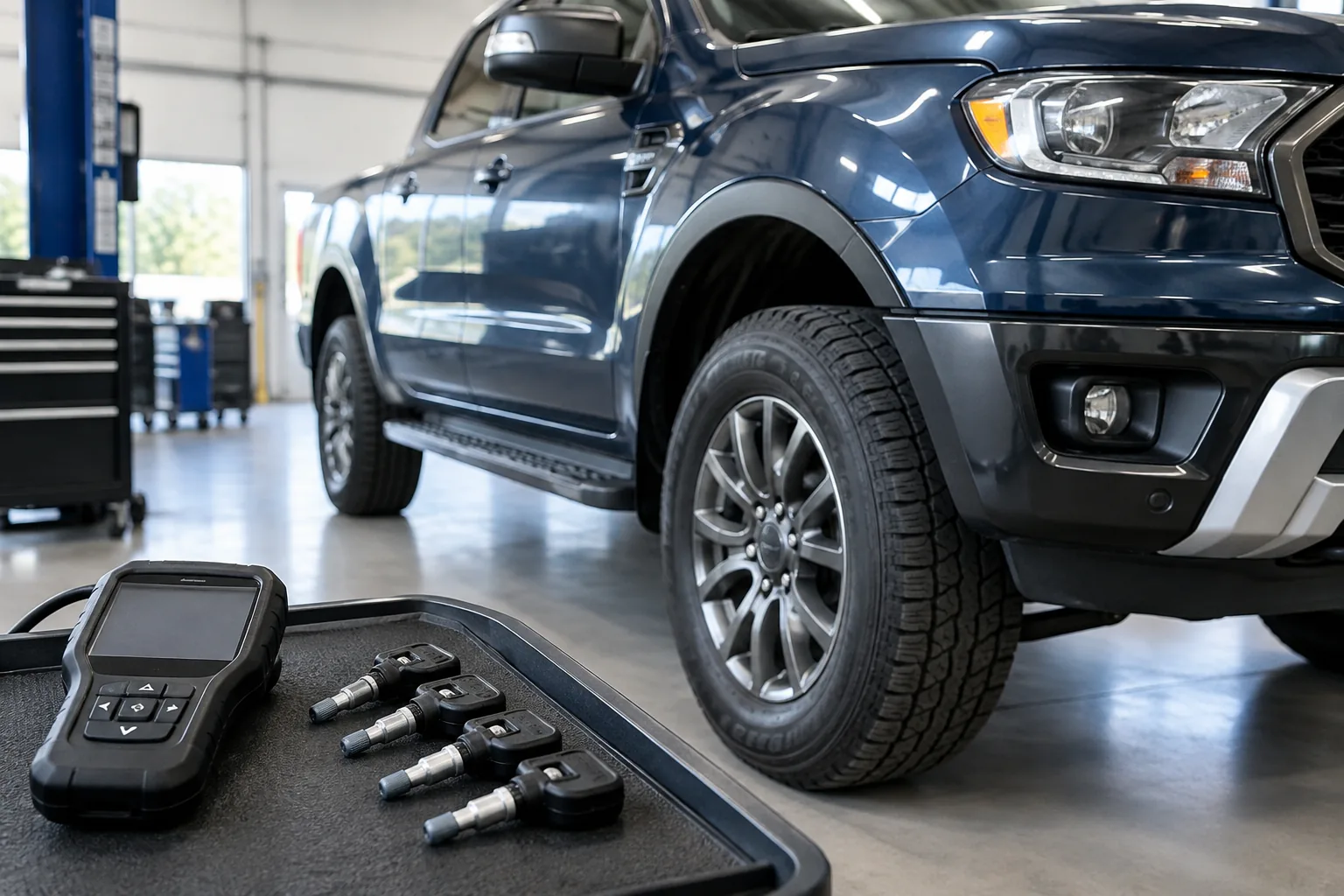
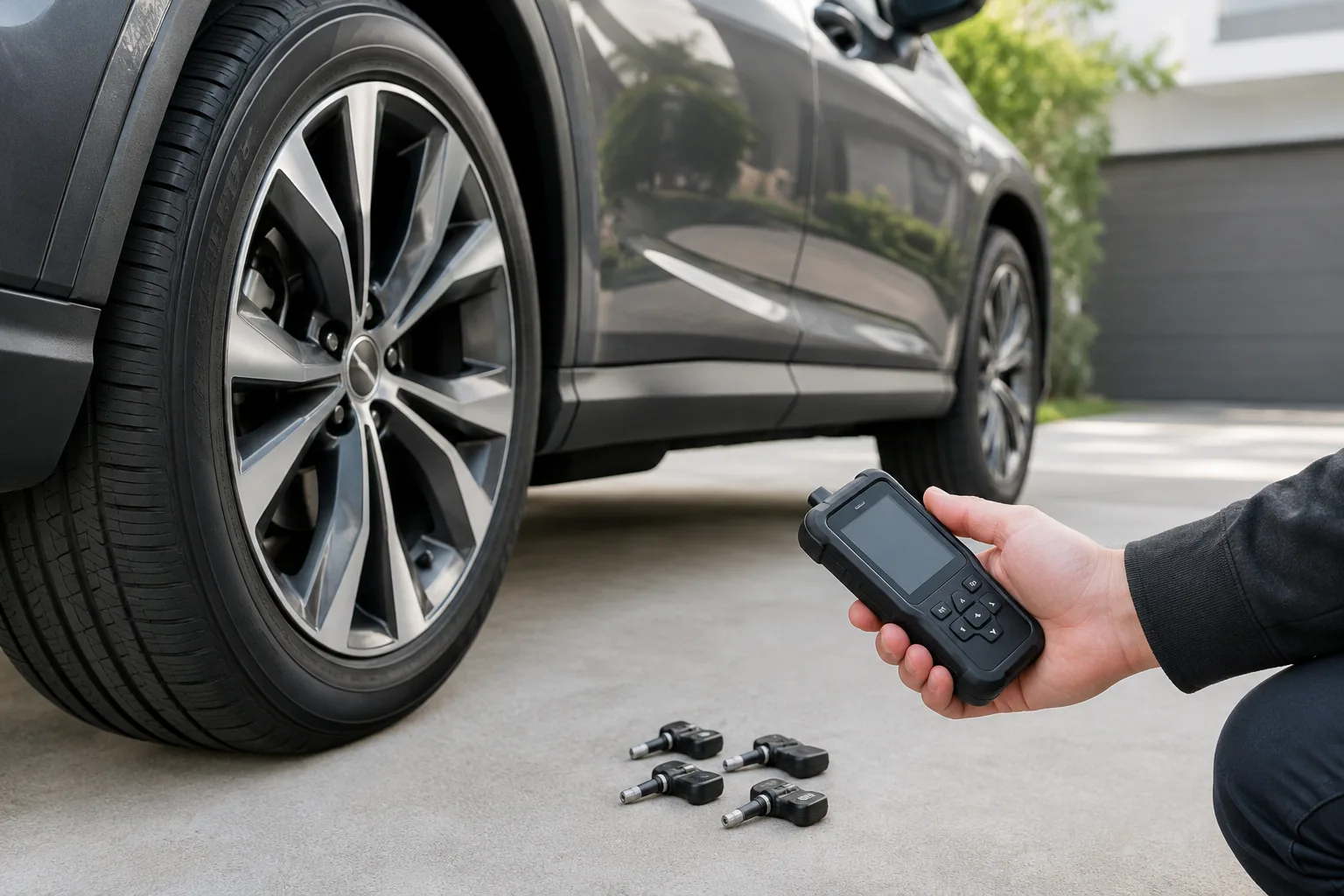
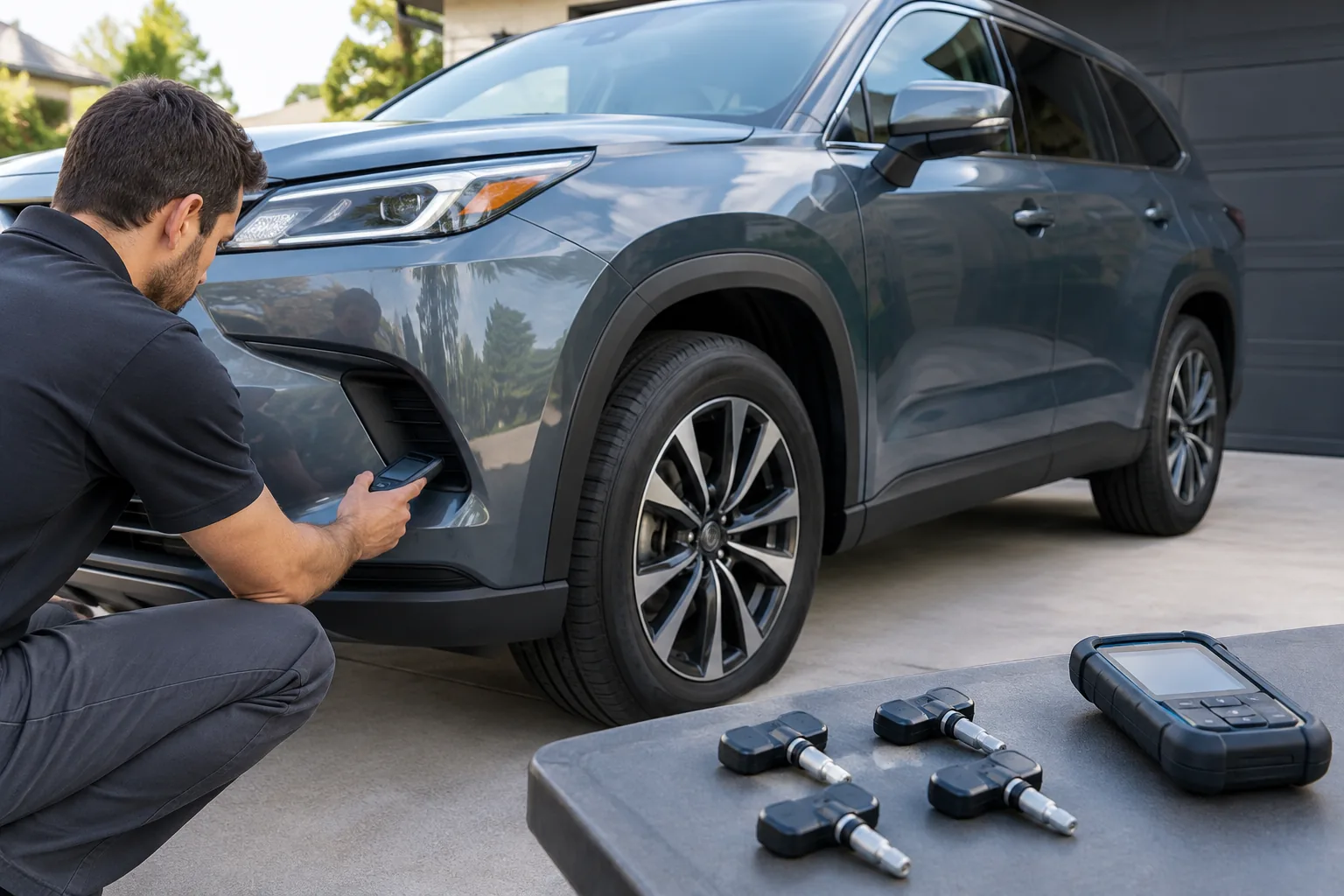
The Telluride is generally equipped with direct TPMS, meaning a pressure sensor sits inside each wheel, but confirm that for your model year in the manual. Direct systems can have a dead sensor battery, a damaged sensor, or a sensor that needs to be registered to the vehicle after a replacement.
Those steps, sensor activation, ID relearn, and sensor programming, are not the same as correcting pressure. They need compatible TPMS equipment, which a tire shop or dealer has. A basic OBD2 code reader won’t program TPMS sensors. Don’t assume a manual reset button exists on this vehicle either. Focus on correct pressure first, then on identifying a sensor fault.
Ask the manual or a shop whether tire rotation or new tires on your specific generation require any TPMS steps. Don’t guess on that one.
FAQ
Why is my Telluride’s TPMS light still on after I filled the tire to the right pressure?
Another tire may still be low, the pressure may have been measured warm, or the system may not have updated yet. If the light acts like a malfunction indicator, the cause is more likely a sensor or system fault. Recheck all four tires cold, then follow the manual’s description of the warning.
Can I keep driving with the light on?
If it’s a low-pressure warning, correct the pressure as soon as you can, since underinflation hurts handling, tire wear, and safety. If it’s a malfunction, the car is usually driveable, but the system may not warn you about a real low tire. Get it checked soon, and keep checking pressures manually in the meantime.
Leave a Reply