
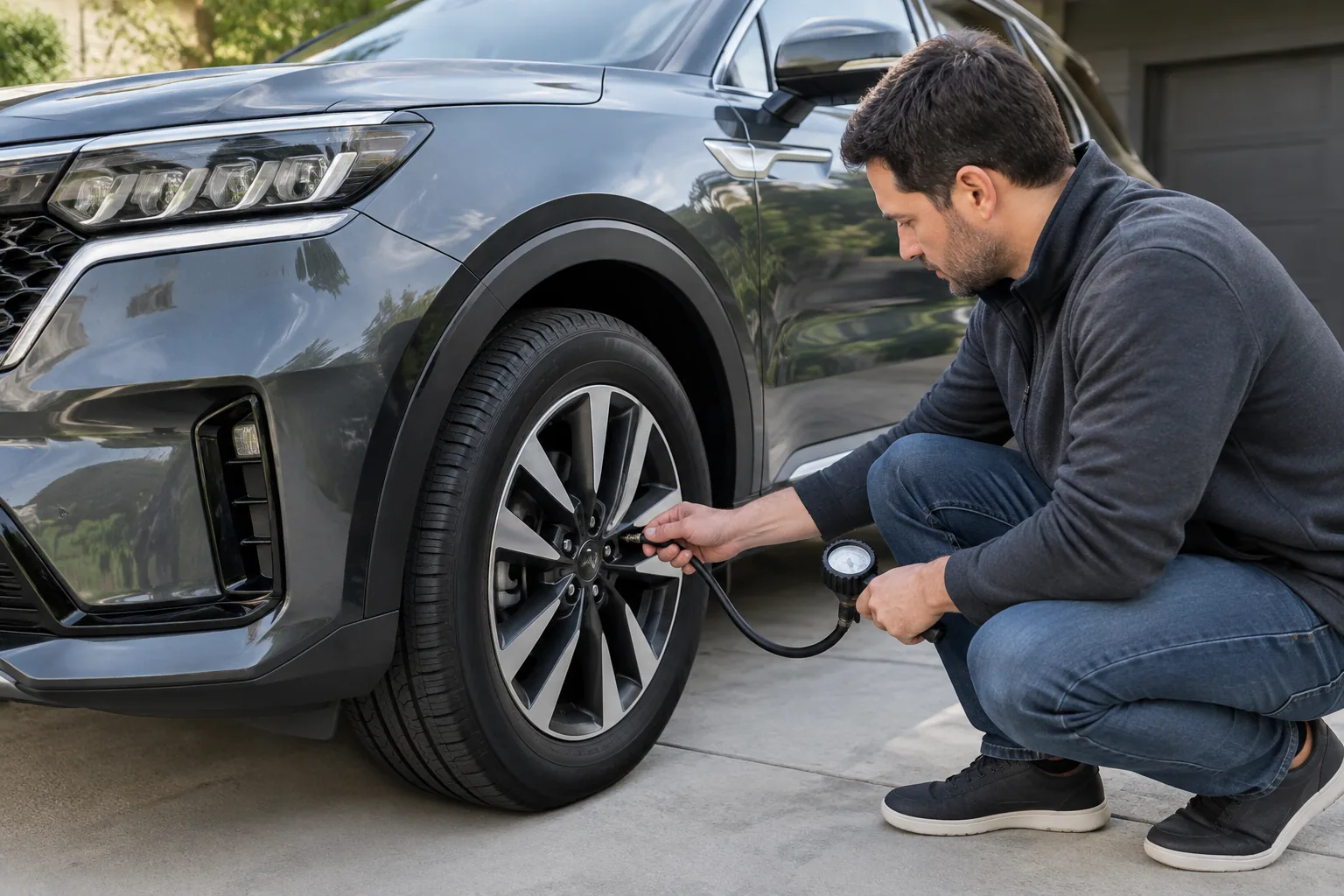
If the tire pressure light on your Sorento stays on after you add air, one of four things is usually going on. A tire is still below the pressure on the door jamb placard, the system hasn’t had a chance to update yet, a tire has a slow leak, or the light isn’t a low-pressure warning at all and is flagging a system malfunction.
Start with the pressures, not the light. Clearing or ignoring the warning without knowing what each tire is actually holding is how people end up driving on a slowly deflating tire.
Start With Cold Pressures and the Placard
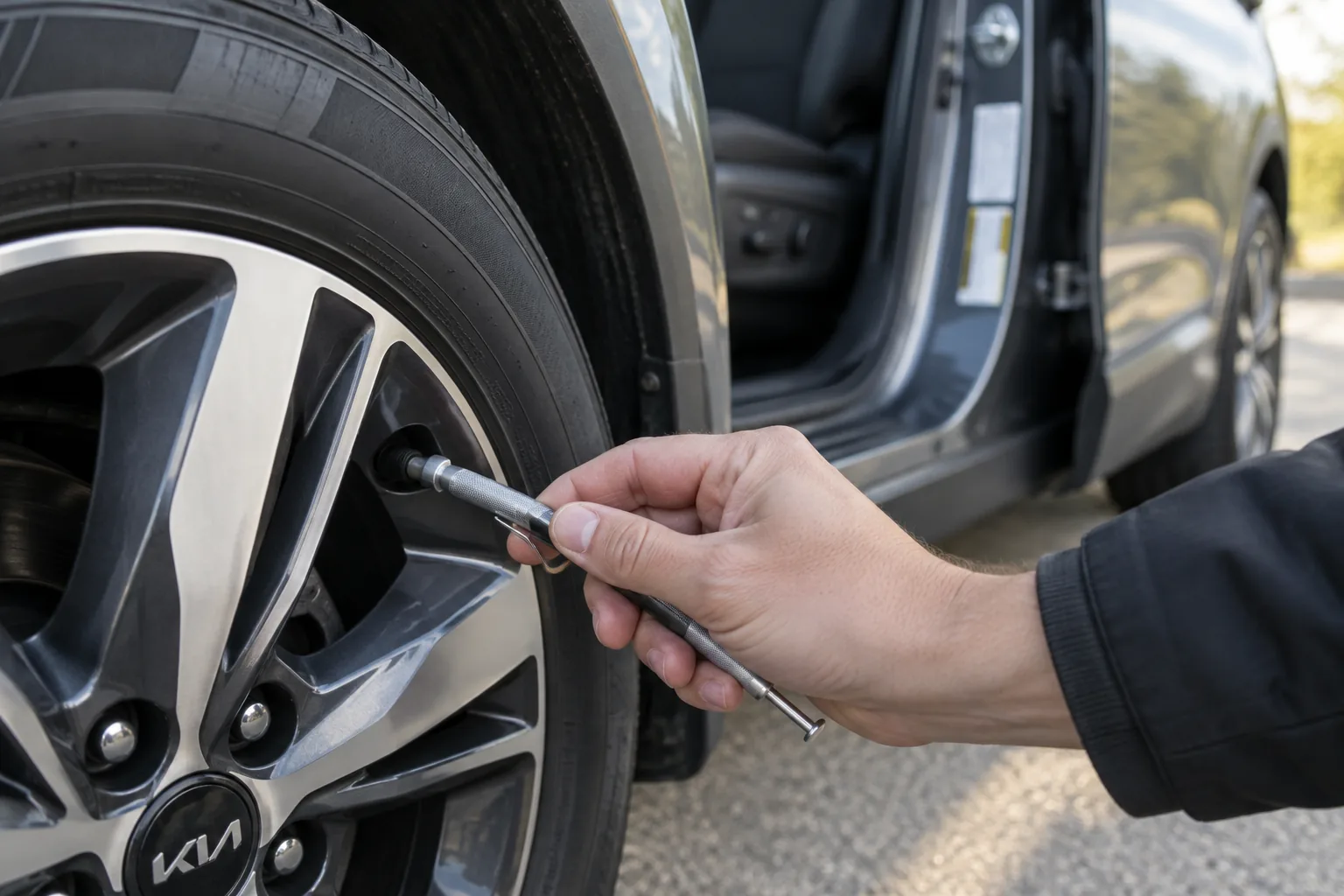
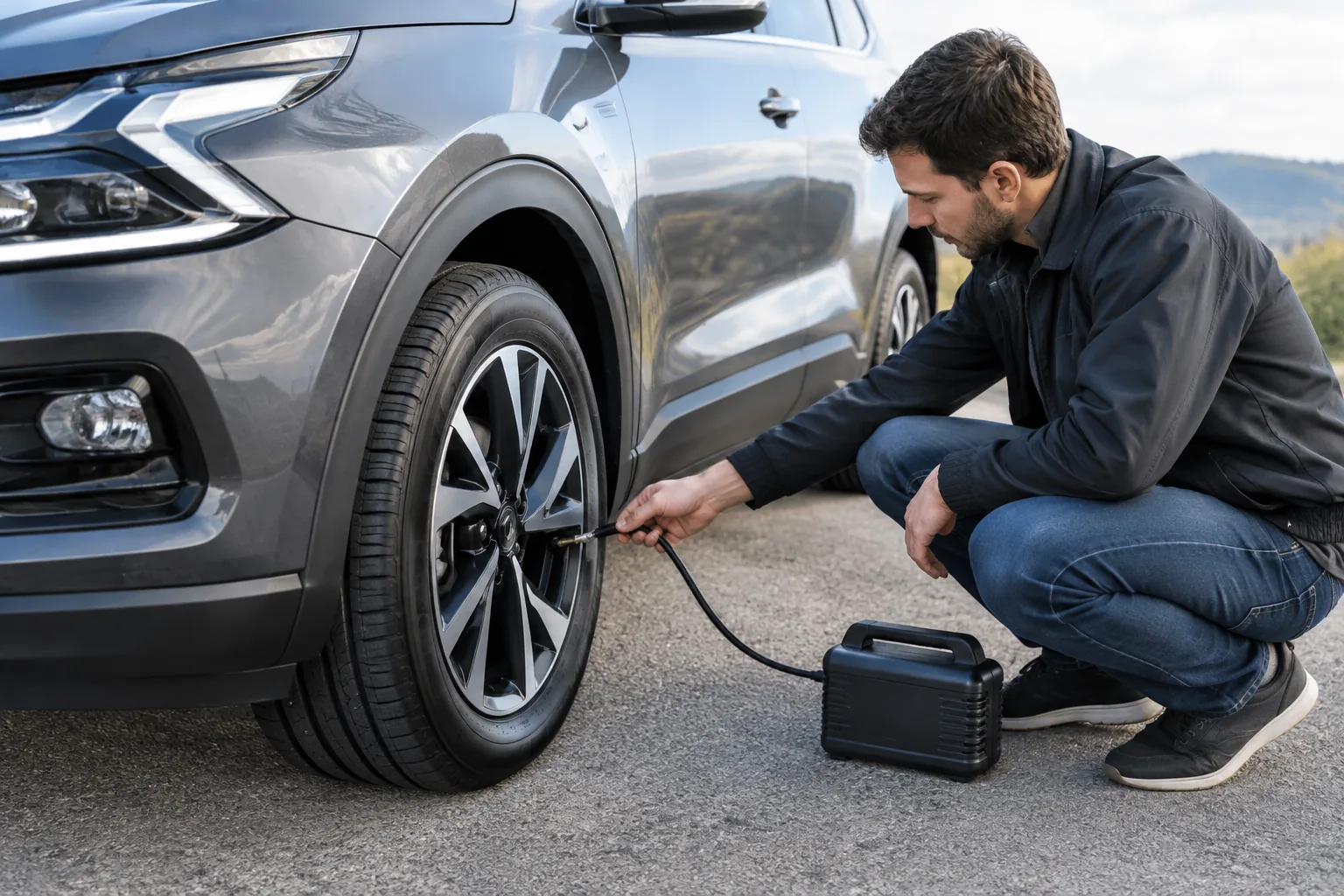
Find the tire and loading placard on the driver’s door jamb. It lists the recommended cold pressure for your Sorento’s tire size, and that number is your target. Don’t use the maximum pressure printed on the tire sidewall, which is a limit for the tire and not a recommendation for your vehicle.
“Cold” means the vehicle has been parked for a few hours or has barely been driven. Warm tires read higher, so a tire that looks fine at a gas station after a highway drive can drop below the threshold once it cools. Cold weather has the same effect, and air pressure drops roughly 1 psi for every 10°F the temperature falls. That’s why the light often appears on the first cold morning of the season.
Check all four tires, not just the one you suspect. The system warns when any tire is low, and a single tire that’s a few psi under will keep the light on. If your Sorento has a full-size spare, check the placard and your manual to see whether it’s covered by the monitoring system.
A gauge is optional if you already own one you trust. If you don’t, a digital tire pressure gauge is an affordable way to get a reading you can compare against the placard, since the gauges built into gas station air hoses are often off.
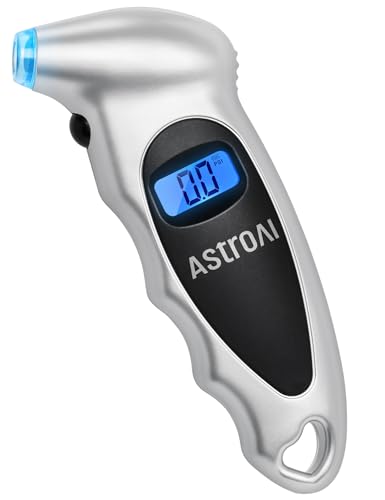
Digital Tire Pressure Gauge
An easy-to-read digital gauge lets you check all four tires against the door jamb placard instead of trusting a worn station hose gauge.
Give the System Time, Then Check for Leaks
After you inflate the tires to the placard number, the light may not go out instantly. Tire pressure monitors generally update the warning only after the sensors report new readings, and that can require the vehicle to be driven for a bit. Your owner’s manual explains how long and under what conditions the light should clear on your specific Sorento, so check the tire pressure monitoring section instead of relying on a generic drive routine.
If the light comes back within a day or two, suspect a leak. Here’s what to look for:
- Re-check pressures cold the next morning. A tire that lost several psi overnight has a leak.
- Look at the tread and sidewall for screws, nails, or embedded debris.
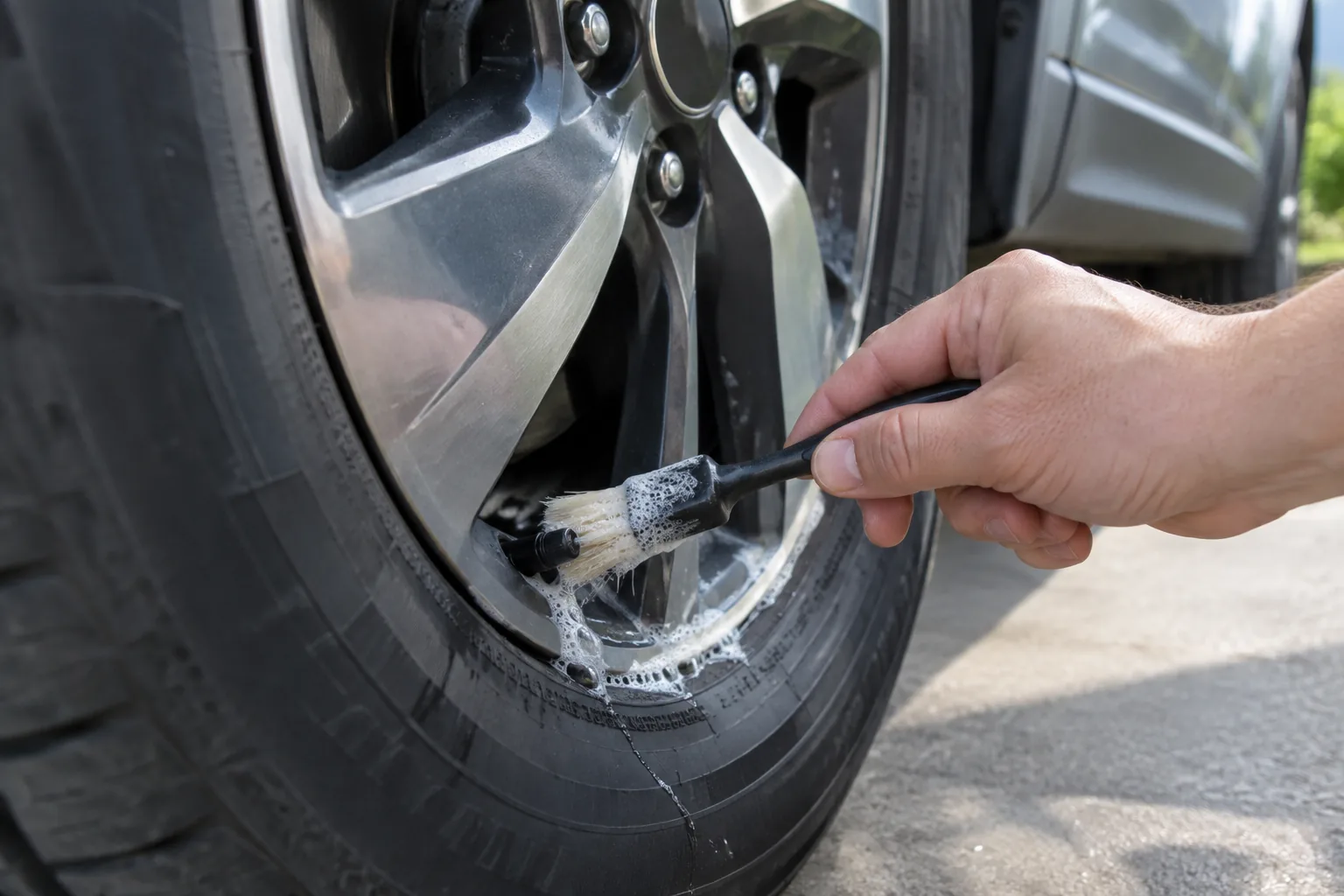
- Inspect the valve stem and the area where the tire meets the wheel. A little soapy water sprayed on these spots will bubble where air is escaping.
- Look for wheel damage, since a bent or corroded wheel edge can leak slowly.
A slow leak is a tire shop job. Most shops can plug or patch a puncture in the tread and will tell you if the damage is in a spot that can’t be repaired safely.
Low-Pressure Warning vs. Malfunction Indication
This is where people get stuck. The tire pressure light can mean two different things, and the fix for each is completely different.
- Low-pressure warning: The light comes on and stays on, telling you at least one tire is below the threshold. The fix is correcting the pressure and finding any leak.
- System malfunction: On many Kia vehicles, the indicator flashes for a period when the key is turned on, then stays lit. That pattern typically points to a fault in the monitoring system itself, such as a sensor problem, and adding air won’t clear it.
Some Sorento model years and trims also show individual tire pressures or a warning message in the instrument cluster, which makes it easier to tell which tire is the problem. The exact light behavior and cluster display vary by model year and equipment, so confirm the flashing pattern and wording in the warning light section of your owner’s manual. If your light flashes and then stays on and every tire is at the correct cold pressure, treat it as a malfunction.
Sensors, Relearns, and What Needs a Shop
Most Kia models sold in the US, Sorento included, use direct tire pressure monitoring, meaning a sensor inside each wheel reports its pressure. Confirm that for your exact model year in the manual, because how the system works determines what service it needs. Several different terms get lumped together as “resetting TPMS,” and they aren’t the same thing:
- Pressure initialization: Some systems need to be told the current pressures are the new baseline. Don’t assume your Sorento needs this or has a button or menu for it. The manual will say if there’s a procedure.
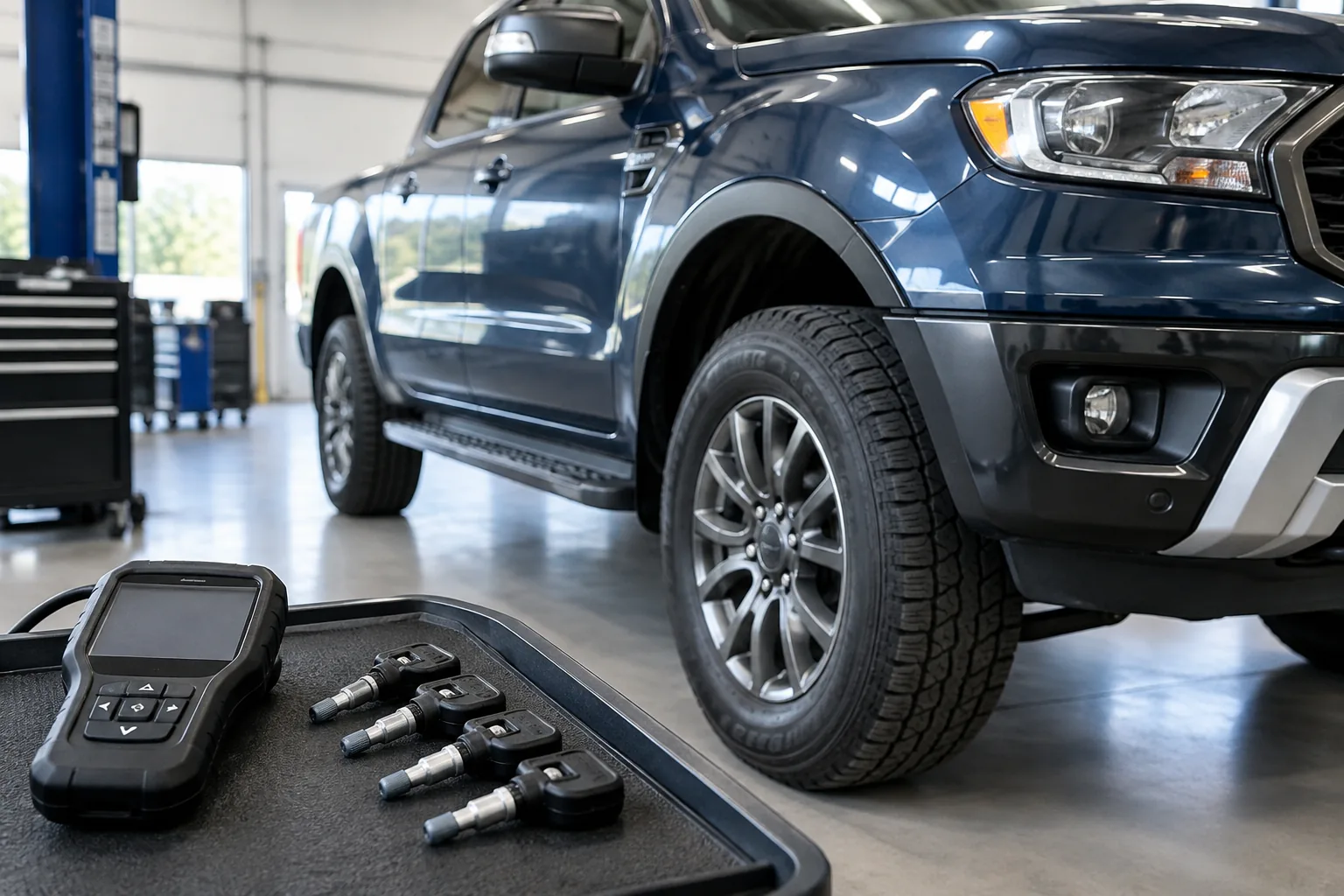
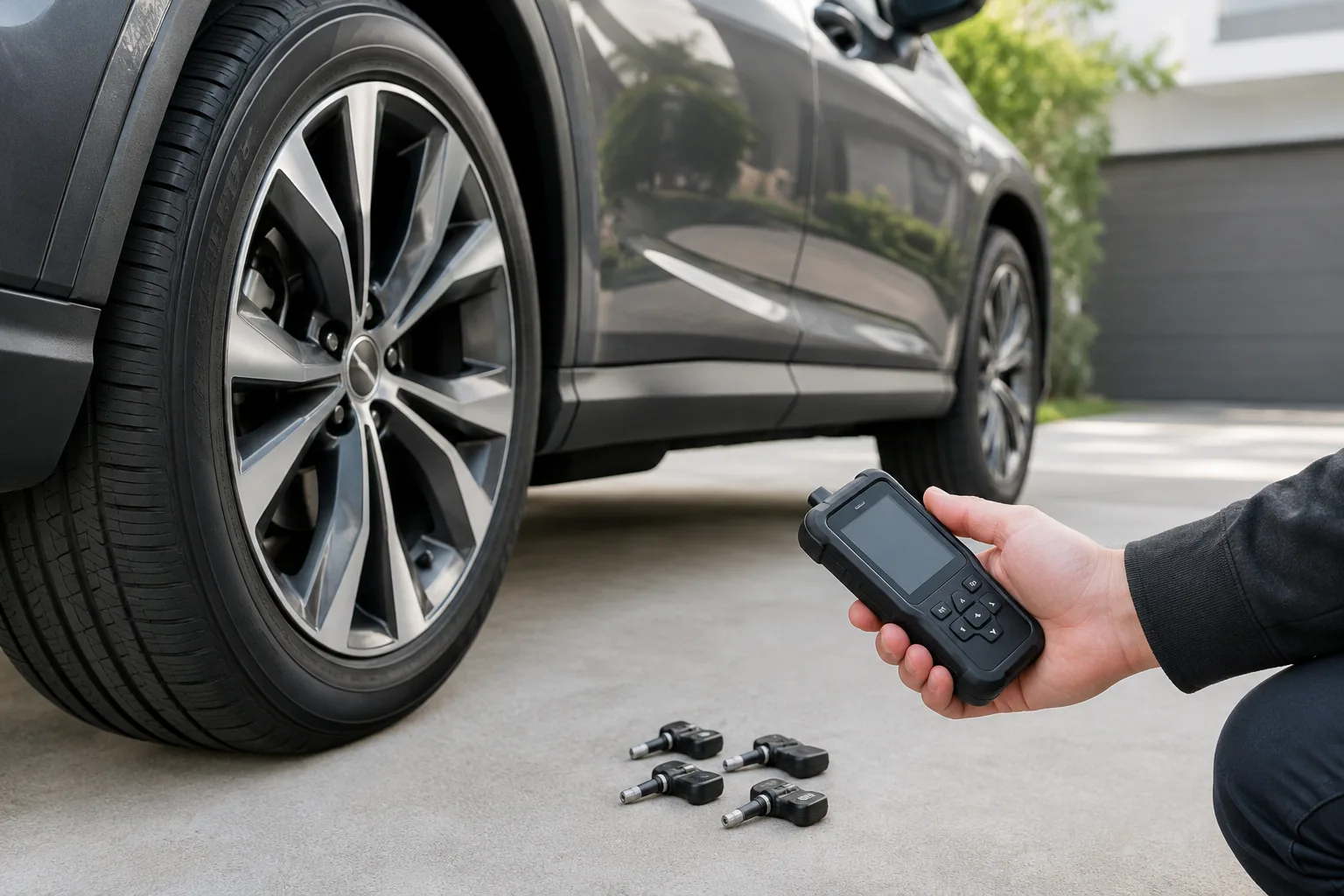
- Sensor activation: A TPMS tool wakes a sensor so it transmits, which a shop uses to check whether a sensor is working.
- Sensor ID relearn: The vehicle learns which sensor ID belongs to which wheel position. Whether this is needed after a tire rotation or sensor swap depends on the generation, so check your manual.
- Sensor programming: A new sensor is programmed with the correct ID or protocol for the vehicle. This requires compatible equipment.
- Fault diagnosis: Finding out why the system is reporting a malfunction, such as a dead sensor battery, a damaged sensor, or a communication fault.
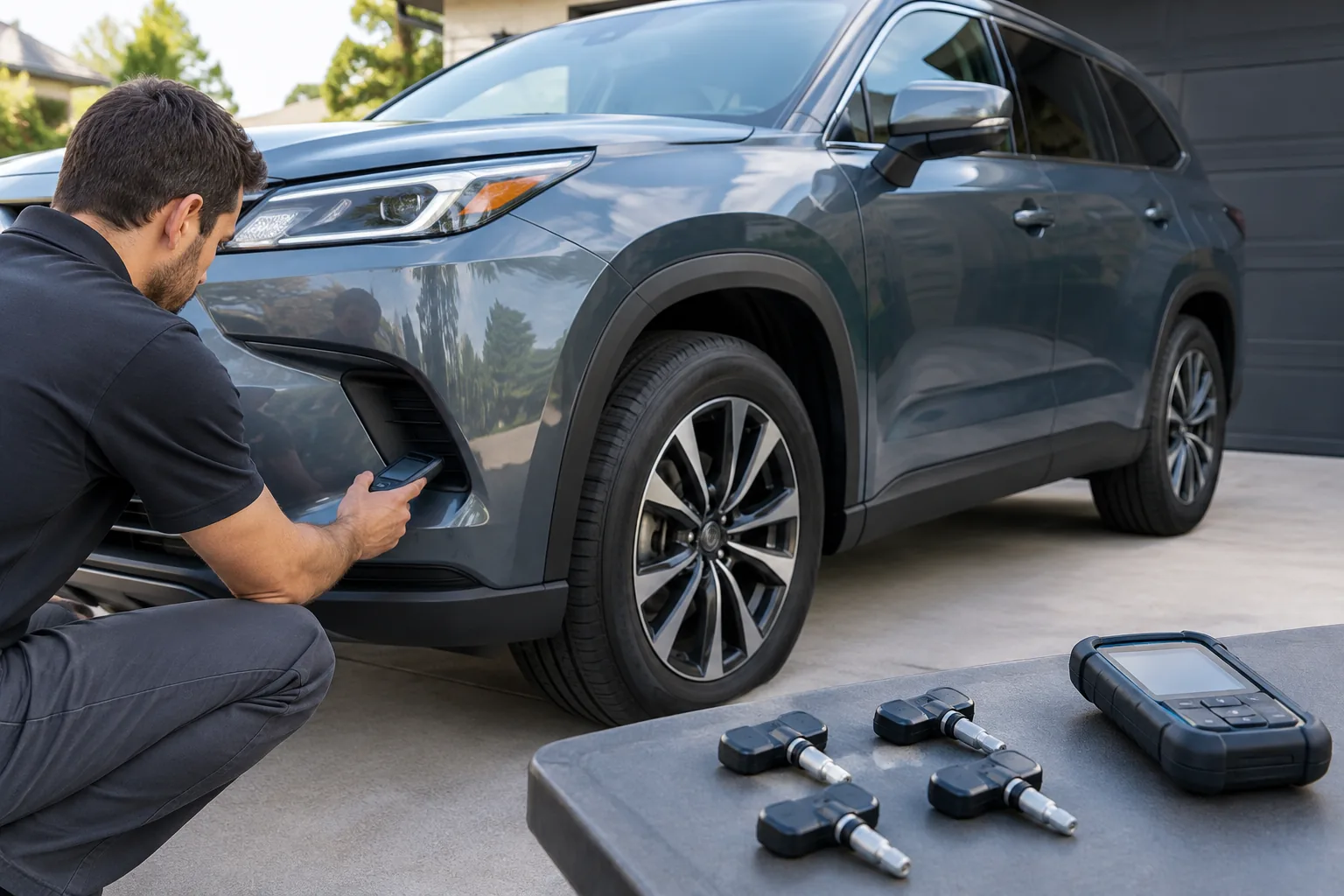
As an owner, your job is cold pressures, leak checks, and reading the manual. Everything past that, including activating sensors, relearning IDs, and programming replacements, needs a TPMS-capable tool at a tire shop or dealer. A basic OBD2 code reader isn’t a TPMS programming tool, so don’t count on one to fix a sensor problem.
Sensor batteries are sealed in and wear out over time, so an older Sorento with a flashing light and good tire pressures is a reasonable candidate for sensor testing. The same goes for a light that appeared right after new tires, wheel swaps, or winter wheels, since a wheel without a working compatible sensor can trigger a fault. Tell the shop about any recent tire work. If you keep a small kit of tools in the garage, our list of must-have tools for every DIY car owner covers the basics worth having.
FAQ
Why is my Sorento’s tire light still on after I filled the tires?
The most common reasons are that a tire is still under the placard’s cold pressure, the system hasn’t updated yet, or there’s a slow leak. If the light flashes before staying on, it may indicate a TPMS malfunction instead. Re-check all four tires cold with a good gauge and read the warning light section of your manual.
Is there a reset button for the tire pressure light on a Sorento?
Don’t assume there is one. Many vehicles, including some Kia models, clear the light on their own once pressures are correct and the sensors report in. If your model year has a reset or initialization step, your owner’s manual will describe it, and it won’t fix a sensor fault.
Can I keep driving with the tire pressure light on?
If it’s a low-pressure warning, check the tires as soon as it’s safe, because driving on an underinflated tire can damage it and affect handling. If it’s a malfunction indication and the tires are correctly inflated, the car is still driveable, but the system may not warn you of a real low tire, so check pressures manually until it’s diagnosed.
Leave a Reply