
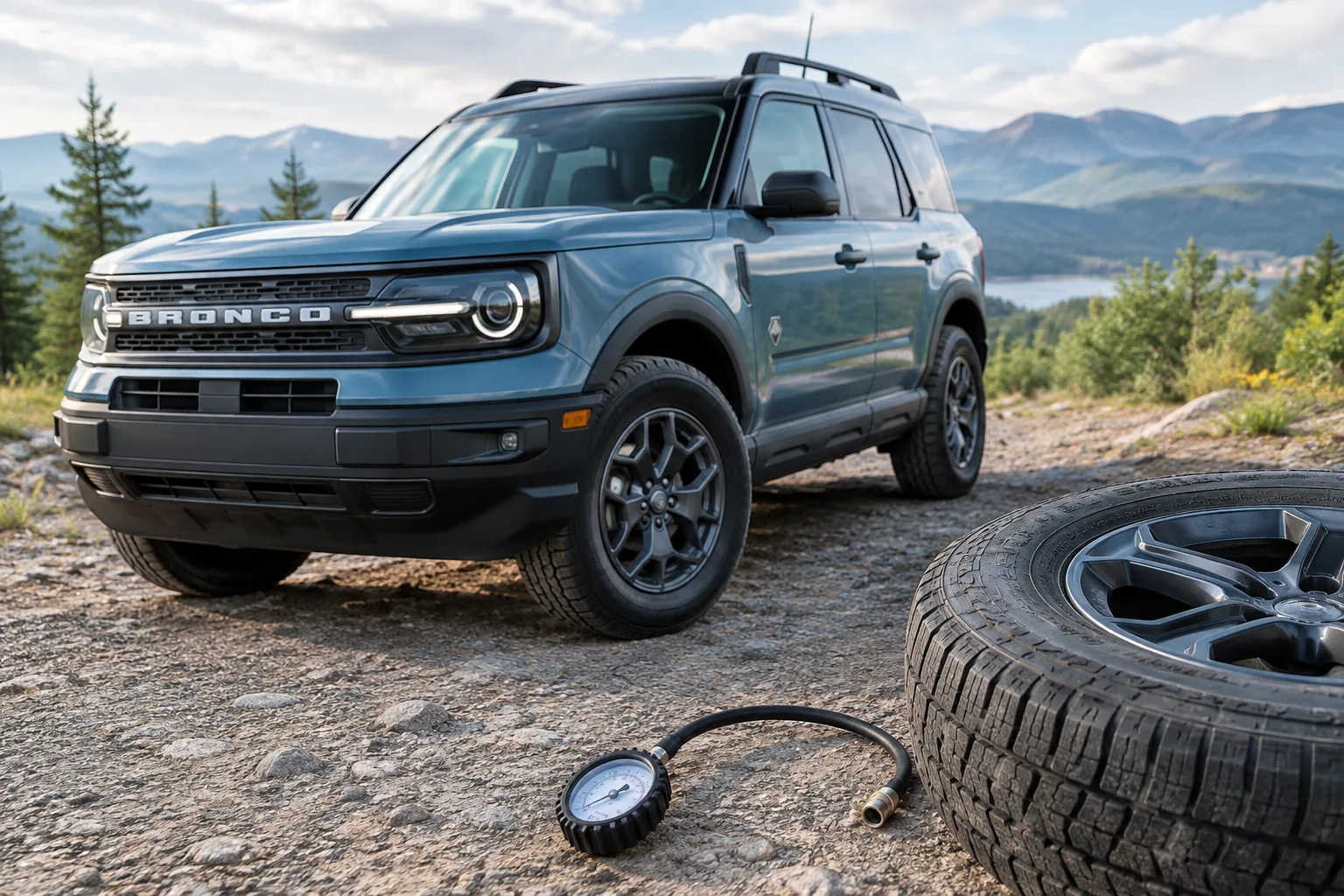
When the tire pressure light comes on in your Bronco Sport, the first move isn’t a reset. Check the pressure in all four tires with a gauge while they’re cold, compare the numbers to the tire placard on the driver’s door jamb area, and look for the reason a tire lost air. In most cases the light is doing its job and a tire is simply low.
If every tire is at the right pressure and the light stays on, or if it flashes before staying lit, you’re likely dealing with a sensor or system problem. That’s a different repair, and it depends on your exact model year and equipment, so treat your owner’s manual as the final word on menus and procedures.
Quick Answer: What to Do First
- Check all four tires with a reliable gauge while they’re cold.
- Set each tire to the pressure on the vehicle’s tire placard, not the number molded into the tire sidewall.
- Look for the cause of any low tire: nail, screw, bent wheel, leaking valve stem, or slow seepage at the bead.
- Note whether the warning light stays solid or flashes first. Those two behaviors mean different things.
- If the light stays on after correct inflation, check the tire pressure monitoring section of your owner’s manual for the exact next steps for your vehicle.
This article covers the Bronco Sport only. The full-size Bronco is a different vehicle, and its procedures shouldn’t be assumed to match.
Step One: Check Cold Pressures Against the Placard
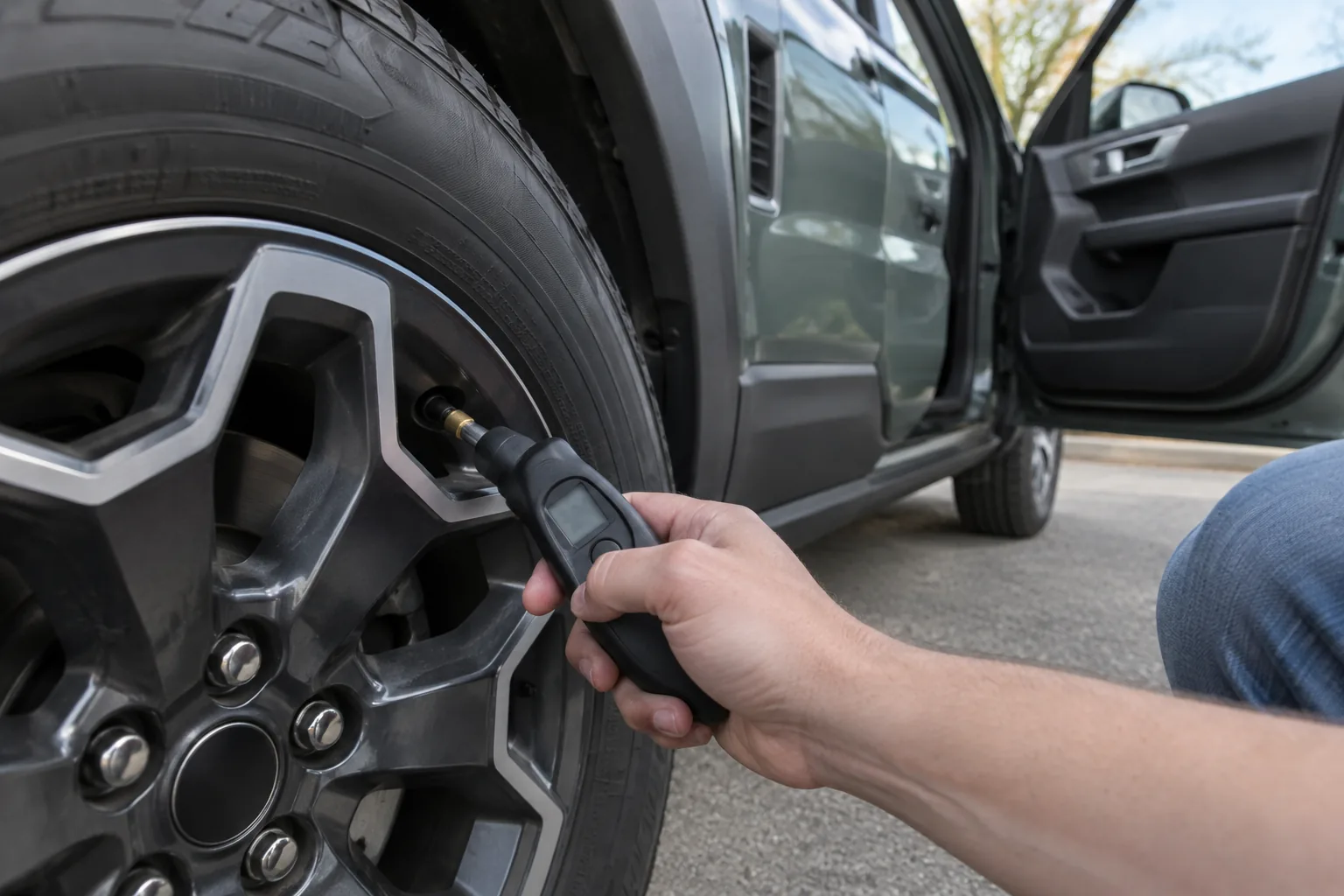
Look at the tire placard (often called the tire and loading information label) in the driver’s door area. It lists the recommended cold pressure for your vehicle. If your Bronco Sport has more than one tire size or equipment package, the label for your car is the one that counts, so don’t trust a number from a forum post or a different Bronco Sport.
“Cold” means the vehicle has sat for a few hours or has been driven less than a mile. Pressure climbs as tires warm up, so a gauge reading after a highway drive will look higher than the true cold number. If you have to add air at a gas station after a drive, add a little, then recheck cold at home.
Temperature matters too. As a rough rule, tire pressure drops about 1 psi for every 10°F drop in air temperature. That’s why the light often appears on the first cold morning of fall or winter. Topping the tires off to the placard number usually handles it.
Don’t inflate to the maximum pressure printed on the sidewall. That number is the tire’s limit, not the target for your vehicle.
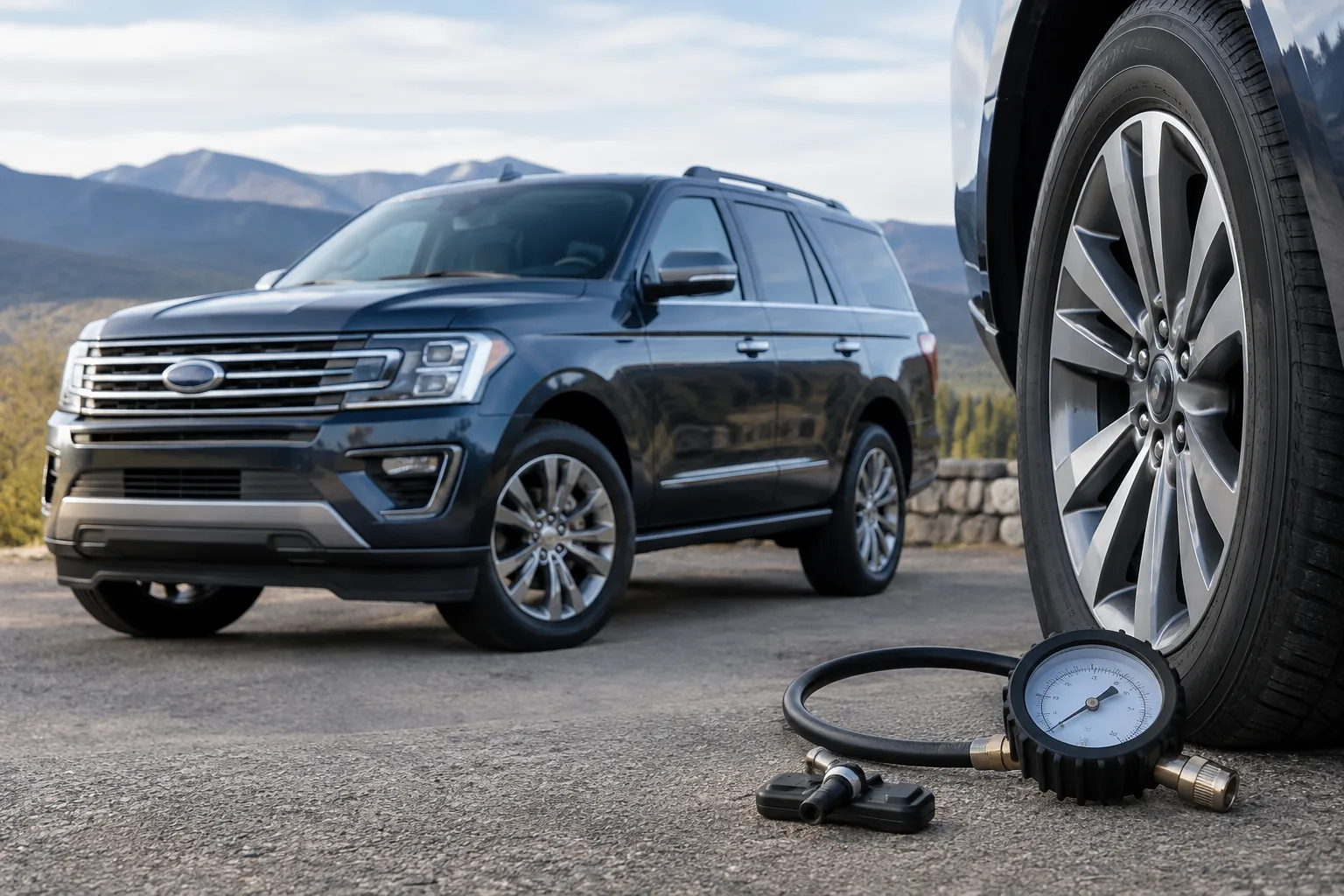
A decent digital gauge is worth owning, since gas station gauges are often inaccurate and the built-in display on some vehicles may not match a handheld reading exactly. A digital tire pressure gauge is easy to read and cheap enough to keep in the glove box.

Digital Tire Pressure Gauge
An accurate handheld gauge is the single most useful tool for settling a TPMS warning before you chase sensors.
Step Two: Inspect for Leaks
If a tire needs air, ask why. A tire that’s a few psi low after a cold snap is normal. A tire that’s low again a week later has a leak.
- Tread and sidewall: Look for nails, screws, or embedded debris. Run your hand carefully over the tread.
- Valve stem: Check the stem and cap. Wheel-mounted TPMS sensors often have a stem that is part of the sensor, so a leaking stem can be a sensor-related repair.
- Wheel rim: Curb damage can break the bead seal and cause a slow leak.
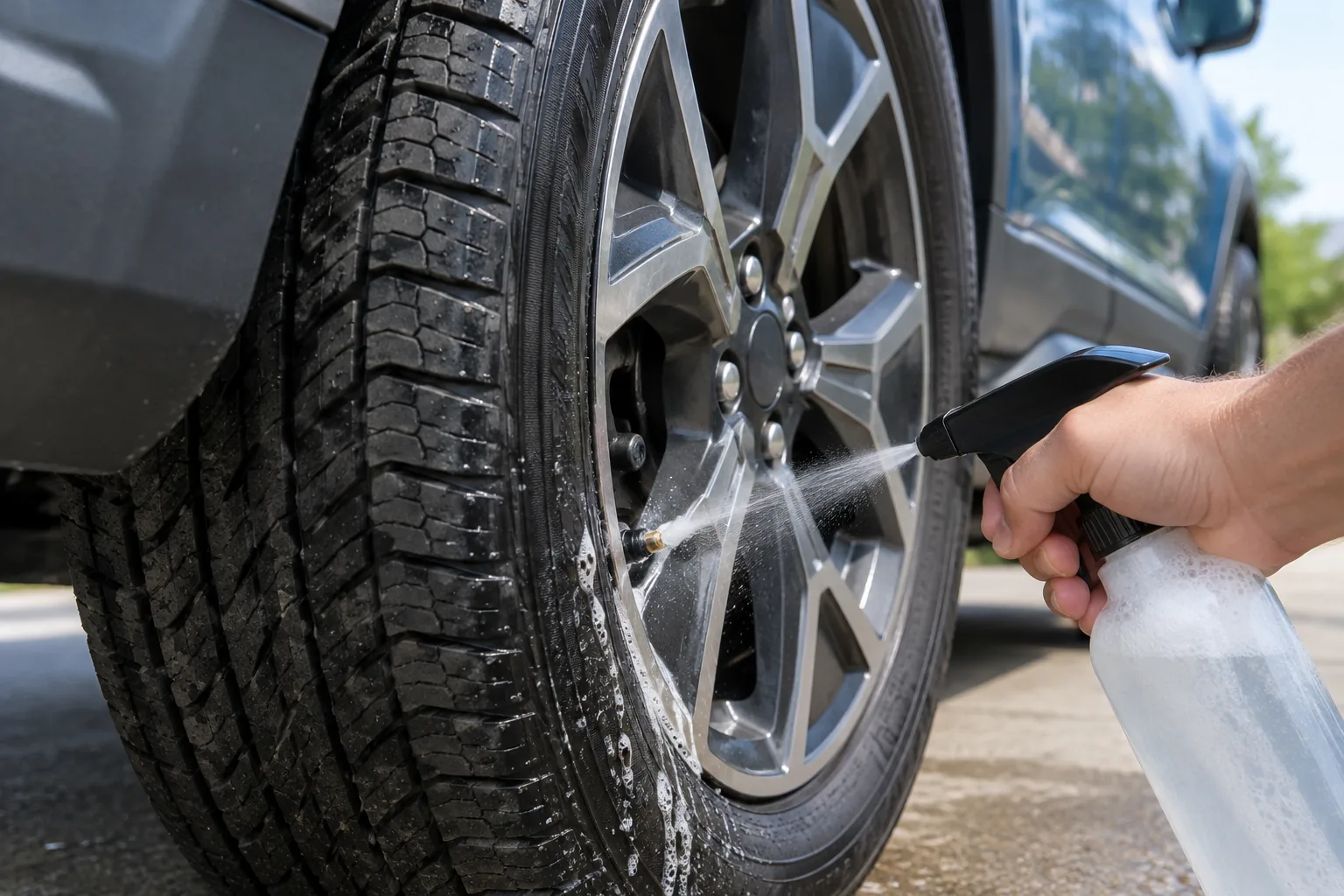
- Soap test: Spray soapy water on the stem, bead, and any suspected puncture. Bubbles show you where air is escaping.
Any tire you can’t confidently account for goes to a tire shop. A repair done properly from inside the tire is better than a plug as a long-term fix, and a shop can tell you whether the sensor is affected.
Low Pressure Warning vs. TPMS Malfunction
Ford vehicles generally use the same tire-shaped warning symbol for both situations, but the behavior differs. In Ford’s owner literature, a solid light signals low pressure, while a light that flashes for a period and then stays on points to a system malfunction. Your Bronco Sport may also show a text message in the instrument cluster, depending on trim and display.
Confirm the exact behavior and wording in your own manual, in the tire pressure monitoring section. Cluster messages and display options can vary by model year and equipment, so I won’t give you menu names I can’t verify.
Solid light
This points to one or more tires being under-inflated. Fix the pressure, find any leak, and give the system normal driving to update. Your manual explains how and when the light turns off, so follow that rather than any generic drive routine you find online.
Flashing, then solid
This points to a fault in the monitoring system itself. Possible causes include a dead sensor battery, a damaged or missing sensor, a sensor that isn’t registered with the vehicle, or interference. Setting the pressure won’t clear a malfunction, and if the system can’t read a wheel, it can’t warn you about a low tire at that wheel.
Reset, Relearn, Activate, Program: They’re Not the Same Thing
People use “reset” for everything, which causes a lot of wasted effort. These are separate jobs:
- Pressure initialization or reset: Telling the system that the current pressures are the correct baseline. Some vehicles have a way to do this, and some don’t. I can’t confirm a specific button or menu for your Bronco Sport, so check the manual and don’t assume one exists.
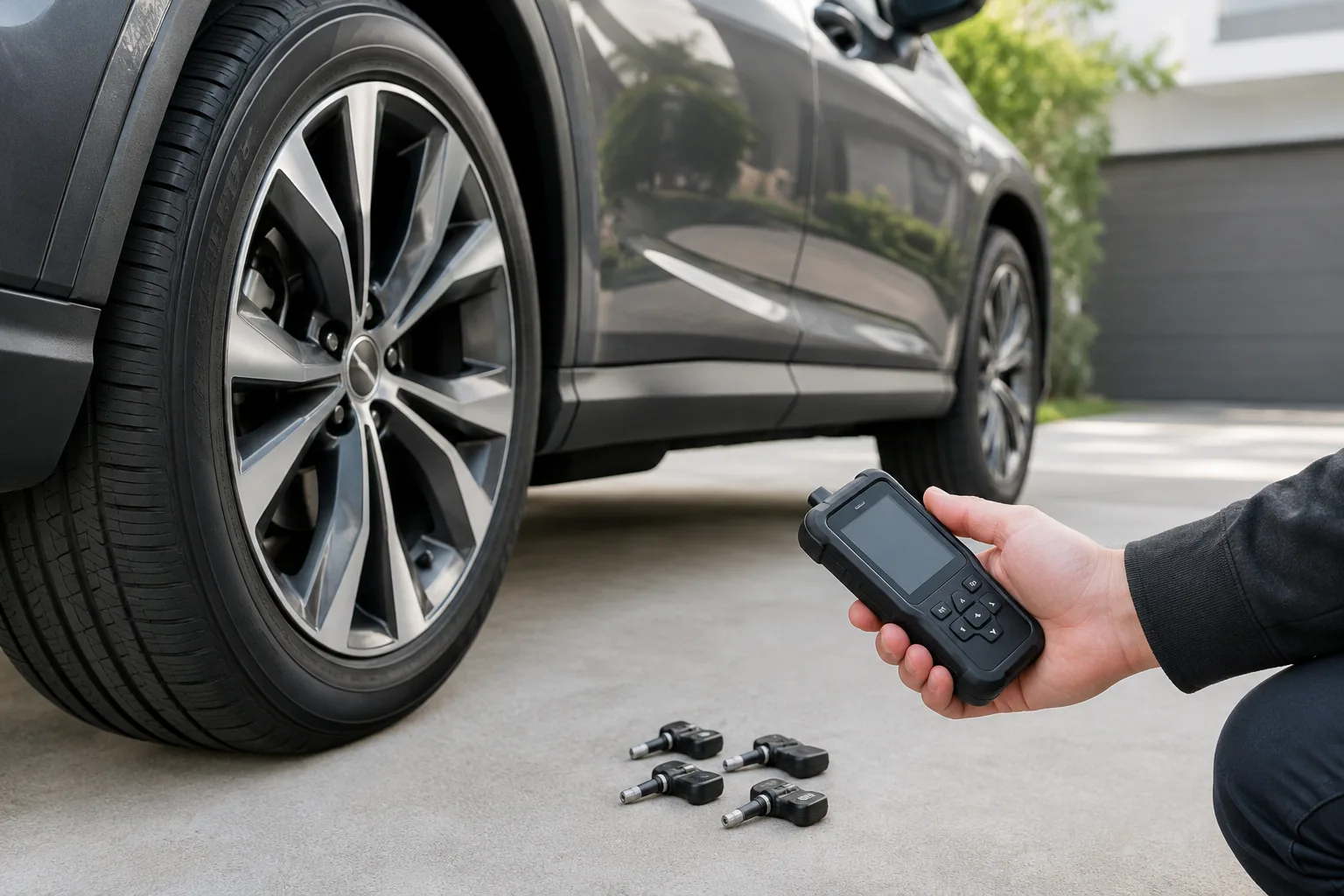
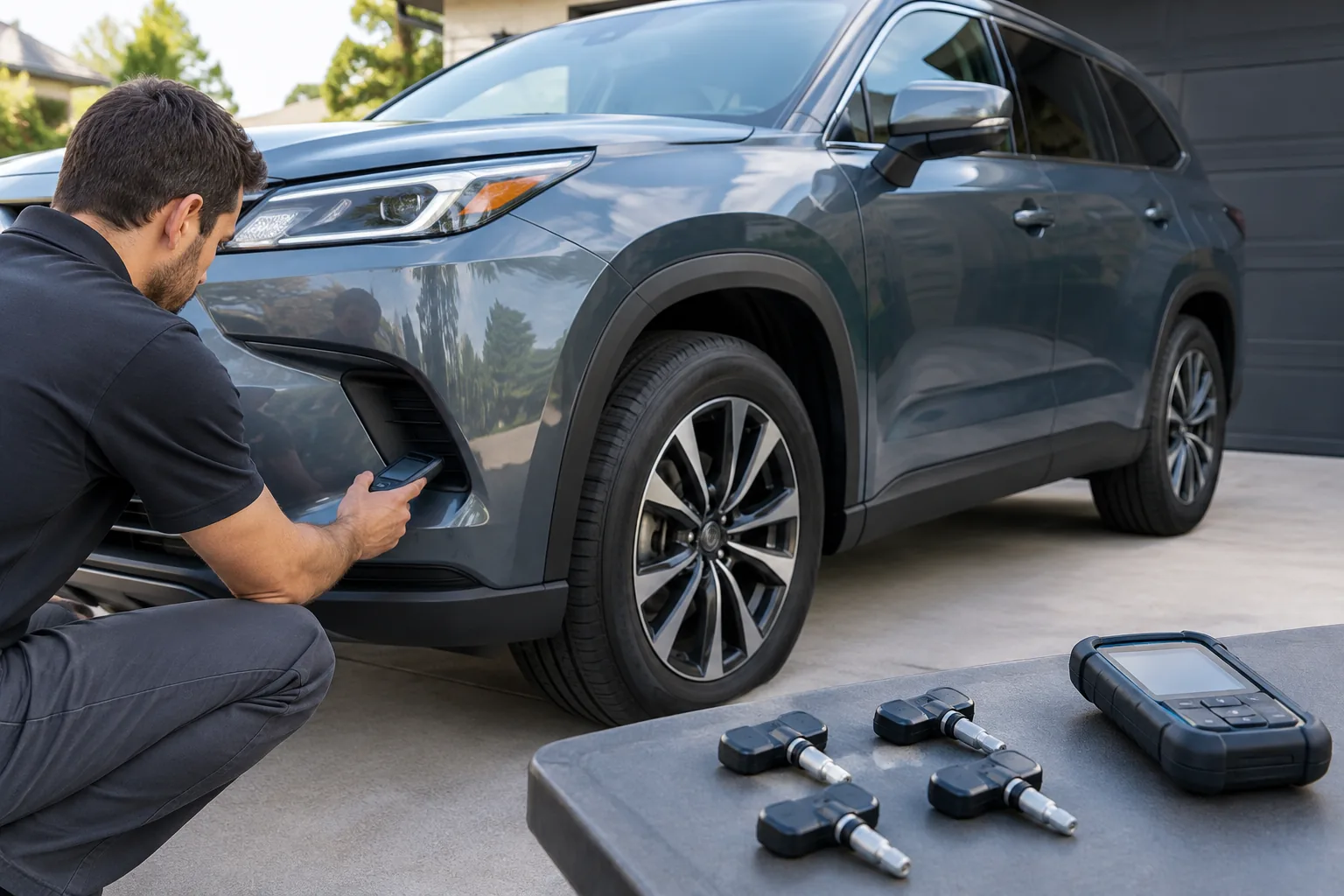
- Sensor activation: Waking a sensor with a tool so it transmits. This is typically done with a TPMS tool near the valve stem.
- Sensor ID relearn: Teaching the vehicle which sensor ID belongs to which wheel position. This is often needed after rotating tires or swapping wheel sets on vehicles that need it.
- Sensor programming: Writing an ID or protocol into a programmable replacement sensor so it works on your vehicle.
- Fault diagnosis: Reading stored codes and sensor data to find which wheel is failing and why.
Whether your Bronco Sport relearns sensor positions automatically after a rotation or needs a tool depends on the vehicle, and I’m not going to guess. The owner’s manual’s tire care and TPMS pages are the place to confirm that. If the manual describes a procedure, follow it exactly. If it says a dealer or tire shop should service the system, believe it.
Sensor Problems That Trigger the Warning
When pressures are right and the light is flashing, these are the likely culprits:
- Sensor battery failure: Wheel sensors have an internal battery that isn’t designed to be replaced separately. After several years, they die, often around the same time since they were installed together.
- Damaged sensor or stem: Curb strikes, corrosion, or rough tire mounting can break a sensor or the valve stem.
- A second wheel set without sensors: Winter wheels and tires need working sensors too. If they were fitted without them or with sensors the vehicle doesn’t recognize, expect a malfunction light.
- Aftermarket wheels or sensors: Wrong sensors, or sensors that haven’t been programmed or registered to the vehicle, can cause persistent warnings.
- Recent tire service: A shop that replaced or swapped a sensor without completing the registration step can leave the light on afterward.
- Spare tire: Depending on your equipment, the spare may not be monitored. Your manual says how your vehicle handles it.
If the light started right after new tires or a wheel swap, go back to the shop that did the work and tell them the light is on. That’s the fastest route to a fix.
What You Can Do vs. What Needs a Shop
Owner tasks
- Checking and setting cold pressures
- Inspecting tires, valve caps, and stems
- Following any reset or relearn steps that your manual actually lists for the Bronco Sport
- Reading the warning behavior (solid or flashing) and any cluster message so you can describe it accurately
Tire shop or dealer work
- Replacing a sensor, which involves breaking the tire bead and rebalancing
- Programming or registering new sensors to the vehicle
- Sensor ID relearn when the vehicle requires a tool
- Diagnosing which sensor is failing when the cause isn’t obvious
When you book the work, ask whether the sensors they’ll install are compatible with the Bronco Sport and whether they’ll register them to the vehicle. A shop with the right TPMS equipment can usually answer that on the phone.
About TPMS Tools and OBD2 Readers
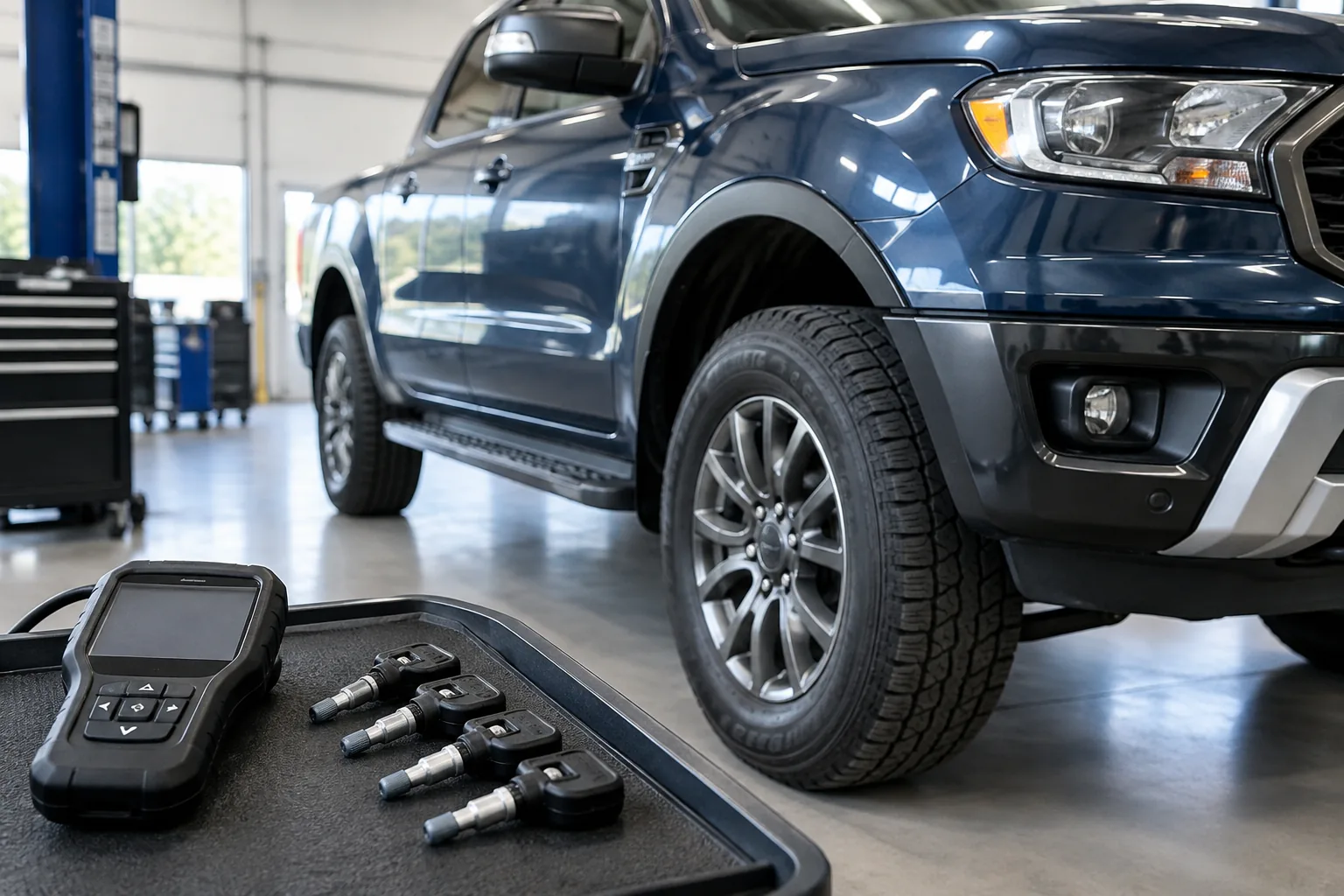
A basic OBD2 code reader generally won’t program TPMS sensors. Some readers can show a stored code or live data, but writing sensor IDs and activating sensors needs a TPMS-capable tool with coverage for your vehicle. If you’re considering a tool, check that the listing specifically states support for the Ford Bronco Sport and your model year. A search page like this Ford TPMS relearn and reset tool search is just a starting point. A listing appearing there is not proof that a tool covers your year, your sensor type, or programmable sensors.
For most owners, paying a shop for the registration step makes more sense than buying a specialty tool. If you do your own tire work often, a few other basics matter more first, and our list of must-have tools for every DIY car owner covers them.
A small 12V inflator is more practical for this problem than any scan tool, because most TPMS lights come from low air. A portable tire inflator lets you correct pressure at home right when the cold morning light appears.

Portable 12V Tire Inflator
Handy for topping off a tire to the placard pressure at home, which resolves most low-pressure warnings.
FAQ
Why is my Bronco Sport tire pressure light on when the tires look fine?
A tire can be well below spec and still look normal. Check each tire with a gauge, and do it cold. Temperature drops are a common trigger. If pressures are correct and the light is flashing or stays on, a sensor or system fault is more likely.
Is there a reset button for the TPMS on the Bronco Sport?
Don’t assume there is one. Whether your vehicle has a reset step, and what it looks like, varies by model year and equipment, so look in the tire pressure monitoring section of your owner’s manual. If the manual doesn’t list a reset or relearn step, it isn’t something you should guess at.
Do I need to relearn the sensors after rotating the tires?
That depends on how your vehicle’s system handles wheel positions, and I can’t confirm it for every Bronco Sport. Check the tire rotation and TPMS pages of your manual. If it calls for a tool, a tire shop or dealer can do it.
Can I keep driving with the light on?
A solid light means a tire may be low, and driving on an under-inflated tire is unsafe and wears the tire quickly, so check it promptly. A flashing light means the system may not be able to warn you about low pressure, so keep checking pressures manually with a gauge until it’s fixed. Get a visibly flat or rapidly leaking tire addressed right away.
The Short Version
Start with a cold gauge reading and the door placard, find any leak, and learn whether your light is solid or flashing. A solid light is usually about air, and a flashing one points to the sensors or the system. Anything involving sensor replacement, programming, or relearn should follow your owner’s manual and, if it needs equipment, a shop with the right tool for your exact Bronco Sport.
Leave a Reply