
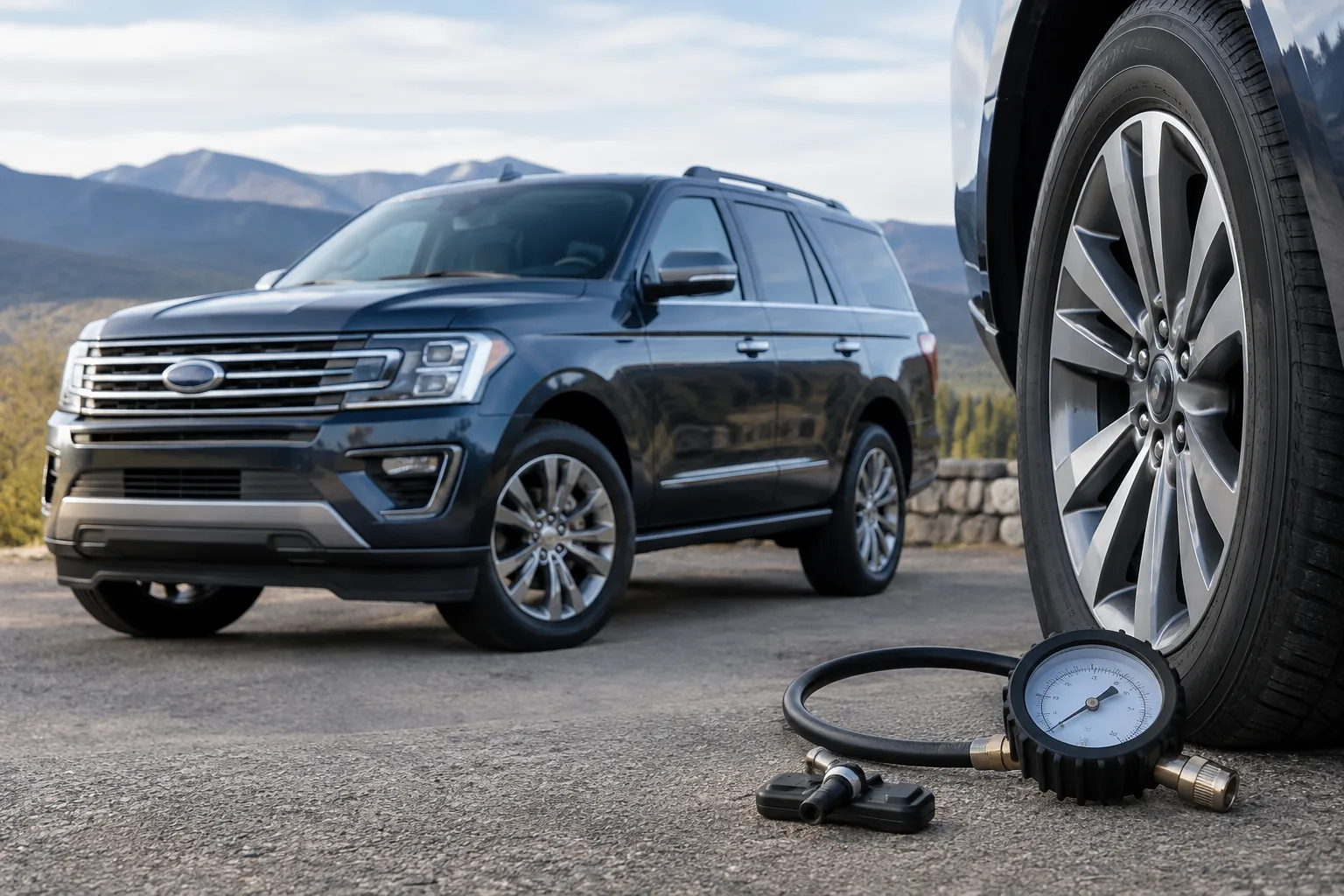
If the tire pressure light is on in your Ford Expedition, don’t hunt for a reset first. Check all four tires cold against the pressure on the vehicle’s tire placard, top them off, and look for a leak. A solid light usually means one or more tires are low, and fixing the pressure is the actual fix. Only after that should you worry about sensors, relearns, or tools.
Start With Cold Pressures and a Leak Check
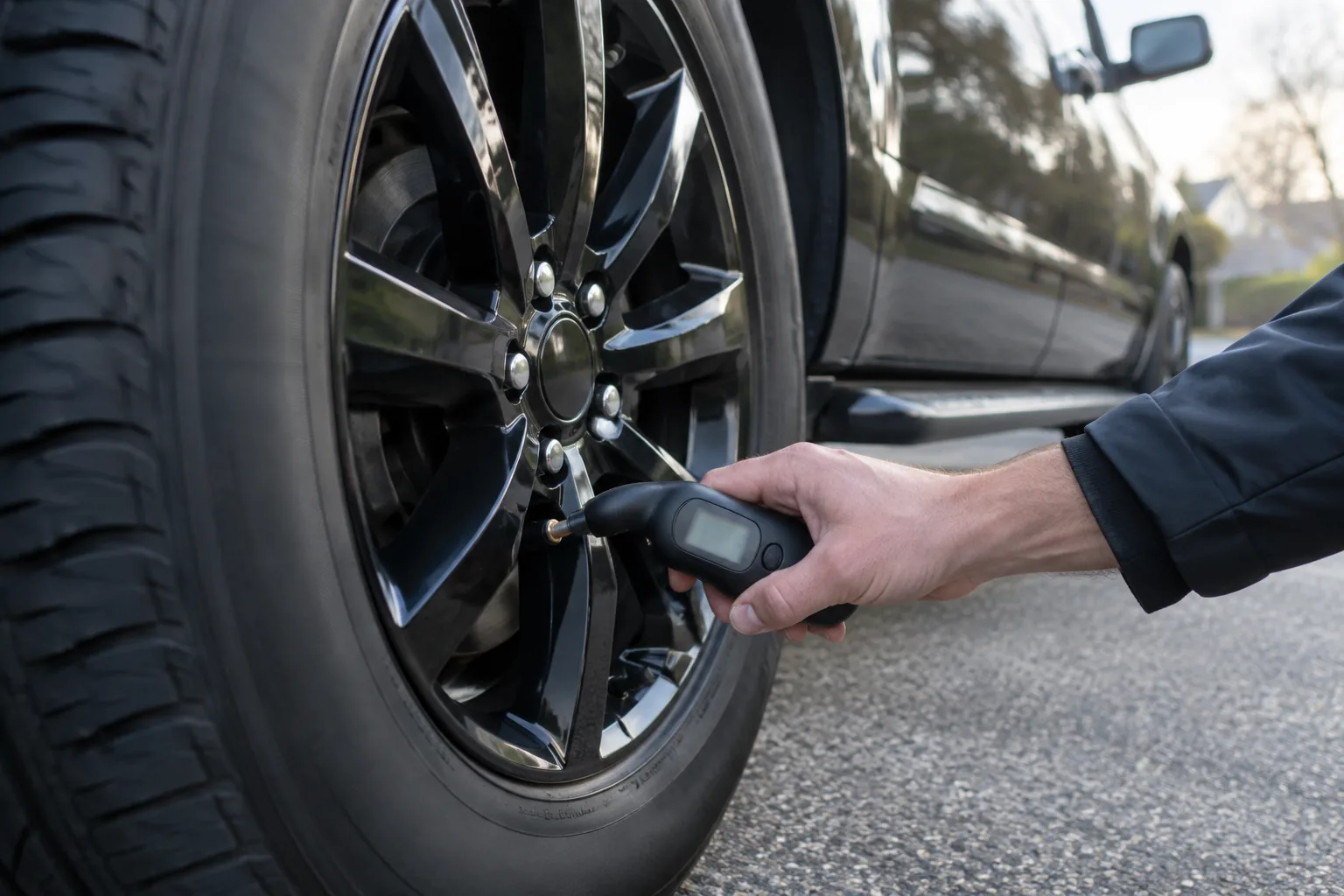
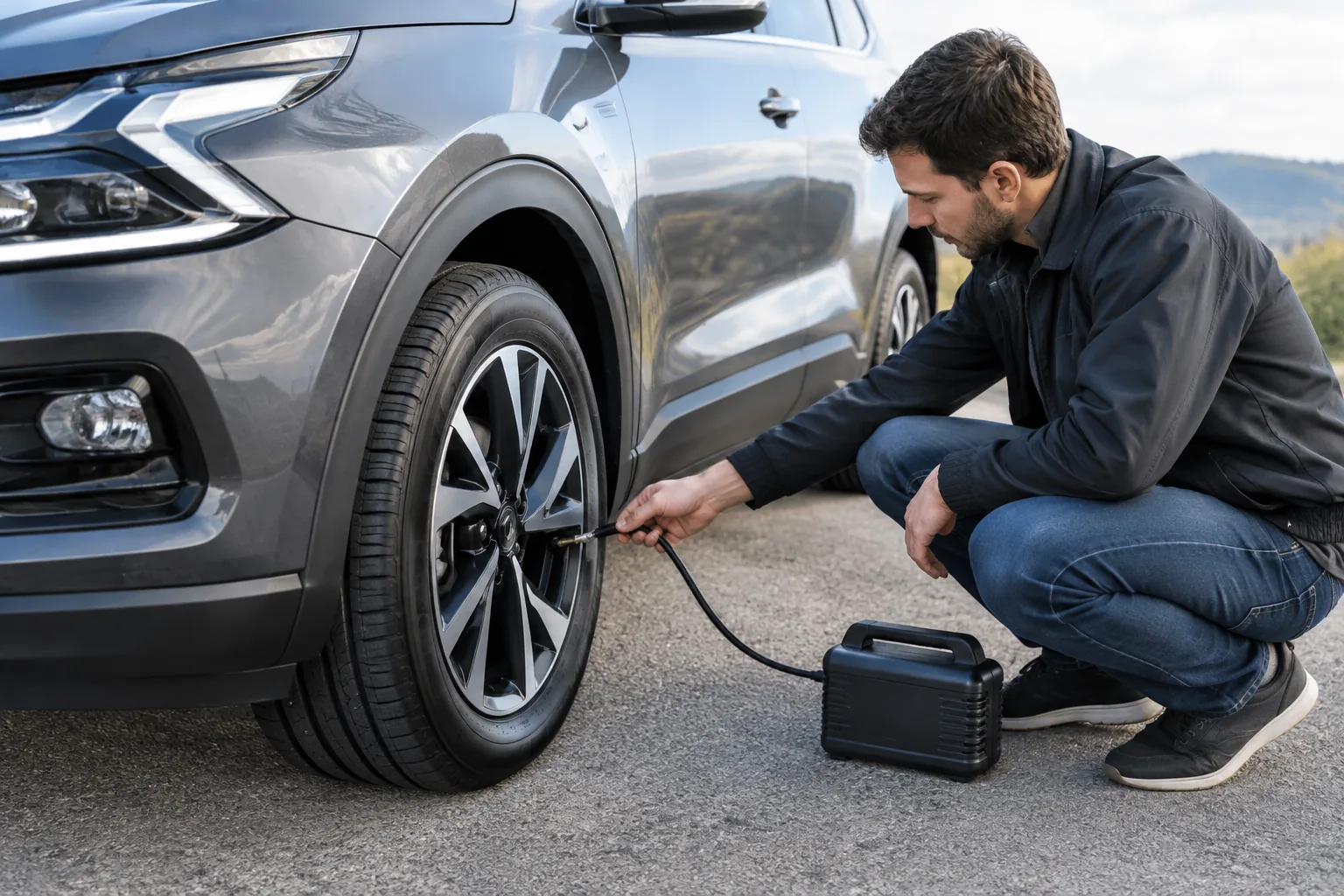
Find the tire and loading information placard, usually on the driver’s door jamb or door pillar. Use that number, not the maximum pressure molded into the sidewall. Check pressures cold, meaning the SUV has sat for several hours or been driven only a short distance.
A decent gauge matters here because gas station gauges are often off. A digital tire pressure gauge is cheap, and it lets you check all four tires and the spare in a minute or two. If you’re building out a home toolkit, our must-have tools for DIY car owners list covers other basics worth owning.

Digital Tire Pressure Gauge
An accurate gauge makes the cold-pressure check reliable instead of guesswork.
If one tire keeps losing air after you’ve topped it off, don’t just clear the light. Look for:
- A nail or screw in the tread
- A leaking valve stem or loose valve core (soapy water on the stem will bubble)
- Corrosion where the tire bead meets the wheel
- Pressure drops after a cold snap, which is normal but still needs correcting
Also check your owner’s manual to see whether your Expedition’s spare is monitored. Some vehicles monitor it and some don’t, and the manual for your model year will say.
Solid Light vs. Flashing Light
The Expedition uses direct monitoring, with a pressure sensor inside each wheel, rather than inferring pressure from wheel speed. The light can mean two different things, and the fix is different for each.
- Low-pressure warning: The light stays on steadily. Inflate to the placard pressure and recheck. Ford’s manuals describe how the light should behave afterward, and some systems need a short drive before it clears.
- System malfunction: Ford’s manuals generally describe the light flashing for a short time at startup and then staying on. That points to a sensor, receiver, or module problem, not a low tire.
Check the TPMS section of your owner’s manual for the exact wording for your model year. Some newer Expeditions also show individual tire pressures in the instrument cluster, which makes finding the culprit much easier. Whether yours does depends on year and trim.
Reset, Relearn, and Sensor Fixes
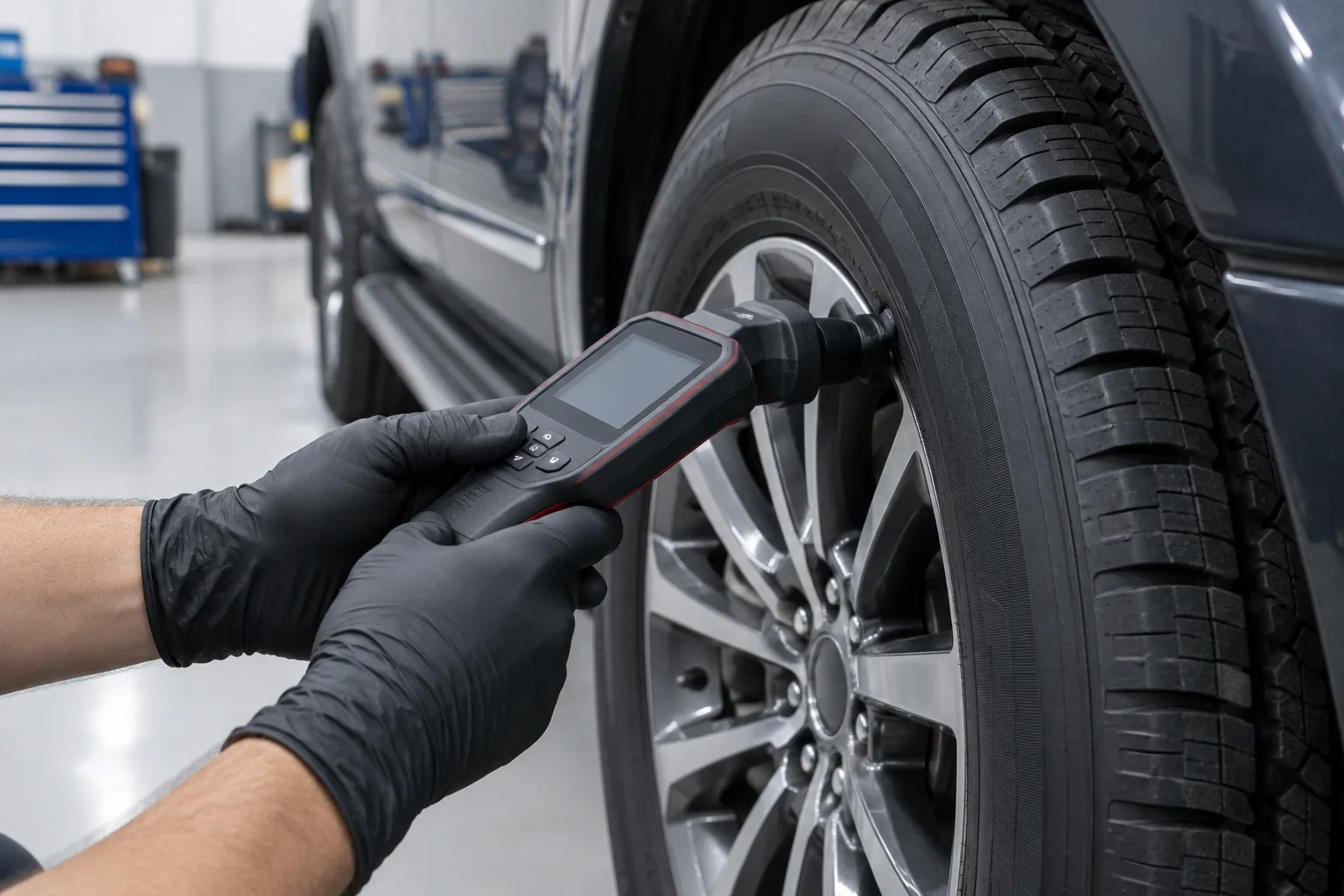
These terms get mixed together, and they’re not the same job.
- Pressure initialization or reset: Telling the system the tires are now at the correct pressure. Don’t assume your Expedition has a reset button or menu item. Check the manual for what your year requires, if anything.
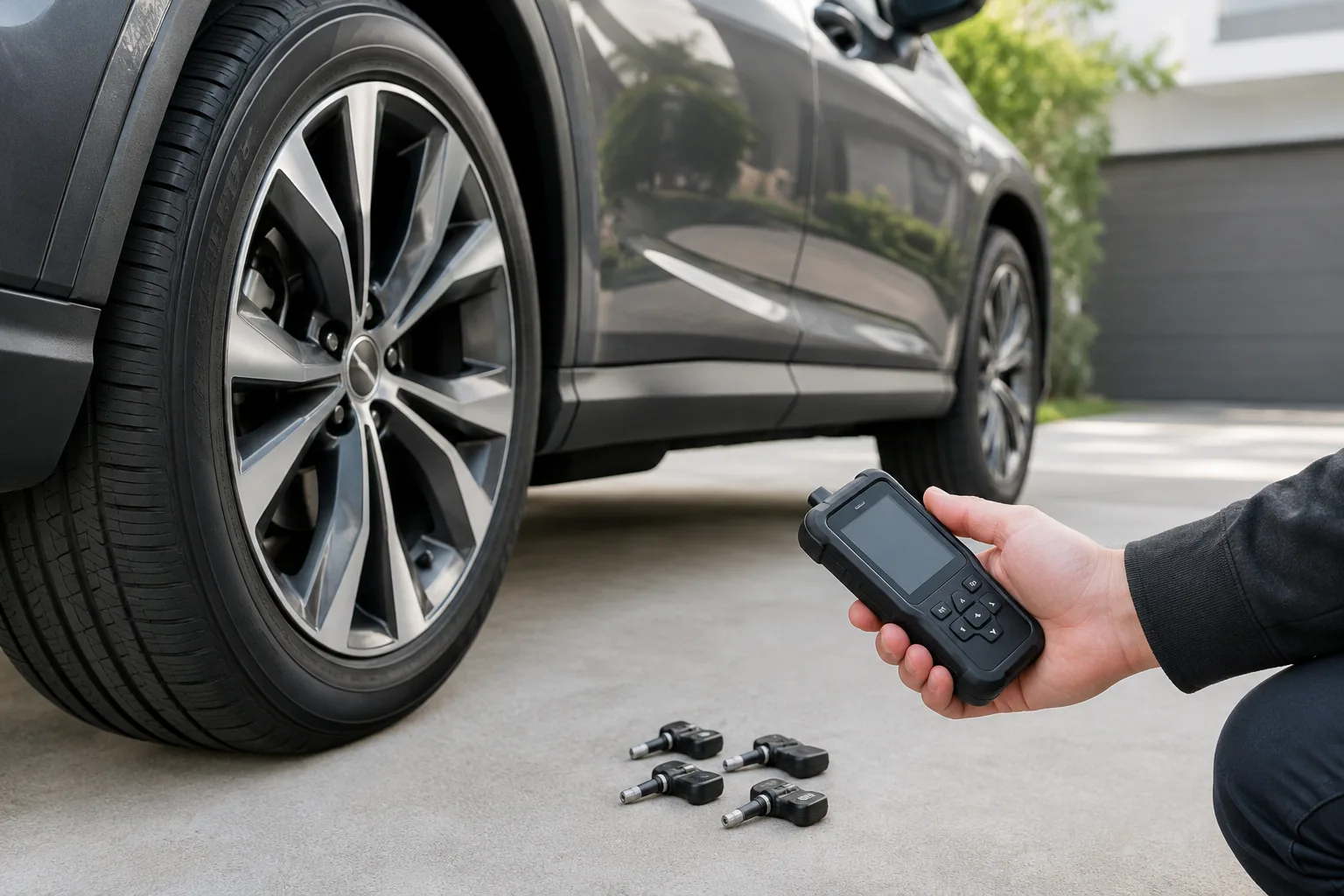
- Sensor activation: Using a TPMS tool to wake a sensor so it transmits. This is also how you confirm a sensor is alive.
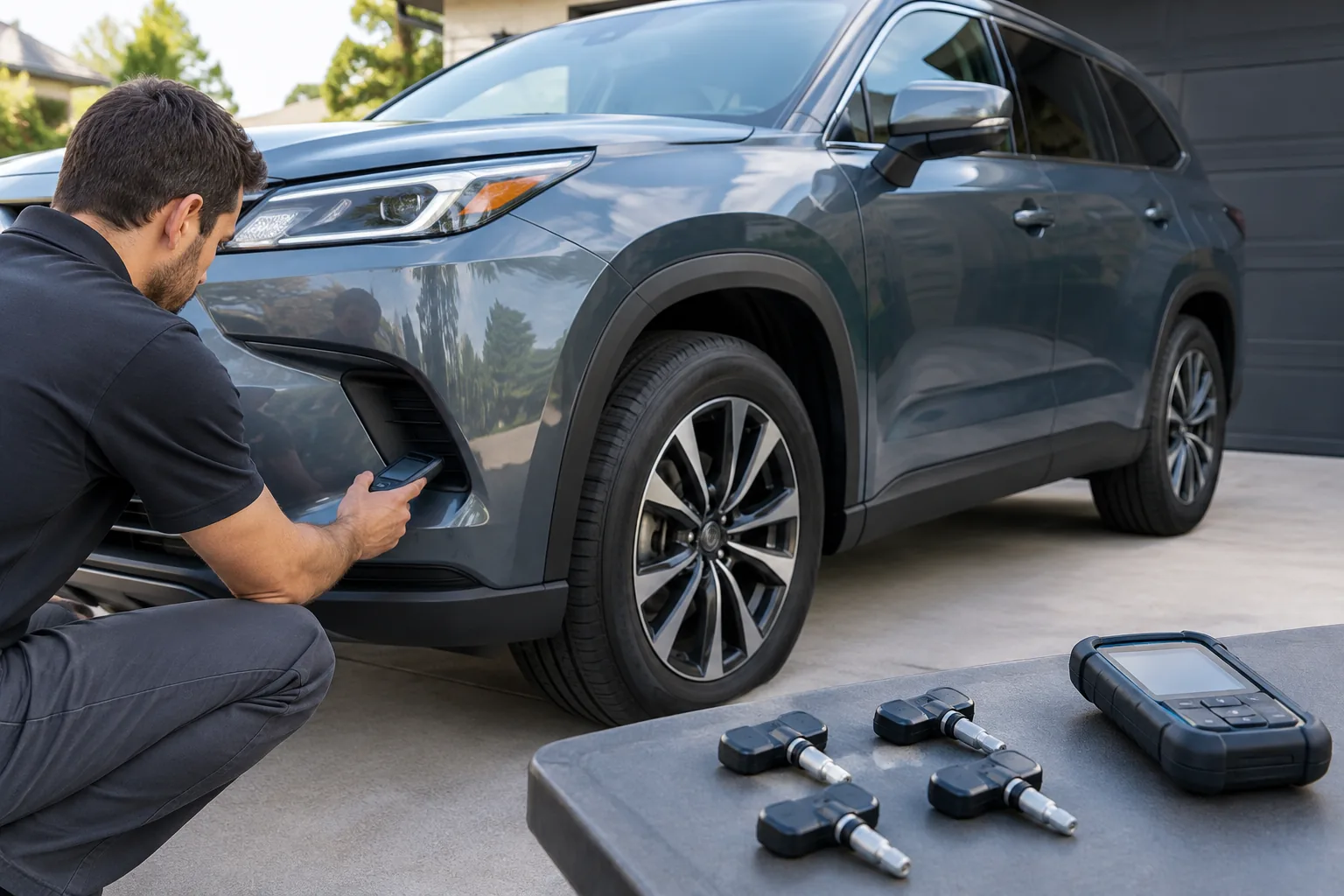
- Sensor ID relearn: Teaching the vehicle which sensor ID sits at which wheel. It may be needed after swapping sensors, and on some Fords after rotation. The method varies by year, and some vehicles need a tool while others learn on their own. Your manual’s tire rotation or TPMS section will say which applies to you.
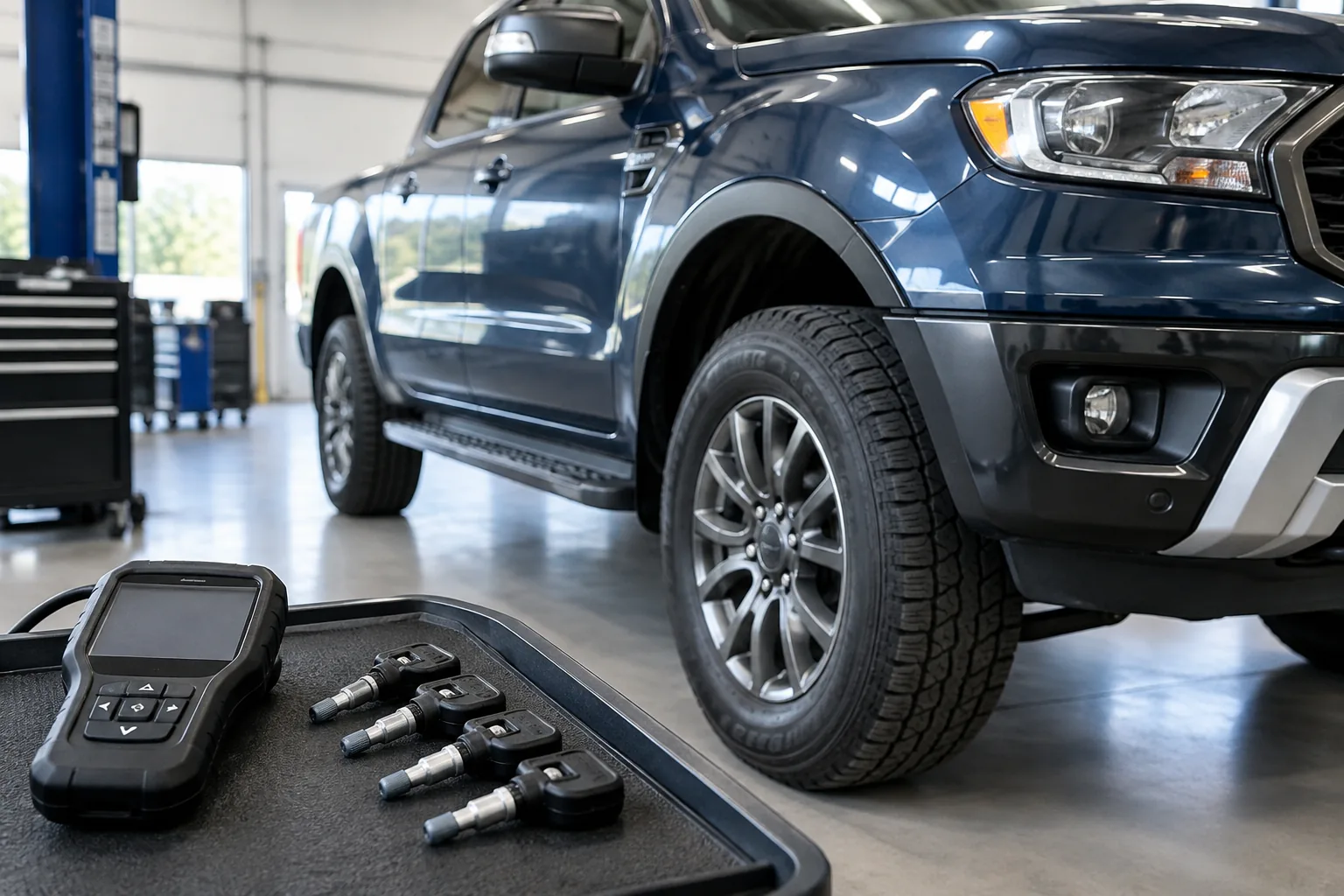
- Sensor programming: Writing an ID to a new programmable sensor. This needs compatible equipment, and it’s usually tire shop territory.
- Fault diagnosis: Reading TPMS codes from the vehicle. A basic OBD2 code reader generally can’t program sensors, and may not read TPMS module data at all.
As an owner, you can handle the pressure check, leak inspection, and valve stem or core checks. Anything involving sensor replacement, ID writing, or relearn with a tool is better left to a shop unless you already own the right equipment.
If you do want your own tool, a search like Ford TPMS relearn tools on Amazon will show options. Treat results as a starting point only. Before buying, confirm the tool’s stated coverage for your exact model year and your sensors’ frequency and type, because a listing showing up in search isn’t proof it works on your Expedition.
The sensors run on sealed batteries that eventually wear out. Aftermarket wheels fitted with the wrong sensors, a damaged sensor from a tire change, or a failing receiver can all trigger a malfunction light. Have a shop read the TPMS data to see which sensor isn’t reporting before replacing anything.
FAQ
Why is my Expedition’s tire pressure light on when the tires look fine?
Tires can be several pounds low without looking flat, and a temperature drop overnight can push a borderline tire under the threshold. Check each one cold with a gauge. If all four match the placard and the light is flashing, then stays on, suspect a sensor or system fault.
Do I need to relearn the sensors after a tire rotation?
It depends on your model year and how the system is set up. Some systems adapt on their own, and others require a specific procedure or tool. Check the tire rotation or TPMS section of your owner’s manual, or ask the shop doing the rotation what your vehicle needs.
Leave a Reply