
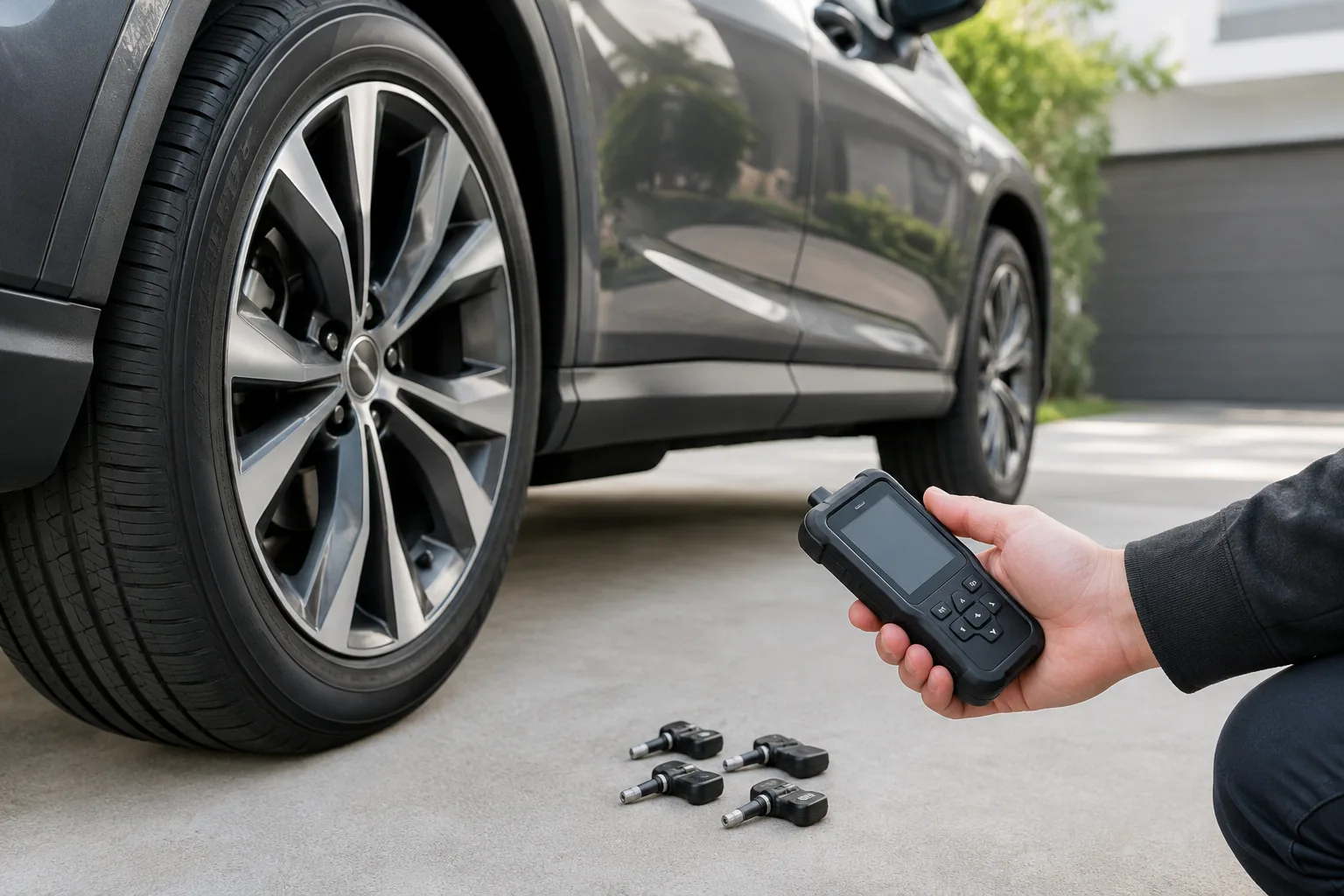
The short answer: check all four tires cold against the pressure on the driver’s door jamb placard, fix any leak, and only then run the pressure initialization your owner’s manual describes for your RX. Initialization tells the system what “normal” is. It doesn’t fix a slow leak or a dead sensor, so resetting before the pressures are right just hides the problem.
The exact steps and menu names vary by model year and generation, so this guide covers the logic and tells you what to confirm in the TPMS section of your manual.
Start With Cold Pressures, Not the Reset
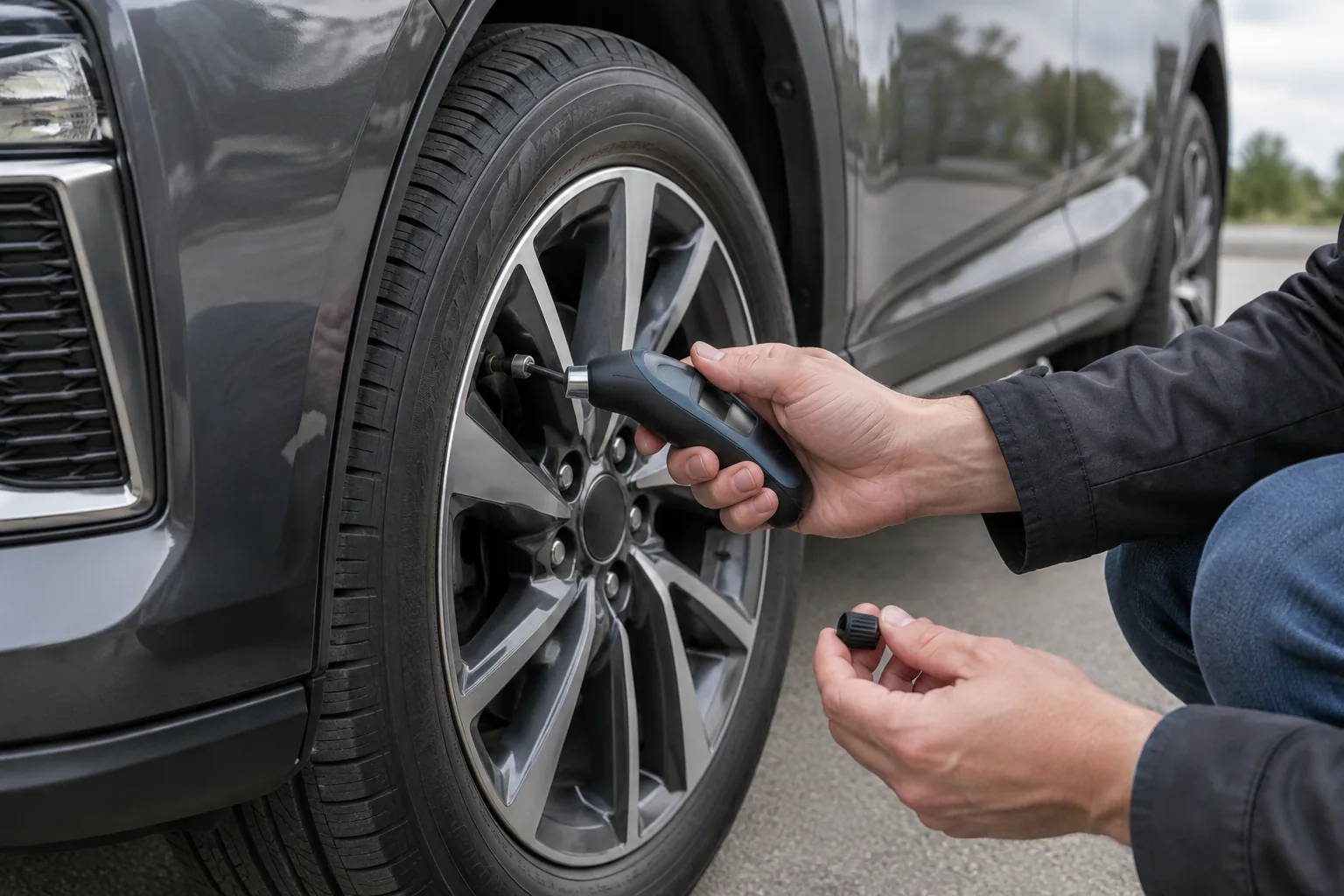
Check the tires before the car has been driven, or after it has sat for a few hours. Use the numbers on the placard in the driver’s door jamb, not the maximum printed on the tire sidewall. Your RX’s placard values can differ by trim and tire size.
While you’re down there, look for the usual causes of a slow leak:
- Nails or screws in the tread
- A bead leak at the wheel rim, common on corroded alloy wheels
- A valve stem that’s cracked, loose, or missing its cap
- One tire that’s lower than the others every time you check it
A sudden cold snap can also drop pressure enough to trigger the light. Topping off to the placard value usually addresses that, though in some cases the light stays on until the system is initialized or the car is driven. Your manual says which applies to your RX.
A portable inflator with a built-in gauge makes this easy at home, and it’s handy for adjusting pressures when the seasons change. A portable tire inflator with a digital pressure gauge is only for setting cold pressures. It doesn’t reset, relearn, or program anything in the TPMS.

Portable Tire Inflator with Digital Pressure Gauge
Optional and useful for setting cold pressures to the door-jamb placard value, nothing more.
For more on what’s worth keeping in your garage, see our list of must-have tools for every DIY car owner.
Know Which TPMS Task You’re Dealing With
“Resetting the tire pressure light” gets used for several different jobs. The Lexus RX sold in the US uses a direct system, with a pressure sensor inside each wheel. Confirm that for your exact year in the manual, because direct and indirect systems are handled differently.
- Pressure initialization: You set the correct cold pressures, then tell the system to treat them as the baseline. Many Toyota-family vehicles require this after inflating, rotating tires, or changing tire size. How you start it depends on the model year, and some vehicles use a button while others use a vehicle settings menu. Don’t hunt for a button without checking, because not every RX has one.
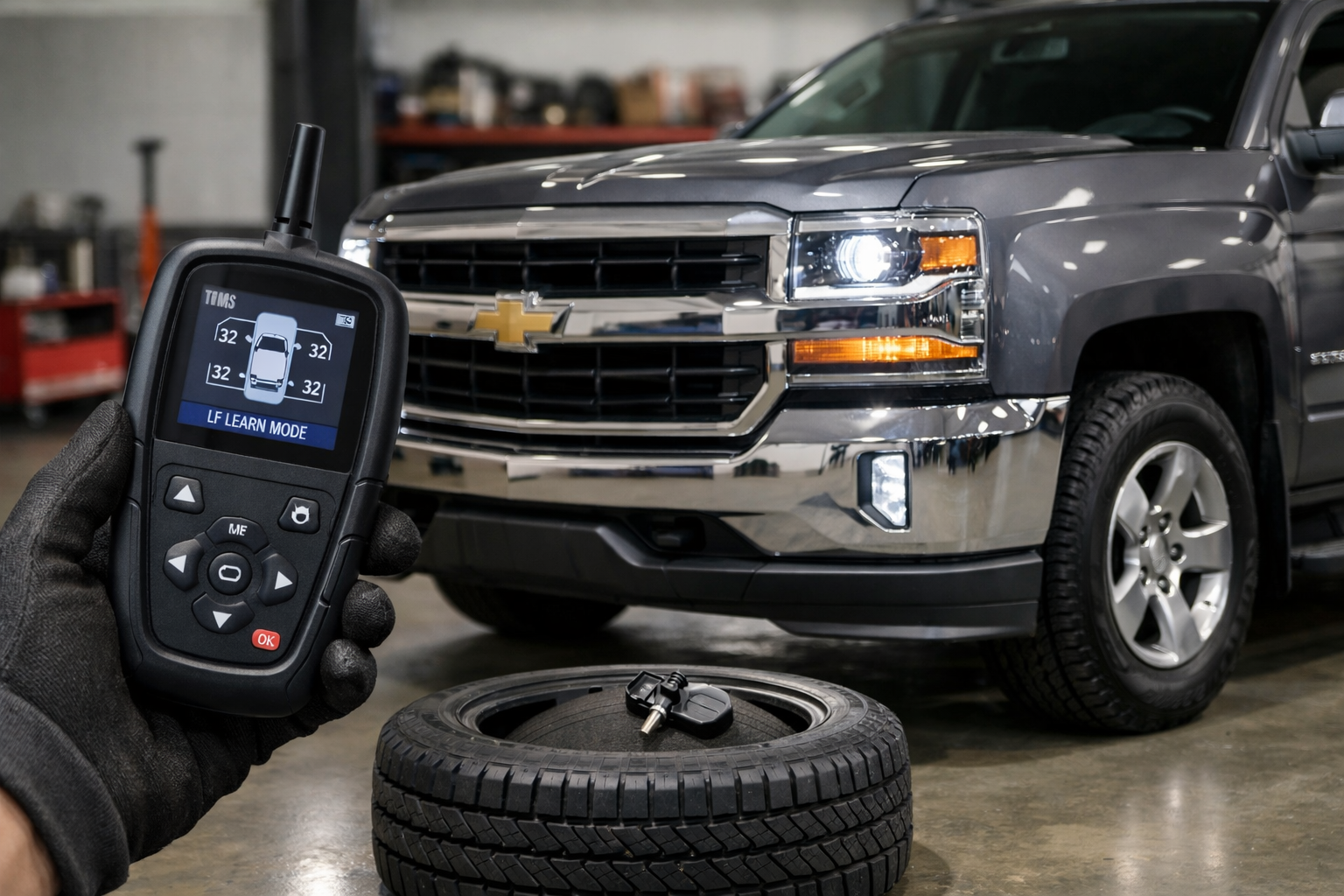
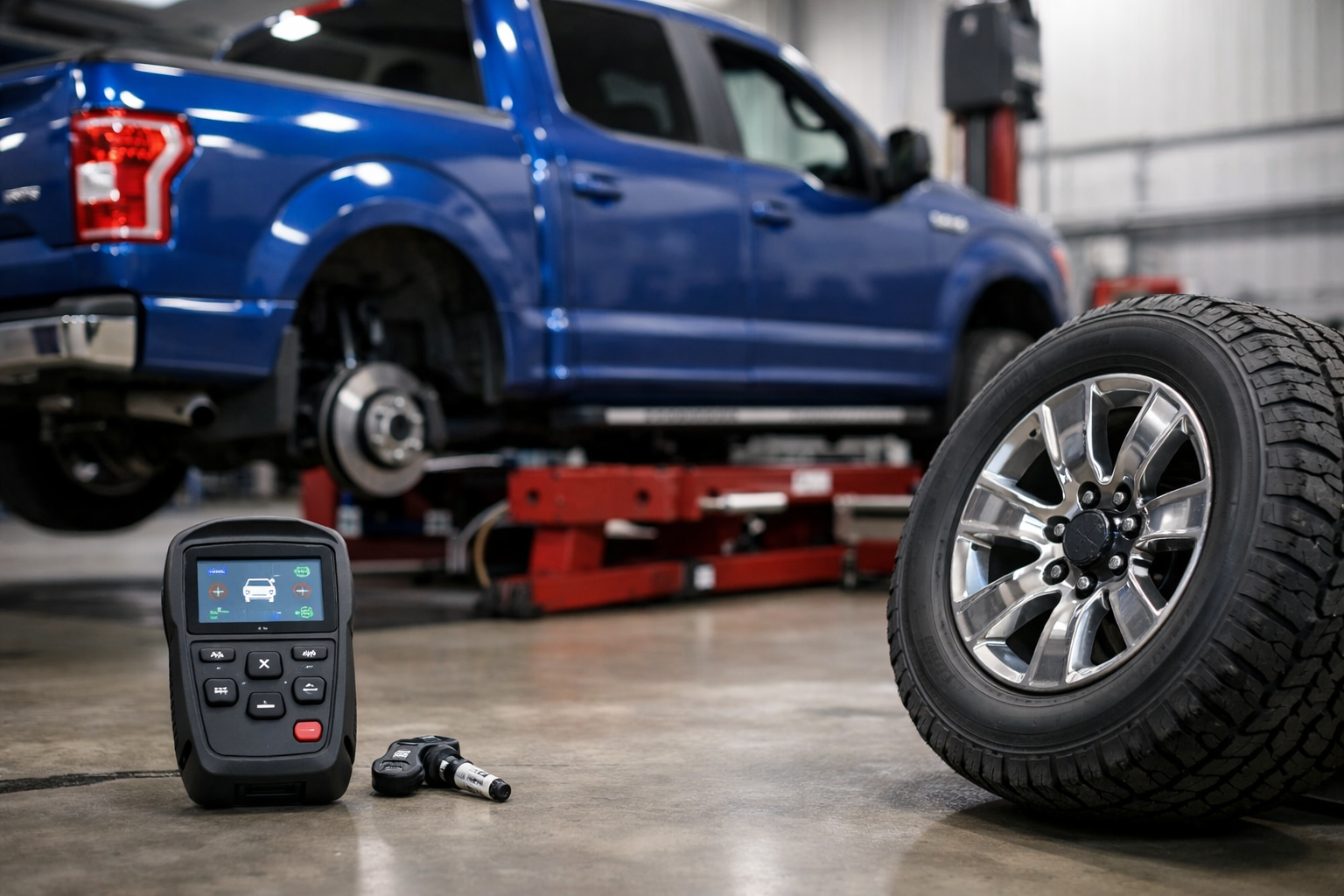
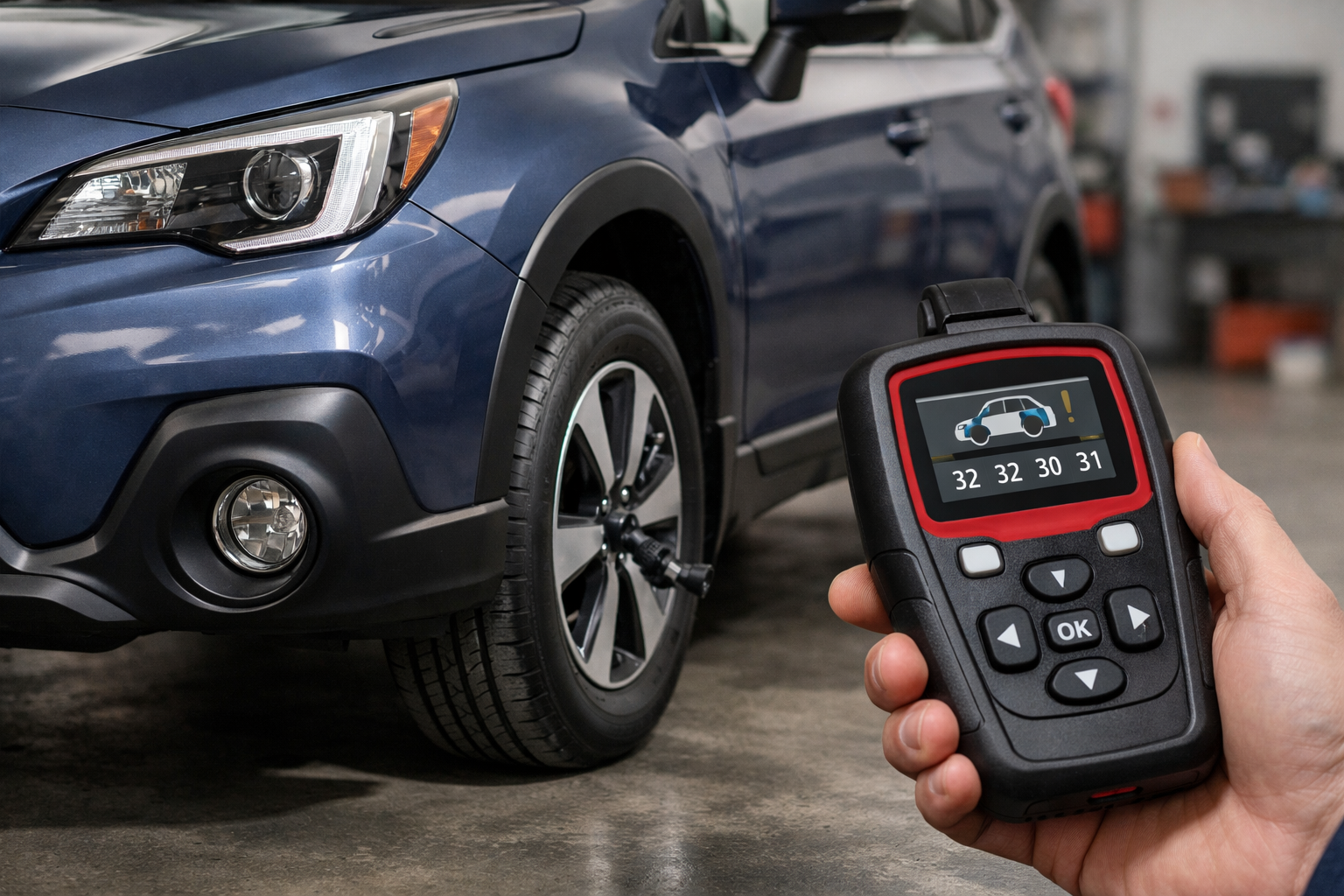
- Sensor activation: Some sensors need to be woken up with a TPMS tool before they’ll transmit. That’s a shop task.
- Sensor ID relearn or registration: The vehicle has to learn the ID of each sensor. This is needed when sensors are replaced, and your manual says whether it’s needed after a tire rotation for your generation.
- Sensor programming: Some replacement sensors must be programmed before they work. This also needs compatible equipment.
- Fault diagnosis: A malfunction means finding the failed sensor, receiver, or wiring problem, not initializing.
A basic OBD2 code reader can’t program or register TPMS sensors. Some scan tools can read TPMS data, but registering IDs takes a tool built for it, and a tire shop that works on Toyota and Lexus vehicles will usually have one.
Low Pressure Warning vs. Malfunction Indication
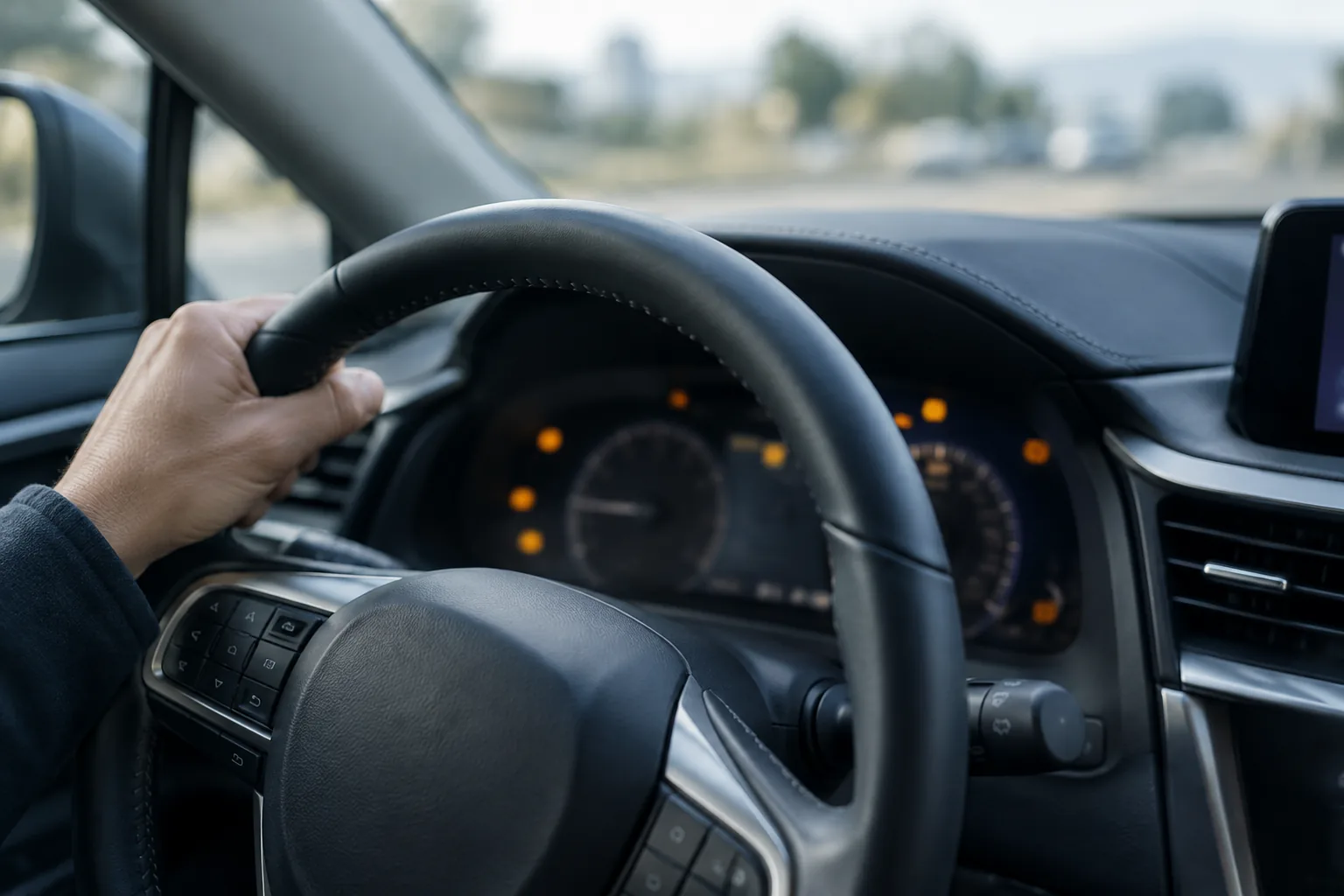
These look similar on the dash but mean different things. A low-pressure warning means one or more tires are below the threshold. A malfunction indication means the system itself has a problem, such as a dead sensor battery, a missing sensor, or a communication fault.
On many Toyota-family vehicles, the malfunction pattern is a light that blinks for a period when the car starts and then stays on, while a low-pressure warning stays solid. Don’t rely on that pattern alone. Look up the exact behavior in the tire pressure warning section of your RX owner’s manual, since it can vary by year.
Here’s how to work through it:
- Set all four tires to the placard pressure when cold.
- Check the light behavior against your manual.
- If the manual calls for initialization, run it exactly as written for your model year.
- If the light still comes on, or it’s a malfunction pattern, book a shop visit for diagnosis.
Sensor batteries aren’t replaceable on most sensors, so an old sensor that’s failed usually means a new sensor, followed by registration or programming. Mention any recent tire or wheel work. Swapping in winter wheels without sensors is a common reason the light comes on, and each wheel set needs working, registered sensors.
If the light only started after you picked up a different tire size or wheel set, give the shop that history too. And if your RX has other warning lights on, don’t assume they’re related. For example, our guide on the Toyota 2GR-FKS 3.5L V6 covers the engine used in many RX 350 models if a check engine light is part of the picture.
FAQ
Why is my Lexus RX tire pressure light still on after I filled the tires?
Common reasons include a pressure that isn’t quite at the placard value when cold, an initialization your model requires but hasn’t been done, a slow leak, or a sensor fault. If the light blinks before staying solid, check whether your manual describes that as a malfunction, which needs diagnosis rather than another reset attempt.
Do I need a tire shop to register new TPMS sensors on my RX?
In most cases, yes. Replacing a sensor typically involves activating, programming, and registering its ID with compatible equipment. Setting pressures and running the owner-level initialization, where your manual provides it, are the parts you can usually do yourself.
Leave a Reply