
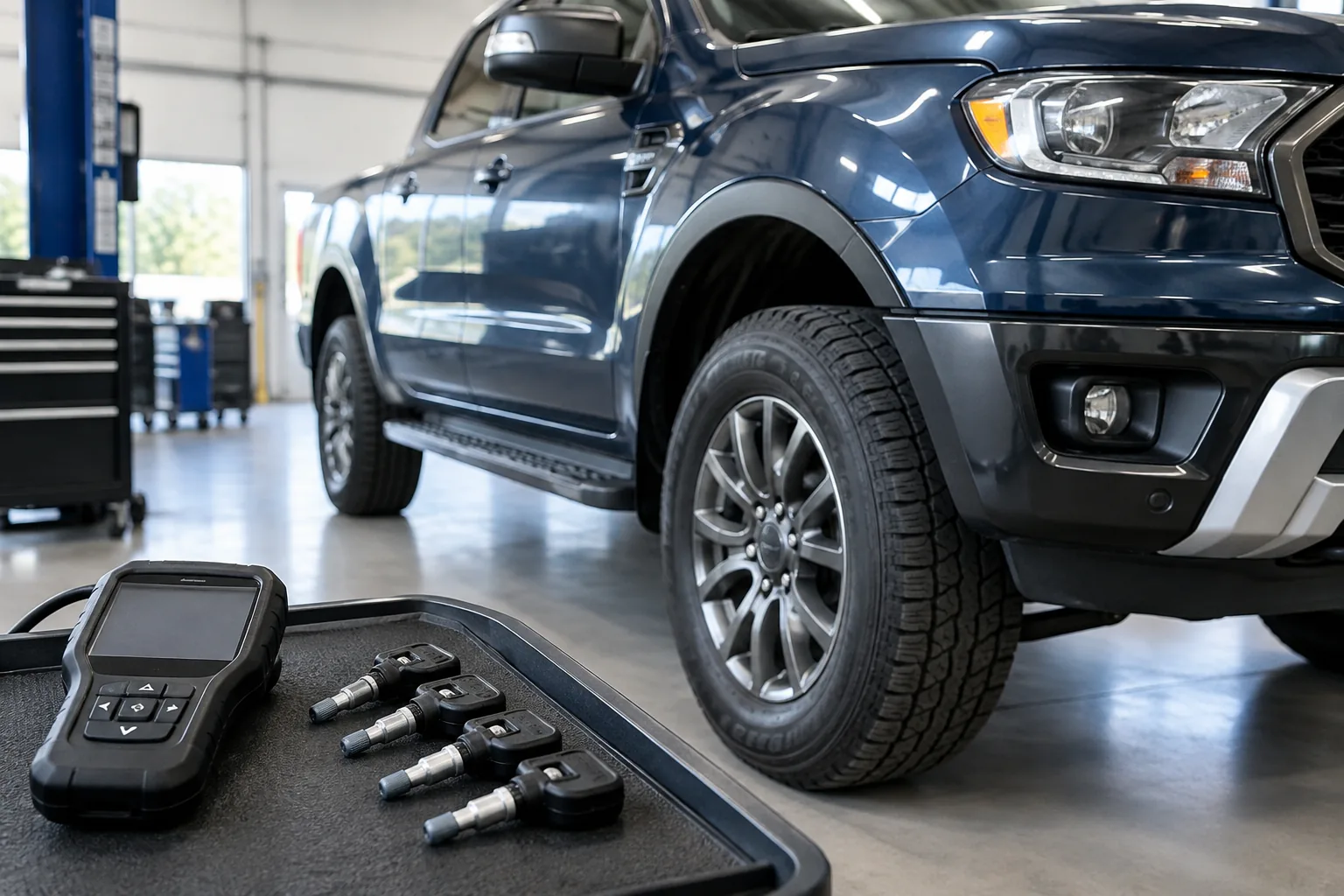
When the TPMS light comes on in a Ford Ranger, the cause is most often a tire that’s genuinely low on air, especially after a cold snap. Less often, it’s a sensor that has stopped reporting, or a sensor the truck no longer recognizes after tire work. Which one you have determines the fix, so don’t start by hunting for a reset.
Which procedure applies also depends on your model year. The Ranger has been sold in the US in several forms over the decades, and the manual for your exact truck is the final word. This article covers what to check, how the terminology breaks down, and what’s an owner job versus a tire shop job.
Start With Cold Pressures, Not the Light
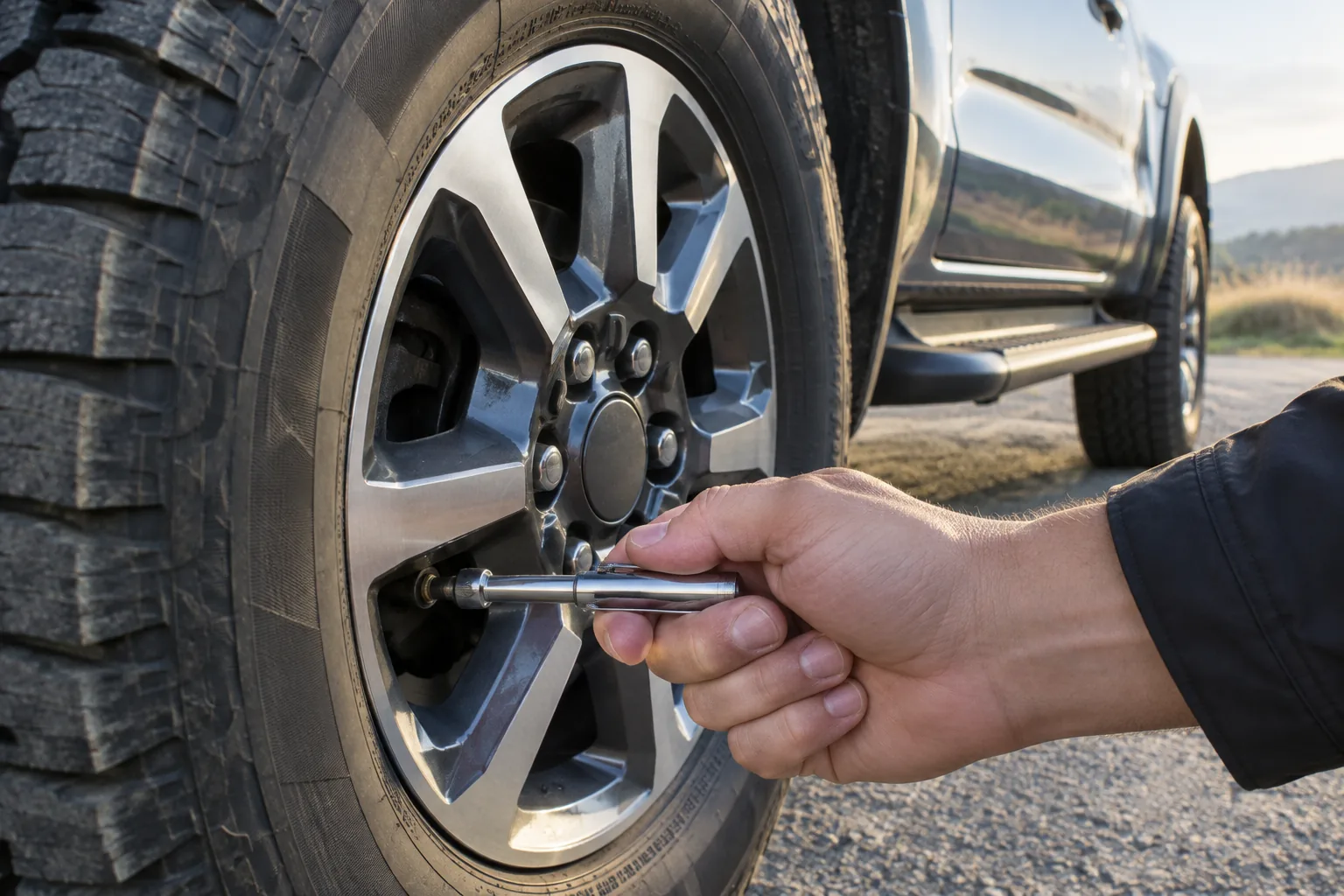
Before you touch anything else, check all four tires with a real gauge when the truck has sat for several hours. Cold pressure is the reading the system is built around, and a warm tire after a highway drive will read higher than it will in the morning.
Compare your readings to the tire placard, which is on the driver’s door jamb area on most Fords. Don’t use the maximum pressure printed on the tire sidewall, since that’s a tire limit and not your truck’s recommendation. Some placards list different numbers for front and rear, so read it closely.
A digital gauge makes this quicker and easier to read in poor light. A digital tire pressure gauge is a cheap tool worth keeping in the glove box, and it’s the kind of basic item we cover in our list of must-have tools for every DIY car owner.

Digital Tire Pressure Gauge
A simple, accurate gauge lets you verify every tire against the placard instead of trusting the dash light alone.
Look for the leak
If one tire is low, find out why before you just air it up. Temperature drops lower pressure over time, but a tire that keeps losing air has a cause.
- Inspect the tread and sidewall for nails, screws, or cuts.
- Brush soapy water on the valve stem, valve core, and where the tire meets the wheel. Bubbles show you the leak.
- Make sure the valve caps are on. They keep dirt out of the valve.
- Recheck pressure after a day. A tire that’s dropped again has a slow leak that needs a shop.
Inflate to the placard pressure when the tires are cold. If you have to add air at a gas station after driving, add slightly and then recheck cold later. A portable 12V tire inflator makes this a driveway job instead of a trip.
Low Pressure vs. Malfunction: Read the Light Correctly
The TPMS indicator can mean two different things, and they lead to completely different fixes. A steadily lit tire-pressure icon generally means one or more tires are low. A light that flashes for a period when the truck starts and then stays on generally points to a system malfunction, such as a sensor problem or a communication fault.
That’s the common pattern across US vehicles, but how your Ranger’s cluster or message display words and shows it can vary by model year and equipment. Check the tire pressure monitoring section of your owner’s manual for the exact behavior and any message text. Don’t guess from a forum thread about a different truck.
- Solid light: Treat it as a low-pressure warning first. Do the cold-pressure check above.
- Flashing, then solid: Treat it as a system fault. Correct pressures won’t clear a dead sensor, so move to the troubleshooting section below.
Direct vs. Indirect: Know Which System You Have
Direct systems use a pressure sensor inside each wheel that transmits to the truck. Indirect systems estimate pressure from wheel-speed data through the ABS, and they typically have a reset or initialization step after you adjust pressures. The procedures aren’t interchangeable.
The Ranger sold in recent years uses sensors in the wheels, but confirm that in the TPMS section of your owner’s manual for your model year. On an older Ranger built before TPMS became standard equipment, you may have no system at all, so a similar dash light would be something else entirely. Don’t assume a reset button or menu item exists. If the manual doesn’t describe one, there isn’t one for you to press.
Five terms that get mixed up
Most bad TPMS advice comes from blending these together. They’re separate jobs.
- Pressure initialization: Telling the system the current pressures are the new normal. This applies mainly to indirect systems, and only if your manual describes it.
- Sensor activation: Waking a sensor so it transmits, usually done with a TPMS tool, and on some vehicles by another method the manual describes.
- Sensor-ID relearn: Teaching the truck which sensor ID belongs to which wheel position, or registering new IDs after a sensor swap.
- Sensor programming: Writing an ID and protocol into a programmable replacement sensor so it works with your vehicle. This takes compatible equipment.
- Fault diagnosis: Finding out why a sensor isn’t reporting, which can mean reading sensor data with a TPMS-capable tool.
A basic OBD2 code reader isn’t a TPMS programming tool. It’s generally built to read engine and emissions codes and won’t program, activate, or relearn sensors. Don’t buy one expecting it to clear a TPMS fault.
What You Can Do Yourself vs. What Needs a Shop
Owner-level work is checking and adjusting pressures, looking for leaks, and following whatever procedure your manual explicitly lays out. After you fix a low tire, the light may not go out instantly. Your manual should say how and when the system updates, and I won’t invent a drive time for you.
Tire and wheel work is where things get more involved, and the right steps depend on the system.
Rotation
With sensors in the wheels, a rotation moves each sensor to a new corner. Whether the truck figures out the new positions on its own or needs a relearn depends on the model year and system, and your manual should spell it out. If it calls for a relearn after rotation, that’s the step to ask about at the shop if you don’t have the equipment.
New tires and wheel changes
Sensors are usually reused when you replace tires, which means the tire shop has to handle the wheel carefully. A shop that works on TPMS-equipped vehicles regularly will service the valve stem hardware and check that the sensors still read. Tell them up front that the truck has sensors, so a sensor isn’t damaged during mounting.
If you run a second set of wheels, such as winter wheels, each set needs working sensors the truck recognizes. How the Ranger handles two sets of IDs is a manual and equipment question, so confirm it before you buy.
The spare
Whether your spare has a sensor depends on the truck, so read the manual. If you swap on a spare that isn’t monitored, the system may react in a way the manual describes. If it is monitored, a low spare can trip the light too.
Troubleshooting a Sensor Problem
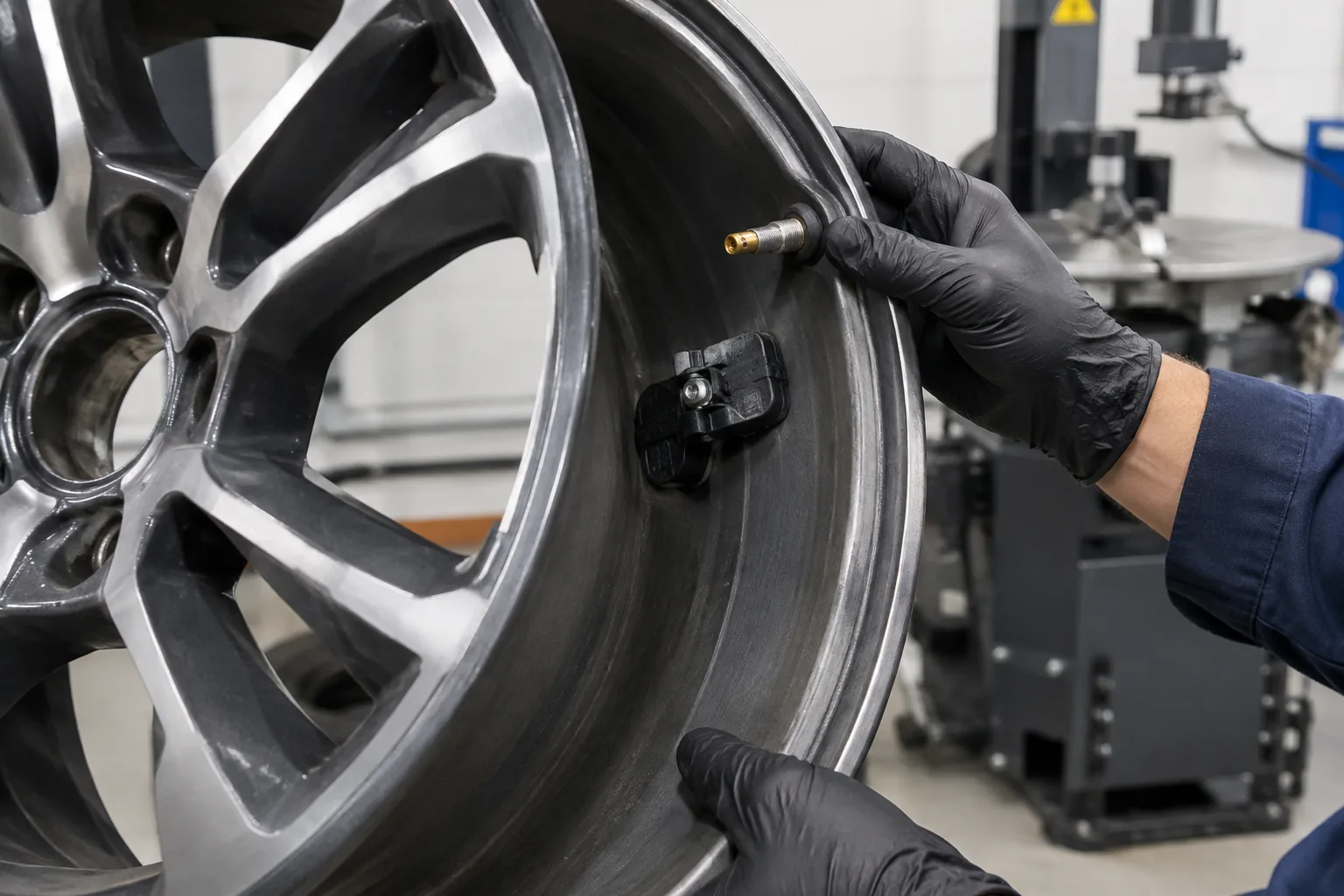
If pressures are right and the light is still flashing or staying lit, a sensor or the system itself is the likely cause. These are the usual suspects, and none is guaranteed in your case.
- Worn-out sensor battery: Wheel sensors are sealed units that run on a battery that eventually dies. Sensors in older trucks fail for this reason, and the typical fix is replacing the sensor.
- Sensor damage: Impact, corrosion at the valve stem, or damage during a tire change can knock one out.
- Wrong or unprogrammed replacement sensor: A sensor that isn’t compatible, or hasn’t been programmed and registered, won’t be recognized.
- Missing relearn after service: New IDs or moved sensors that the truck hasn’t learned can cause a fault.
- Light started right after tire work: Go back to the shop first. This is the strongest clue you’ll get.
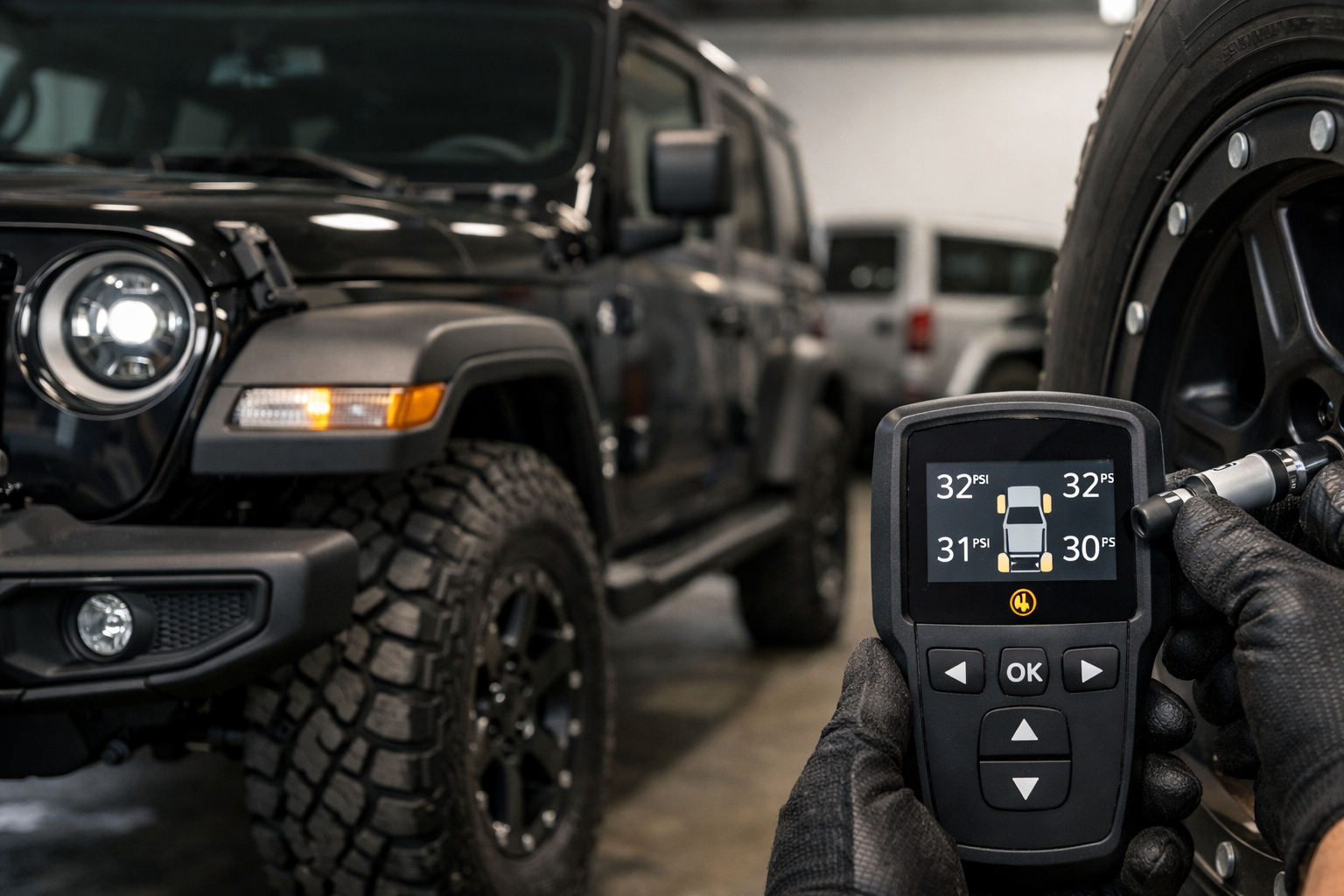
One pattern helps: if the light appeared immediately after a tire service, suspect a procedure or equipment issue. If it appeared on its own with an older truck, suspect a dying sensor. A TPMS-capable tool can show which sensor isn’t responding, which saves guessing, and a shop with one can usually tell you in minutes.
About buying a TPMS tool
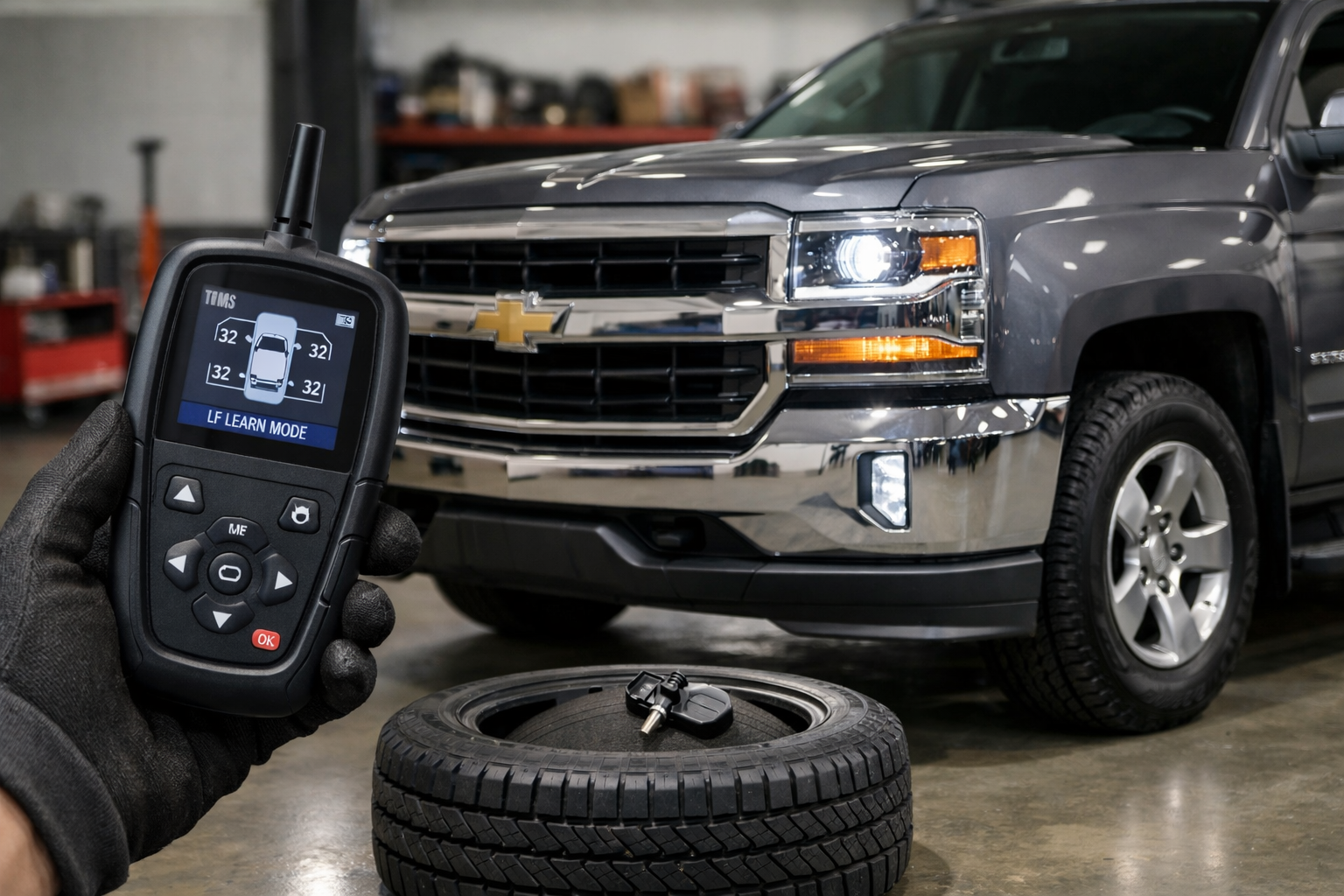
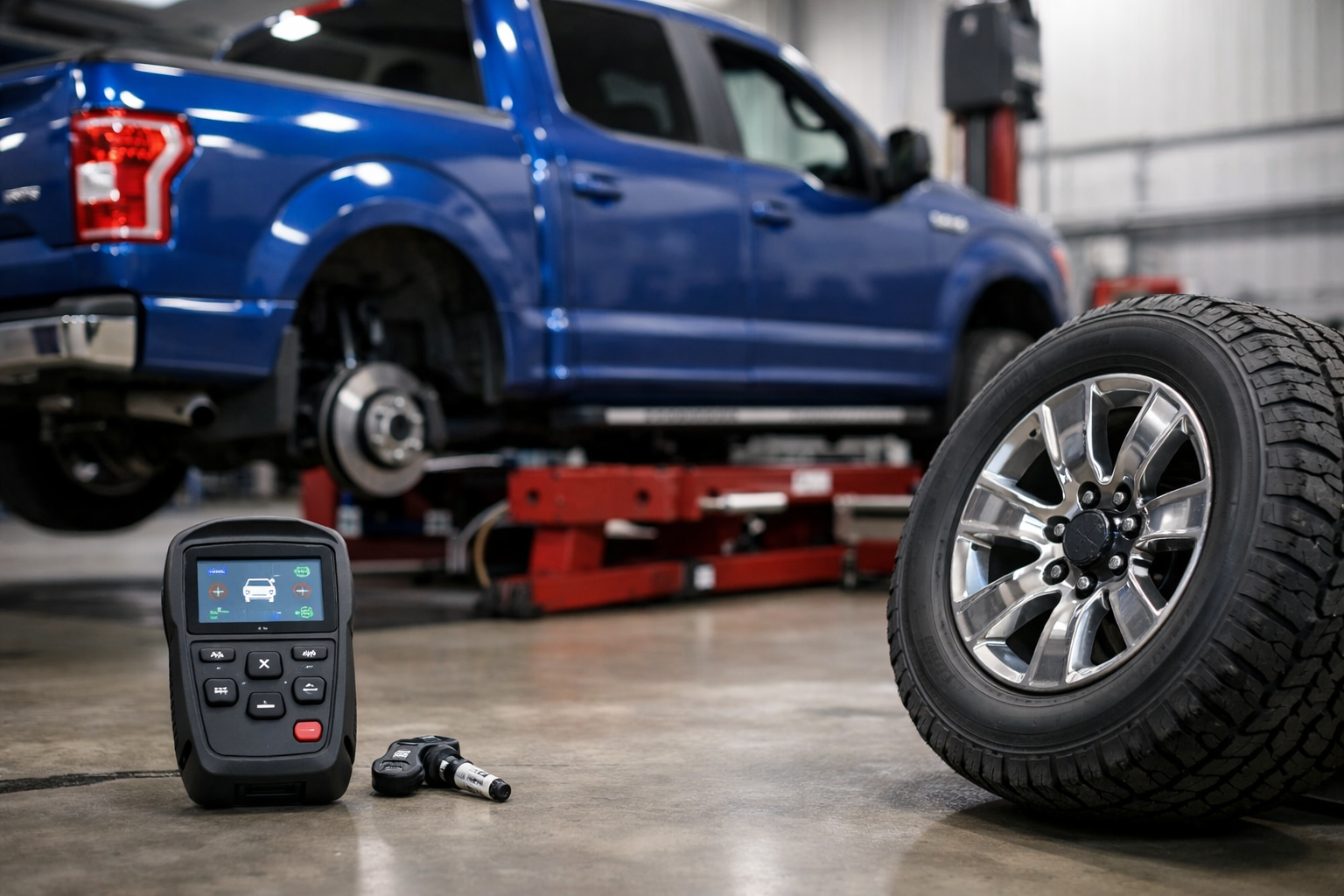
If you plan to handle sensor work yourself, you’d want a tool that can activate sensors and read IDs for your truck. Browse Ford TPMS relearn and reset tools on Amazon to see what’s out there, but treat a search result as a starting point only. A listing doesn’t prove coverage for your Ranger’s model year, its sensor frequency, or support for programmable sensors. Check the tool maker’s coverage information for your exact truck before you buy.
For most owners, one shop visit is cheaper than a tool you use once. A tool starts to make sense if you swap wheel sets seasonally or work on several vehicles.
FAQWhy is my Ranger’s TPMS light on when the tires look fine?
Tires can be low enough to trigger the warning without looking flat, particularly in cold weather. Check each tire cold with a gauge against the door placard. If the pressures are correct and the light is flashing before staying on, the problem is more likely a sensor or system fault than low air.
Is there a TPMS reset button on a Ford Ranger?
Don’t assume there is one. Whether your truck has any reset or relearn step, and what it involves, depends on the model year and system. Open the tire pressure monitoring section of your owner’s manual and follow only what it describes for your truck.
Can I clear the light with a cheap OBD2 scanner?
A basic OBD2 reader generally can’t program, activate, or relearn TPMS sensors, so it isn’t the right fix for a sensor fault. A scan tool with TPMS functions is a different category of tool. Even then, confirm it supports your truck before relying on it.
Do I need to relearn the sensors after rotating tires?
It depends on your model year and how the system identifies wheel positions. Some systems need a relearn after rotation and others handle it on their own. Your owner’s manual will state which applies, and a tire shop with TPMS equipment can do the relearn if one is required.
The Short Version
Check cold pressures against the placard, find any leak, and note whether the light is solid or flashing. Fix low air first, then move to sensors only if the pattern points there. For anything involving sensor IDs, programming, or a replacement sensor, let the manual and a shop with compatible equipment guide you rather than a generic procedure.
Leave a Reply