
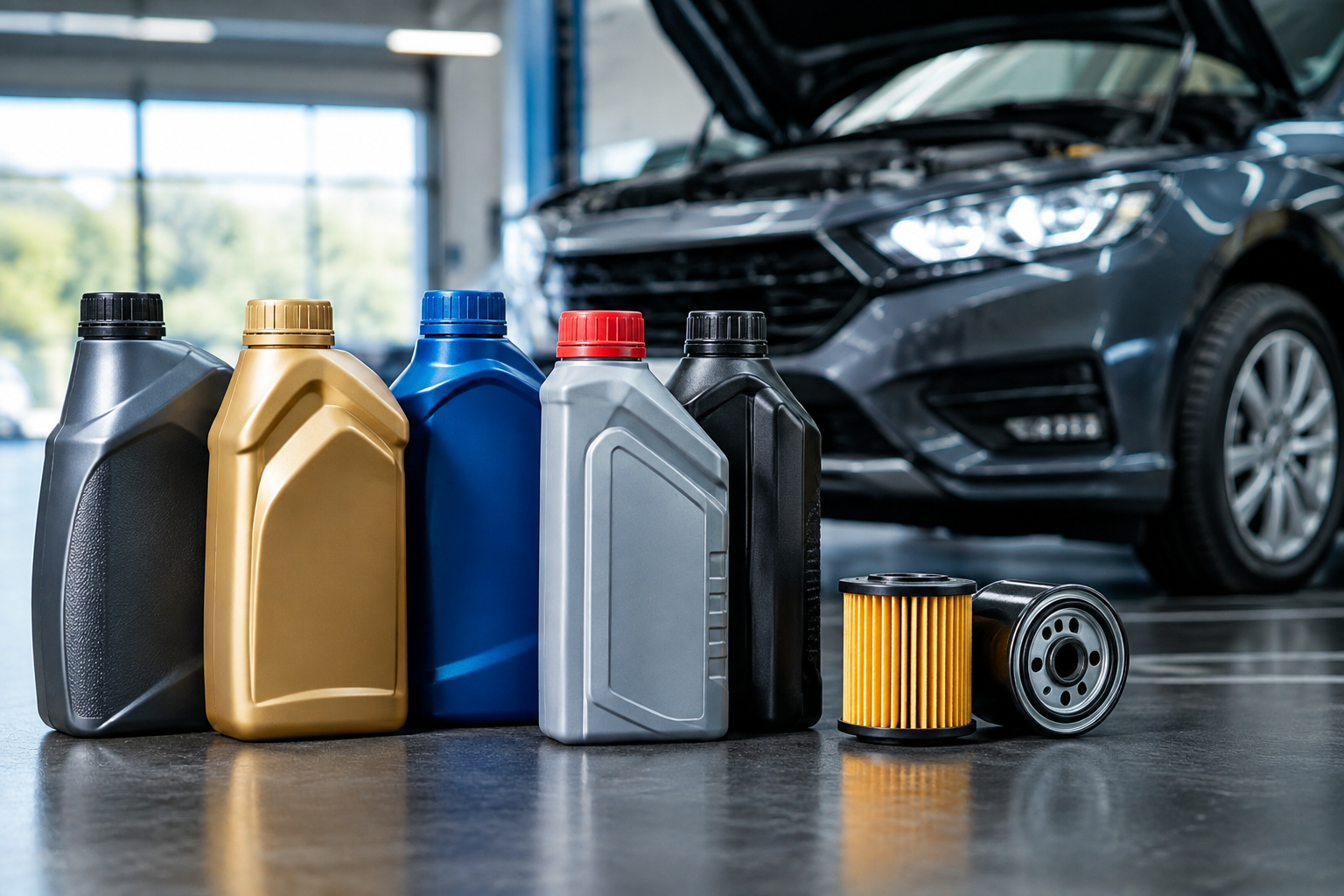
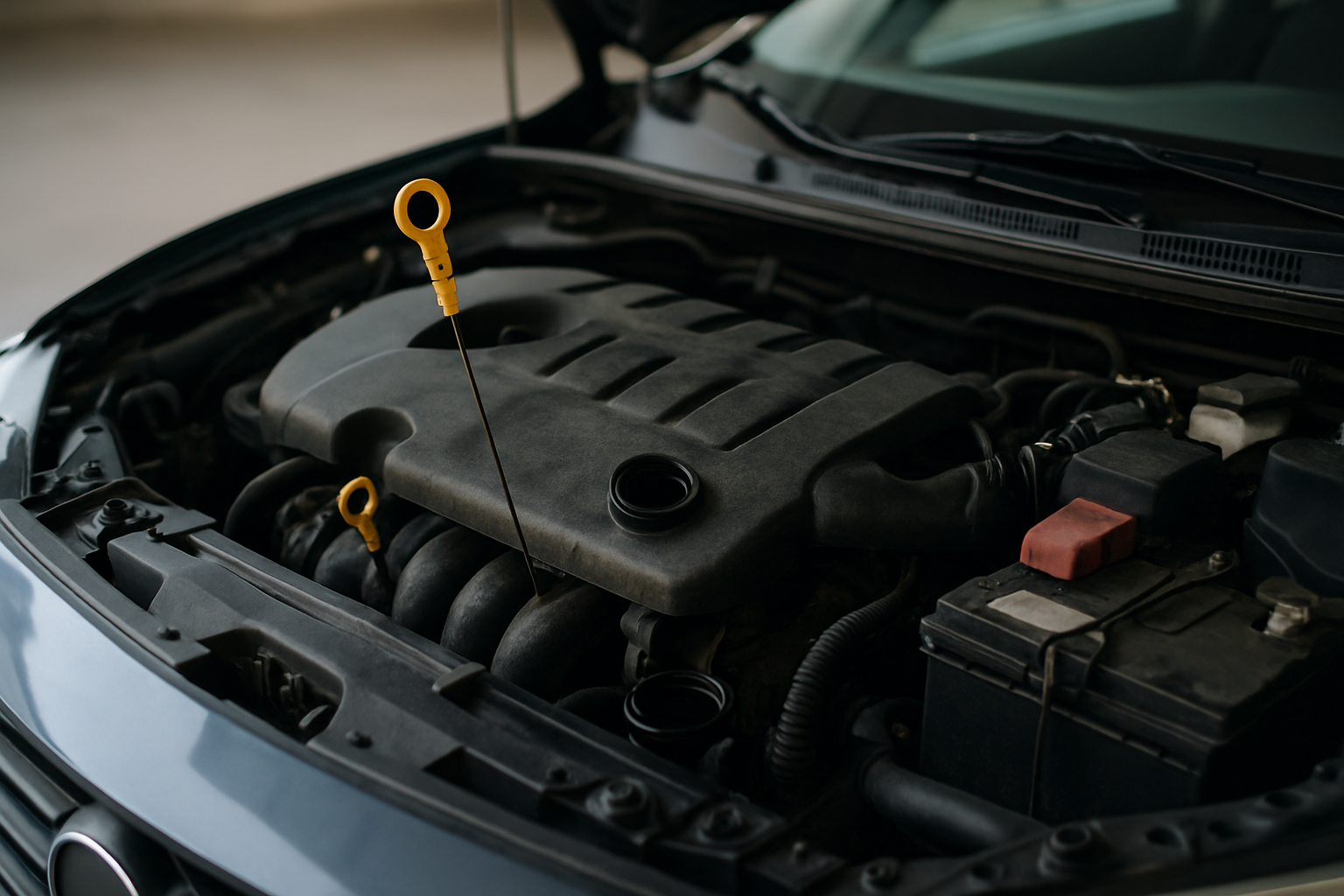
Pop the hood on ten different cars in a parking lot and you’ll find ten different oil requirements hiding in the owner’s manual. That bottle of 5W-30 you grabbed off the shelf at the auto parts store might be perfectly fine for your neighbor’s Camry and completely wrong for your Volkswagen or your Ram 1500. Oil specs aren’t marketing fluff. They’re tied to engine tolerances, turbo cooling, timing chain wear, and in some cases, whether your warranty claim gets approved or denied.
This guide breaks down what your specific car brand actually needs, the viscosity grade you’ll see most often, and a real product you can buy today that meets the spec. We’ll also flag the brands where getting it wrong isn’t just a minor mistake, it’s an expensive one.
Why “Any 5W-30 Will Do” Is Bad Advice
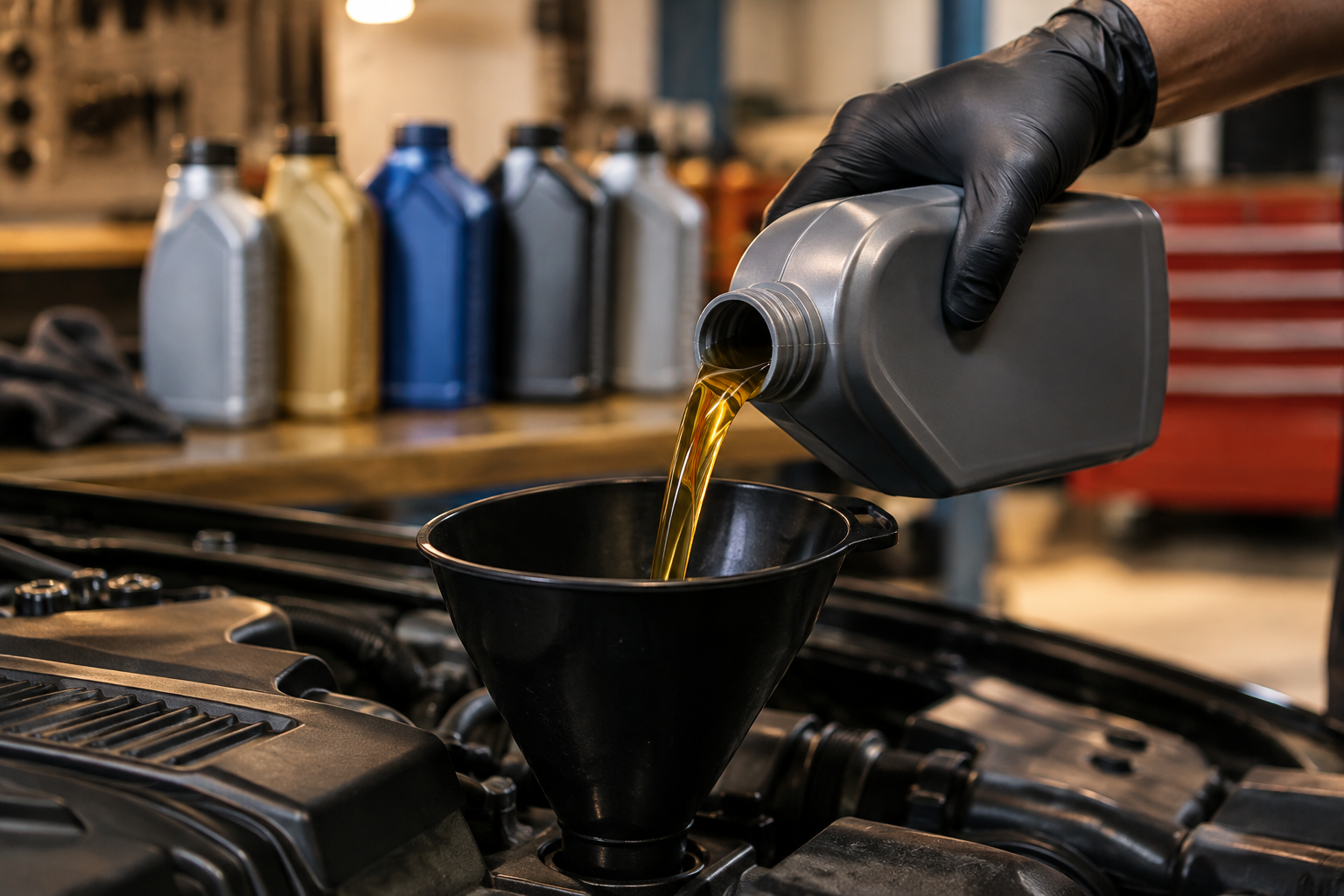
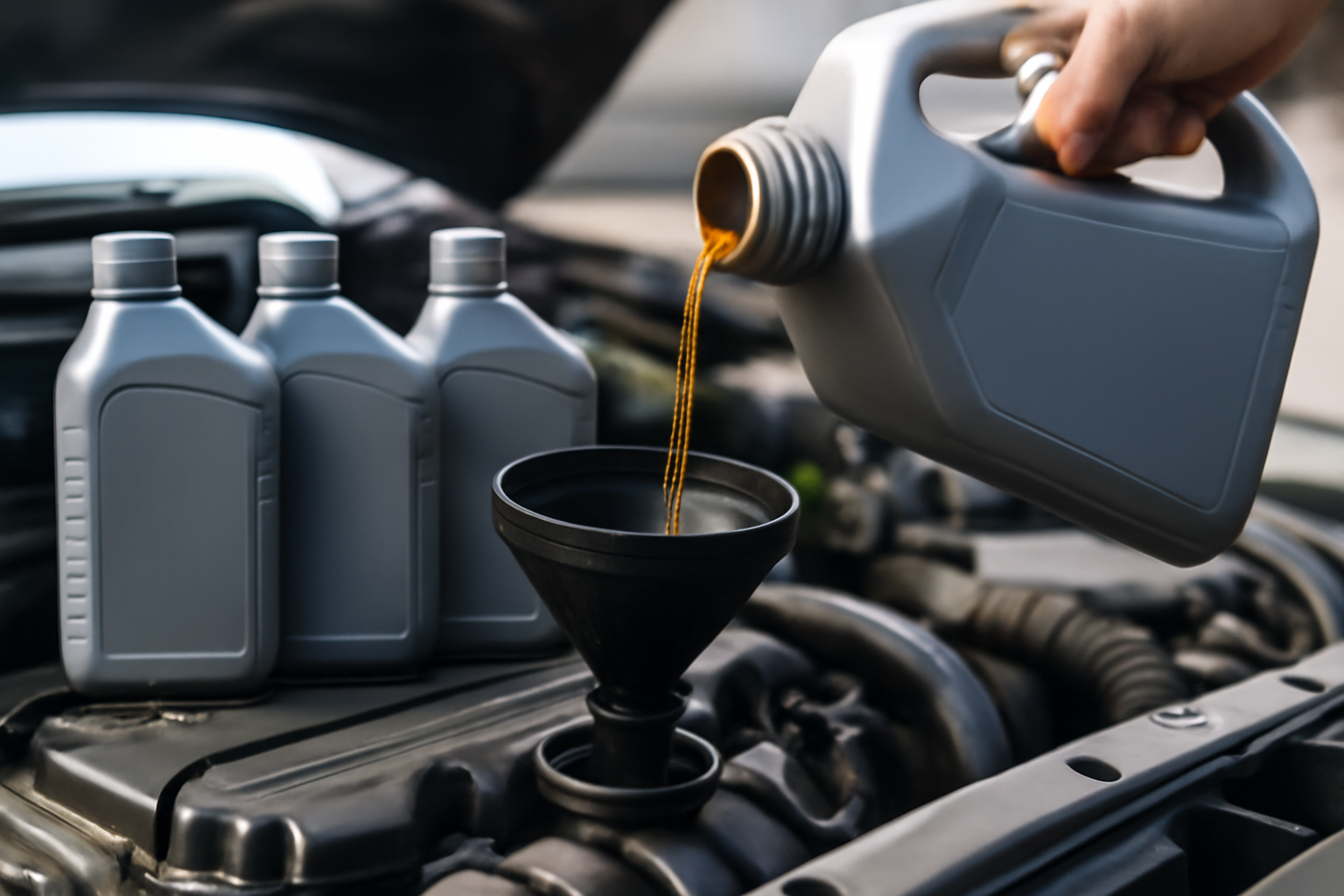
Viscosity grade is only half the equation. The other half is the additive package and the certification behind it, things like API SN Plus, dexos1 Gen 3, or VW 508.00. These specs control how the oil resists breakdown under high heat, how well it protects against low speed pre-ignition (LSPI) in turbocharged engines, and how it interacts with timing chains, variable valve timing solenoids, and turbo bearings.
A generic bottle of 5W-30 might pass API SN certification but completely miss the mark on GM’s dexos1 Gen 3 requirement or Honda’s HTO-06 spec. Modern engines, especially the turbocharged four cylinders showing up across the lineup on everything from crossovers to full-size trucks, are far less forgiving of the wrong oil than the old naturally aspirated V6s were. If you’re shopping for a family SUV and comparing fuel economy across brands, it helps to know that a lot of these smaller turbo engines are exactly the ones that care most about correct oil spec, something worth keeping in mind if you’re browsing options in our breakdown of every SUV ranked by MPG.
Ford
Ford’s current spec for most gas engines is WSS-M2C946-A1 (5W-20) or WSS-M2C947-A1 (5W-30), depending on the engine family. EcoBoost engines, including the 2.7L and 3.5L in the F-150, typically call for 5W-30 meeting the -947-A1 spec. Check your cap and owner’s manual before assuming.
Motorcraft Full Synthetic 5W-30 is formulated to Ford’s exact spec and is the safest bet for warranty purposes. If you want a widely available alternative, Castrol Edge 5W-30 also meets Ford’s requirements and holds up well in EcoBoost trucks that tow regularly.
Chevy and GM
GM vehicles built after 2011 require dexos1 Gen 3 approved oil, and this one actually matters more than most people realize. Dexos1 Gen 3 has stricter LSPI protection and volatility limits than a standard API SN oil, which matters a lot in turbocharged engines like the 1.5L in the Equinox or the 2.7L in the Silverado.

Mobil 1 dexos1 Gen 3 0W-20
Mobil 1’s dexos1 Gen 3 formula is factory-approved and one of the most trusted picks for GM trucks and SUVs.
If you’re towing with a Silverado, running the correct dexos1 oil becomes even more important since heat and load both accelerate oil breakdown. Pairing the right oil with proper habits, like knowing when to use tow/haul mode on your Silverado, goes a long way toward protecting the drivetrain long term.
Toyota
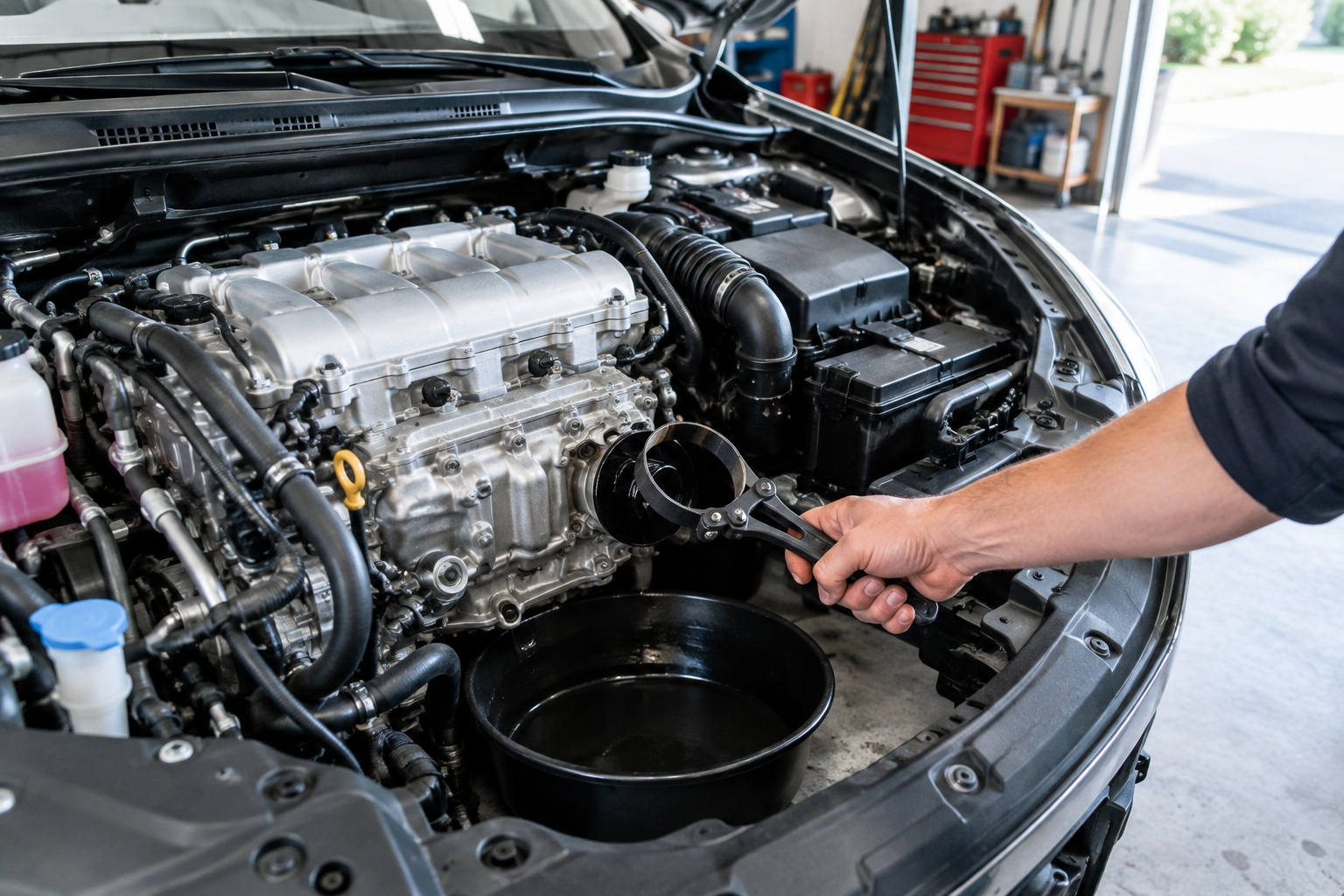
Toyota specifies ILSAC GF-6A oil, and most non-hybrid four cylinders and V6 engines run 0W-20. Hybrid models, including many RAV4 and Highlander Hybrid trims, use 0W-16, a thinner oil that boosts fuel economy but isn’t interchangeable with 0W-20 without checking your specific model year.
Mobil 1 0W-20 Full Synthetic covers the vast majority of Toyota gas engines and meets GF-6A. If you drive a hybrid, double check your manual before buying, since using 0W-20 in a 0W-16 rated engine isn’t catastrophic but does slightly reduce the fuel economy benefit the automaker engineered in.
Honda
Honda uses its own certification called HTO-06, and nearly every current Honda gas engine, from the CR-V to the Pilot, runs 0W-20. Honda Genuine 0W-20 Full Synthetic is formulated specifically to meet HTO-06, and it’s a solid default if you don’t want to compare additive packages.
If you’d rather buy a well known third party brand, Mobil 1 Advanced Full Synthetic 0W-20 also meets Honda’s requirements and is easier to find in bulk at most retailers.
Subaru
Subaru doesn’t require a proprietary spec beyond API SN, but nearly every current model uses 0W-20. Older EJ series boxer engines, especially in higher mileage Outbacks, benefit from a slightly heavier oil in hot climates, something worth researching if you’re dealing with known issues covered in our guide to Subaru Outback years to avoid.
Valvoline Advanced Full Synthetic 0W-20 is a reliable, widely available option that plenty of Subaru owners run without issue.
Hyundai and Kia
Hyundai and Kia’s turbocharged GDI engines, common across the Sportage, Tucson, Telluride, and Santa Fe lineups, specifically call for API SN Plus or newer oil with strong LSPI protection. Viscosity is usually 5W-20 or 0W-20 depending on engine.
Pennzoil Platinum Full Synthetic 5W-20 meets API SN Plus and is a common recommendation from Hyundai and Kia service departments. Skipping the SN Plus certification on these turbo engines isn’t just a technicality, LSPI events can actually damage pistons over time.
Nissan
Nissan’s current gas lineup mostly runs 0W-20 meeting API SN or SP certification. There’s no unusual proprietary spec here, which makes shopping simpler. Mobil 1 Extended Performance 0W-20 is a solid pick that covers the Rogue, Altima, and Pathfinder without complication.
Mazda
Mazda’s Skyactiv engines run 0W-20 and don’t require a unique certification beyond API SP, but Mazda is known for being picky about oil quality on the turbocharged Skyactiv-G 2.5T found in the CX-50 and CX-90. Idemitsu Full Synthetic 0W-20 is the oil Mazda dealerships often use themselves, and it’s a smart choice if you want something as close to factory fill as possible.
Volkswagen and Audi
This is where things get serious. VW and Audi TSI and TFSI engines require oil meeting VW 502.00/505.00 or the newer 508.00/509.00 spec, depending on model year. Using an oil that doesn’t meet the correct approval can accelerate timing chain stretch and cam follower wear, both of which are common and expensive failure points on these engines.

Castrol Edge Professional VW 508.00
This is a VW factory-approved formula built specifically for TSI engines that require the newer, thinner 508.00/509.00 spec.
Don’t assume any European-branded 5W-30 covers you here. Always match the exact VW approval number printed on the bottle to the one listed in your owner’s manual.
BMW

BMW requires oil meeting its own Longlife certification, either LL-01 or the newer LL-04 for diesel and certain gas engines with particulate filters. Most gas BMWs run 5W-30. Liqui Moly Leichtlauf High Tech 5W-30 meets BMW LL-01 and is a favorite among independent BMW mechanics for a reason.
Mercedes-Benz
Mercedes uses its MB-Approval system, most commonly MB 229.5 or 229.51 for current gas engines, with 5W-30 being the standard viscosity. Mobil 1 ESP Formula 5W-30 carries the MB 229.51 approval and is a common factory-fill equivalent for C, E, and GLE-class vehicles.
Jeep, Ram, and Chrysler
Stellantis vehicles use the FCA MS-6395 spec. Most Pentastar V6 engines run 0W-20, while the 5.7L and 6.4L Hemi V8s typically call for 0W-40 in performance applications. If you’re cross-shopping a high-output truck, it’s also worth reading how oil and cooling demands differ across the segment in our comparison of the Ram RHO vs. TRX vs. Ford Raptor.
Mobil 1 0W-40 Full Synthetic is a common recommendation for Hemi-powered trucks and SUVs, while Pennzoil Platinum 0W-20 covers the Pentastar V6 lineup found in the Grand Cherokee and Wrangler.
FAQ
Can I use a higher spec oil than my car requires?
Generally yes. An oil that exceeds the required spec, like using dexos1 Gen 3 when only dexos1 Gen 2 was required, won’t hurt your engine. The bigger risk is going the other direction and using an oil that doesn’t meet the minimum spec at all.
How often do I actually need to change synthetic oil?
Most modern full synthetic oils are rated for 7,500 to 10,000 miles under normal driving conditions, though your car’s oil life monitor is a more accurate guide than a flat mileage number since it factors in your actual driving habits and climate.
Does using the wrong oil spec really void my warranty?
It can. If a dealership can prove that using an oil outside the required spec directly caused a failure, like LSPI damage from skipping API SN Plus, they can deny a warranty claim. Keeping receipts and matching the exact spec printed in your owner’s manual protects you if that ever comes up.
This article contains affiliate links. We may earn a small commission at no extra cost to you.
Leave a Reply