
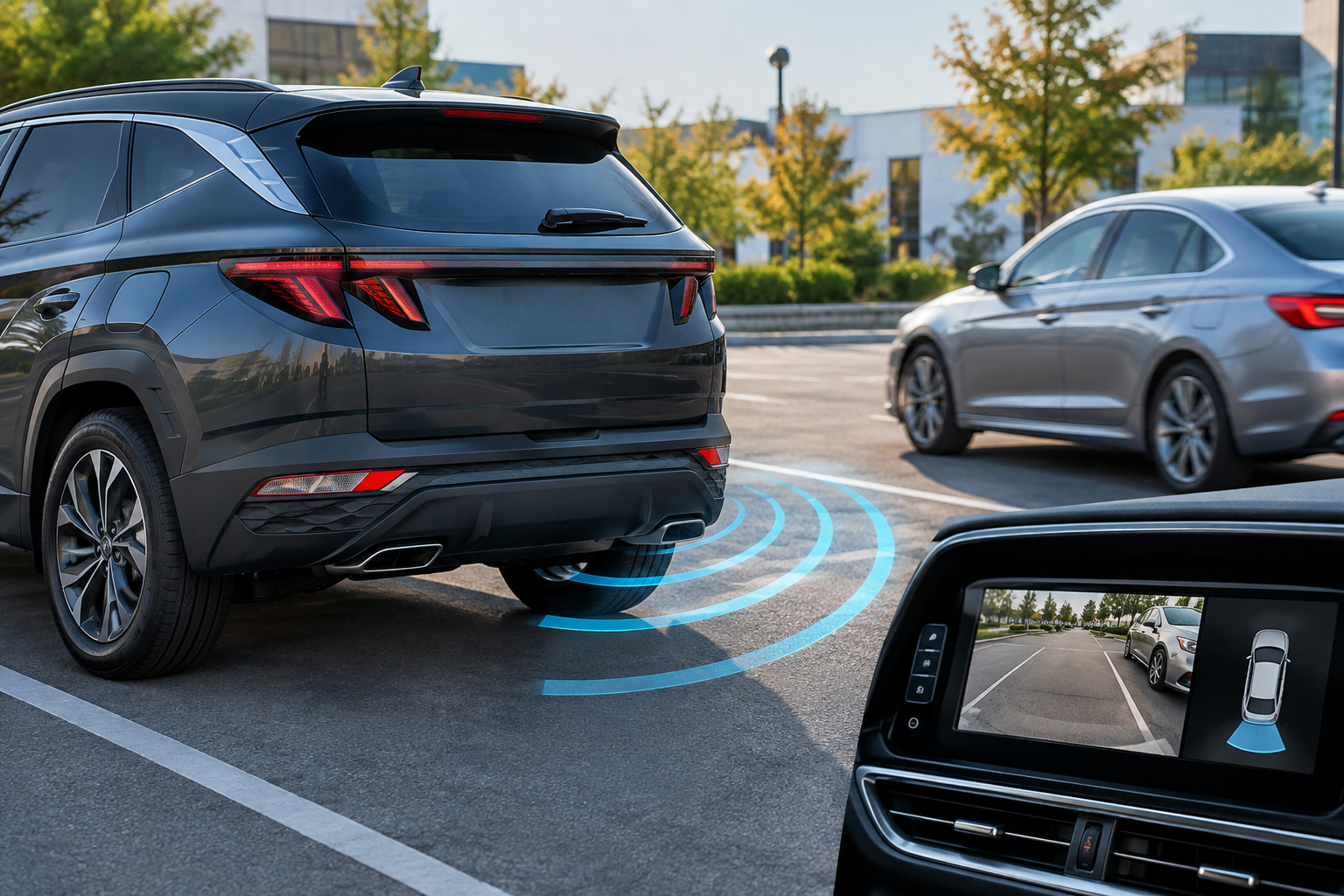
You’re backing out of a parking spot at the grocery store, and instead of that familiar beep warning you about the minivan cruising past behind you, there’s nothing. Silence. For a Tucson owner who’s grown used to that extra set of eyes, a rear cross traffic alert that suddenly goes quiet (or shows up as “unavailable” on the cluster) is more than annoying. It’s a real gap in a safety feature you paid for and rely on.
Hyundai calls this system Rear Cross-traffic Collision-avoidance Assist (RCCA) on newer Tucson models, though you’ll still see it referred to as Rear Cross-traffic Alert (RCTA) in older manuals and on base-level trims that only get the warning without the automatic braking assist. The naming and capability actually changed between the outgoing Tucson generation and the current NX4 body style, so it’s worth checking your owner’s manual to confirm exactly which version your car has before you assume something’s broken.
How the System Works and Why It Fails
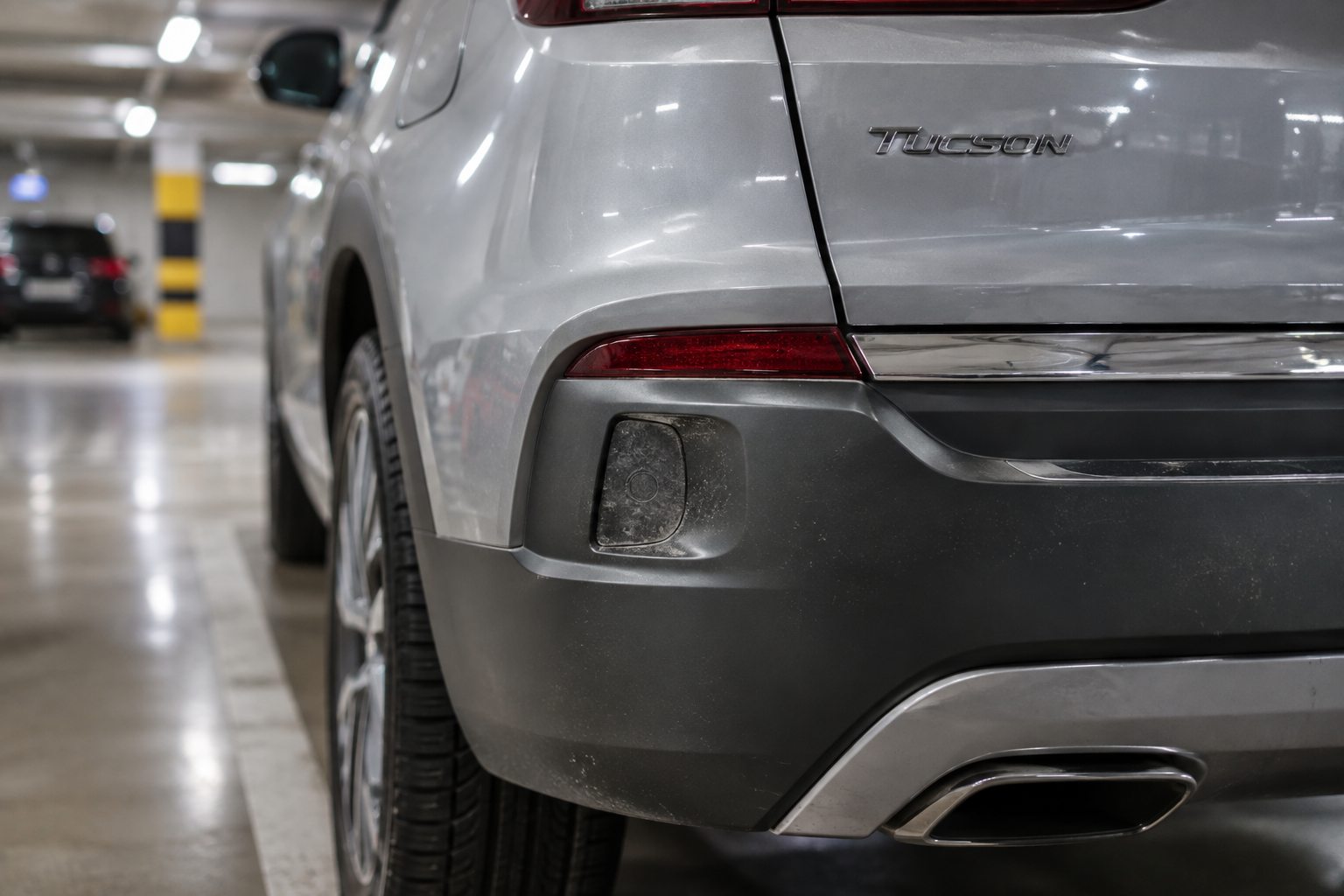
RCTA/RCCA on the Tucson relies on two rear corner radar sensors mounted low in the rear bumper, one on each side. These are the same sensors that handle blind-spot monitoring (Hyundai calls that Blind-Spot Collision-Avoidance Assist, or BCA), so when one function drops out, the other often does too. That shared hardware is the first place to look when something goes wrong.
The system is designed to work at low speeds, generally while you’re in reverse and moving under about 3 to 5 mph, and it’s meant to catch cross traffic approaching from either side, not vehicles directly behind you the way a backup camera does. Above that speed threshold, or once you shift out of reverse, it simply won’t engage, which is normal behavior and not a fault.
Blocked or Dirty Sensors
The most common cause of a “Rear Cross-traffic Alert Unavailable” message is something physically covering the radar sensors. Mud, road salt, snow buildup, or even a thick layer of dust can be enough to block the signal. Wipe down the lower corners of your rear bumper with a clean cloth, especially after driving in slush or dirt roads, and see if the warning clears on its own restart.
Trailer Hitches, Bike Racks, and Bumper Damage
A hitch-mounted bike rack, cargo carrier, or trailer tongue sitting directly in the sensor’s field of view can confuse the radar or block it outright. If you’ve recently installed a hitch accessory and the alert stopped working around the same time, that’s almost certainly your culprit. Try removing it and testing again before you assume there’s an electrical problem.
Bumper damage is another sneaky cause. Even a minor parking lot bump that doesn’t look serious can shift a sensor’s aim just enough to throw off its calibration. If your Tucson has been in a fender bender, even a small one, and the rear bumper was touched, the sensors may need a professional realignment or recalibration at a dealership or body shop with the right diagnostic tools.
Settings and Low Battery Voltage
It sounds obvious, but double-check that the feature hasn’t been toggled off in the settings menu. Some owners accidentally disable it while poking around the driver-assist menu, similar to how people mistakenly disable other alerts covered in our guide on turning off lane assist on the Hyundai Tucson. It only takes a stray tap to switch something off without realizing it.
Low battery voltage is an underrated cause too. Radar modules and their control units are sensitive to voltage drops, and a weak or aging 12-volt battery can cause the system to intermittently disable itself, especially in cold weather when battery output naturally sags. If your Tucson also shows other electrical quirks, flickering lights, slow start, or random warning lights, get the battery tested before you spend money chasing a sensor problem that doesn’t exist.
NOCO Boost Plus Jump Starter
A reliable way to rule out low battery voltage as the cause of intermittent sensor faults before you pay for diagnostics.
How This Relates to Blind-Spot Monitoring
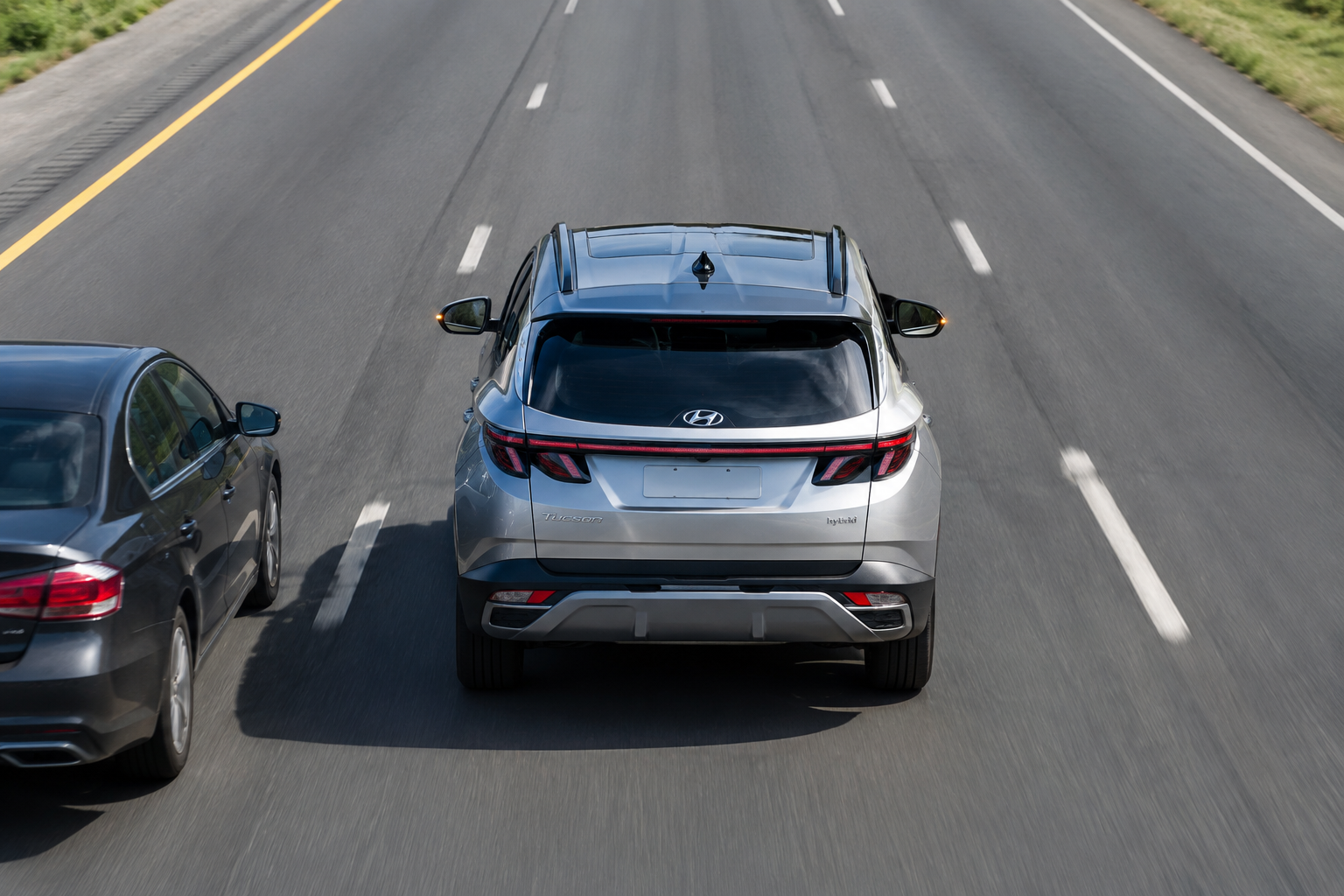
Because RCTA/RCCA and blind-spot monitoring share the same rear radar sensors on most Tucson model years, a fault in one system frequently shows up in both at the same time. If you’re getting a blind-spot warning light along with the rear cross traffic message, that’s a strong hint the problem is with the radar hardware itself rather than a software setting. However, don’t assume it’s always paired. Some model years handle fault detection separately, so it’s possible for one system to fail while the other keeps working fine.
If you want a spare sensor on hand for peace of mind or you’re comparing OEM versus aftermarket parts before a repair, it helps to know what you’re shopping for. A quick look at Hyundai Tucson blind spot radar sensors on Amazon gives you a sense of pricing and availability, though for calibration you’ll still want a shop with the proper alignment tools.
Trim availability matters here too. On many Tucson model years, RCCA and BCA come bundled together in the same convenience or tech package, meaning if your trim didn’t include one, it likely doesn’t have the other either. Don’t assume your car should have a feature just because a friend’s Tucson does. Cross-check your trim level and options list against the owner’s manual for your exact model year.
Hyundai OEM Rear Bumper Sensor
Sourcing an OEM-spec sensor helps avoid the calibration headaches that sometimes come with generic aftermarket parts.
Frequently Asked Questions
Why does my Tucson say Rear Cross-traffic Alert Unavailable but the camera still works?
The backup camera and the RCTA radar sensors are completely separate systems. The camera uses an optical lens, usually near the license plate, while cross traffic alert relies on radar in the bumper corners. It’s common for one to fail while the other keeps functioning normally, so don’t assume a working camera means the radar side is fine.
Can cold weather alone cause the alert to stop working?
Yes, cold weather can trigger it indirectly. Snow or ice buildup over the sensors is the most direct cause, but cold temperatures also reduce battery output, which can cause the radar module to temporarily disable itself. Clearing the bumper and letting the car warm up often resolves it without any repair needed.
If chasing down electrical gremlins and driver-assist quirks is starting to feel like a full-time job, you’re not alone. Related systems like the driver attention warning on the Hyundai Tucson and the broader driver attention warning setup across Kia and Hyundai vehicles share some of the same sensor and software architecture, so troubleshooting one often teaches you something useful about the others.
Leave a Reply