
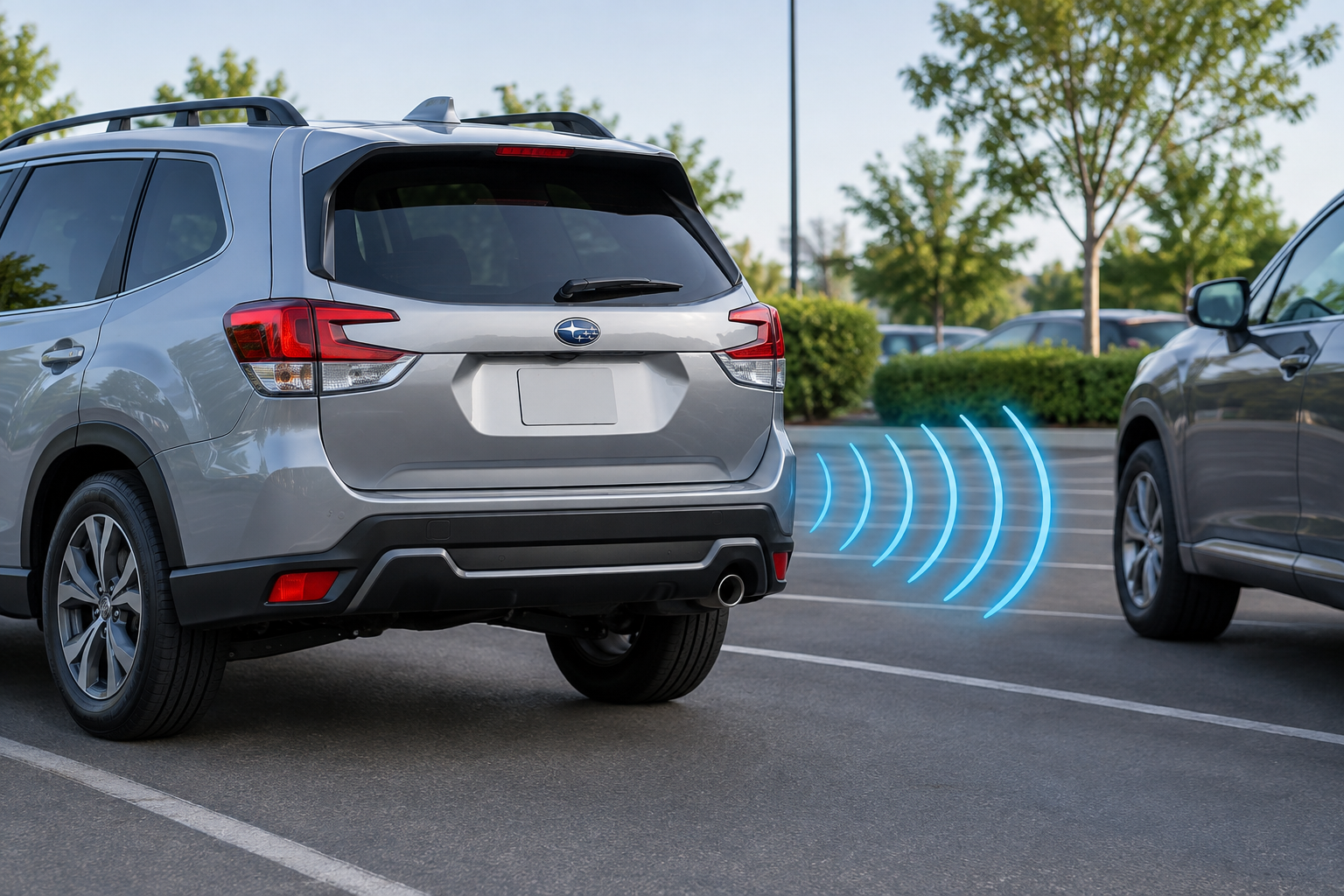
You back out of a parking spot, glance at the dash expecting the familiar chime and flashing arrow, and nothing happens. Or worse, a message pops up saying the system is unavailable right when you need it most, like at a crowded grocery store or busy driveway with kids around. Rear Cross Traffic Alert on the Subaru Forester is one of those features you don’t think about until it quits working, and then it’s suddenly the only thing on your mind.
The good news is that most of the time, the cause is simple and fixable in your driveway. Sometimes it’s a settings issue, sometimes it’s a physical blockage, and occasionally it points to something that needs a trip to the dealer. This guide walks through every likely cause, how the system actually works on the Forester, and what to check first before you assume the worst.
What Rear Cross Traffic Alert Actually Is on the Forester
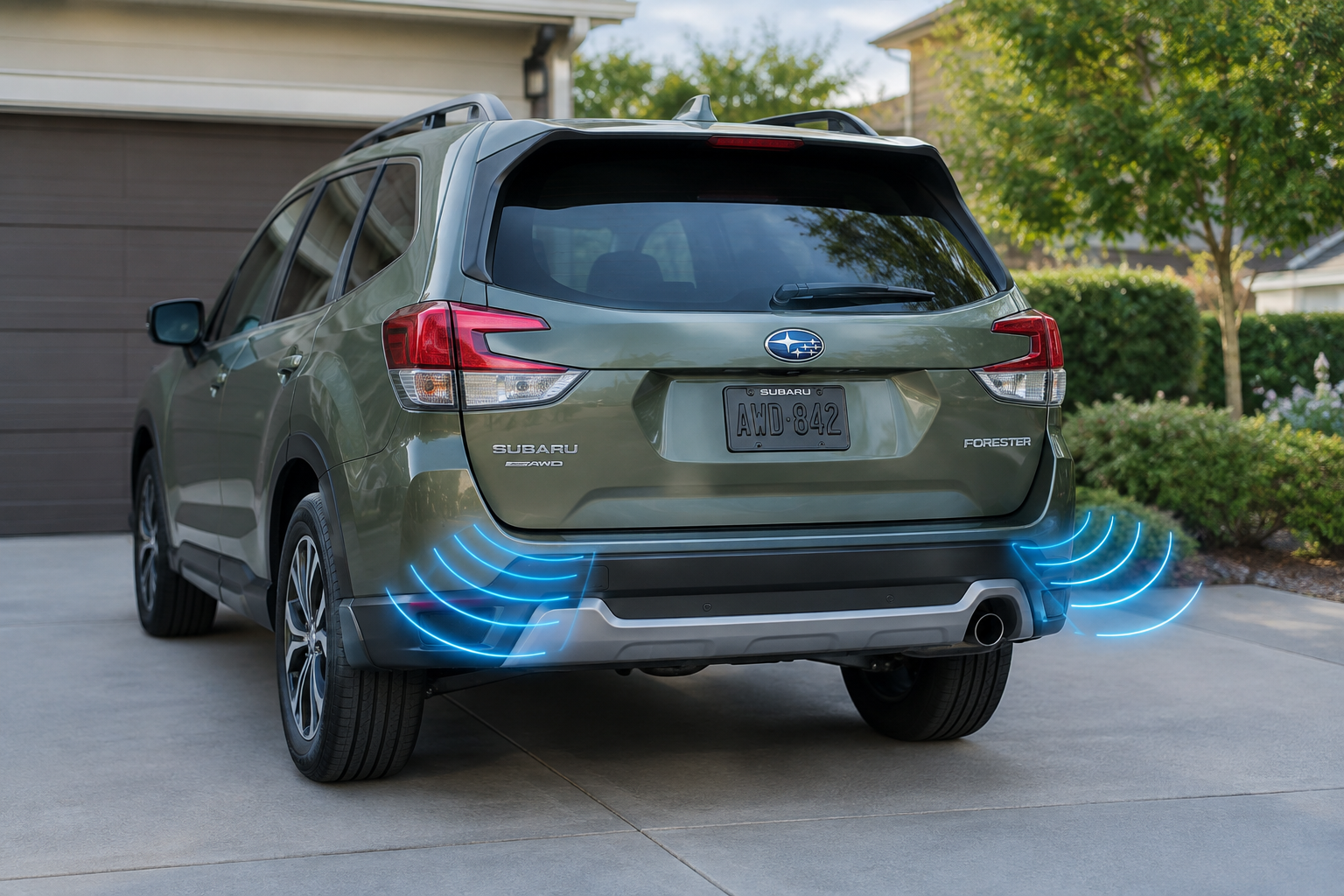
Subaru calls this feature Rear Cross Traffic Alert, and it’s part of a larger radar package Subaru markets as SRVD, short for Subaru Rear Vehicle Detection. This is the same underlying hardware that runs Blind Spot Detection, so when people ask why their rear cross traffic warning and blind spot monitor both act up at the same time, it’s because they’re literally using the same sensors and the same control module.
Those sensors are two small radar units tucked behind the rear bumper cover, one on each side near the taillights. They’re not visible from the outside unless you know exactly where to look, and that’s important because it means the bumper cover itself, along with anything mounted to or near it, can interfere with the radar signal even without any obvious damage.
It’s worth being clear that Rear Cross Traffic Alert and Blind Spot Detection are related but not identical systems. They share sensors and a lot of the same electronics, but they run different detection logic and can fail independently. If your blind spot light is behaving normally but rear cross traffic keeps dropping out, that’s not a contradiction. It just means the fault is more specific to how the system interprets objects moving laterally behind the car versus stationary objects beside it.
When the System Should Actually Work
Rear Cross Traffic Alert only activates while you’re in reverse and moving at low speed, generally under about 6 mph. It’s designed to catch cross traffic, pedestrians, or cyclists approaching from either side as you back out of a parking space or driveway, not to monitor traffic while you’re driving forward. If you’re expecting it to warn you about something while cruising down the road, that’s not what this feature is for. Blind Spot Detection and Lane Change Assist handle that job instead.
Trim availability matters here too. On most Forester model years, Rear Cross Traffic Alert comes bundled with Blind Spot Detection and is standard starting on Premium trim and above, while base trims often don’t get it at all. Subaru has shifted this standard equipment cutoff around between generations, so a 2016 Forester Premium may not have the same availability as a 2021 or 2023 model. If you’re not sure whether your specific trim and year should even have this feature, check your owner’s manual or window sticker rather than assuming based on a friend’s Forester.
Common Reasons RCTA Stops Working or Shows Unavailable
Dirt, Snow, Ice, or Road Grime on the Bumper
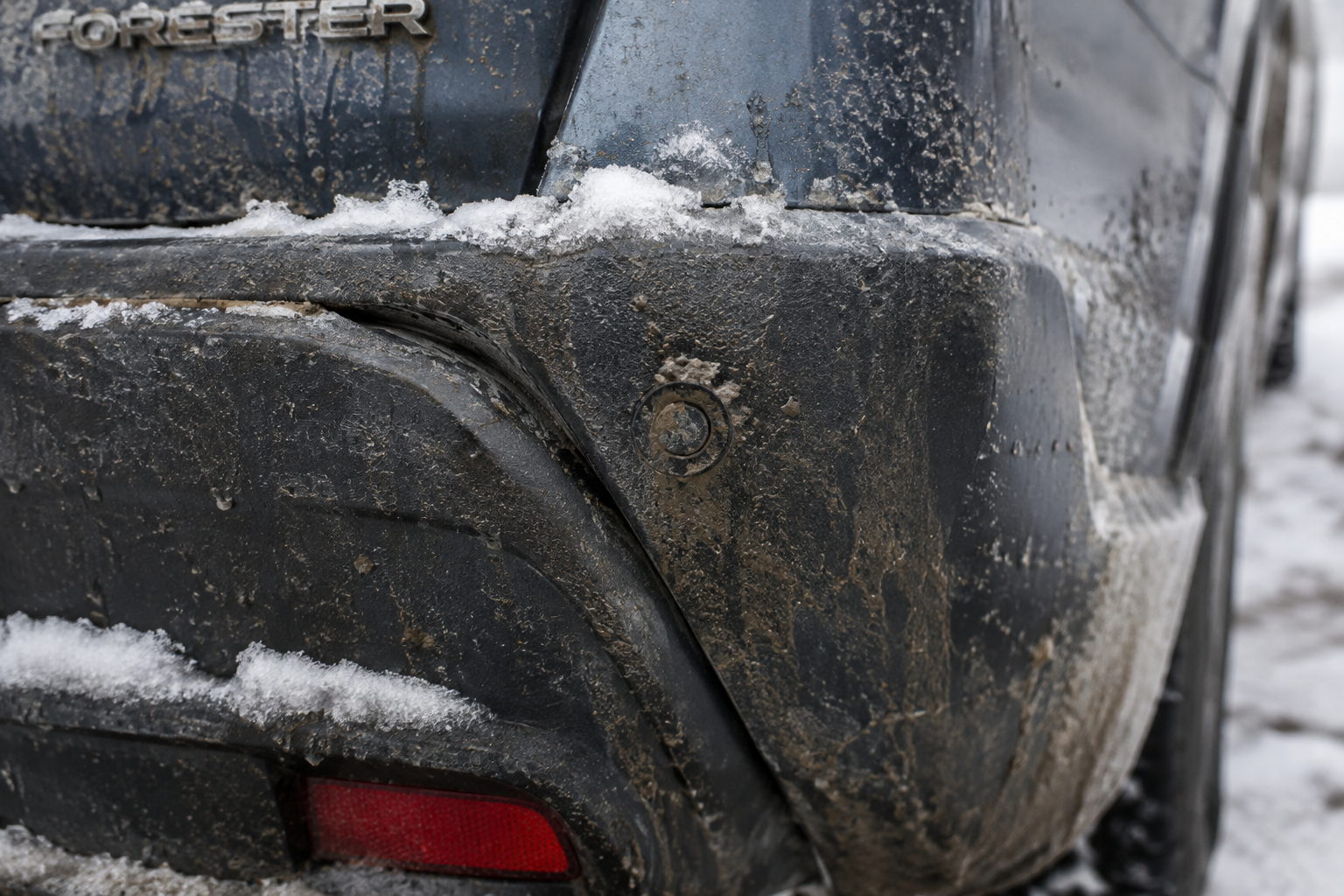
This is the single most common cause, and it’s almost embarrassingly simple to fix. A layer of road salt, caked mud, or a thin sheet of ice over the rear bumper corners can be enough to block or distort the radar signal. Subaru’s own warning messages often hint at this directly, telling you the system is temporarily unavailable due to sensor obstruction.
Wash the rear bumper thoroughly, paying close attention to the corners near the taillights where the sensors sit. In winter, don’t just brush off surface snow, since packed slush in the wheel well area or bumper seam can linger even after the visible snow is gone. Give it a few minutes to dry and try backing up again before assuming there’s a deeper problem.
Trailer Hitches, Bike Racks, and Cargo Accessories
A hitch-mounted bike rack, cargo carrier, or even a trailer ball sitting in the wrong position can sit directly in the radar’s field of view. Some Foresters will automatically disable Rear Cross Traffic Alert when a trailer is wired in through the factory harness, since the system assumes something is now blocking or complicating the sensor’s read. Even without a wired connection, a bulky rack can physically obstruct enough of the bumper to cause false unavailability messages.
If you added an aftermarket rack after buying the car, try removing it temporarily to see if the system comes back online. If it does, you’ve found your answer, and you’ll need to either reposition the rack or accept that RCTA won’t be reliable while it’s installed.
Bumper Damage or Poor Repair Work
A minor parking lot bump might not look like much cosmetically, but it can shift the bumper cover just enough to misalign a radar sensor behind it. This is especially common after body shop repairs where the shop wasn’t aware sensors were back there, or didn’t recalibrate them after the work was done.
If your Forester has had any rear-end bodywork, collision repair, or even a bumper cover replacement, and the RCTA issues started around the same time, that’s not a coincidence. These sensors typically need a static or dynamic calibration procedure after bumper removal, and skipping that step is one of the most overlooked causes of persistent “system unavailable” messages.
Low Battery Voltage
Subaru’s driver assist systems, including radar-based features, are sensitive to voltage drops. A battery that’s aging, a weak alternator, or just a car that’s sat for a long stretch without being driven can cause the electrical system to dip below what the radar module needs to initialize properly. You might notice RCTA disappearing intermittently, especially on cold mornings or right after starting the car.
If you notice other electrical quirks alongside the radar issue, like dim lights at idle or a slow crank on startup, the battery is a reasonable first suspect. A weak battery affects more than convenience features too, so it’s worth ruling out early rather than chasing sensor problems that don’t exist.
NOCO Genius Battery Charger and Maintainer
Keeps your Forester’s battery at full voltage between drives, which helps prevent radar and driver-assist glitches caused by low voltage.
Battery maintainers are especially useful if your Forester sits for days at a time, whether it’s a second car, a seasonal vehicle, or one that just doesn’t get driven much during the week. Plugging in a maintainer overnight before a trip can rule out voltage as the culprit before you spend money diagnosing sensors that are working fine.
Settings Turned Off Accidentally
It sounds almost too simple, but a lot of “broken” RCTA complaints turn out to be a setting that got toggled off, either by another driver, a curious passenger, or during a dealer service visit. Subaru’s infotainment menus bury some of these driver assist toggles a few screens deep, so it’s easy to bump one without realizing it.
Check your settings menu under driver assist or EyeSight features (even though RCTA itself isn’t part of EyeSight, Subaru often groups all the driver assistance toggles together in the same menu). If you’ve been troubleshooting other alerts on your Forester, like the process covered in how to turn off DriverFocus on Subaru Forester, you already know how deep some of these menus can go, and it’s worth double-checking nothing else got switched off in the process.
Sensor or Module Faults
If you’ve ruled out dirt, obstructions, bumper damage, and battery voltage, and the system still won’t come back reliably, you could be looking at an actual radar sensor failure or a fault in the control module. This is less common than the issues above, but it happens, especially on higher-mileage Foresters or ones that have been in a rear-end collision even if the bumper looks fine now.
A dealer or qualified independent shop can pull fault codes specific to the SRVD system, which will point to which sensor or module is throwing the error. Don’t assume you need a full sensor replacement without this step, since sometimes a simple recalibration resolves what looks like a hardware failure.
BlueDriver Bluetooth Pro OBDII Scan Tool
A solid option for reading manufacturer-specific fault codes at home before paying a shop diagnostic fee.
A scan tool like this won’t replace a proper dealer calibration if your sensors need one, but it can save you money by confirming whether there’s an actual fault code stored before you schedule an appointment. If it comes back clean, you can focus your troubleshooting on the physical causes covered above instead.
How This Compares to Blind Spot Monitoring Behavior
Because Rear Cross Traffic Alert and Blind Spot Detection share hardware, an obstruction or sensor fault often affects both at once. If your blind spot indicator light is also flickering or your Forester is throwing blind spot warnings inconsistently, that’s a strong clue the problem is at the sensor or bumper level rather than something specific to reverse gear logic.
That said, don’t assume the two systems always fail together. Software glitches, wiring issues specific to the reverse circuit, or a shift knob position sensor problem can affect RCTA while leaving blind spot monitoring completely normal. Treat them as related but separate diagnostic paths, and mention both to your service advisor if you’re bringing the car in, since it helps them narrow down whether the issue is sensor hardware or system-specific logic.
If you’re dealing with a Forester that’s had a rocky history with driver assist quirks in general, it might also be worth reading through issues covered in how to turn off Lane Assist on Subaru Forester, since Subaru’s various assist features often get lumped into the same conversation even though they use different sensors and cameras.
Keeping the Sensors Clean Going Forward
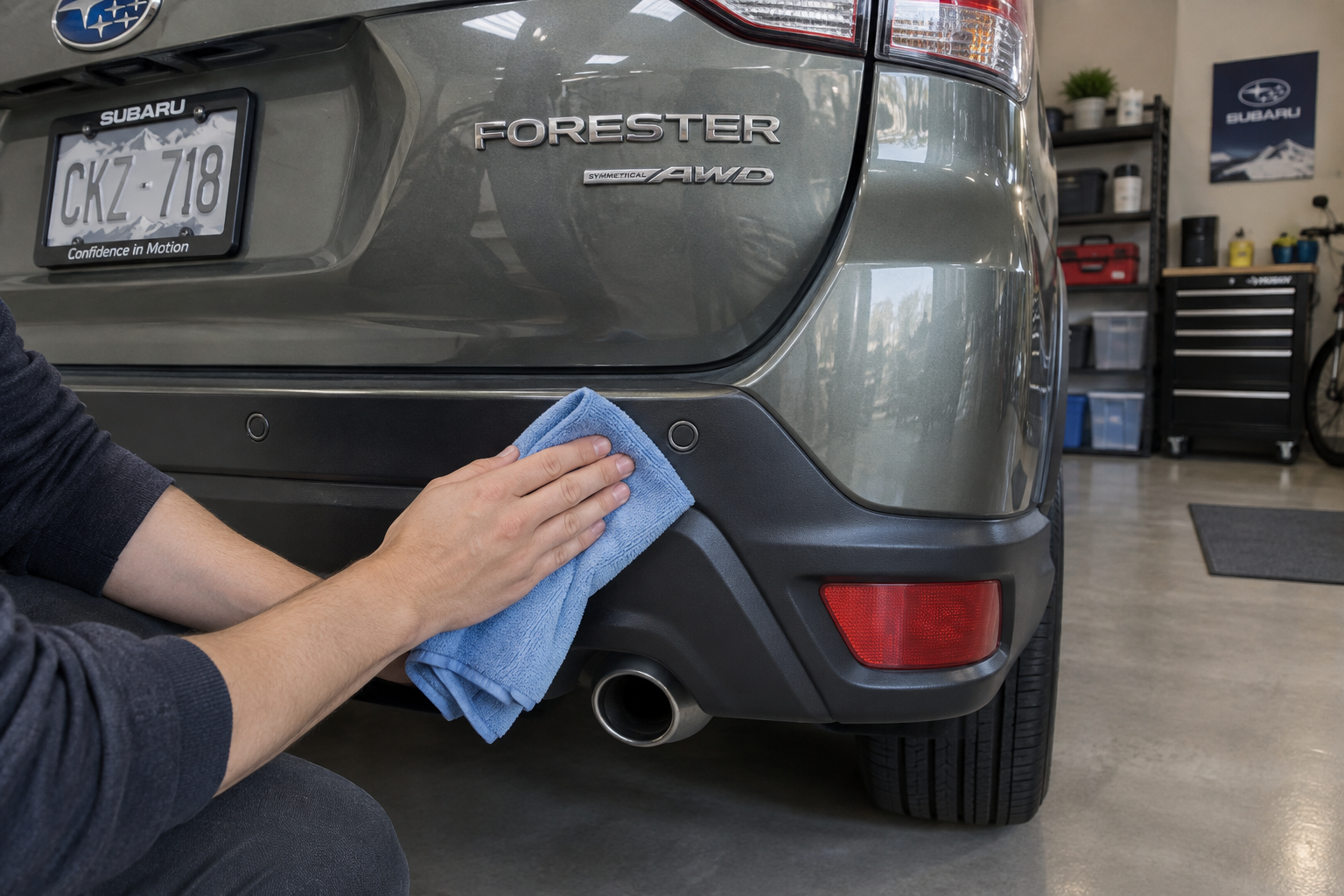
Once you’ve got the system working again, a little routine maintenance goes a long way toward preventing repeat issues. A quick wipe-down of the rear bumper corners during regular car washes takes seconds and can head off most dirt-related dropouts before they start.
Chemical Guys Microfiber Detailing Cloths
Gentle on bumper covers and sensor housings, and useful for a quick wipe-down before winter drives when grime builds up fast.
If you live somewhere with harsh winters, consider making bumper cleaning part of your regular routine rather than an afterthought. Road salt buildup happens fast, and a five-minute rinse of the rear corners can be the difference between a working system and a frustrating “unavailable” message every time you back out of the driveway.
Frequently Asked Questions
Why does my Forester say Rear Cross Traffic Alert is temporarily unavailable?
This message almost always points to a blocked or dirty sensor, extreme temperatures affecting the radar, or low battery voltage. Clean the rear bumper corners first, let the car warm up if it’s very cold out, and check your battery if the message keeps recurring.
Does a trailer hitch always disable Rear Cross Traffic Alert?
Not always, but it can. Some Foresters automatically disable the system when a trailer wiring harness is connected, since the assumption is something behind the car may interfere with radar accuracy. A hitch installed without an active trailer connection is less likely to cause issues, but a bike rack or cargo box mounted on it still can.
Can I drive safely without Rear Cross Traffic Alert working?
Yes, plenty of people drove for decades without this feature at all. It’s a convenience and safety aid, not a replacement for checking your mirrors and backup camera. Treat a malfunctioning system as a reason to be extra cautious backing up, not a reason to panic about the car being unsafe overall.
Will a body shop repair fix RCTA problems after a fender bender?
Only if the shop performs the correct sensor calibration after replacing or repairing the rear bumper. Ask specifically whether they recalibrate the SRVD radar sensors as part of the repair, since some shops skip this step unless you bring it up directly.
Leave a Reply