
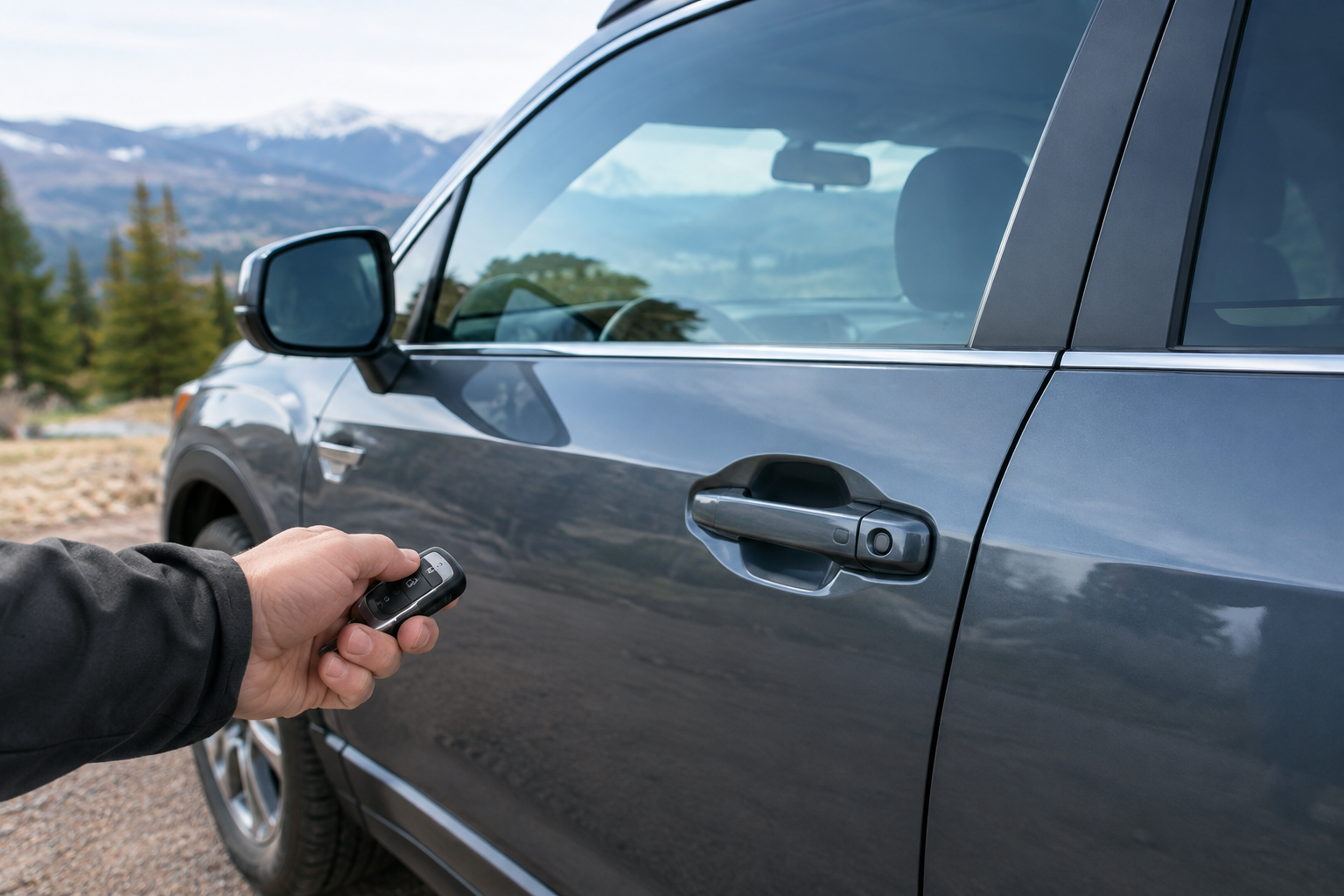
You walk up to your Outback with your hands full of groceries, touch the door handle like you’ve done a thousand times before, and nothing happens. No click, no unlock chime, just a handle that stares back at you like it’s never heard of you. Subaru calls this feature Keyless Access with Push-Button Start, and when it stops responding to your touch, the cause is usually simpler than you’d think, but tracking it down means ruling out the fob, the handle, and the car itself one at a time.
Start With the Fob Battery
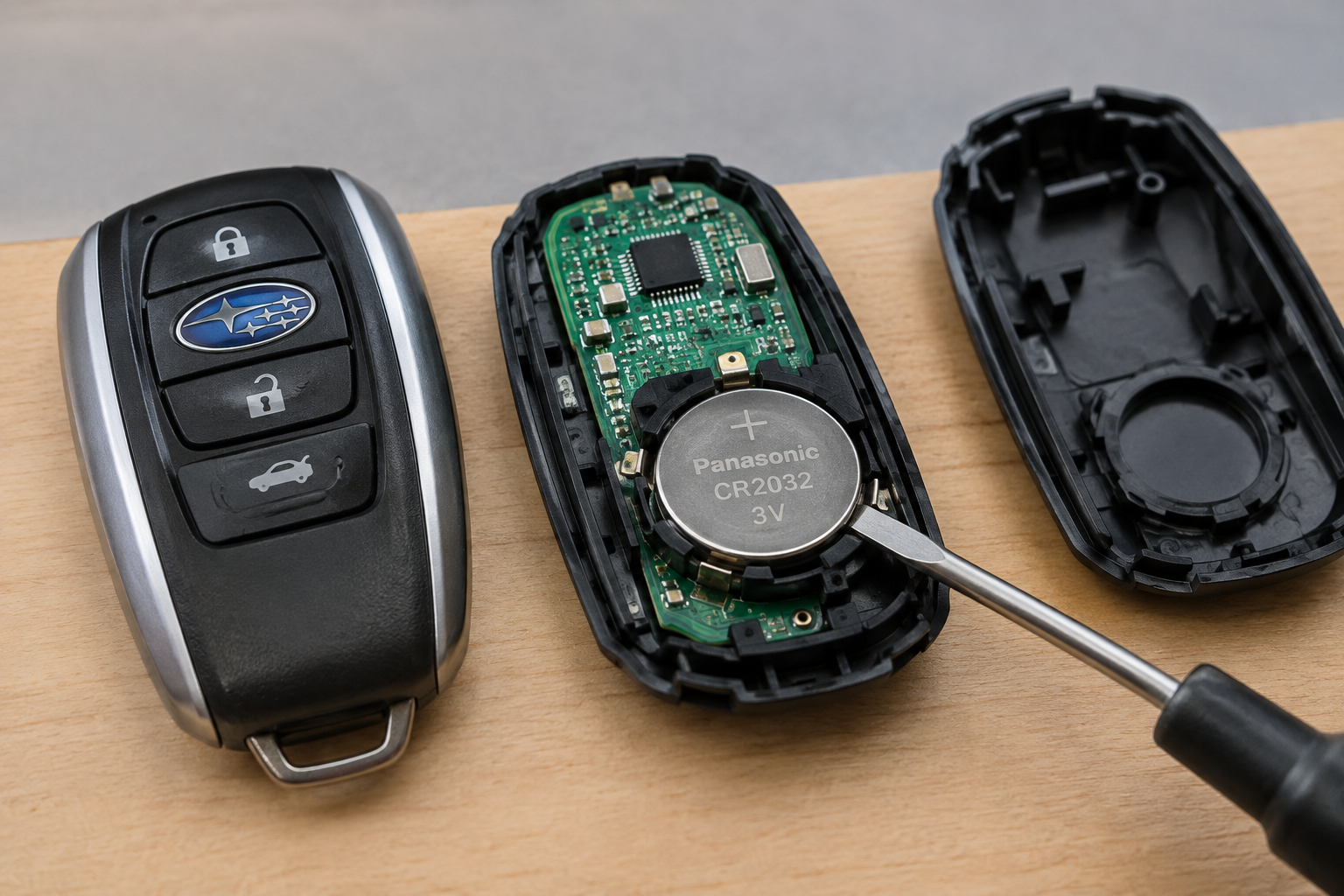
A weak coin cell battery is the number one reason passive entry stops working while the fob still unlocks the car when you press the button manually. Subaru’s passive entry system needs a stronger, more consistent signal than a simple button press does, so it’s often the first function to fail as the battery fades.
Most Outback fobs from 2015 and up use a CR2032 coin cell. If your fob still unlocks the doors when you press the button but touching the handle does nothing, swap the battery before you do anything else. It’s the cheapest, fastest fix and solves this problem more often than any other cause on this list.
Keep a spare on hand since these batteries die without much warning.
Subaru Outback Key Fob Battery
A fresh CR2032 fixes the majority of passive entry complaints in minutes.
Fob Sleep Mode and Power-Saving Behavior
Subaru fobs have a power-saving feature that puts the passive entry function to sleep if the fob sits motionless for an extended period, usually around two weeks. This is meant to prevent the battery from draining if the fob is left on a shelf or forgotten in a drawer.
If your fob has been sitting still (in a purse you haven’t carried, a second car, or a junk drawer), the touch sensor may simply be dormant. Pressing the unlock button on the fob directly usually wakes it back up, and passive entry should resume working within a few seconds to a few minutes after that.
This is different from a dead battery. A sleeping fob will still unlock the car with a manual button press instantly, while a dying battery often causes intermittent range issues even with the button.
Check Your Passive Entry Settings
It’s easy to overlook, but Subaru lets you disable the touch-sensor unlock function through the infotainment settings menu without touching the fob at all. If someone in your household (or a service tech during a recent visit) turned this off, the handles simply won’t respond even with a perfectly healthy fob and battery.
On most 2020 and newer Outback models, go to Settings, then Vehicle, then look for “Keyless Access” or “Auto Lock/Unlock” depending on your trim and software version. Confirm that both the unlock and lock functions are toggled on, since some owners accidentally disable just one side.
Older Outbacks (2015 to 2019) may control this through a combination of buttons on the fob itself rather than a touchscreen menu, so check your owner’s manual for the exact sequence for your model year, since Subaru changed this more than once across generations.
Handle Sensors and Single-Door Failures
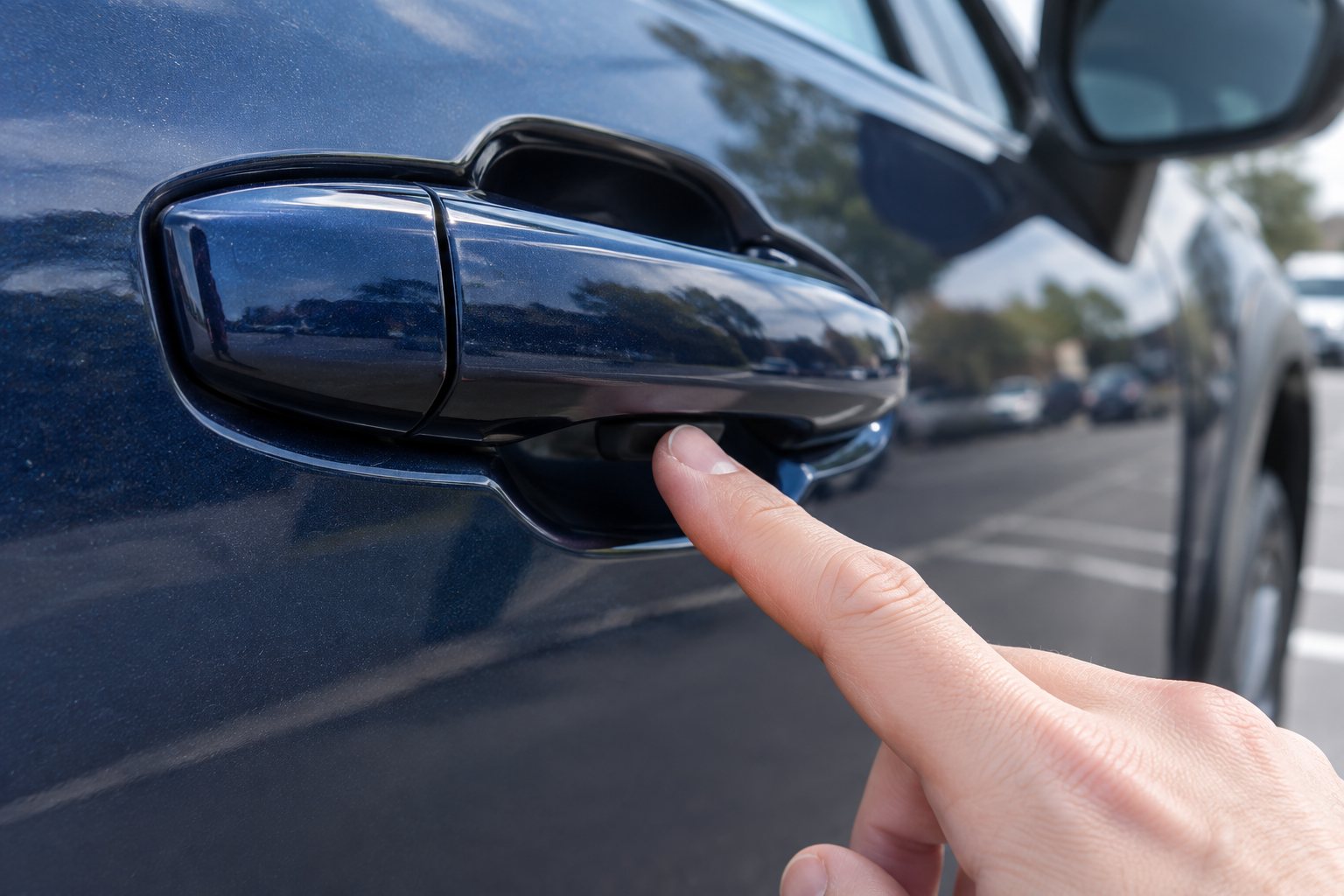
If only one door handle refuses to unlock while the others work fine, the problem almost certainly lives in that specific handle, not the fob or the car’s main receiver. Each door handle has its own capacitive touch sensor and antenna, and these can fail independently from moisture intrusion, corrosion, or simple wear over years of use.
Rear doors on the Outback see this more often than the fronts because they get touched less frequently and can accumulate grime around the sensor without anyone noticing. Try wiping the handle down with a dry cloth first, since dirt or a film of road salt can sometimes interfere with the capacitive touch signal.
If cleaning doesn’t help and the issue is isolated to one handle, you’re likely looking at a failed touch sensor or a wiring connection at the door hinge that’s worn from years of opening and closing. This is a job for a dealer or an independent shop with access to Subaru’s wiring diagrams, since the repair usually means replacing the handle assembly or repairing a broken wire in the door jamb loom.
Antenna Interference and Signal Blockers
Passive entry relies on low-frequency antennas built into the doors and bumpers communicating with your fob over a short range. Other electronics carried close to your body can interfere with that signal more than most people expect.
Phones, other key fobs, smartwatches, and even some RFID-blocking wallets can disrupt the handshake between your fob and the car. If your keyless entry works fine some days and not others, try moving your phone to a different pocket or bag away from your keys and see if that changes anything.
Parking near cell towers, power lines, or other vehicles using similar frequencies can occasionally cause temporary interference too, though this is rare and usually resolves itself once you move the car.
Low 12V Battery Voltage
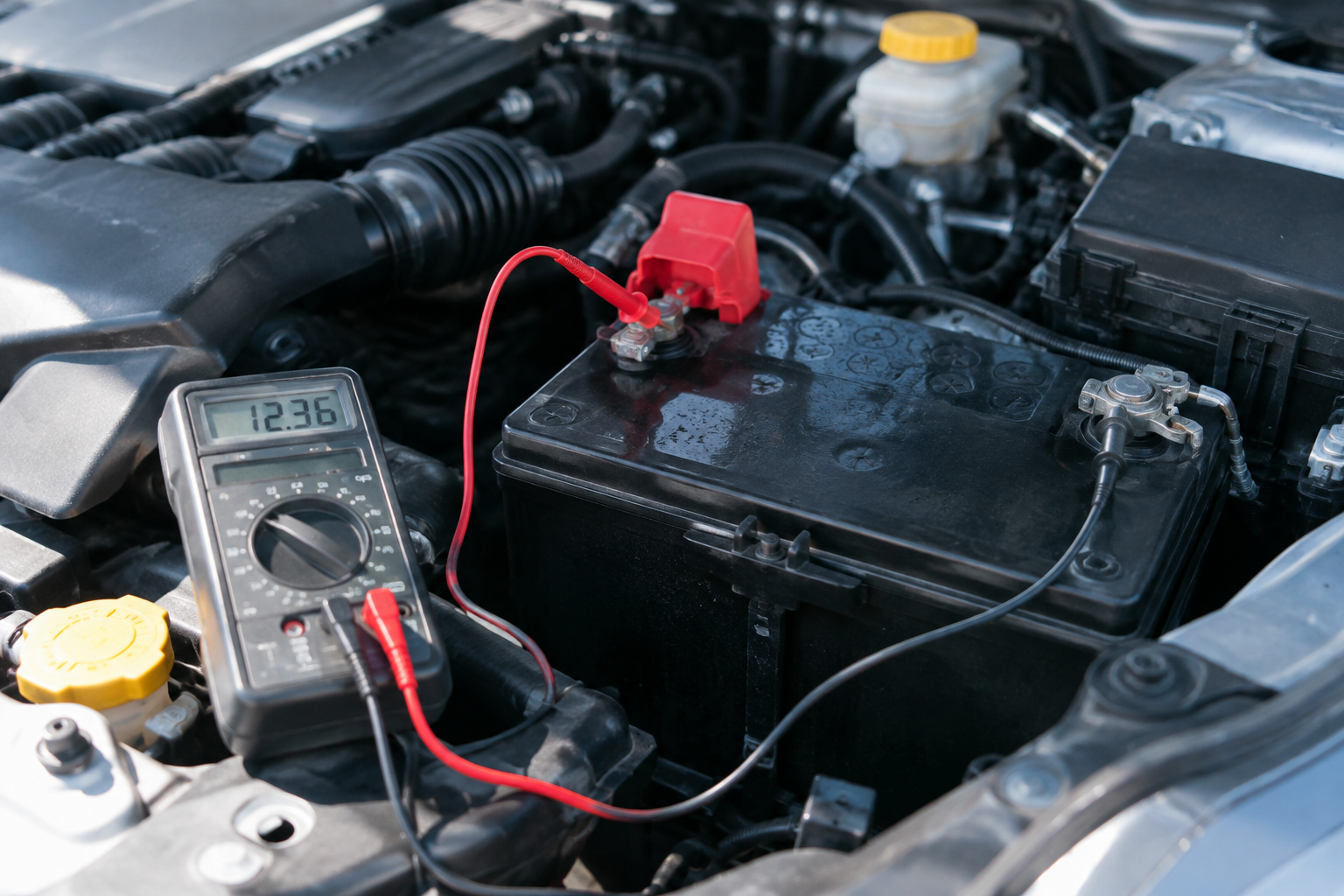
The Outback’s passive entry system draws on the car’s 12V battery to power the door antennas and control module, and if that battery is weak, the system can lose range or stop responding to handle touches entirely well before you notice starting issues. This is especially common in Outbacks that sit for days at a time or in colder climates where battery capacity drops.
If your remote start also seems sluggish, your dome lights look dimmer than usual, or you’ve noticed slower cranking when you start the engine, a marginal battery is a strong suspect. A basic multimeter check should show close to 12.6 volts at rest, and anything meaningfully lower means it’s time for a charge or a replacement.
A dying 12V battery is often the hidden cause behind electrical gremlins that seem unrelated at first, similar to how a weak battery can cause the kind of intermittent electrical issues covered in our guide on what to check when a brake pedal goes to the floor after sitting overnight. Both problems share the same root cause of a car’s electrical system not getting the voltage it needs.
If you suspect the battery is the culprit, a compact jump starter or battery tester is worth keeping in your trunk anyway, since Outbacks in colder climates are prone to slow battery drain.
Portable Car Jump Starter
A compact jump starter gets you back on the road fast if a weak 12V battery is behind your keyless entry issues.
Model-Specific Lockout Behavior
Subaru built in a deliberate safety feature across most Outback generations that disables passive unlock if the fob is detected inside the car while a door is open. This prevents you from accidentally locking your keys inside, but it can look like a malfunction if you’re standing outside holding a second fob while another one is inside the cabin.
Some Outback trims also pause passive entry temporarily after the alarm has been triggered or after multiple failed unlock attempts in a short window, as a security measure against relay attacks. If your handle worked fine yesterday and suddenly stopped today with no other symptoms, try locking the car manually with the fob button first and then testing the handle again after a minute.
Newer Outback Wilderness and Touring trims running updated software may also require a firmer, fuller-hand grip on the handle rather than a light touch, since Subaru adjusted sensor sensitivity in later production runs to reduce false unlocks from brushing against the car.
Fob vs. Vehicle: How to Tell Them Apart
The fastest diagnostic is swapping fobs if you own more than one. If your second fob unlocks the handle fine and the first one doesn’t, the problem is isolated to that specific fob and its battery or internal antenna.
If neither fob works on any door, but the physical unlock button on the fob still opens the car, you’re looking at a vehicle-side passive entry issue, likely tied to the settings menu, the 12V battery, or a blown fuse for the keyless module. If pressing the fob button doesn’t unlock the doors at all, that points toward a dead fob battery or a deeper receiver problem worth having scanned at a dealer.
One dead handle with everything else working normally almost always means a bad sensor in that specific door, not a systemwide fault, so there’s no need to replace the fob or chase electrical gremlins elsewhere in the car.
Frequently Asked Questions
Why does my Subaru Outback fob work up close but not for passive entry?
This is the classic sign of a weakening coin cell battery. The fob still has enough power to transmit a button press signal at close range, but passive entry requires a continuous, stronger signal that a low battery can no longer sustain reliably.
Can I fix a bad door handle sensor myself?
Replacing the sensor itself usually means removing the door panel and handle assembly, which is doable with basic tools and patience but does require Subaru-specific torque specs and care around the wiring harness. If you’re not comfortable with interior trim removal, this is a reasonable job to hand off to an independent shop rather than risk damaging the door panel clips.
Does a Subaru dealer need to reprogram the fob after a battery change?
No, a battery swap doesn’t require any reprogramming or dealer visit. The fob should sync immediately once the new battery is installed, and passive entry typically resumes working within seconds of the fob waking back up.
Leave a Reply