
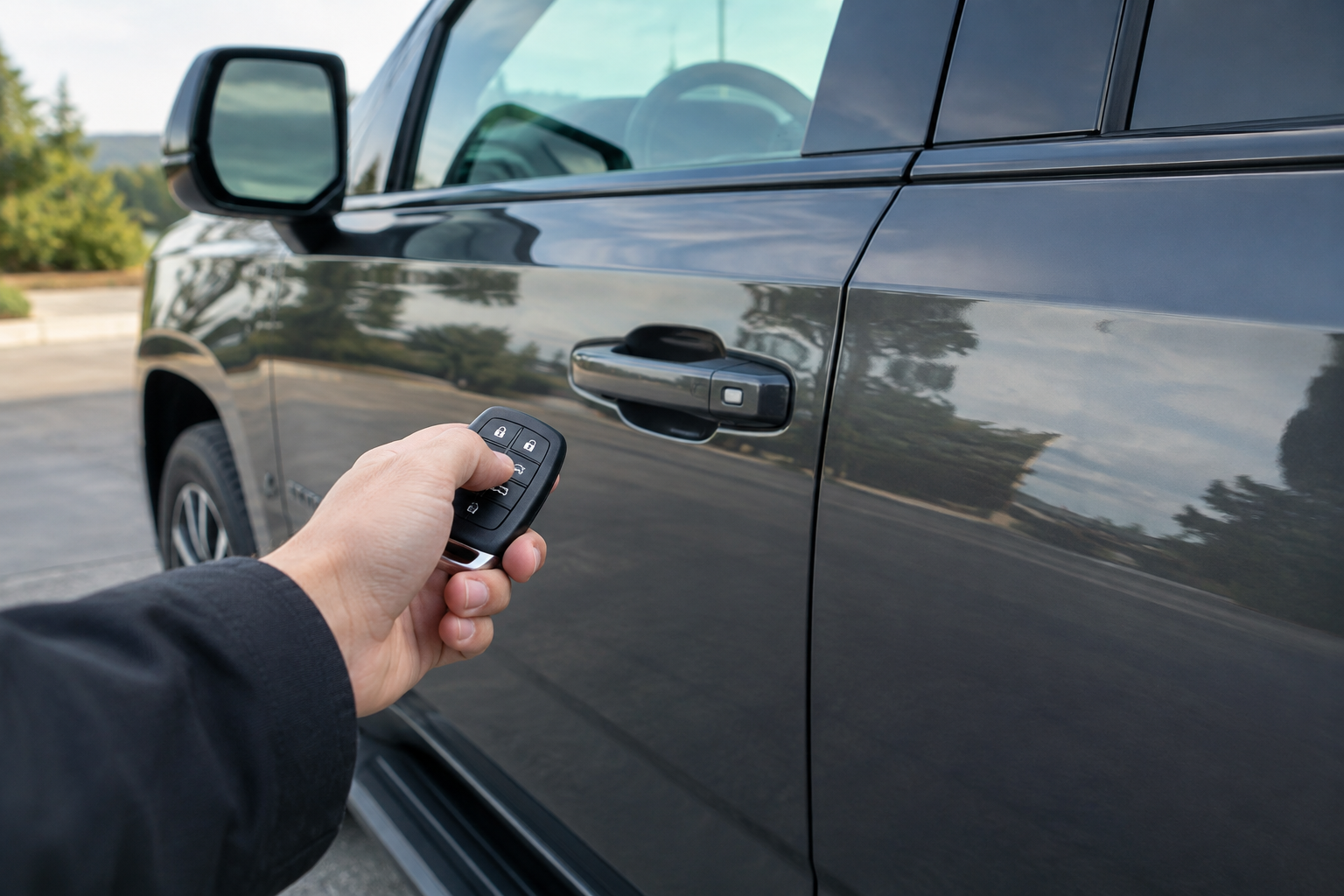
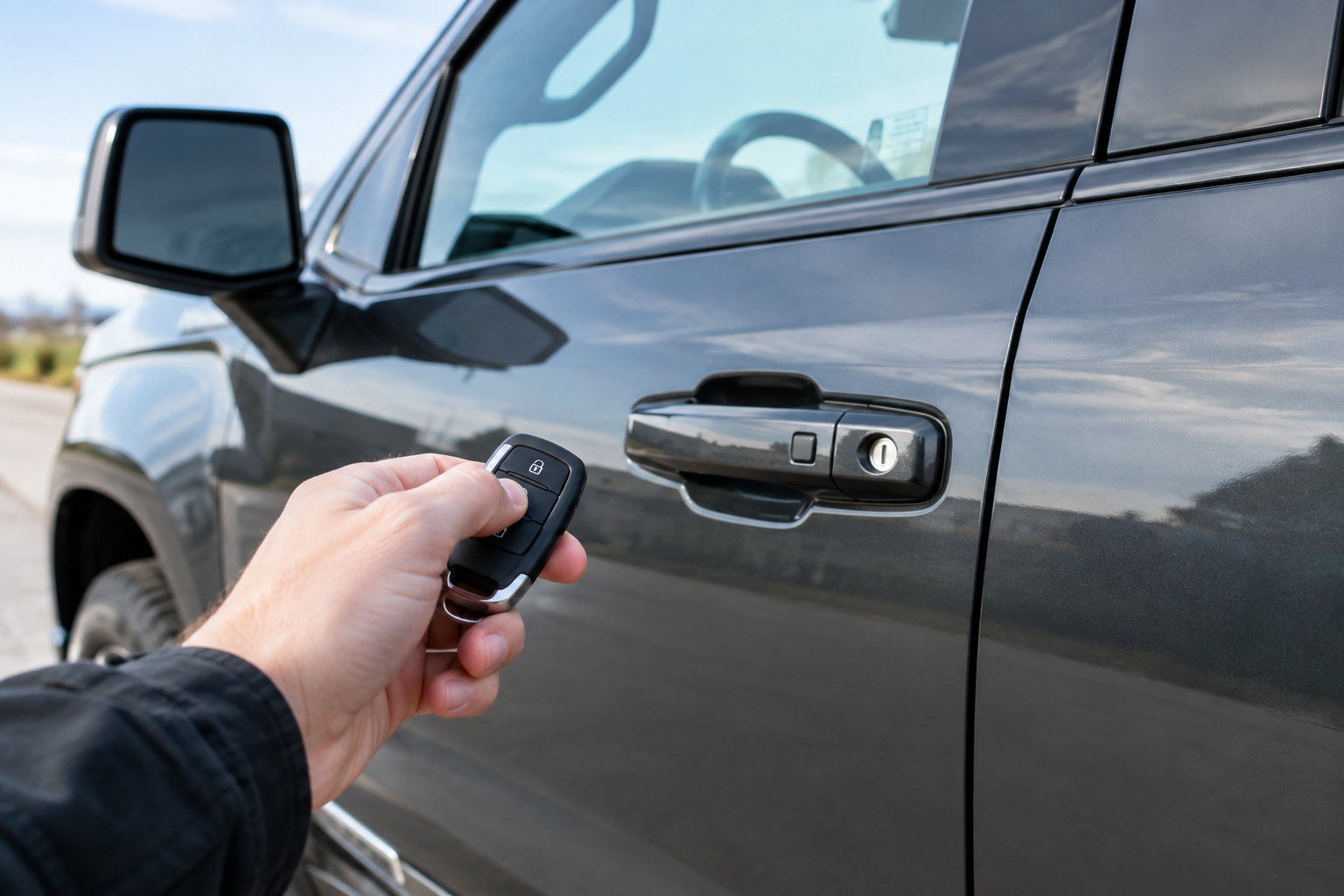
You walk up to your Tahoe with your hands full of groceries, reach for the door handle, and nothing happens. No click, no unlock, no welcome lights. You dig the fob out of your pocket and press the button manually, and the doors pop open fine. So the fob works, but the passive entry doesn’t. That specific combination points to a handful of very common culprits, and most of them you can diagnose yourself in the driveway without a scan tool.
This guide walks through why Chevy’s keyless entry system (GM calls it Passive Entry Passive Start, or PEPS, on Tahoes equipped with it) stops responding to a touch or approach, even though the fob still transmits a signal when you press it. We’ll also cover how to tell if the problem is your fob, one bad door handle, or something on the vehicle side like the body control module or battery voltage.
First, Confirm What “Keyless Entry” Actually Means on Your Tahoe
Not every Tahoe has the same setup, and mixing up terms causes a lot of confusion. GM uses a few different systems depending on trim and model year:
- Remote Keyless Entry (RKE): Pressing the lock/unlock buttons on the fob itself. This works on every Tahoe with a fob.
- Passive Entry Passive Start (PEPS): Touching the door handle (usually a small capacitive pad or button on the back of the handle) unlocks the door as long as the fob is nearby, no button press needed. This is standard on LT trims and above starting with the 2021+ redesign, and optional on earlier LS/LT models.
- Hands-free liftgate: A separate system tied to the same fob that senses a foot kick or button under the bumper.
If your fob buttons work but touching the handle does nothing, you’re dealing specifically with a PEPS problem, not a total keyless entry failure. That distinction matters because it narrows the diagnosis to the handle sensor, the antenna network, or a setting, rather than the fob’s transmitter or battery.
Weak or Dying Fob Battery
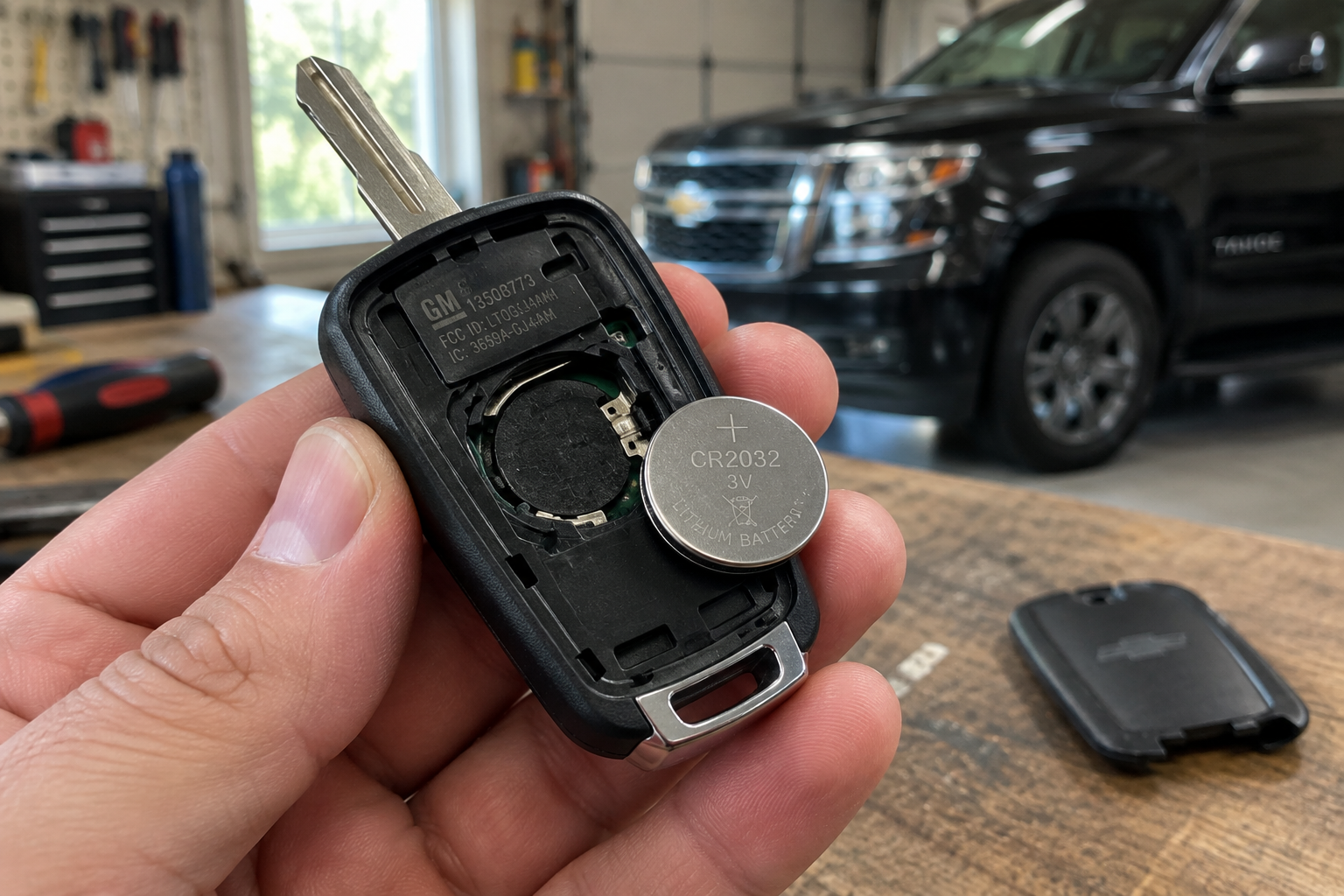
Even if your remote still unlocks the doors when you press the button, a weak battery can be exactly what’s killing the passive entry function. PEPS requires a two-way handshake between the vehicle’s antennas and the fob. That handshake needs more consistent signal strength than a simple one-way button press, which is why a marginal battery often breaks passive entry first while the buttons still limp along for another week or two.
The Tahoe’s fob uses a CR2032 coin cell in most model years. If you haven’t swapped it since you bought the truck, that’s your first and cheapest thing to try.
Chevy Tahoe Key Fob Battery (CR2032)
A fresh CR2032 fixes a surprising number of “dead” passive entry complaints for less than the cost of a coffee.
Pop the fob open (there’s usually a small release button or slot for a flathead screwdriver on the back), swap the battery, and test the handle again before you assume anything electronic has failed.
Fob Sleep Mode and RF Interference
GM fobs go into a low-power sleep state if they sit motionless for an extended period, which is common if you keep a spare fob in a drawer or if your daily fob has been sitting untouched on a counter overnight. Picking it up and pressing any button usually wakes it instantly, but that same fob might not “wake up” fast enough to respond to a passive handle touch until it’s been jostled.
Interference is another sneaky cause. Keeping your fob in the same pocket as a phone, another RFID card, or a second key fob can scramble the low-frequency signal the door handle antenna sends out to wake the fob. If you carry a stack of key fobs on one ring, or your phone case has a magnetic wallet with cards in it, try separating them and test the handle again.
Metal detector-style airport screening, standing near heavy machinery, or parking next to another vehicle broadcasting on a similar frequency can also cause a momentary miss. If passive entry works most of the time but fails intermittently in specific parking spots, interference is a reasonable suspect.
Passive Entry Disabled in Settings
This one catches more people than you’d expect. GM lets you toggle passive entry on and off through the infotainment settings menu, and it’s possible for this to get switched off accidentally, especially after a software update, a battery disconnect, or if someone else drove the truck and poked around the menus.
To check it:
- Press the settings icon on the touchscreen.
- Go to Vehicle or Vehicle Settings, depending on model year.
- Look for Door Locks or Keyless Access.
- Confirm “Passive Entry” or “Passive Unlock” is toggled on.
Some trims also let you set passive entry to unlock only the driver’s door on first touch, requiring a second touch or button press for the rest. If only certain doors are unlocking with a touch, this setting, not a fault, could be the entire explanation.
One Door Handle Not Working vs. the Whole Truck
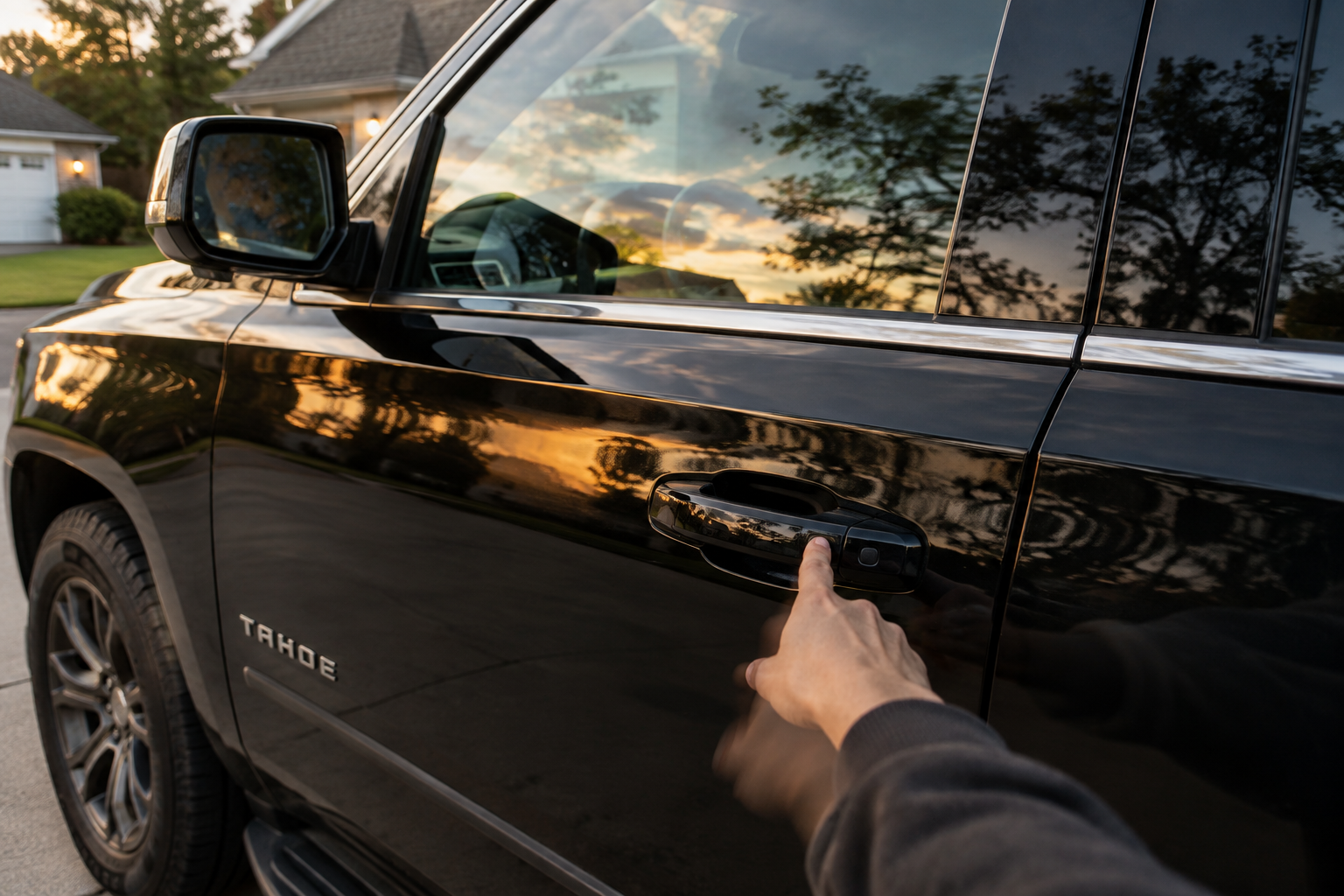
This is the fastest way to tell whether you have a fob problem or a vehicle-side problem. Test every handle on the truck, including the liftgate button if equipped, with the same fob.
- Only one handle fails, all others work fine: That points to a bad handle sensor, a corroded connector, or a wiring fault at that specific door. These sensors take a beating from car washes, road salt, and general weather exposure, and they do fail individually. This is a job for a dealer or independent shop with access to GM’s wiring diagrams, since the door panel needs to come off to access the connector.
- All handles fail, but the fob buttons still lock and unlock: That points to something shared by the whole system, like a body control module fault, a blown fuse for the passive entry antennas, or a dead 12V battery not providing enough voltage to run the low-power antenna network.
- Nothing works at all, including fob buttons: That’s almost always the fob battery or a fob that needs to be reprogrammed/resynced, not a vehicle fault.
Low 12V Battery Voltage
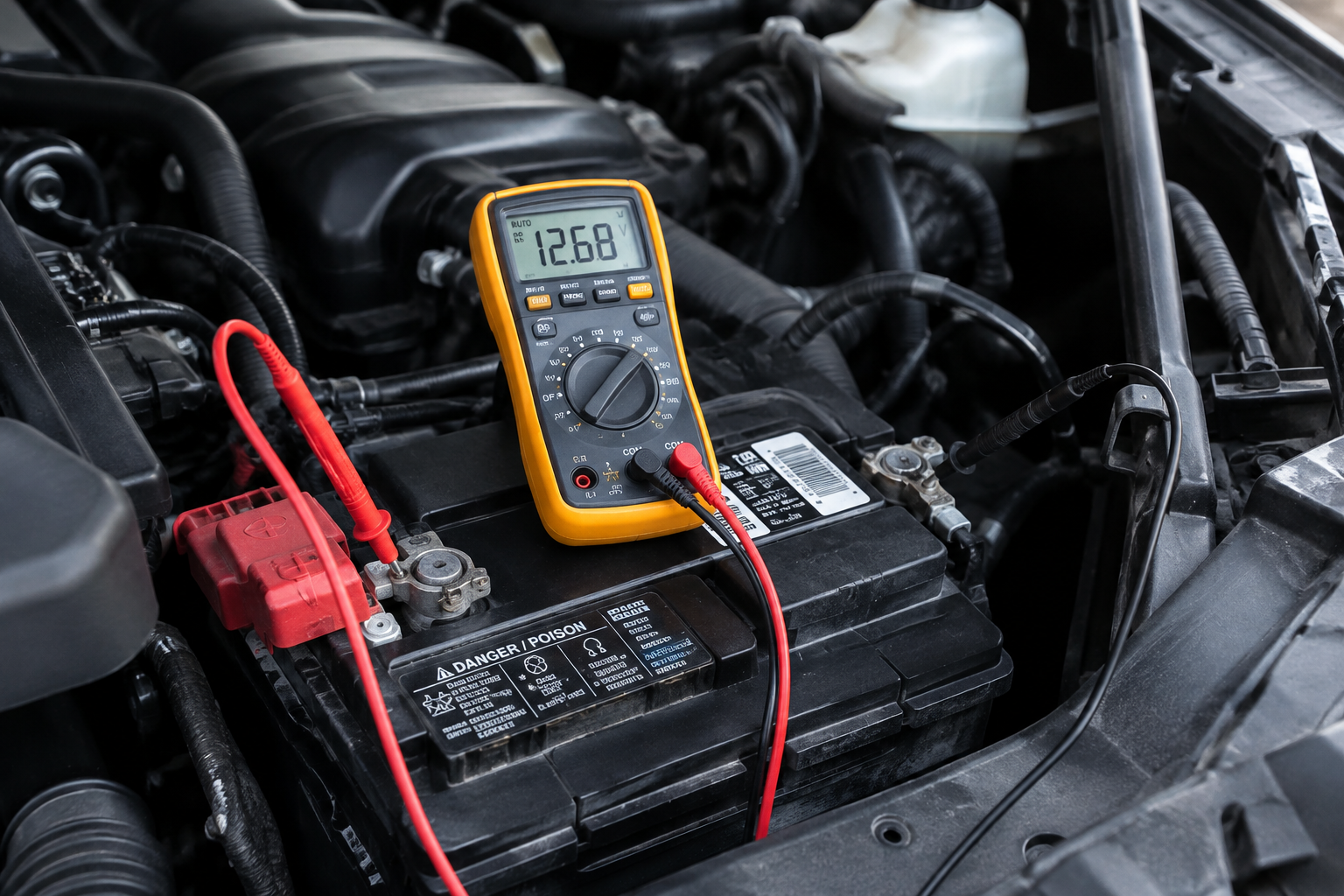
The PEPS antennas around your door handles are constantly listening at low power, and that circuit is one of the more voltage-sensitive systems on the truck. If your 12V battery is aging, has a weak cell, or is barely holding a charge, passive entry is often one of the first features to get flaky, well before you notice slow cranking or dash warning lights.
If your Tahoe sat for a week or more, or you’ve noticed slower start-up, dimming interior lights, or the truck occasionally needing a jump, get the battery load-tested. A lot of auto parts stores will do this for free. This is also worth checking if you’ve recently had electrical work done or installed aftermarket accessories that draw parasitic current.
Model-Year and Trim Differences Worth Knowing
The 2021 and newer Tahoe (the current generation on the T1XX platform) handles passive entry differently than the 2015-2020 trucks. Newer models use capacitive touch sensors built into the handle itself, while older Tahoes with the optional passive entry package used a small black button on the back of the handle that you had to press, not just touch. If you’re used to a touch-only system from a rental or a friend’s newer Tahoe, an older truck may simply require a firmer press in the right spot, not a repair at all.
High Country and Z71 trims have had passive entry standard for longer than base LS trims, where it’s sometimes bundled into an optional convenience package. Check your window sticker or owner’s manual to confirm your truck actually came with the feature before you spend time chasing a “fault” that was never there.
Frequently Asked Questions
Why does my Tahoe fob work up close but not for passive entry from a few feet away?
That range difference is normal and points straight to signal strength. A fob that unlocks the truck when you’re standing right next to the door but won’t trigger passive entry from further away almost always has a weakening battery or is picking up interference from something in your pocket or bag.
Can a bad 12V battery really affect just the door handles and nothing else?
Yes. The passive entry antennas run on very low current and are sensitive to voltage drops that wouldn’t yet cause noticeable problems with headlights, the radio, or engine cranking. It’s often the canary in the coal mine for a battery that’s starting to fail.
Do I need to reprogram my fob after replacing the battery?
No. Swapping the CR2032 battery doesn’t erase the fob’s pairing with your Tahoe. If the fob stops working entirely after a battery swap, double check the battery is seated correctly and facing the right direction rather than assuming you need to reprogram anything.
Passive entry problems on the Tahoe are almost always fixable without a dealer visit once you’ve narrowed down whether it’s the fob, one handle, or the whole vehicle. Start with the cheap and easy stuff, a fresh battery and a settings check, before you assume you need a new sensor or module. If you’re chasing down other electrical quirks on your Tahoe, like the rear seat reminder alert, or dealing with a related GM SUV, our guide to the Yukon’s rear seat reminder covers similar settings menus you’ll already be familiar with.
Leave a Reply