
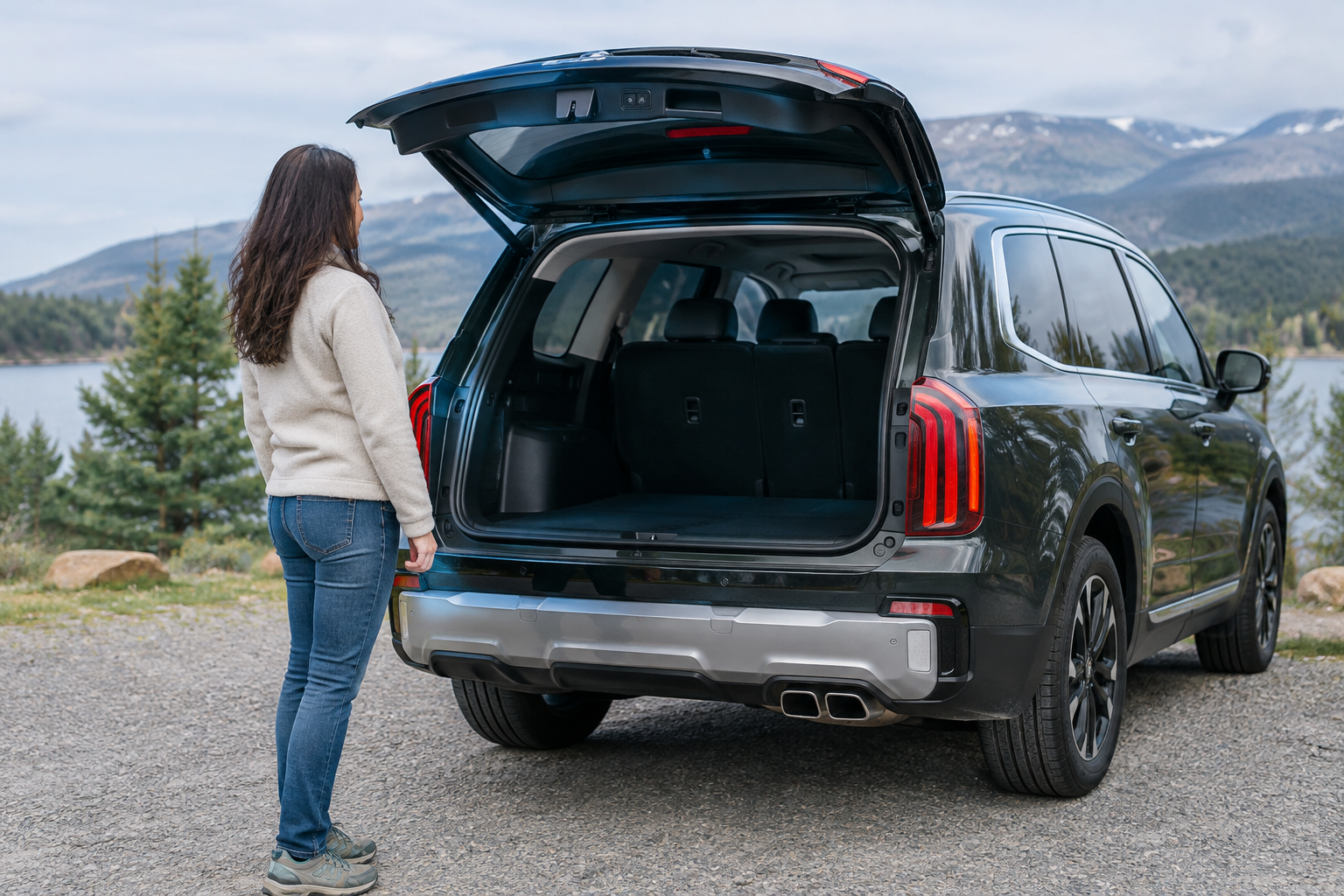
A power liftgate that suddenly refuses to cooperate is one of those problems that feels minor until you’re standing in a parking lot with groceries in your arms and a hatch that won’t budge. The Kia Telluride’s hands-free power liftgate is a genuinely useful feature when it’s working right, but the system relies on a chain of sensors, motors, and modules that can each cause a different symptom when something goes wrong. Before you assume you need a trip to the dealer, it helps to know which issues are simple fixes and which ones point to a failing component.
Start With the Basics: Which Telluride Trims Have This Feature
The power liftgate has been standard or available across most Telluride trims since the model launched for the 2020 model year, but the hands-free foot-sensor version (where you wave your foot under the rear bumper) is typically reserved for higher trims like the EX, SX, and X-Line/X-Pro depending on year. Base LX trims in earlier years sometimes came with a manual liftgate instead. If your Telluride isn’t opening hands-free at all and never has, check your owner’s manual to confirm your trim actually includes that sensor before you start chasing a “problem” that’s actually just a missing feature.
Kia also made small software and hardware revisions across model years, so a 2020 Telluride and a 2023 or newer Telluride can behave slightly differently even when the symptom sounds the same. Keep your model year handy if you end up calling a dealer or ordering parts.
Liftgate Won’t Open or Won’t Respond at All
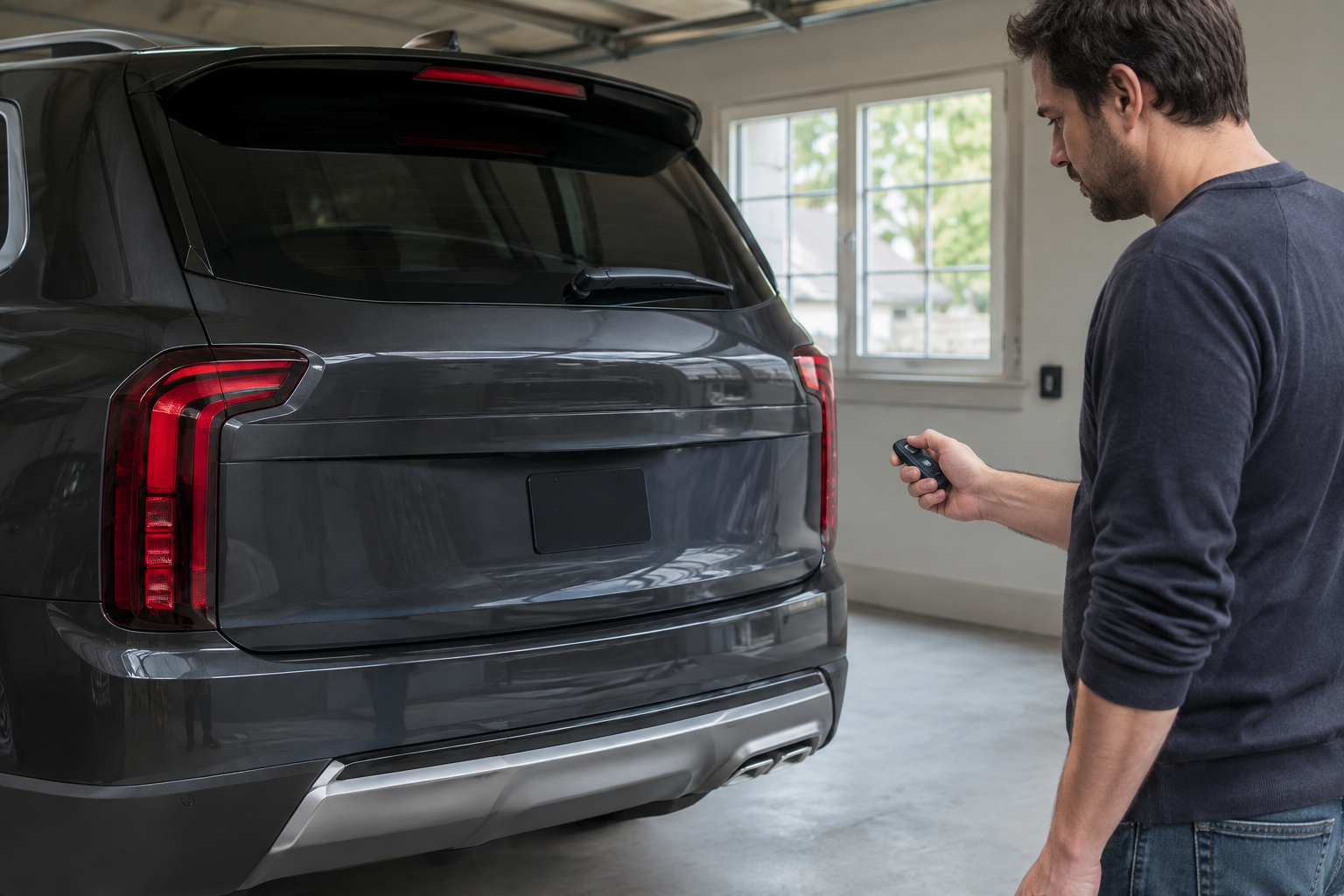
When the liftgate does nothing at all, whether you’re using the key fob button, the interior switch, or the exterior handle button, the cause is usually electrical rather than mechanical.
- Check the fuse first. The Telluride’s power liftgate runs through a dedicated fuse in the engine bay fuse box. A blown fuse will kill the entire system instantly, and it’s the cheapest possible explanation.
- Low 12V battery voltage. The liftgate motor needs a healthy charge to operate. If your battery is weak or the vehicle has been sitting for a while, the system may refuse to open as a protective measure. Try starting the car and letting it run for a minute before testing the liftgate again.
- Key fob battery. If only the fob-triggered opening fails but the interior button works fine, the fob’s coin battery is the likely culprit.
- Child safety lock or manual lock switch. Some owners accidentally engage the manual override switch located on the inside of the liftgate itself, which disables power operation until it’s switched back.
If none of these solve it, a scan tool that reads body control module codes will usually point straight at the failed component, similar to how diagnosing an intermittent electrical gremlin in other systems, like the issue covered in this guide on rear-end noises that get louder with speed, often comes down to isolating one bad part in a chain of otherwise fine components.
Liftgate Reverses, Stops Partway, or Won’t Fully Close
This is the most common complaint owners report, and it almost always traces back to the obstruction detection system doing exactly what it’s designed to do, just for the wrong reason.
Obstruction and Pinch Sensors
The liftgate uses force sensors to detect resistance while moving. If it senses anything unexpected, ice buildup, a stuck weatherstrip, road grime in the track, or even strong wind pushing back on the panel, it will stop and reverse automatically as a safety measure. Clean the rubber seals around the liftgate opening and the latch striker area, since dirt and debris here are a surprisingly frequent cause of false triggers.
Height Memory Setting Conflicts
The Telluride lets you set a maximum open height for garages with low clearance. If this height is set too low, or if it gets corrupted after a battery disconnect, the liftgate may stop partway and behave as though something is blocking it. Reset the height by opening the liftgate fully, holding the close button on the liftgate switch or interior panel until it beeps, then setting your preferred height again per your owner’s manual instructions for your model year.
Failing Struts or Drive Unit
If the liftgate feels like it’s straining, moving slower than it used to, or drooping when you try to hold it open manually, the power struts (also called lift supports) are likely wearing out. These are gas-charged cylinders that lose pressure over time, and once they weaken, the liftgate motor has to work harder, which can trip the pinch sensor even when nothing is actually obstructing it.
Kia Telluride Power Liftgate Strut
A direct-fit replacement strut set is often the fix when the liftgate sags, moves slowly, or falsely triggers the obstruction sensor.
Replacing both struts as a pair, rather than just the one that looks worse, keeps the liftgate moving evenly and reduces strain on the motor. It’s a reasonable weekend fix for anyone comfortable with basic tools, and it’s far cheaper than paying a shop for labor on a job that mostly involves popping out two ball-socket clips.
Latch Problems and the Liftgate That Won’t Latch Shut
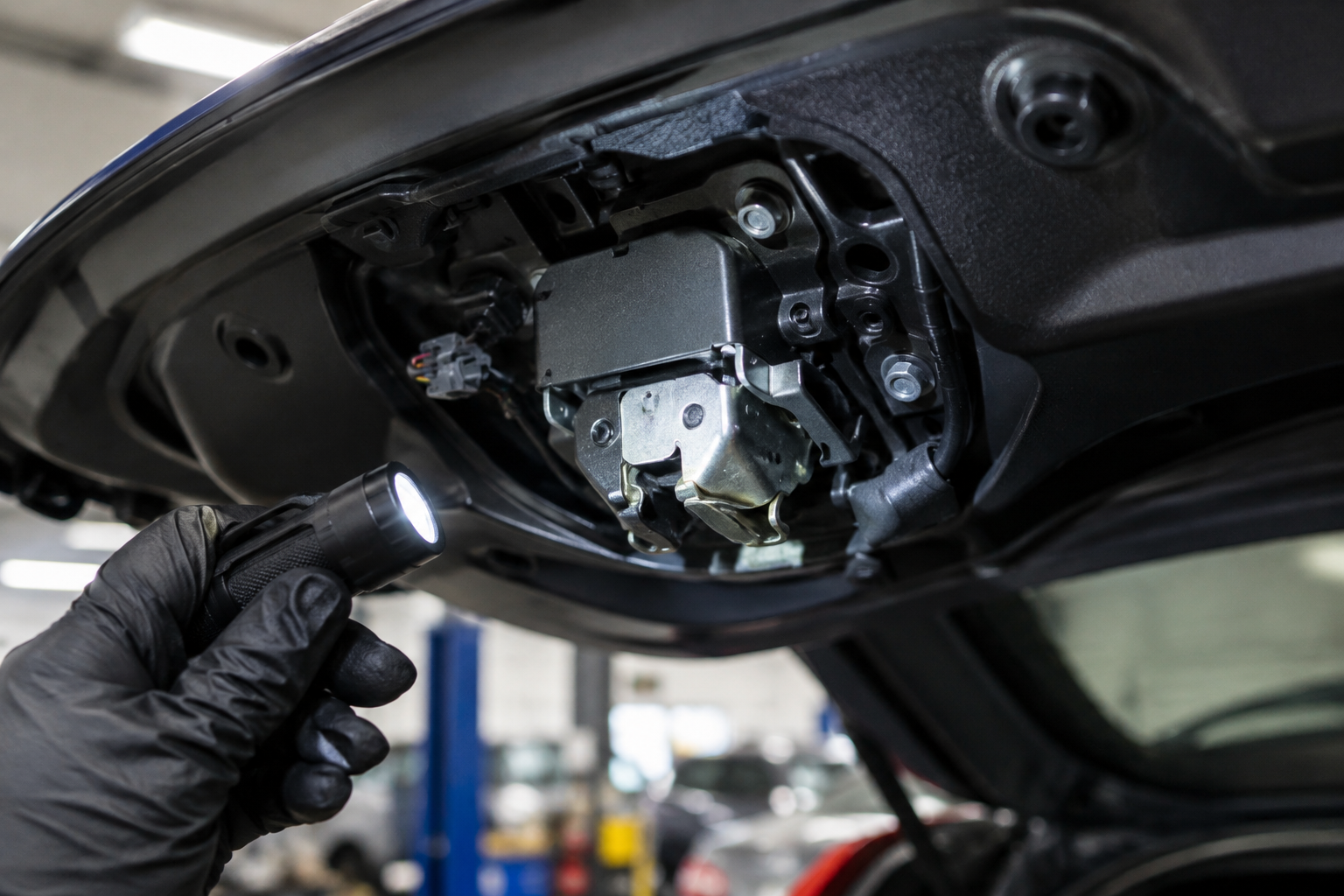
If the liftgate powers down but doesn’t actually latch, or it clicks and then pops back open, the latch assembly itself may be misaligned or failing. Road salt and moisture are common causes of latch corrosion in the Telluride, especially in colder climates. A liftgate that latches fine when you push it manually but fails under power suggests the motor isn’t delivering enough force to seat the latch, which again points back to worn struts or a weakening drive motor rather than the latch itself.
Try manually closing the liftgate firmly by hand first. If it seats and locks normally that way, you’ve isolated the problem to the powered closing mechanism rather than the latch hardware.
Hands-Free Foot Sensor Not Working
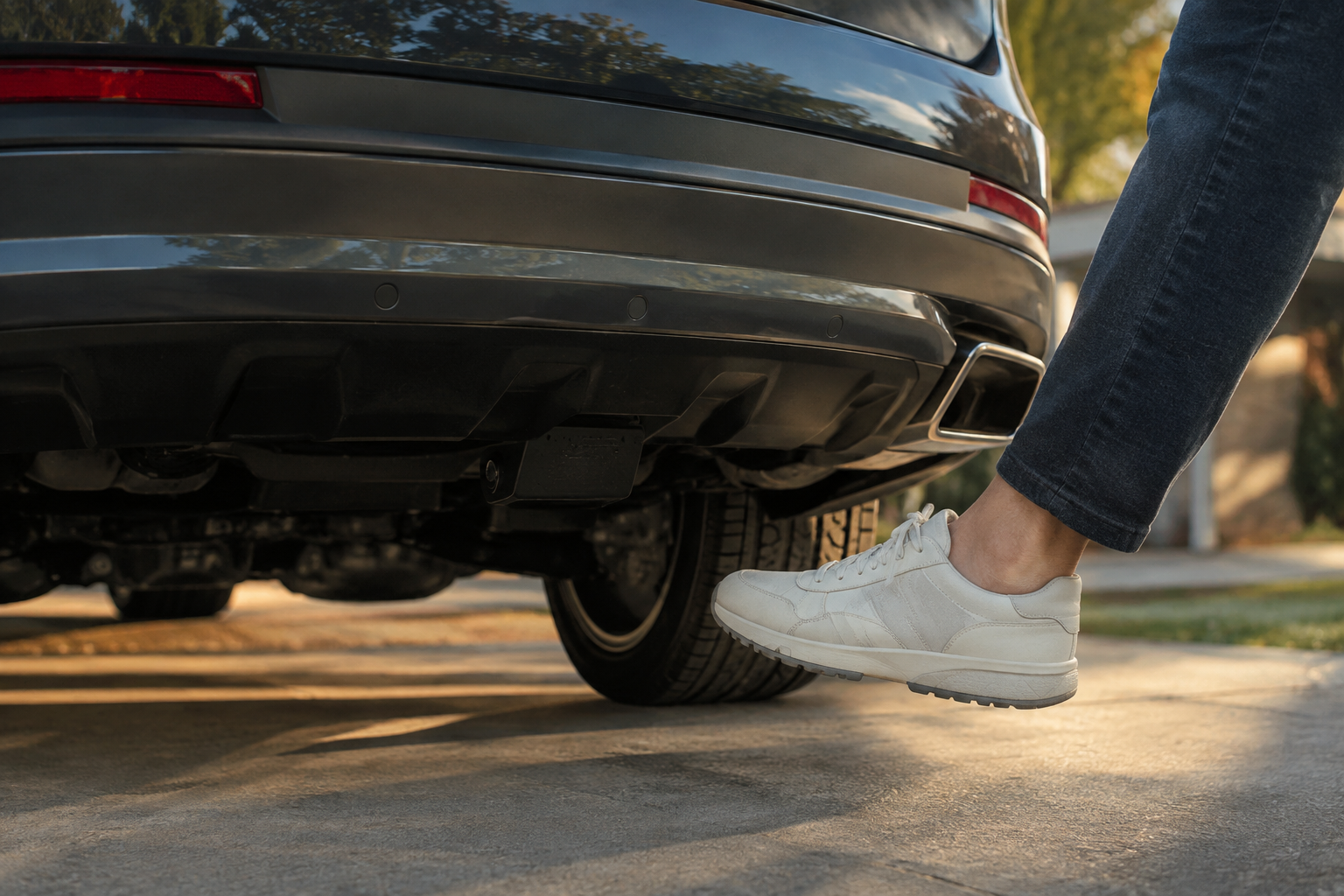
On trims equipped with the foot-activated sensor, the most common complaint isn’t total failure, it’s inconsistency. A few things affect reliability:
- Mud, snow, or a dirty rear bumper can block the sensor’s detection zone.
- The key fob needs to be within a few feet of the vehicle, typically in a pocket or bag, for the sensor to arm.
- Some owners accidentally disable the feature entirely through the vehicle’s settings menu without realizing it.
Check your Telluride’s settings menu (accessible through the touchscreen under vehicle settings or convenience settings depending on year) to confirm the hands-free feature is toggled on. It’s an easy thing to switch off by accident, similar to how drivers sometimes disable other convenience or alert features without meaning to, the way owners have had to relearn settings menus for things like the driver attention warning system on the Telluride.
Resetting the System After a Battery Disconnect or Fault
Anytime the 12V battery is disconnected, replaced, or dies completely, the power liftgate module often loses its calibration for open height and closing force. Kia’s reinitialization procedure generally involves:
- Opening the liftgate fully by hand.
- Pressing and holding the close switch (on the liftgate itself, not the fob) until you hear a chime or see a brief motor response.
- Allowing the liftgate to cycle open and closed once under power without interruption.
- Testing the height memory setting again since it may need to be reprogrammed.
If the system won’t reinitialize this way, a dealer scan tool can force a relearn, and this is usually covered under warranty if your Telluride is still within its coverage window.
Manual Operation Differences by Year
Every Telluride model year allows manual operation as a fallback, but the exact steps to disable power assist before manually forcing the liftgate vary slightly. Earlier 2020-2021 models use a small switch on the inside trim panel of the liftgate to fully disable power operation, while newer model years integrated this into the touchscreen settings alongside the height adjustment. Always disable power mode before forcing the liftgate manually, since fighting against an active motor can damage the drive gears or strip the clutch mechanism inside the actuator, turning a cheap fix into an expensive one.
Frequently Asked Questions
Why does my Kia Telluride liftgate open partway and then stop?
This is almost always the pinch/obstruction sensor reacting to a dirty seal, ice, wind resistance, or a low battery voltage condition. Clean the weatherstripping and latch area first, then check your battery’s charge before assuming a mechanical failure.
Can I replace the power liftgate struts myself?
Yes. Most Telluride power struts attach with simple ball-socket clips that pop off with a flathead screwdriver or trim tool. Replacing both sides as a matched pair usually takes under thirty minutes and resolves sagging or slow-closing symptoms without touching the electronics.
Does a dead 12V battery affect the power liftgate even if the car starts fine?
Yes. The liftgate motor and its sensors are sensitive to voltage drops, and a battery that’s weak but still capable of starting the engine can still cause the liftgate to behave erratically, reverse unexpectedly, or refuse to open at all.
Leave a Reply