
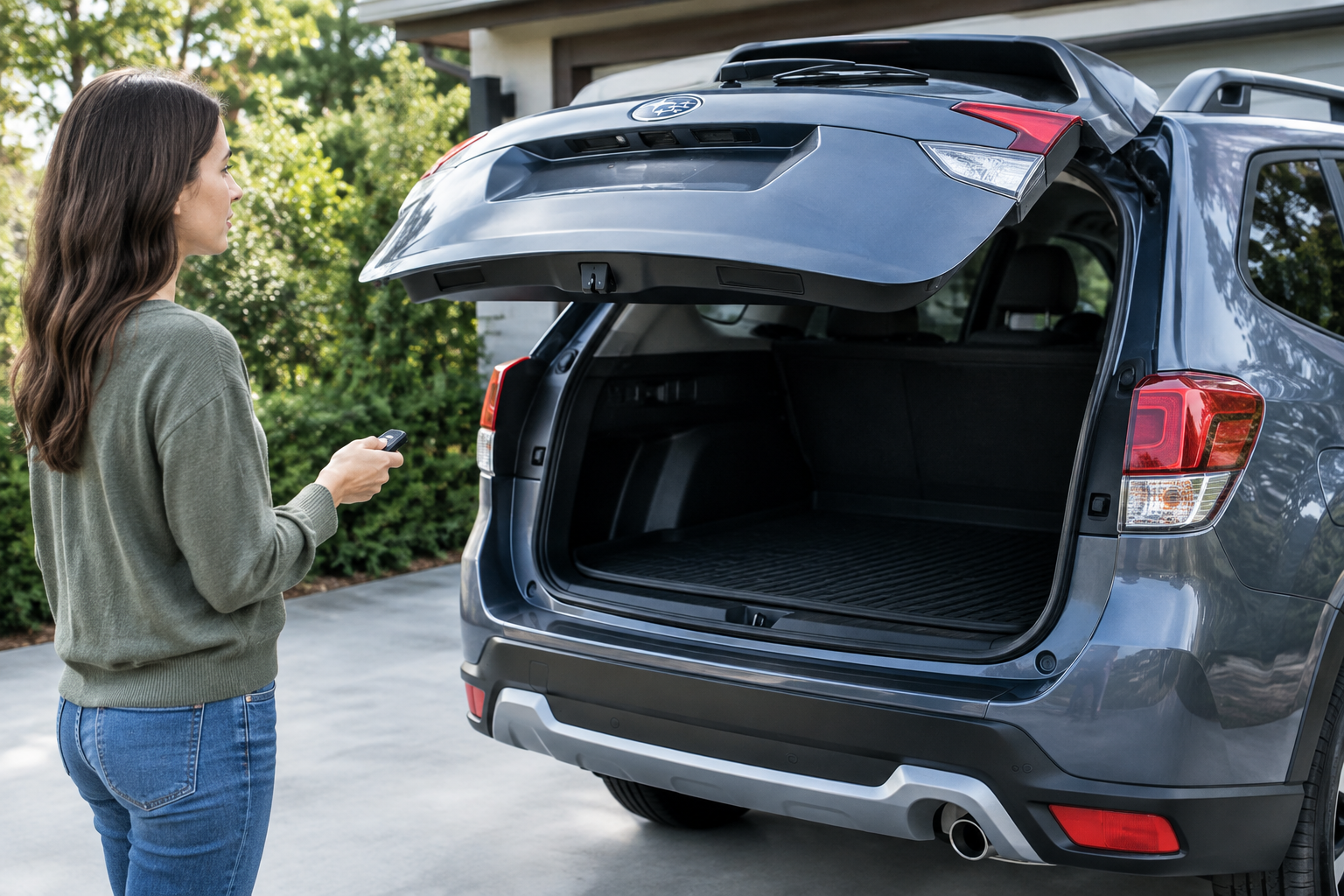
A power liftgate that suddenly refuses to cooperate is one of those problems that seems to come out of nowhere. One day you’re tapping the button on your key fob and the tailgate swings open smoothly, and the next day it either won’t budge, stops halfway, or slams closed on its own like it has a mind of its own. Before you assume the worst and start pricing out a new liftgate motor, it helps to know that most of these issues trace back to a handful of common culprits, and several of them you can fix yourself in a few minutes.
The Subaru Forester has offered a power rear gate since the 2014 model year on higher trims like Touring and Limited, and it became more widely available with each redesign. Whether you’re driving a 2015, an SK-generation 2019-2024 Forester, or the newer models, the underlying system works the same way: a pair of electric struts (or a cable-drive motor on some trims) push and pull the gate, guided by sensors that watch for obstructions and a control module that remembers your preferred open height. When any piece of that chain gets interrupted, the whole system can act unpredictably.
Start With the Basics: Battery Voltage and Fuses
Low battery voltage is the number one reason a power liftgate starts acting erratic before it fails completely. The liftgate motor needs a strong, steady current to run, and if your battery is weak, aging, or your alternator isn’t charging properly, the module may cut power mid-cycle to protect itself. This shows up as a gate that stops partway open, reverses for no reason, or refuses to move at all.
Check your battery voltage with a simple multimeter. You want to see around 12.6 volts with the engine off and closer to 13.7 to 14.7 volts running. If your readings are low, charge or replace the battery before you chase anything else on this list, because every other troubleshooting step assumes the electrical system is healthy.
Next, check the fuses. The Forester’s power liftgate typically pulls from a fuse in the engine bay fuse box, and a blown fuse will kill the system completely rather than causing intermittent behavior. Your owner’s manual has the fuse diagram, but look for one labeled “Liftgate” or “Rear Gate” in the under-hood box. A cheap fuse tester makes this a thirty-second check instead of pulling fuses one by one.
Height-Memory Settings Are Probably Not Set Right
One of the most overlooked reasons a Forester’s power gate seems to malfunction is that the height-memory setting is wrong for your garage or driveway. If you set the maximum open height too tall at some point and then park in a garage with a lower ceiling, the gate can hit the ceiling, trigger the obstruction sensor, and reverse itself, and it’ll keep doing that every single time until you adjust the setting.
To reprogram the height on most Forester model years, open the liftgate fully using the button, then hold the close button (either the interior switch near the driver’s seat or the button on the gate itself) once it reaches the height you want. Release it, and the system should chime or flash to confirm the new position is saved. On 2019 and newer Foresters, this setting lives in the same switch cluster to the left of the steering wheel, right around where you’d also find the controls covered in our guide to turning off DriverFocus on the Subaru Forester.
If reprogramming doesn’t stick, or the gate keeps reverting to a default height, that’s often a sign the control module needs a full reset rather than a simple reprogram, which we’ll cover below.
Obstruction and Pinch Detection Triggering False Stops
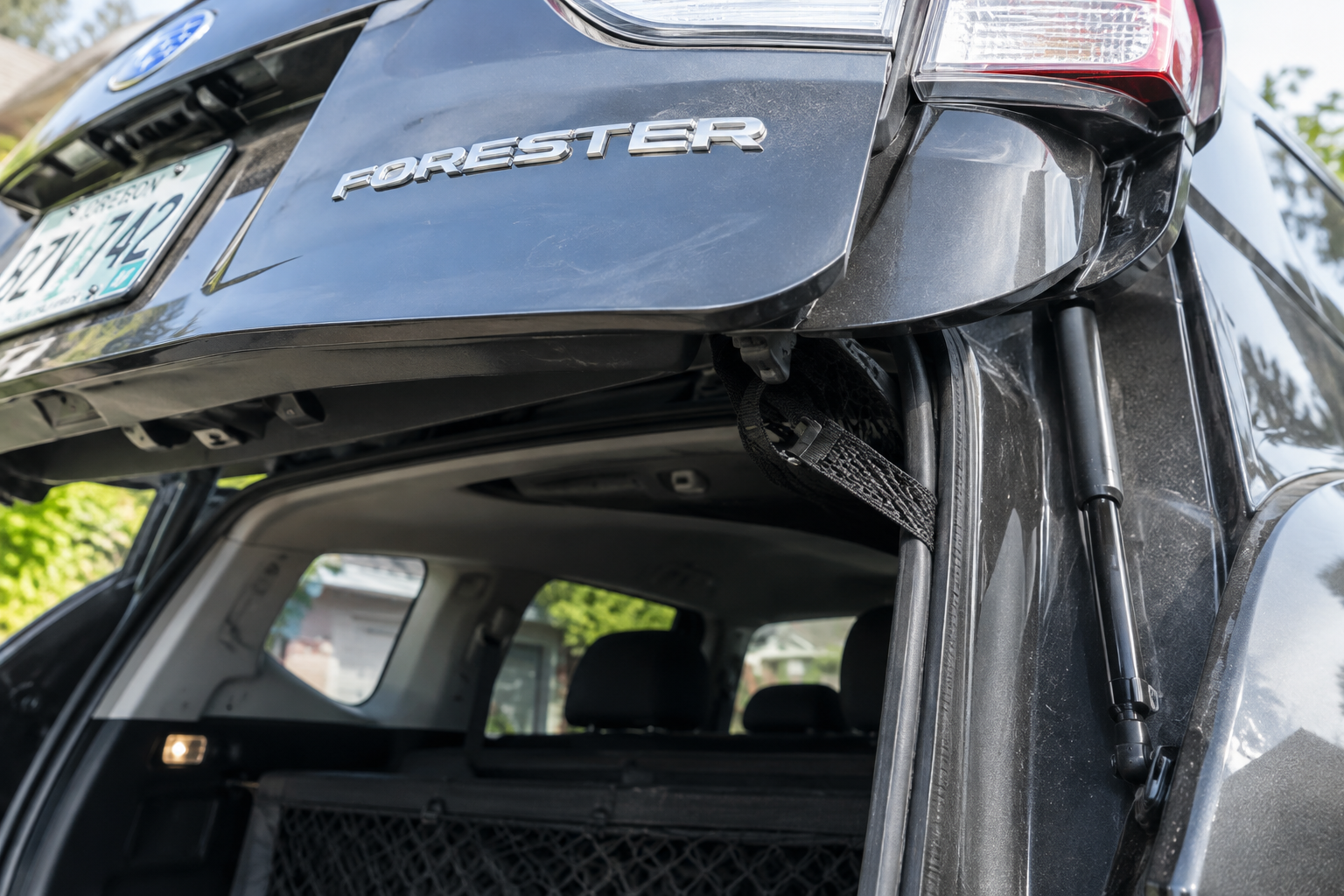
Subaru built the power liftgate with anti-pinch sensors that stop and reverse the gate the instant they detect resistance. This is a safety feature, but it’s also one of the most common reasons people think their liftgate is “broken” when it’s actually working exactly as designed.
Common triggers include:
- Ice, snow, or frozen weatherstripping along the seal
- A cargo net, tonneau cover, or loose strap hanging into the gate’s path
- Debris or grit built up in the tracks along the sides of the opening
- A misaligned gate from a minor bump or fender-bender that throws off the sensor’s calibration
Wipe down the rubber seal and the metal tracks with a clean cloth and inspect for any buildup, especially after winter driving. If you live somewhere with harsh winters, frozen door seals are a legitimate and very common cause of a liftgate that won’t fully close, so give it a few minutes to warm up or gently break the ice free before assuming it’s mechanical.
Latch Problems and Why the Gate Won’t Latch Closed
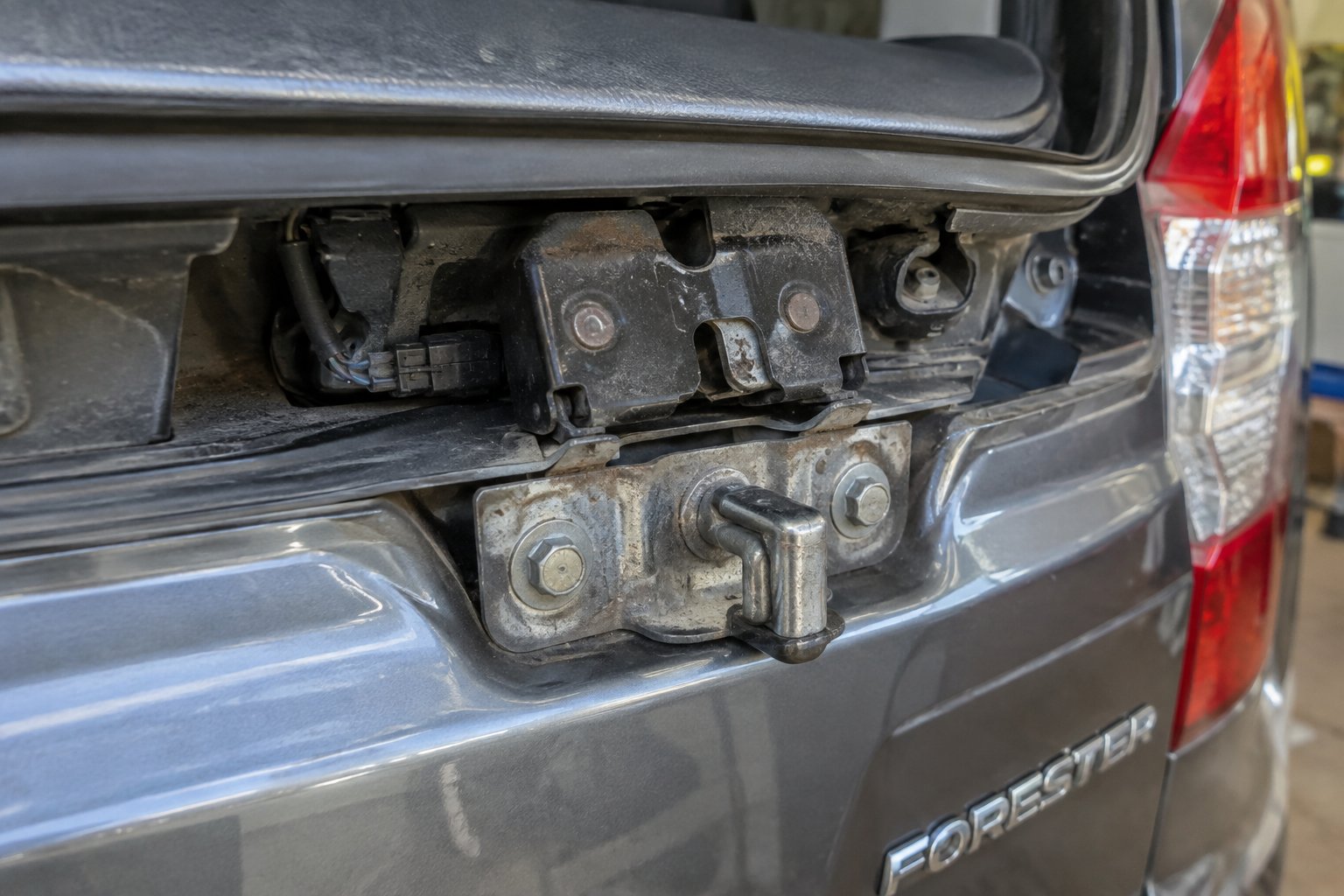
If the liftgate closes most of the way but won’t latch, or it closes and then pops back open, the latch mechanism itself is the likely suspect. The latch has its own small motor and switch that confirms the gate is fully secured, and Subaru’s software won’t let the system report “closed” until that switch is satisfied.
Debris in the latch striker, a bent striker pin from someone pushing the gate closed too hard, or a worn latch motor can all prevent that confirmation signal. You can test this by manually pushing the gate firmly closed until you hear the motor cycle and the latch click into place. If it consistently needs extra force to latch, the striker alignment is probably off and may need adjustment by a technician, or the latch assembly itself may be wearing out.
Failing Liftgate Struts Are the Most Common Long-Term Failure
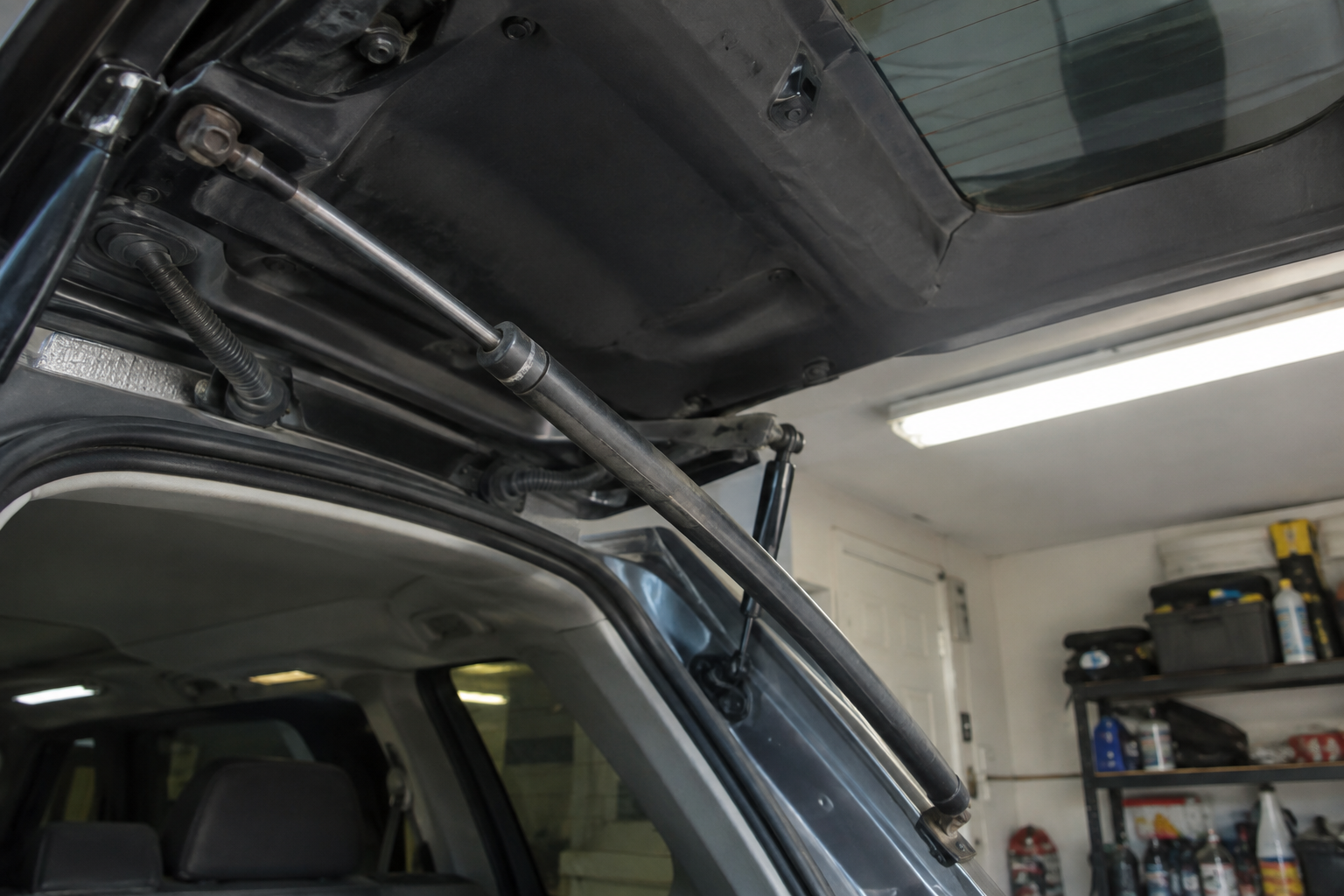
If your Forester is a few years old and the gate has gotten noticeably slower, sags on its own, or struggles to stay up, worn power struts are almost certainly the cause. These are the two gas-and-electric struts on either side of the opening that do the physical lifting, and like any strut, they lose pressure and wear out over time, especially in extreme heat or cold.
You’ll notice the symptoms gradually. The gate might start slow, then get slower, then start drifting down on its own even when the system says it’s fully open. Eventually one or both struts won’t have enough force left to lift the gate at all, and the motor will strain and either stall out or trip a fault code.
Subaru Forester Power Liftgate Strut
A direct-fit replacement strut is often cheaper than a single dealer part and takes about 20 minutes per side to swap.
Replacing struts is one of the more approachable DIY jobs on a Forester. You typically need a small pry tool to pop the retaining clip, a friend to hold the gate steady, and about fifteen to twenty minutes per side. Always replace both struts together even if only one has failed, since the mismatched lift force between an old and new strut will cause uneven movement and put more strain on the new one.
Key Fob, Interior Button, and Hands-Free Sensor Behavior
Not every power liftgate complaint is mechanical. Sometimes the issue is simply that the input method you’re using isn’t working the way you think it should, and it helps to understand how each control is supposed to behave.
Key Fob Button
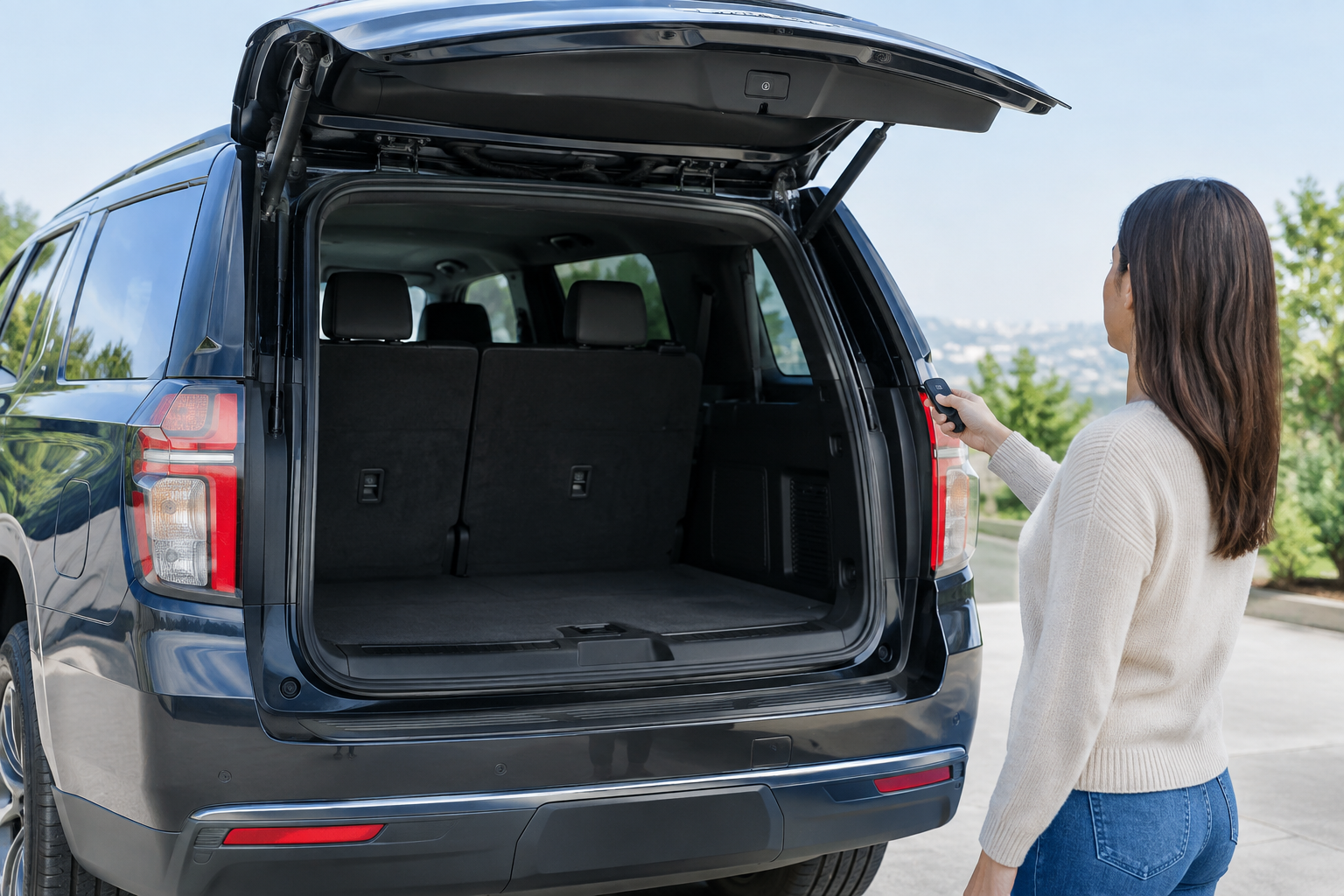
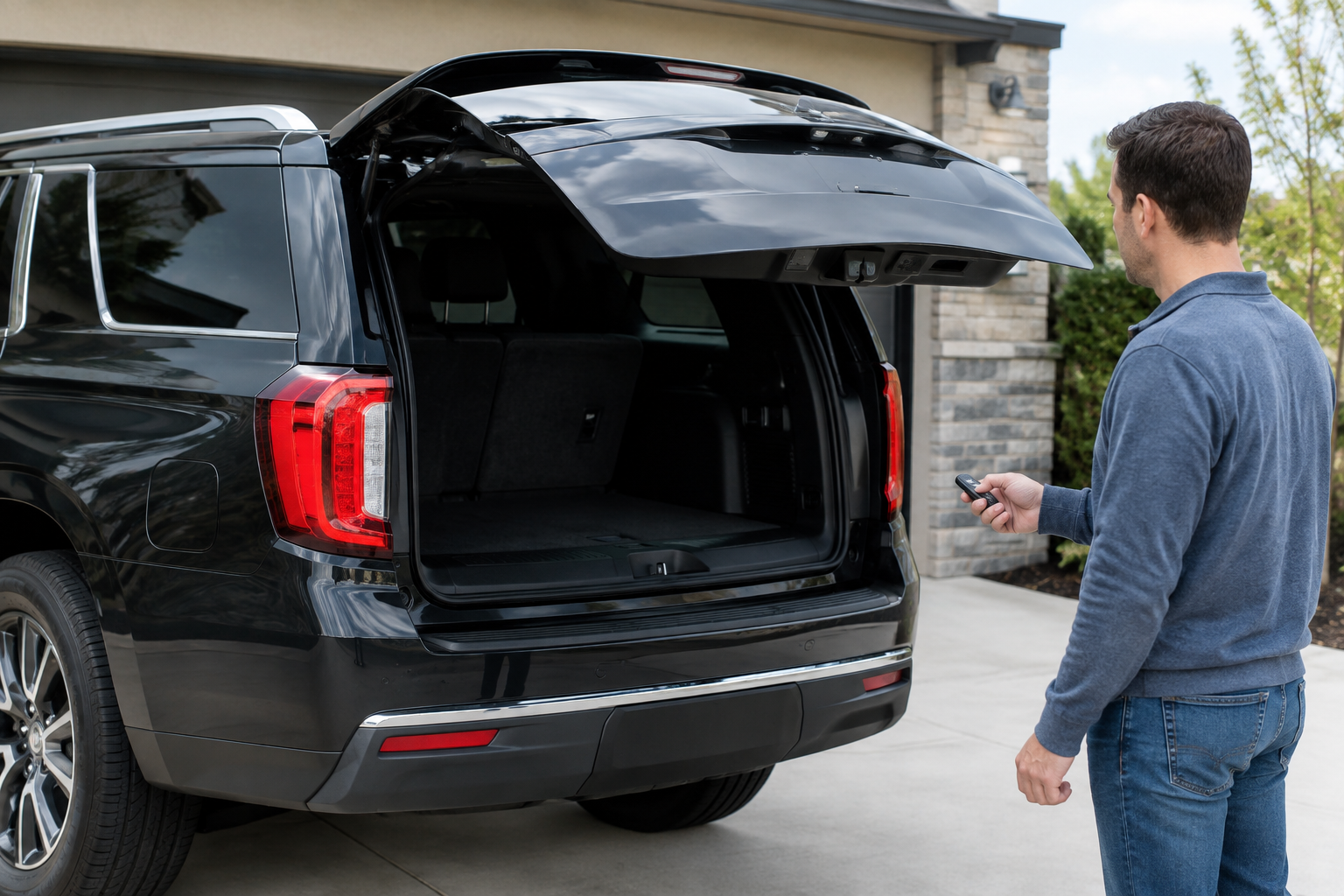
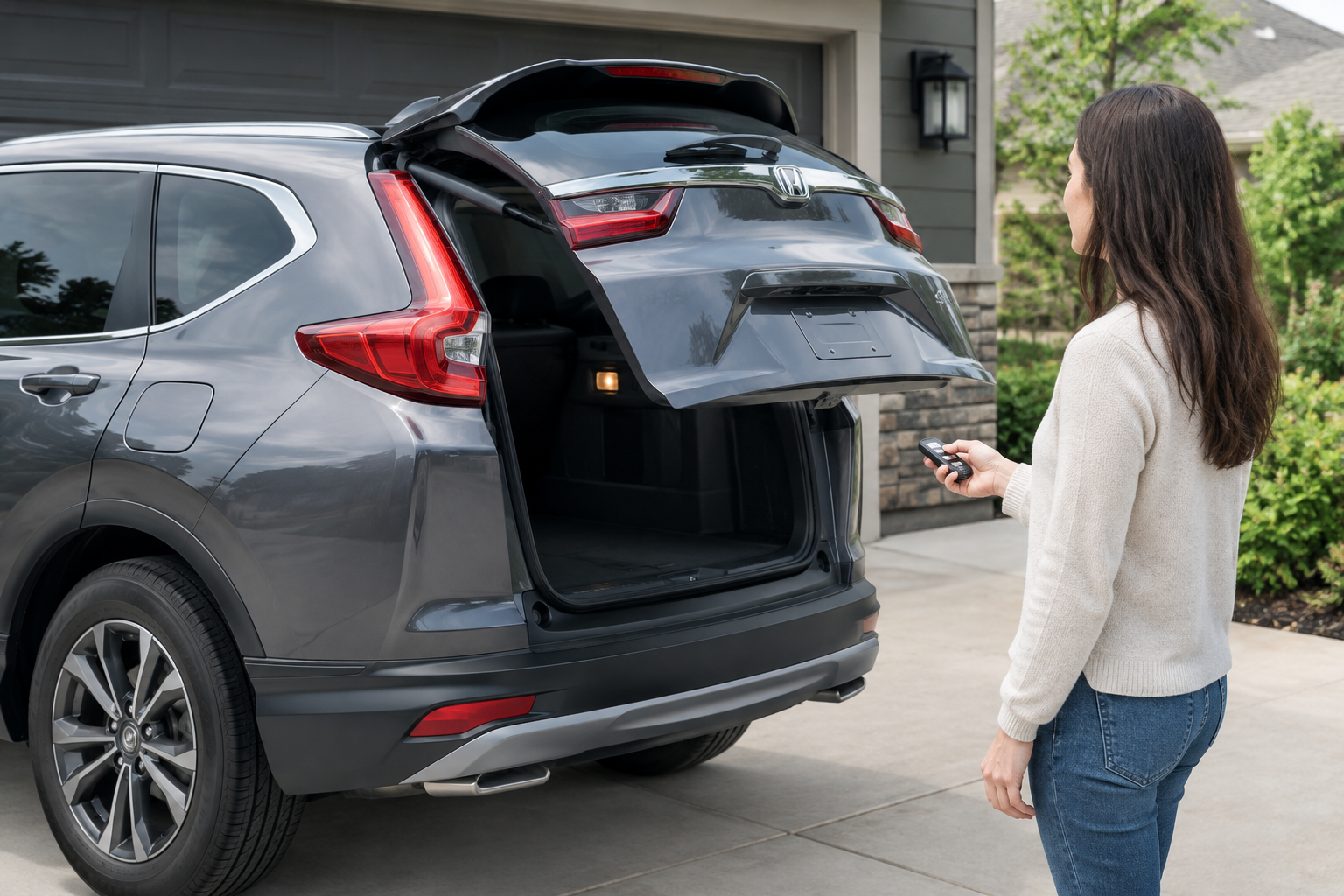
Pressing and holding the liftgate button on your key fob for about two seconds should trigger the gate from a distance, typically within the range Subaru specifies in the owner’s manual, usually around 30 feet. If nothing happens, check the fob’s battery first. A weak coin-cell battery in the fob is a sneaky cause of intermittent failures that people often blame on the vehicle itself.
Interior Dash Switch
The switch near the driver’s door or on the center console should open and close the gate the same way the fob does. If this switch stops responding but the exterior button on the gate still works, you’re likely looking at a wiring or switch failure rather than a problem with the liftgate motor itself.
Hands-Free Kick Sensor
On Foresters equipped with hands-free power liftgate (typically Limited and Touring trims from 2019 onward), waving your foot under the rear bumper should trigger the gate as long as the key is within range. This sensor is sensitive to debris, road grime, and even heavy accumulations of road salt. Clean the sensor area under the rear bumper with a soft brush and see if that resolves inconsistent triggering before assuming the sensor itself has failed.
Resetting and Reinitializing the Power Liftgate System
When the gate is acting erratic across multiple inputs, a full reinitialization often clears out whatever confused state the control module is stuck in. This is different from just reprogramming the height memory, since it forces the module to relearn the full range of travel from scratch.
The general procedure across most Forester model years works like this:
- Turn the ignition off and disconnect the negative battery terminal for about one minute
- Reconnect the battery and turn the ignition to the “on” position without starting the engine
- Manually open the liftgate fully by hand, slowly, until it reaches its natural full-open stop
- Close the gate manually the same way until it latches
- Test the power function using the interior switch first, then the fob and hands-free sensor if equipped
Some model years require you to hold the interior switch for a few seconds after reconnecting the battery to trigger the relearn sequence, so check your specific owner’s manual if the gate doesn’t respond normally after the steps above. If the reset doesn’t stick and the gate reverts to erratic behavior within a day or two, that points toward a hardware fault, like a failing strut or a bad connection, rather than a software glitch.
When the Gate Only Works Manually
If you can push and pull the liftgate by hand but the power function has stopped responding entirely, that’s a different situation than partial failures. This usually means either a fuse has blown, the motor has failed outright, or there’s a break in the wiring harness at the hinge, which flexes every time the gate opens and closes and can eventually crack the wires inside.
Manually operating the gate is safe to do on every Forester model year, but you should always turn the power liftgate function off first if you plan to leave it in manual mode for a while, since a control module trying to sync with a gate that isn’t cooperating can drain your battery faster than normal. If you’re dealing with a fully manual gate for more than a day or two, it’s worth getting the wiring harness at the hinge inspected before the small crack becomes a complete break that’s harder to diagnose.
FAQ
Why does my Forester’s liftgate open partway and then stop?
This is almost always the anti-pinch sensor detecting resistance, whether from ice, debris in the track, or a slightly misaligned gate. Check the weatherstripping and tracks for obstructions first, and if the problem persists in clear weather with a clean gate, weak struts or low battery voltage are the next things to check.
Can I still drive with the power liftgate stuck open?
Yes, but you shouldn’t drive any real distance with it open since it affects the car’s aerodynamics, can let in exhaust fumes at highway speeds, and leaves your cargo exposed. If you can close it manually, do so and disable the power function until you’ve diagnosed the issue.
How much does it cost to fix a Subaru Forester power liftgate?
It depends heavily on the cause. A blown fuse or dead fob battery costs next to nothing to fix, while a full strut replacement is a moderate DIY expense if you do it yourself, or somewhat more at a shop. A failed control module or motor assembly is the most expensive repair path, so it’s worth ruling out the cheaper causes first.
Does the power liftgate work the same way on every Forester model year?
The core function is similar, but hands-free foot-sensor activation wasn’t standard until later Touring and Limited trims starting around 2019. Earlier models with the power gate option rely on the key fob and interior/exterior buttons only, so if your foot-sensor activation isn’t working, first confirm your trim and model year actually include that feature.

Leave a Reply