
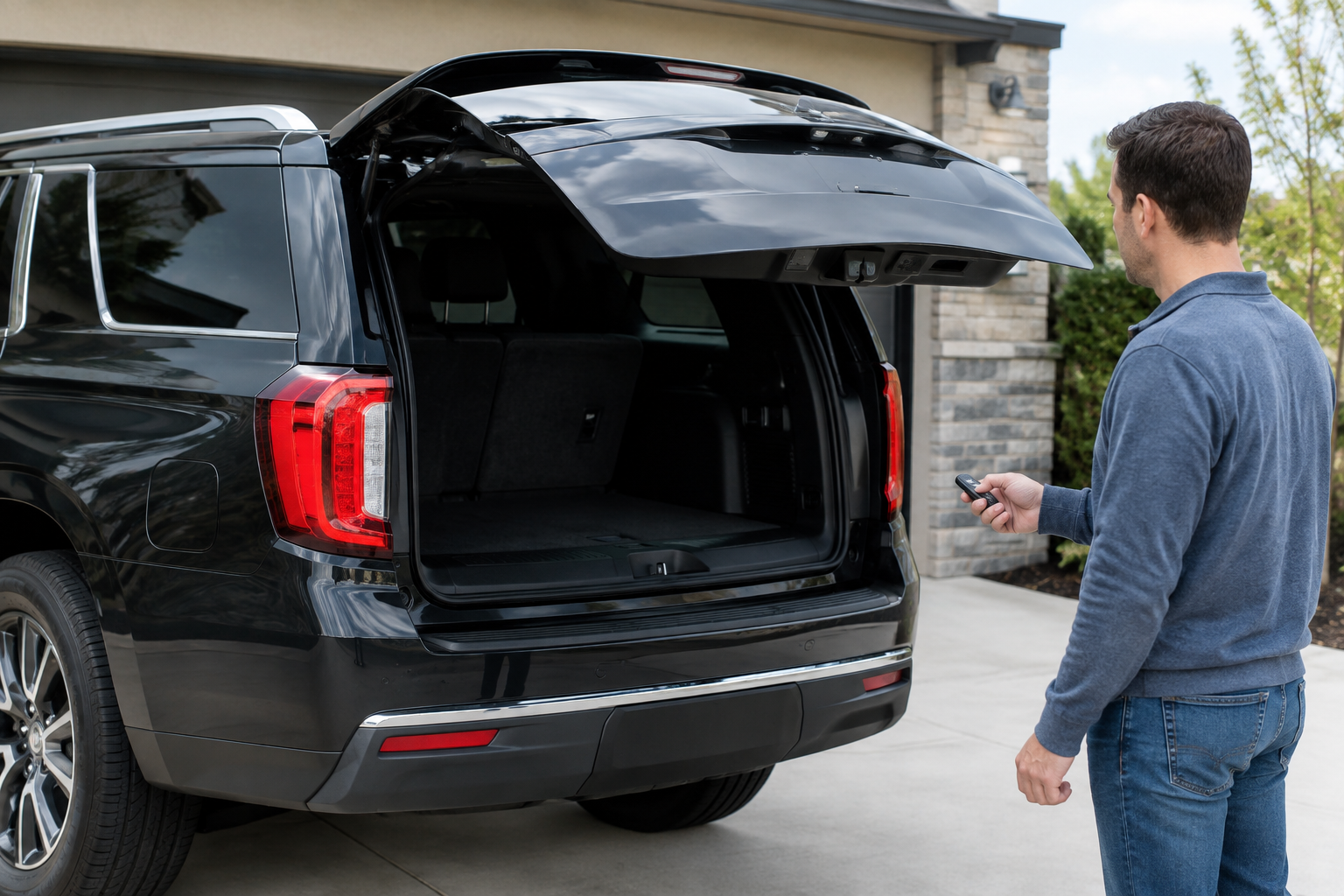
A power liftgate that suddenly stops cooperating is one of those problems that feels bigger than it actually is. Your GMC Yukon relies on a handful of sensors, a motor, gas struts, and a latch assembly to make that hatch glide open and closed on command, and when one piece of that chain gets confused, the whole system can act unpredictably. Before you assume the worst, it helps to work through the most common causes in order, since most liftgate issues trace back to something simple like a low battery, a stuck sensor, or a height setting that needs to be reset.
Start With the Basics: Battery Voltage and Fuses
Power liftgates are notoriously sensitive to low battery voltage. If your Yukon’s battery is weak or the alternator isn’t charging properly, the liftgate module may refuse to operate at all, or it might open partway and stop as a protective measure.
Check your battery’s voltage with a simple multimeter before you dig into anything else. Anything below 12.4 volts at rest can cause the liftgate to behave erratically, and a jump start or full charge often resolves the issue on its own.
Also check the fuse box, since a blown fuse tied to the liftgate module or rear closure system will disable the feature entirely. The GMC Yukon typically has a rear compartment fuse and one under the hood or in the instrument panel, depending on the model year, so check your owner’s manual for exact fuse locations and amperage ratings.
Height Memory Settings Can Cause Partial Openings
One of the more overlooked reasons a Yukon liftgate stops partway open is a height memory setting that no longer matches your garage ceiling or personal preference. GMC lets you program a maximum open height so the liftgate doesn’t hit a low garage door or ceiling fixture.
If that setting got changed accidentally, or if it was set for a different environment, the liftgate will stop at that programmed point every time, even if there’s nothing physically blocking it.
To reset the height, open the liftgate fully by hand, then hold it at the height you want while pressing and holding the liftgate control button (usually located on the driver’s door panel or on the liftgate switch itself) until you hear a chime. The exact button sequence varies slightly by model year, so if the chime doesn’t sound after a few seconds, check your manual for the specific reprogramming steps for your trim.
Obstruction and Pinch Detection
The power liftgate is designed to reverse direction if it senses resistance, which is a safety feature to prevent it from closing on a person or object. Sometimes debris, ice, snow, or even a loose weatherstrip seal can trigger this detection even when nothing is actually in the way.
Inspect the liftgate opening and the rubber seals around the frame for anything that could be interfering with the sensors. A little buildup of road grime or a warped seal is enough to fool the system into thinking there’s an obstruction.
If the liftgate reverses unexpectedly on a clear day with nothing blocking it, try cleaning the seal area and the latch mechanism with a mild degreaser, then test again. This one fix alone solves a surprising number of “phantom obstruction” complaints.
Latch Problems and Failing Liftgate Struts
If the liftgate opens fine but won’t latch closed, or it feels like it’s fighting itself when closing, the latch assembly itself may be worn or misaligned. A latch that doesn’t fully engage will often report a false open signal to the module, which can prevent the system from functioning at all.
Weak or failing liftgate struts are another frequent culprit, especially on Yukons that have racked up more mileage. When the struts lose their gas pressure, the electric motor has to work much harder to lift the hatch, and in some cases it simply can’t get the door moving fast enough to satisfy the module’s expected timing, triggering a fault code.
If your liftgate feels heavy, sags on its own, or the motor sounds strained, it’s worth replacing the struts before assuming the whole module has failed.
GMC Yukon Power Liftgate Strut
A direct-fit replacement strut set is one of the most common fixes for a slow or heavy-feeling power liftgate.
Replacing struts is a job most people can do in under 30 minutes with basic hand tools, and it’s far cheaper than a dealership diagnosing the whole system as faulty. Just make sure you’re buying struts rated for your specific model year, since GMC changed the liftgate design across generations.
Key Fob, Interior Button, and Hands-Free Sensor Behavior
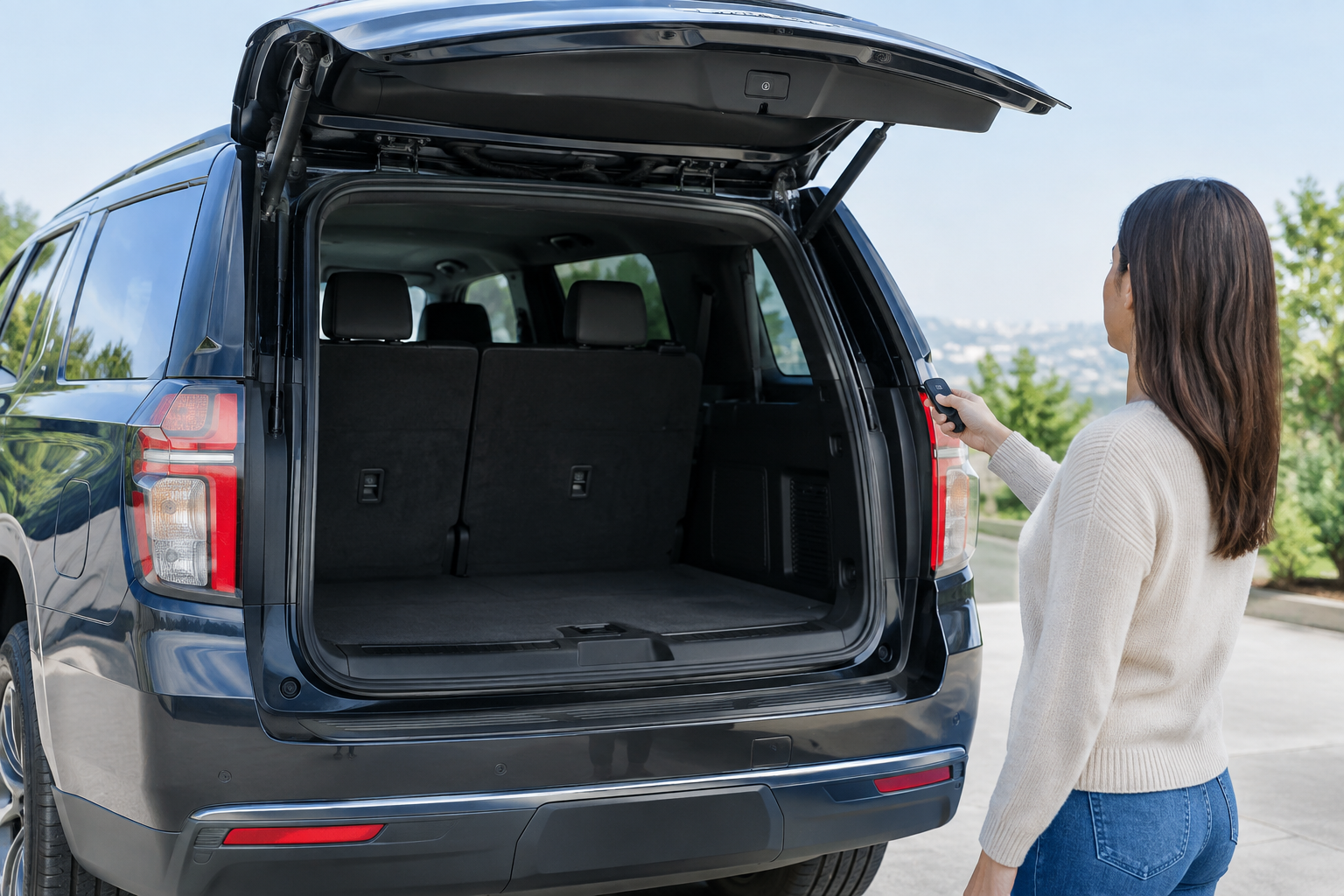
It’s common for owners to notice that the liftgate works fine from the interior button but not from the key fob, or vice versa. This usually points to a fob battery issue or a range problem rather than a liftgate fault, so swap in a fresh fob battery before assuming anything mechanical is wrong.
On trims equipped with the hands-free foot-activated sensor, false triggers or non-responses are typically caused by mud, snow, or road salt buildup under the rear bumper covering the sensor. Wipe down that area and test the kick motion again with a clean, dry foot.
Not every Yukon trim year includes the hands-free sensor, so double check your build sheet or window sticker if you’re troubleshooting a feature you’re not sure was ever installed. Availability changed across trim levels and model years, and assuming a feature exists when it doesn’t will send you chasing a problem that isn’t there.
Resetting and Reinitializing the System
Most Yukon power liftgate issues can be cleared with a simple reinitialization rather than a trip to the shop. Disconnecting the battery for several minutes, or pulling the liftgate module fuse and letting the system fully power down, often clears whatever fault code was preventing normal operation.
After reconnecting power, cycle the liftgate manually a few times with the interior button before trying the fob or hands-free sensor again. This lets the module relearn the travel distance and any resistance points along the way.
If the problem persists after a reset, and you’ve already ruled out battery voltage, fuses, obstructions, and worn struts, it may be time to have the dealer pull codes from the body control module. Persistent motor or latch faults sometimes point to a failing liftgate actuator, which is a more involved repair.
Manual Operation When the Power System Fails
Every Yukon with a power liftgate still allows manual operation, but the steps differ slightly depending on the model year. On most Yukons, you can push the liftgate up or down by hand even with the power system engaged, though you may feel some resistance from the motor.
Some model years include a manual release lever inside the liftgate trim panel or near the latch that fully disengages the motor, letting you operate the hatch purely by hand. If your liftgate is completely stuck and won’t respond to any input, check your owner’s manual for this release before assuming you’re stuck with a broken hatch.
While you’re working through electrical gremlins on your Yukon, it’s also worth knowing how to manage other convenience features that sometimes cause confusion, like turning off the rear seat reminder on the GMC Yukon if it’s triggering more often than you’d like.
Frequently Asked Questions
Why does my Yukon’s liftgate only work from inside the vehicle?
This usually points to a dead or weak key fob battery, a fob that’s out of range, or a setting that disables remote operation for security reasons. Try a fresh fob battery first, and confirm the vehicle isn’t in valet mode or a similar restricted setting.
Can I disable the power liftgate and operate it manually all the time?
Yes, most Yukons let you turn off the power liftgate feature through the infotainment settings or a dedicated switch near the liftgate controls, which lets you operate it purely by hand without the motor engaging. This is a useful temporary workaround if you’re waiting on a part but still need to use your vehicle.
How much does it typically cost to fix a power liftgate strut versus a full motor replacement?
Liftgate struts are a relatively affordable fix and often something you can do yourself with basic tools, while a full liftgate motor or actuator replacement is a bigger job that usually requires professional diagnosis and labor. Always rule out the cheaper strut and sensor issues before assuming you need a full motor replacement.


Leave a Reply