
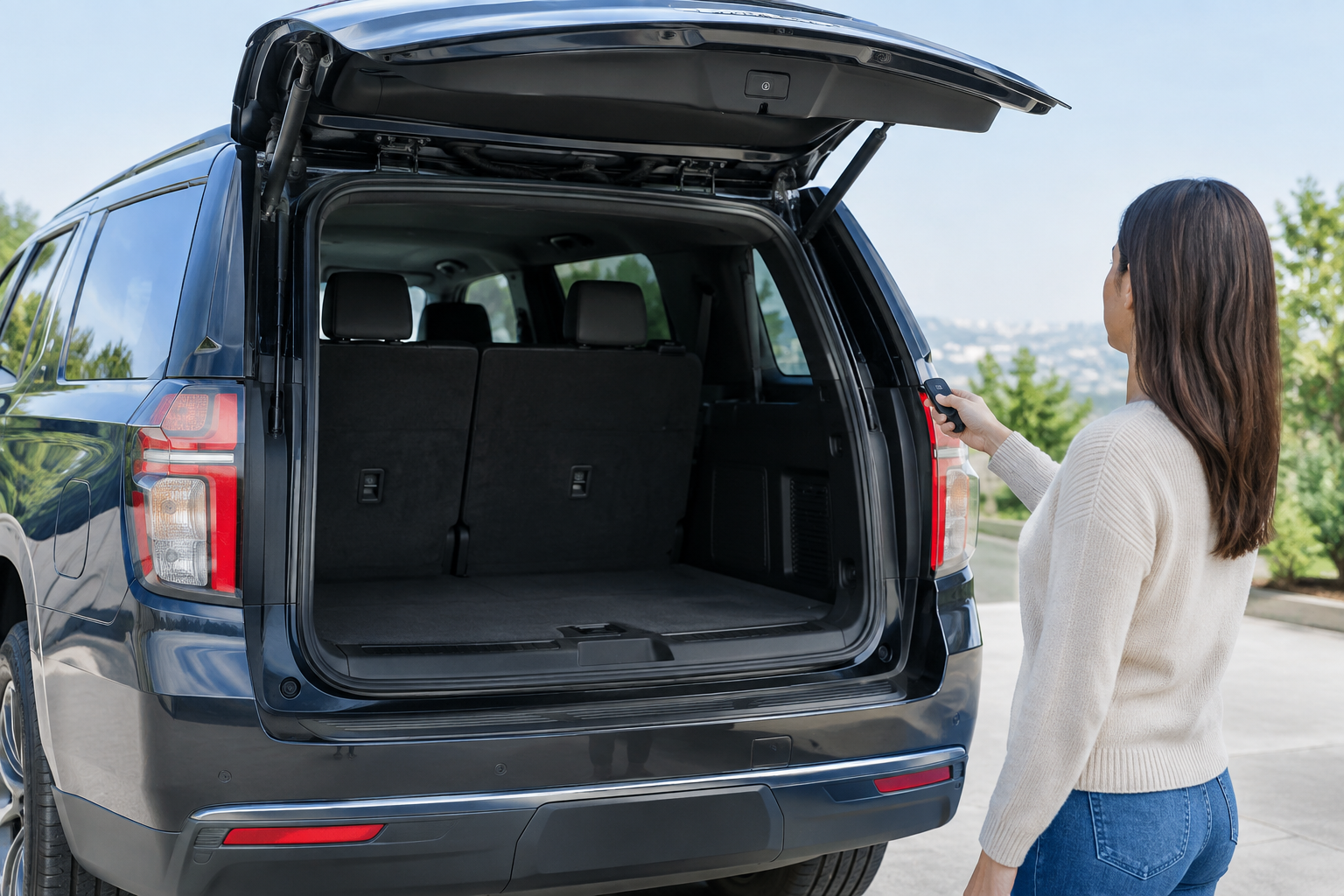
There’s nothing quite like standing in a parking lot pressing the liftgate button on your key fob over and over while your Tahoe just sits there, ignoring you. A power liftgate that won’t open, won’t close, or randomly reverses itself is one of those problems that seems mysterious at first but almost always comes down to a handful of predictable culprits. The good part is that most of them are things you can diagnose yourself in fifteen minutes without a scan tool.
This guide walks through every common failure point on the Chevy Tahoe’s power liftgate system, from software glitches that just need a reset to worn-out struts that need replacing. We’ll also cover which model years and trims even have this feature, since GM changed the system significantly when the Tahoe was redesigned.
Which Tahoe Model Years and Trims Have a Power Liftgate
The power liftgate became available on the Tahoe starting with the 2015 model year, when GM moved to the K2XX platform. It was standard or optional on LT, LTZ, and Premier trims, but base LS models typically didn’t get it at all. If your Tahoe is an LS from that generation and the liftgate never moves on its own, that’s not a malfunction, it just doesn’t have the hardware.
When GM redesigned the Tahoe for 2021 on the new T1XX platform, the liftgate system got a serious upgrade. Higher trims like the Premier, RST, and High Country picked up a hands-free, foot-activated liftgate that opens when you wave your foot under the rear bumper with the key fob nearby. That feature is not available on the LS or LT trims in most configurations, so check your window sticker or owner’s manual before assuming your sensor is broken.
Knowing your exact trim and model year matters here because the reset procedures, fuse locations, and even the manual override steps are different between the 2015-2020 generation and the 2021-plus generation. Always confirm which platform you’re working with before you start pulling fuses or crawling under the cargo area.
Height-Memory Settings Causing the Liftgate to Stop or Reverse
One of the most common reasons a Tahoe liftgate seems to malfunction is actually a programmed height limit doing exactly what it’s supposed to do. GM’s system lets you set a maximum open height so the liftgate doesn’t hit a low garage ceiling. If that height was accidentally set too low, or set by a previous owner, the liftgate will open partway and stop every single time, and you’ll think something is broken.
To check or reset this on most model years, open the liftgate fully by hand, then use the switch on the driver’s door panel or the infotainment settings menu (depending on year) to reprogram the height while holding the liftgate at your desired stopping point. On 2021-plus Tahoes, this setting usually lives in the vehicle settings screen under “Liftgate” rather than a physical switch.
If you recently had the vehicle serviced or bought it used, resetting the height memory to factory default and then setting it fresh often clears up mysterious stopping behavior instantly. It’s the first thing to try before you assume you have a motor or sensor problem.
Obstruction Detection and Pinch Sensors
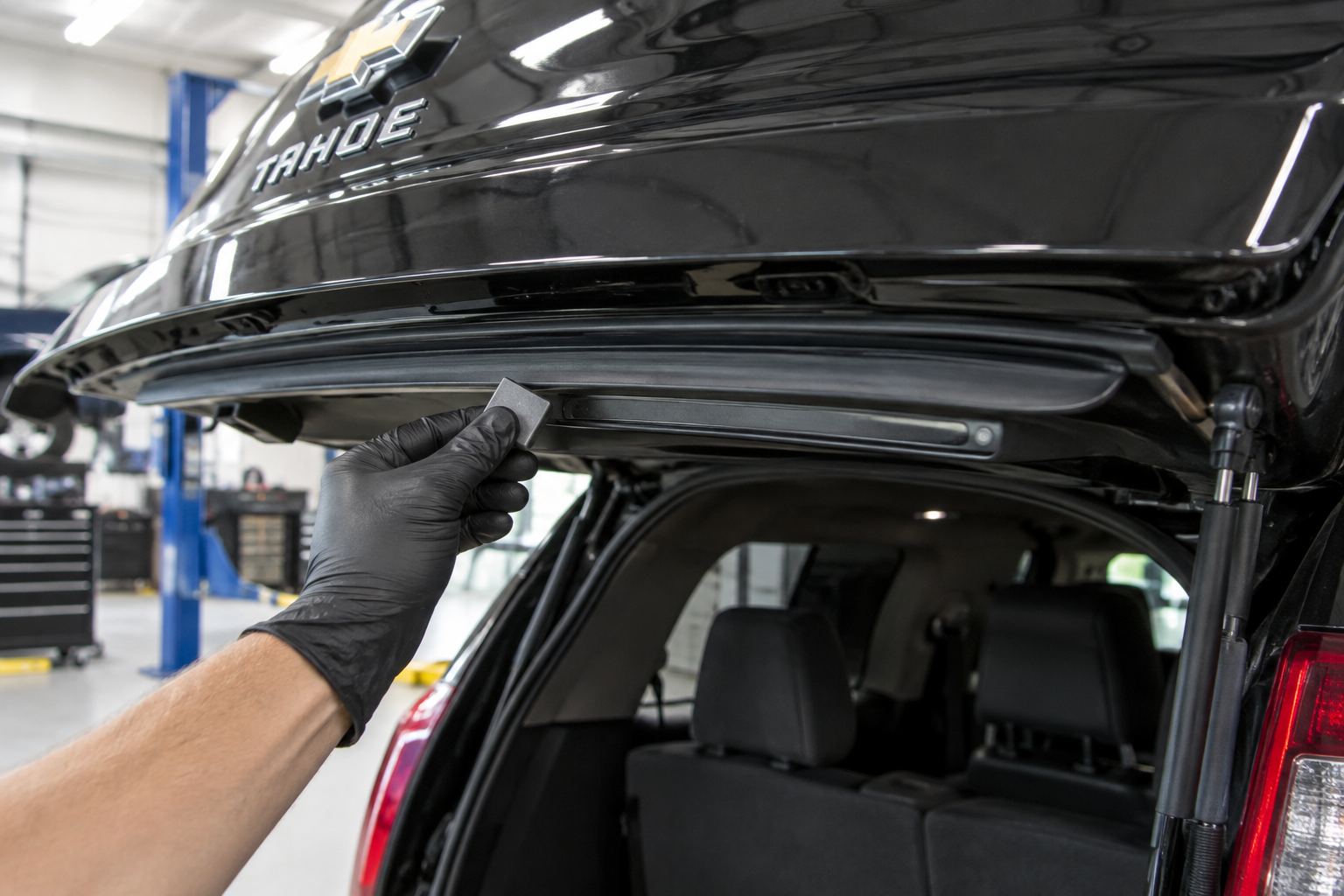
The power liftgate uses force sensors to detect resistance while opening or closing. If it senses something in the way, real or not, it will stop and reverse direction automatically as a safety measure. This is by design, but it becomes annoying when the system is overly sensitive or triggering on nothing.
Common causes of false obstruction detection include a buildup of ice or snow around the liftgate seal, a loose weatherstrip rubbing against the frame, or debris caught in the track. Cold weather is a frequent trigger because stiff rubber seals create more resistance than the system expects, especially on Tahoes parked outside overnight in northern climates.
Wipe down the seal and the surrounding frame, remove any visible obstruction, and cycle the liftgate a few times. If it still reverses in the exact same spot every time even with nothing blocking it, that points toward a failing position sensor or a worn latch striker rather than an actual obstruction, which we’ll cover next.
Latch Problems and Alignment Issues
The latch mechanism is a mechanical part that wears out over time, and it’s one of the more overlooked reasons a liftgate won’t fully close or won’t release when you press the button. If the latch doesn’t sense that it’s fully seated, the module will refuse to power the liftgate closed, or it’ll cycle open again right after closing.
Look at the striker pin on the body and the latch assembly on the liftgate itself. Rust, dirt, or a slightly bent striker can prevent the latch from clicking into the secondary catch position. A little dielectric grease or white lithium grease on the latch and striker can solve minor sticking, but a latch that clicks loudly, feels loose, or fails to hold under light pressure needs to be replaced.
This is also a good point to mention that if your Tahoe’s rear seat reminder or other cargo-related alerts have been acting strange alongside the liftgate issue, it’s worth reading our guide on how to turn off the rear seat reminder on the Chevy Tahoe, since both systems share some of the same body control module logic.
Low Battery Voltage and Fuses
Power liftgates are voltage-hungry, and GM’s system will often refuse to operate the liftgate motor at all if the battery voltage drops below a certain threshold. This is a protection feature, not a flaw, but it means a slightly weak battery can make a perfectly healthy liftgate act completely dead.
If your Tahoe has been sitting for a while, the remote start seems sluggish, or the interior lights look dim, charge or test the battery before you chase anything else. A battery that reads fine at rest but sags heavily under load is often the real cause of a liftgate that won’t open with the fob but works fine with the interior switch after the engine’s been running for a few minutes.
Fuses are the next quick check. The Tahoe’s liftgate control module and motor typically pull from a specific fuse in the underhood or interior fuse box depending on year, and your owner’s manual will list the exact location and amperage. A blown fuse usually means something drew too much current, so if a fresh fuse blows again immediately, don’t keep replacing it, that points to a shorted motor or wiring issue that needs proper diagnosis.
Key Fob, Interior Button, and Hands-Free Sensor Behavior
It helps to isolate which input method is failing, because that narrows down the problem fast. Try opening and closing the liftgate with the button on the liftgate itself, then the switch on the dash or door panel, then the key fob, and finally the hands-free foot sensor if your Tahoe has one.
If the liftgate works fine with the physical button but not the fob, you’re likely dealing with a weak fob battery, a fob that needs reprogramming, or interference from something plugged into a nearby power outlet. If it only fails with the hands-free foot sensor, the sensor itself, usually mounted near the rear bumper, may be caked in road grime, ice, or mud, which blocks its ability to detect your foot motion.
Clean the sensor area with a soft cloth and try again before assuming it’s electrically dead. On 2021-plus Tahoes, this sensor is a known area where a good wash at a car wash with strong undercarriage spray can temporarily disable it if water gets into the connector, so give it time to dry out if the issue started right after a wash.
Failing Liftgate Struts and Drive Components
If the liftgate moves but seems to strain, drops suddenly, or the motor sounds like it’s working overtime, the support struts or the drive actuator itself are probably wearing out. These parts hold the liftgate open and assist the motor, and when they weaken, the motor has to compensate, which often trips the same overload protection that makes the system think there’s an obstruction.
Struts are relatively cheap to replace and it’s a job most owners can do in their driveway with basic hand tools. Weak struts are actually one of the most common reasons for a Tahoe liftgate that “stops halfway” even when the electronics are perfectly fine.
Chevy Tahoe Power Liftgate Strut
A direct-fit replacement strut is often all it takes to fix a liftgate that sags or won’t stay open.
If you replace the struts and the problem persists, or the motor itself makes grinding or clicking noises during operation, the actuator assembly may need replacement. This is a more involved repair since it usually requires removing interior trim panels to access the motor unit, so weigh the labor cost against having a shop handle it if you’re not comfortable pulling apart liftgate trim.
Reset and Reinitialization Procedures
Most power liftgate glitches, especially ones involving inconsistent stopping points or a liftgate that no longer syncs with the fob, can be cleared with a system reset. On the majority of Tahoe model years, this involves disconnecting the negative battery terminal for a few minutes, or pulling the liftgate module fuse specifically, then reconnecting and manually cycling the liftgate open and closed by hand a few times to let it relearn its travel range.
After reconnecting power, don’t use the powered switch immediately. Open and close the liftgate manually first so the module can recalibrate its start and end points, then try the powered function again. Skipping this step is the most common reason people say “I reset it and it still doesn’t work right.”
For a full electrical gremlin sweep, it’s also worth checking your battery and charging system the same way we’d recommend for other electrical oddities, similar to what we outline in our piece on diagnosing issues that appear after a vehicle sits overnight, since weak batteries tend to cause several unrelated symptoms at once.
Manual Operation When the Power Liftgate Fails
Every Tahoe with a power liftgate retains the ability to open and close it by hand, but the exact steps differ slightly by generation. On 2015-2020 models, you can typically pull up on the liftgate manually even with the power switch engaged, though you may feel some resistance from the motor. There’s often a mechanical release near the latch that lets you disconnect power assist entirely in an emergency.
On 2021-plus Tahoes, GM added a manual release lever inside the liftgate trim, usually accessible by removing a small cover panel, specifically so you can operate the latch without power if the battery is dead or the module has failed. Check your owner’s manual for the exact location since it moved between early and later production years within the same generation.
If you’re regularly dealing with electrical accessory quirks across your GM SUV, it’s worth a look at our guide for the GMC Yukon rear seat reminder as well, since the Yukon shares nearly identical body control architecture with the Tahoe and many of the same troubleshooting steps apply.
Frequently Asked Questions
Why does my Tahoe liftgate open but won’t close all the way?
This is almost always a latch alignment or obstruction sensor issue. Check the striker pin for rust or misalignment first, then inspect the door seal for debris that could be triggering a false pinch detection.
Can I disable the power liftgate and just use it manually?
Yes. Most model years let you turn off the power function through the infotainment settings or a dash switch, after which you can open and close it by hand like a standard liftgate without triggering the motor.
Does a dead key fob battery affect the power liftgate?
It can. A weak fob battery reduces the signal strength needed for hands-free and remote operation, even though the interior and exterior physical buttons will usually still work normally.
How much does it cost to fix a Chevy Tahoe power liftgate?
It depends entirely on the failure point. A strut replacement is a relatively affordable DIY fix, while a full actuator motor or control module replacement done at a dealership will run considerably higher due to both parts and labor.



Leave a Reply