
A power liftgate that suddenly refuses to cooperate is one of those problems that always seems to happen at the worst time, usually when your arms are full of groceries or you’re late for a school pickup. The Ford Explorer’s power liftgate is generally reliable, but it relies on a chain of sensors, motors, and switches that all have to agree before the tailgate will move. When one link in that chain fails, you get symptoms ranging from a liftgate that won’t budge to one that opens partway and then reverses like it hit an invisible wall.
The good part is that most of these issues trace back to a short list of usual suspects, and you can rule several of them out in a few minutes without any tools. This guide walks through the causes in order of likelihood, starting with the quick checks and working toward the repairs that actually require parts.
Which Explorer Model Years Have the Power Liftgate
Power liftgates showed up on the Ford Explorer as far back as the fifth generation (2011-2019), where they were standard on higher trims like Limited and Platinum and optional on XLT. The sixth-generation Explorer (2020-present) offers it more broadly, and hands-free foot-activated opening became available starting around 2020 on Limited, ST, and Platinum trims.
If you drive a base trim like the XLT with cloth seats from the older generation, you may not have a power liftgate at all, just a manually operated one with gas struts. Check your owner’s manual or look for a button on the liftgate itself and on your key fob. That’s the fastest way to confirm what you’re working with before you start troubleshooting a feature your Explorer might not even have.
Start With the Basics: Buttons, Fobs, and the Interior Switch
Before assuming something is broken, test every way you can trigger the liftgate. Try the button on the liftgate itself, the button on the key fob, and the switch near the driver’s seat (usually on the lower dash or center stack, depending on year). If one method works and others don’t, the problem is isolated to that specific switch or fob, not the liftgate motor itself.
A key fob with a weak battery is a common and cheap fix. Swap in a fresh CR2032 battery and try again before you assume anything mechanical is wrong. If the interior switch doesn’t respond but the fob and liftgate button do, you might have a bad switch that needs replacing, which is a relatively minor repair compared to motor or latch issues.
Height Memory Settings That Block the Liftgate
Ford Explorers with power liftgates let you set a maximum opening height, which is handy if you park in a garage with a low ceiling. If that height is set too low, the liftgate can seem like it’s malfunctioning when it’s actually just stopping exactly where you told it to.
To check or reset this, open the liftgate manually to your desired height, then use the SYNC touchscreen or the liftgate button (press and hold, depending on model year) to set a new maximum. On many years, holding the liftgate close switch for several seconds while the gate is open will reprogram the height memory. If your liftgate opens only a few inches and stops, this setting is worth checking before anything else.
Obstruction and Pinch Detection Gone Haywire
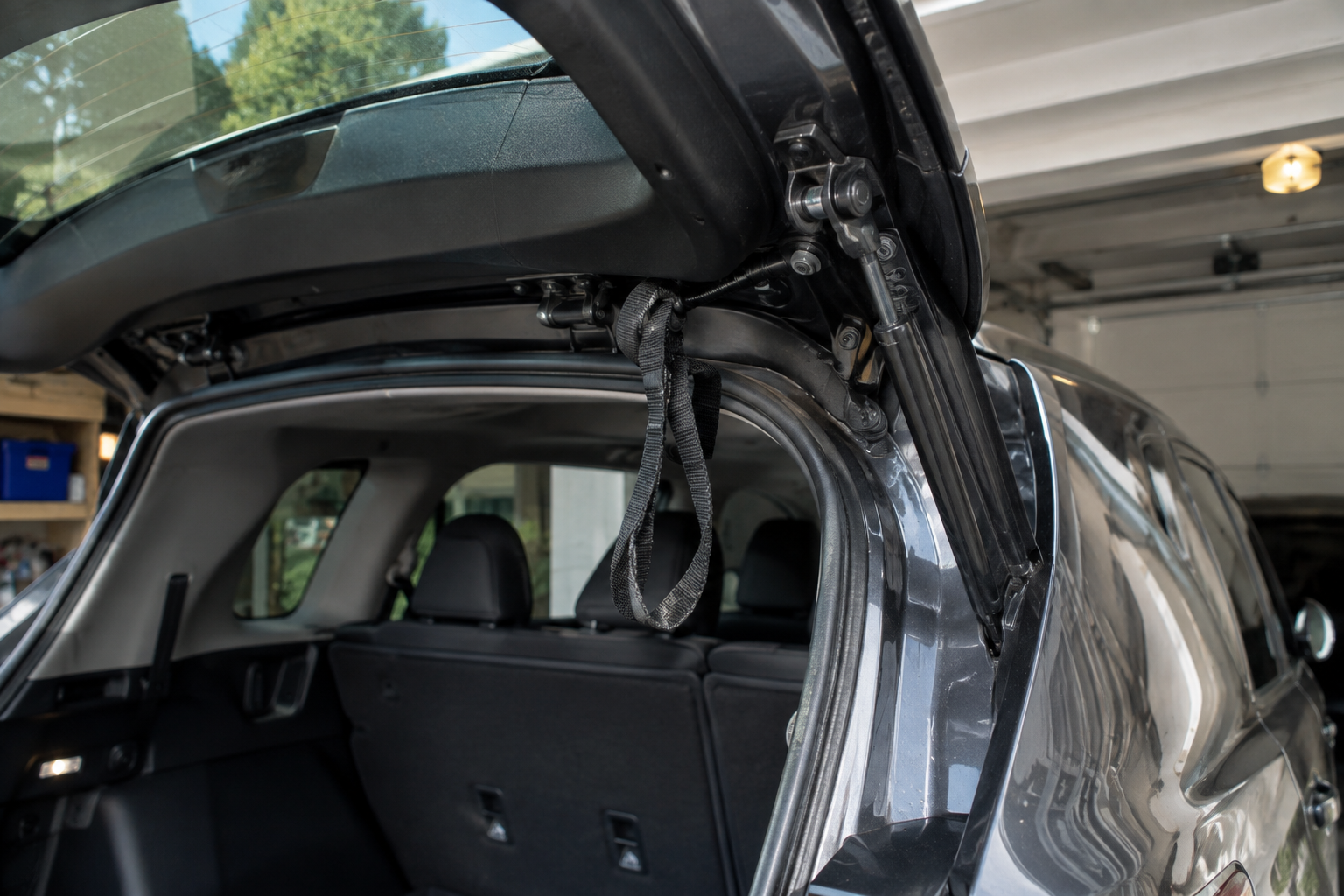
Ford built pinch protection into the power liftgate so it reverses automatically if it senses resistance while closing. That’s a safety feature, but it can also misfire due to debris, ice buildup, or worn weatherstripping along the liftgate opening.
Check the rubber seals around the liftgate frame for cracks, dirt, or ice in cold weather. A small stick, leaf, or accumulated grime along the sensor strip can trick the system into thinking there’s an obstruction every time. Clean the seals and the frame edge with a mild cleaner, dry everything thoroughly, and test again.
If the liftgate reverses at the same spot every time even with a clean frame, the issue may be a misaligned latch or a bent striker pin rather than the sensor system itself. That’s a mechanical problem, not an electronic one, and it usually means a trip to a shop or a DIY latch inspection.
Latch Problems and Alignment Issues
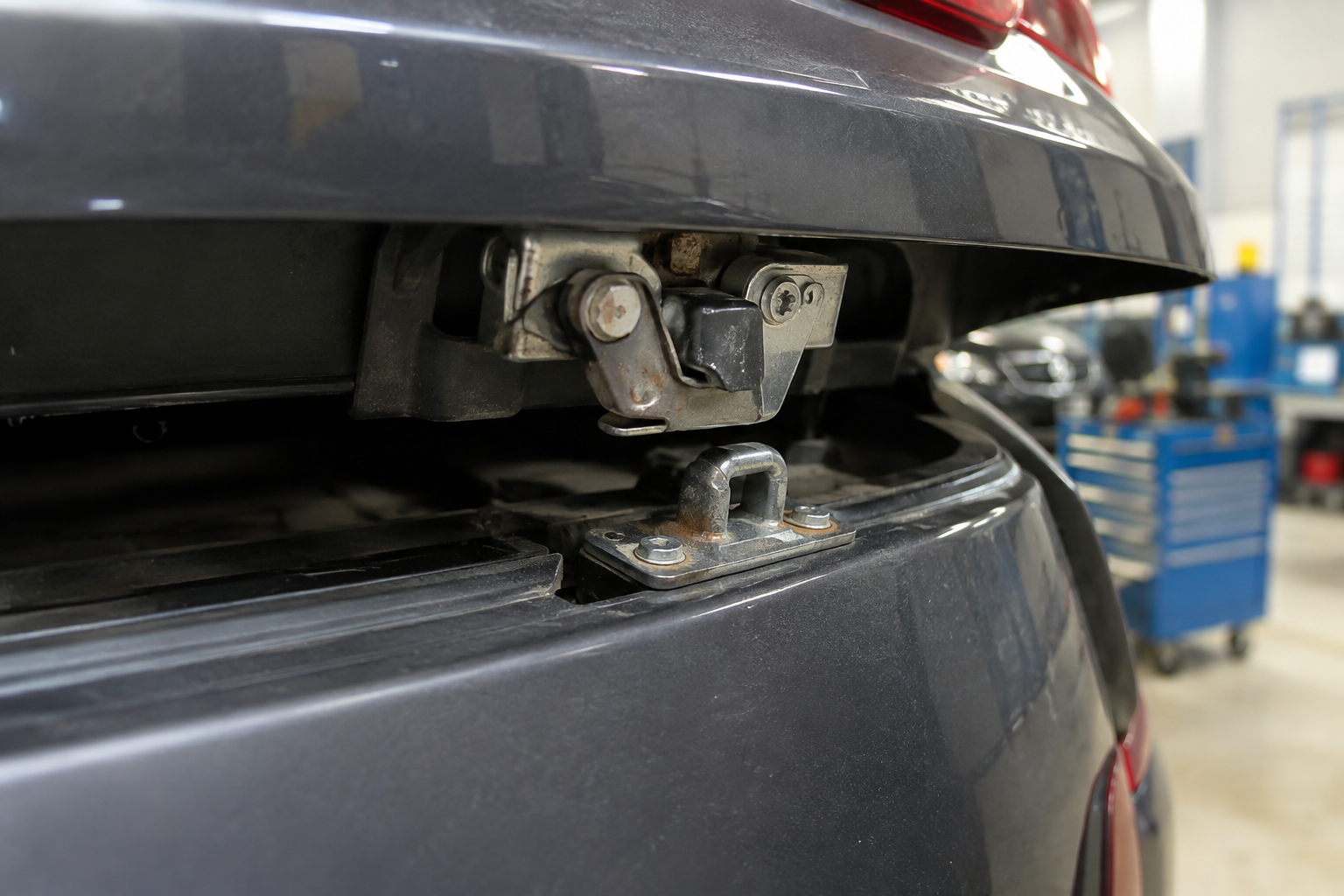
The latch mechanism is what actually pulls the liftgate closed those last couple of inches and confirms to the body control module that the gate is secure. If the latch is dirty, corroded, or slightly misaligned from an old fender-bender or aggressive slamming, the liftgate may refuse to fully close, or it might close and then pop back open.
Spray a small amount of dry lubricant into the latch mechanism and work the striker by hand to see if it moves freely. If the latch clicks but the liftgate still reads as “open” on the dash, the latch switch itself may be failing and sending bad signals to the module. This is a fairly common wear item on Explorers that see a lot of liftgate cycles, especially fleet or rideshare vehicles.
Low Battery Voltage and Blown Fuses
Power liftgates are voltage-hungry, and Ford’s system will often refuse to operate the liftgate motor if the battery voltage drops below a certain threshold, even if the battery still has enough juice to start the engine. If you’ve noticed slow cranking, dim interior lights, or other electrical quirks alongside the liftgate issue, the battery is a prime suspect.
Check the fuse box too. The Explorer’s power liftgate typically pulls from a dedicated fuse, and a blown one will kill power liftgate function entirely while leaving the rest of the vehicle unaffected. Your owner’s manual has the fuse diagram and location, usually in the engine bay or under the dash on the driver’s side.
If your battery is more than four or five years old, consider replacing it before you spend time chasing electronic gremlins. A battery voltage tester is a cheap way to confirm whether your battery is actually the problem before you replace anything.
NOCO Genius Battery Charger
A reliable trickle charger that keeps your Explorer’s battery topped off, which helps prevent voltage-related liftgate glitches during cold weather or long periods of light driving.
Weak batteries are also a frequent cause of other electronic quirks in Fords, similar to what we’ve covered when troubleshooting Driver Alert warnings on the Explorer, where low voltage can trigger false alerts across multiple systems at once.
Hands-Free Foot Sensor Issues (Where Equipped)
On Explorers equipped with the hands-free liftgate feature, a kicking motion under the rear bumper triggers the gate without touching a button. This sensor is convenient but sensitive to road grime, salt, and physical damage from parking curbs or trailer hitches.
If the foot sensor stops responding, start by cleaning the bumper area where the sensor sits, usually centered under the rear fascia. Road film and ice are the most common culprits. Also confirm the key fob is within range, since the hands-free system requires the fob to be detected nearby before it’ll activate the liftgate.
If cleaning doesn’t help, the sensor module itself may need diagnostic testing at a dealership, since it’s not something most owners can easily test at home without a scan tool that reads body control module codes.
Failing Liftgate Struts and Drive Components
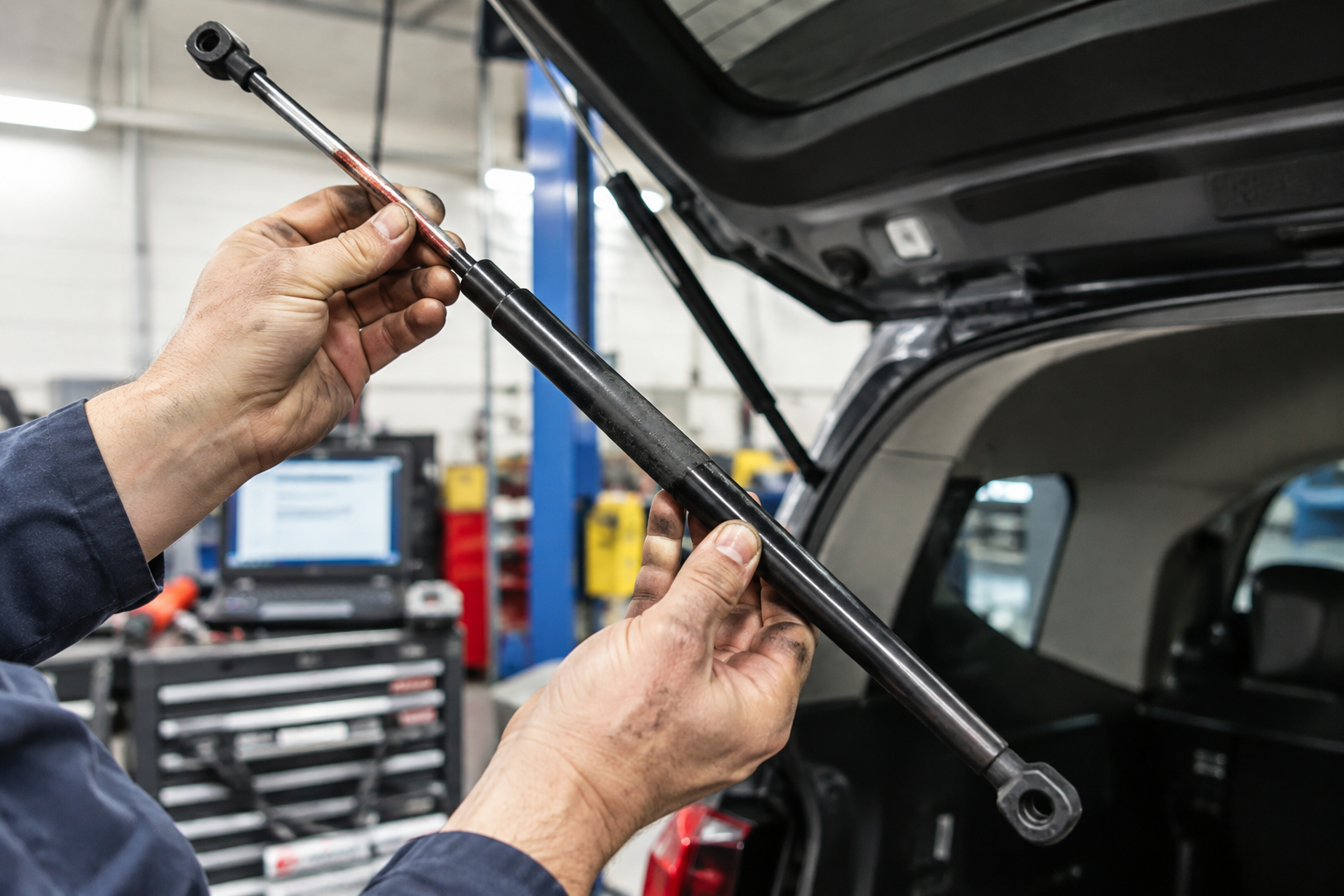
Even with all the electronics working correctly, a power liftgate still relies on either hydraulic struts or a strut-and-motor combination to physically lift the tailgate’s weight. When these struts wear out, the liftgate may open partway and then stall, or it may seem to fight the motor on the way up, drop suddenly, or fail to hold position when you manually stop it.
Worn struts are one of the most common reasons a power liftgate strains or stops mid-cycle, especially on Explorers past the 80,000-mile mark. If you press the liftgate button and hear the motor working hard but see little or no actual movement, weak struts are likely the reason. This is different from an electronic fault because the system is trying to do its job, it just doesn’t have the mechanical assistance it needs.
Ford Explorer Power Liftgate Strut
A direct-fit replacement strut set restores proper lifting force and stops the sagging or stalling that comes with age.
Struts typically fail in pairs since they wear at a similar rate, so if one side is clearly weaker than the other, plan on replacing both at the same time. This is a job most people can do in a driveway with basic hand tools, and it’s far cheaper than replacing the entire liftgate motor assembly.
Manual Operation Steps by Model Year
If the power liftgate stops working entirely and you need to get into the cargo area, manual operation is still possible on most Explorer years, though the steps vary slightly. On the 2011-2019 generation, you can typically close the liftgate manually as long as you don’t leave it in a partially engaged state, since forcing it shut with the motor disengaged can trip an error state.
On the 2020-present generation, Ford recommends letting the liftgate come to a complete stop before manually assisting it, and using a light touch rather than forcing it, since the motor clutch can be damaged by excessive force. If your liftgate is stuck in a weird position, disconnecting the 12V battery for a few minutes and reconnecting it will often reset the body control module and clear whatever fault caused the stall. This is similar to the reset process needed for other electronic features, like the one described in our guide on Ford Explorer driver assistance settings, where a module reset clears persistent glitches.
When to See a Dealer or Independent Shop
Most of what’s covered here is diagnosable and fixable without special tools, but a few situations call for a professional. If the liftgate throws a warning message on the dash cluster repeatedly, or if a scan tool is needed to read body control module fault codes, a shop visit will save you time compared to guessing.
Latch replacement and motor assembly work also tend to be easier with a lift and proper trim removal tools, since the interior liftgate panel has to come off cleanly to avoid breaking plastic clips. If you’re not comfortable removing interior panels, this is a reasonable job to hand off rather than risk cracking trim pieces that cost more to replace than the labor would have.
Frequently Asked Questions
Why does my Ford Explorer liftgate open on its own?
This is usually caused by a stuck button, either on the fob, the liftgate itself, or the interior switch, sending a repeated signal. Check for a fob button stuck in a pressed position from a worn button pad, and inspect the liftgate switch for debris or moisture causing it to short intermittently.
Can I disable the power liftgate and operate it manually?
Yes, most Explorers let you disable the power feature through the SYNC settings menu, after which the liftgate can be opened and closed by hand like a traditional manual tailgate. This is a useful workaround if you’re waiting on parts and don’t want to deal with error messages every time you use it.
How much does it cost to fix a Ford Explorer power liftgate?
Costs vary widely depending on the cause. A blown fuse or dead fob battery costs next to nothing, while liftgate struts run on the affordable to mid-range side if you do it yourself, and a full latch or motor assembly replacement at a dealer will run considerably more due to labor and diagnostic time.
Why does my liftgate stop halfway and beep?
A beep paired with a stop mid-cycle almost always points to the obstruction detection system sensing resistance, often from a dirty seal, ice, or a misaligned latch striker. Clean the frame and seals first, then check the latch alignment if the problem continues at the same spot every time.


Leave a Reply