
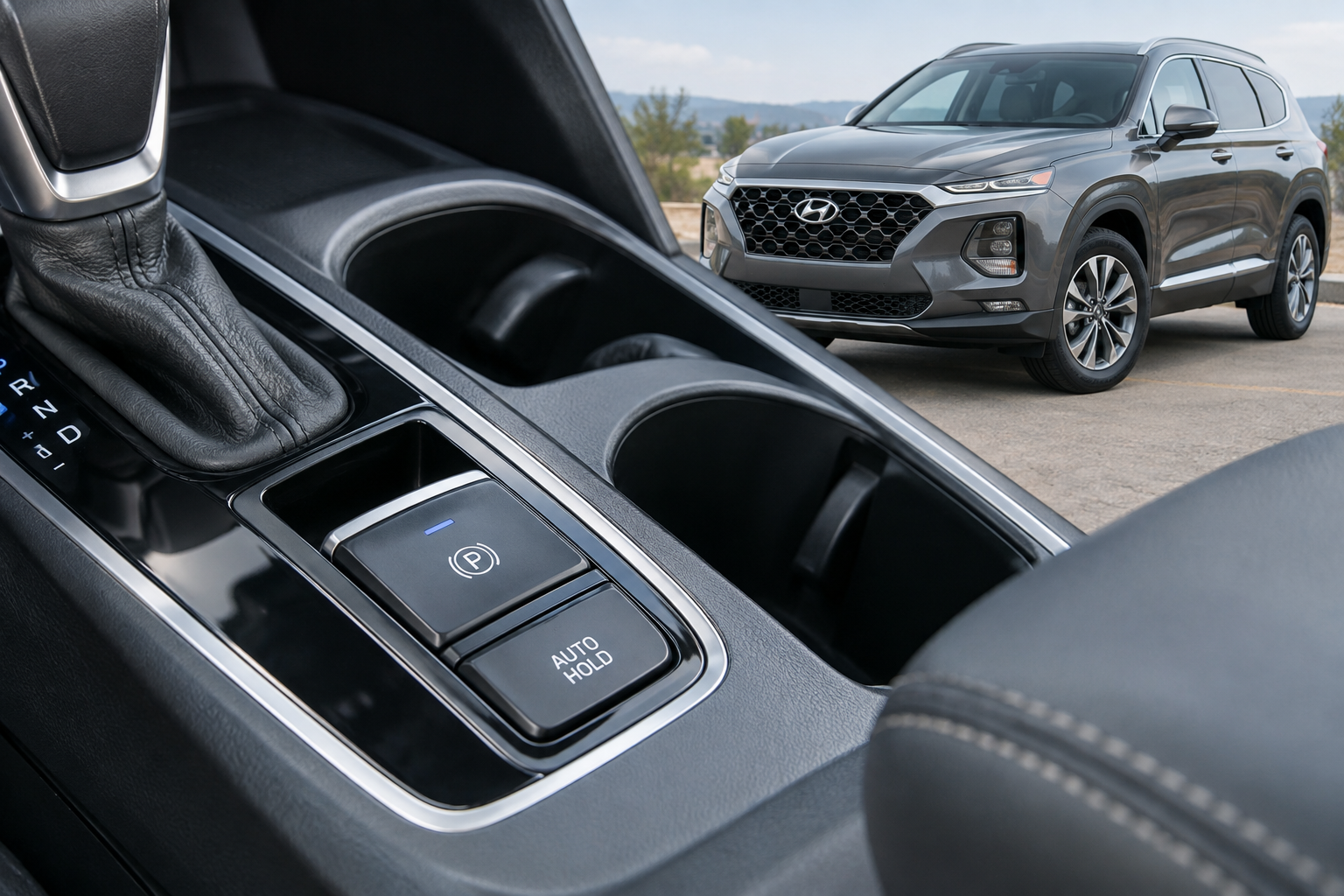
There are few things more unsettling than starting your Santa Fe, seeing the parking brake light stay lit, and realizing the electronic parking brake (EPB) simply won’t let go. Unlike an old-school cable brake you could kick loose with a firm tug, an EPB relies on a small computer, a switch, wiring, and motorized calipers at the rear wheels. When any part of that chain gets confused, the system defaults to “locked” for safety, which is smart engineering but frustrating when you’re already late for work.
This guide walks through the checks you can safely do yourself, explains what’s likely happening under the hood, and tells you when it’s time to stop troubleshooting and call for help. We’ll also cover why forcing the vehicle to move while the EPB is engaged is never the answer, even if it feels like the fastest fix.
What an EPB Warning Actually Means
The Santa Fe’s EPB uses small electric motors built into the rear brake calipers to clamp and release the pads. A control module tells those motors when to engage based on your switch input, ignition state, and a handful of safety conditions like whether the driver’s door is closed or the seat belt is buckled, depending on the model year.
When the system won’t release, it’s usually because one of those conditions isn’t being met, the module isn’t getting a clean signal, or there isn’t enough voltage to run the actuator motors. A caliper that’s mechanically stuck adds another layer entirely. Working through these possibilities in order saves you time and avoids unnecessary trips to the dealer.
Start With the Basics: Safe Checks Before You Touch Anything
Before assuming the worst, run through the simple stuff. It sounds obvious, but a surprising number of “broken EPB” calls turn out to be user error or a missed step in the release sequence.
- Make sure your foot is fully on the brake pedal when pressing the EPB switch. Most Santa Fe model years require brake pedal input to release the parking brake, and a light tap won’t register.
- Confirm the ignition is fully in the “on” or “run” position, not just accessory mode. The EPB motors need full electrical power to operate, not just accessory voltage.
- Check that your seat belt is buckled and the driver’s door is fully shut and latched. Some Santa Fe trims tie the EPB release logic to these inputs as an added safety layer.
- Look at your dash for any other active warning lights, like ABS or traction control. The EPB module often refuses to release if it sees a fault elsewhere in the brake system.
- Pull out your owner’s manual and follow the exact release sequence listed for your specific model year. Hyundai revised the EPB software logic more than once across Santa Fe generations, so the steps for a 2019 model can differ from a 2023.
If you’ve gone through all of that and the brake still won’t budge, it’s time to look at the electrical side of things. This is also a good moment to mention that if you’ve ever had brake pedal issues on this vehicle before, it’s worth reading through Brake Pedal Goes to Floor After Sitting Overnight? Here’s What to Check, since a soft or failing pedal can sometimes trigger related brake system warnings.
Low Voltage: The Most Common Culprit
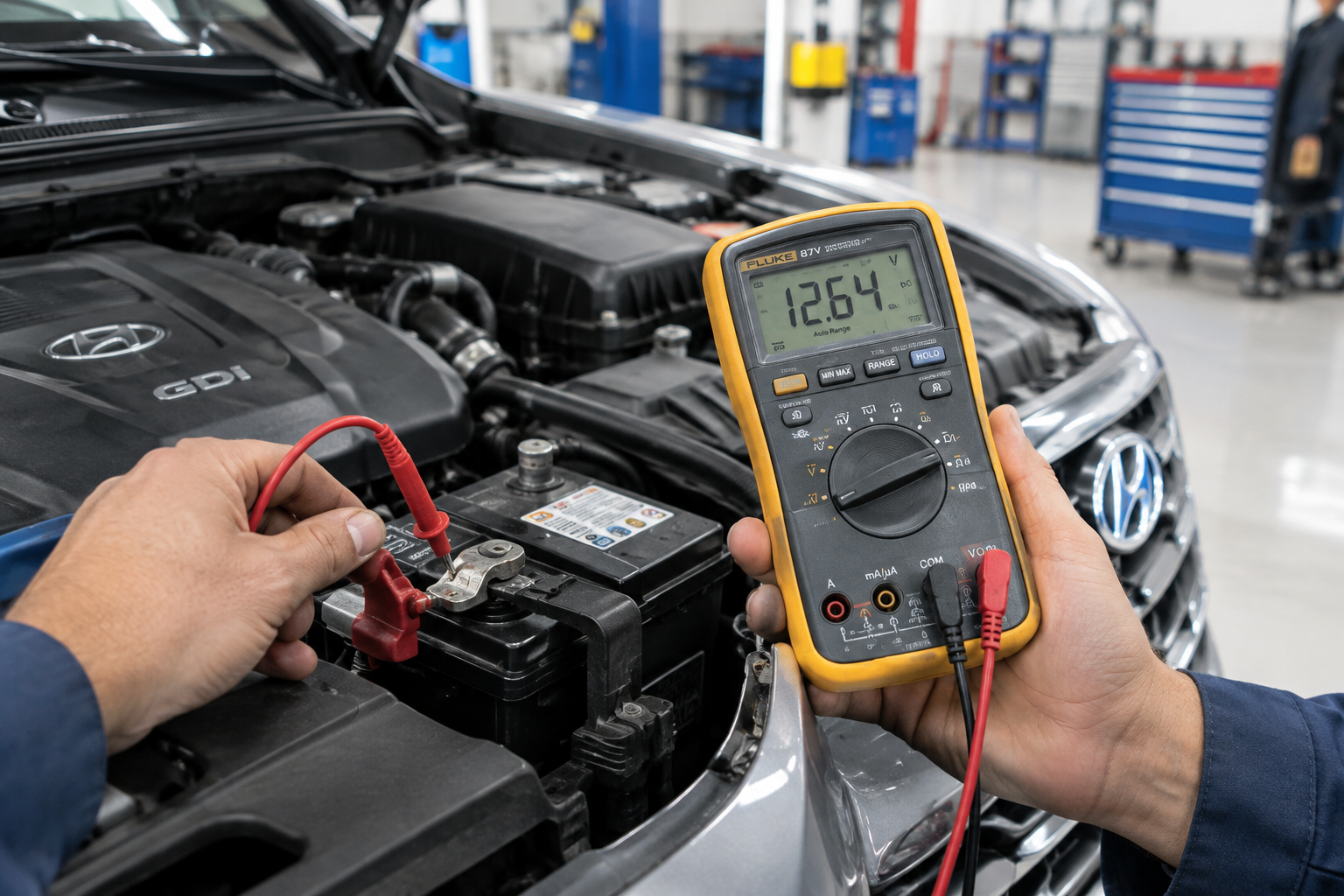
The EPB actuators at each rear wheel need a solid, consistent voltage supply to clamp and release properly. Hyundai’s EPB modules are picky about this, and if your battery is weak, has a bad terminal connection, or is simply old, the module may refuse to release the brake to avoid leaving you stranded with a caliper stuck mid-travel.
A quick voltage check at the battery terminals should read close to 12.6 volts with the engine off, and somewhere in the 13.5 to 14.7 volt range with the engine running. Anything noticeably lower points to a charging issue, a weak battery, or corroded connections that need cleaning.
If you suspect low voltage but don’t have a way to check it, a basic battery load tester or a multimeter is cheap insurance to keep in your glovebox. It’s also worth having an OBD2 scanner on hand that can read Hyundai-specific EPB fault codes, since a generic code reader often won’t dig deep enough into the brake module.
Hyundai Santa Fe OBD2 Scanner
A scanner with manufacturer-specific coverage lets you pull EPB module codes instead of just generic engine codes.
Once you’ve confirmed the battery and charging system are healthy, a jump start or a battery replacement can sometimes clear the low-voltage lockout on its own. If the EPB releases normally after that, you’ve found your answer. If it still won’t budge, the problem is likely in the switch, wiring, or module rather than the power supply itself.
Switch, Module, and Wiring Faults
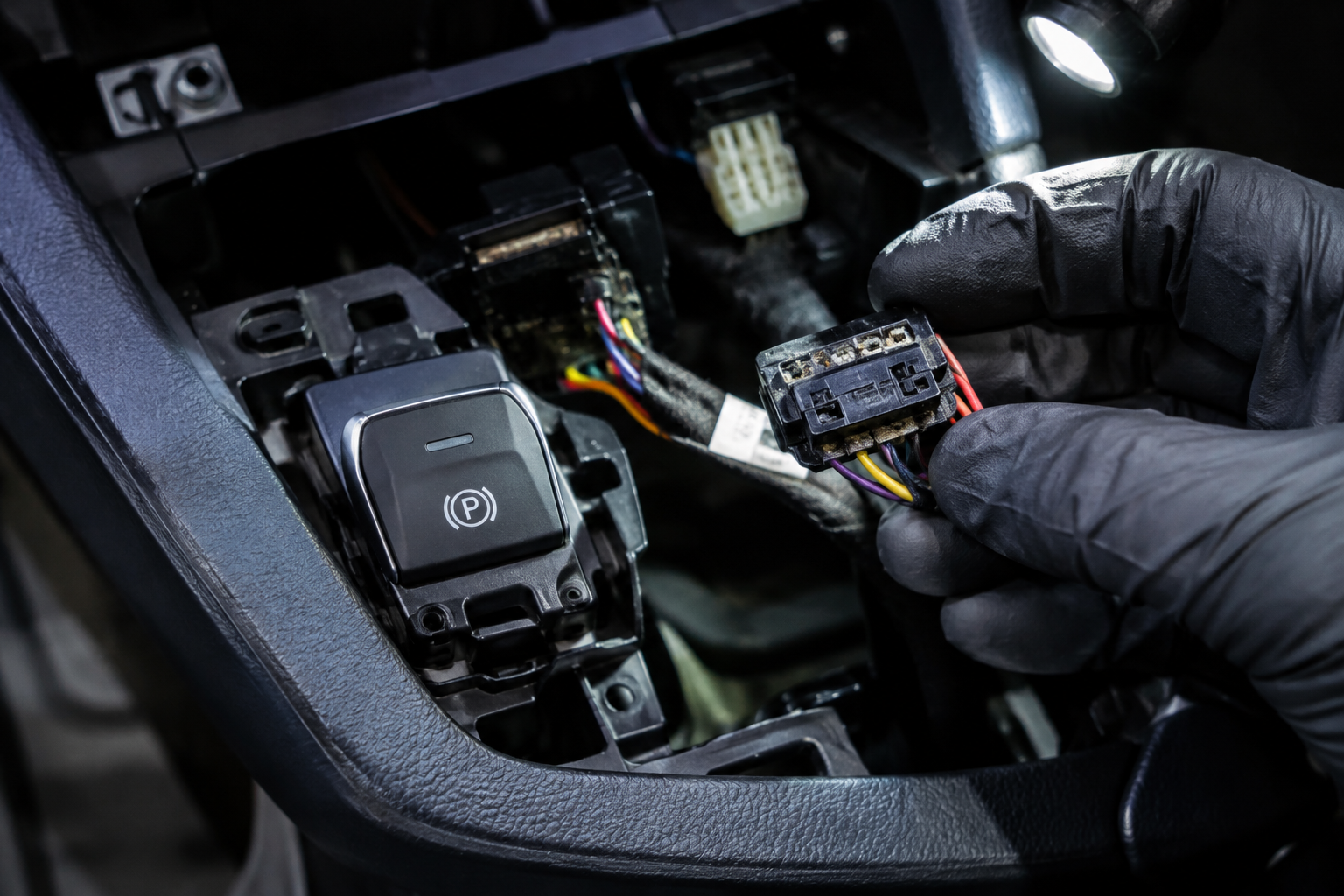
The EPB switch on the center console is a simple electrical component, but it takes a lot of use over the life of the vehicle. Repeated pulls and pushes can wear the internal contacts, causing intermittent signal loss that the module reads as no input at all.
Wiring harness issues are less common but not rare, especially around the connectors near the console or under the rear of the vehicle where road grime and moisture can corrode a pin over time. A scan tool that can monitor live switch input data while you press the button is the fastest way to confirm whether the switch itself is sending a signal.
If the module isn’t receiving a clean release signal, it has no way of knowing you actually want the brake to disengage, so it stays locked as a default safe state. This is one of the more common reasons a Santa Fe owner ends up needing a dealer or independent shop to replace the switch assembly rather than diagnose it themselves.
Actuator and Caliper Problems at the Wheel
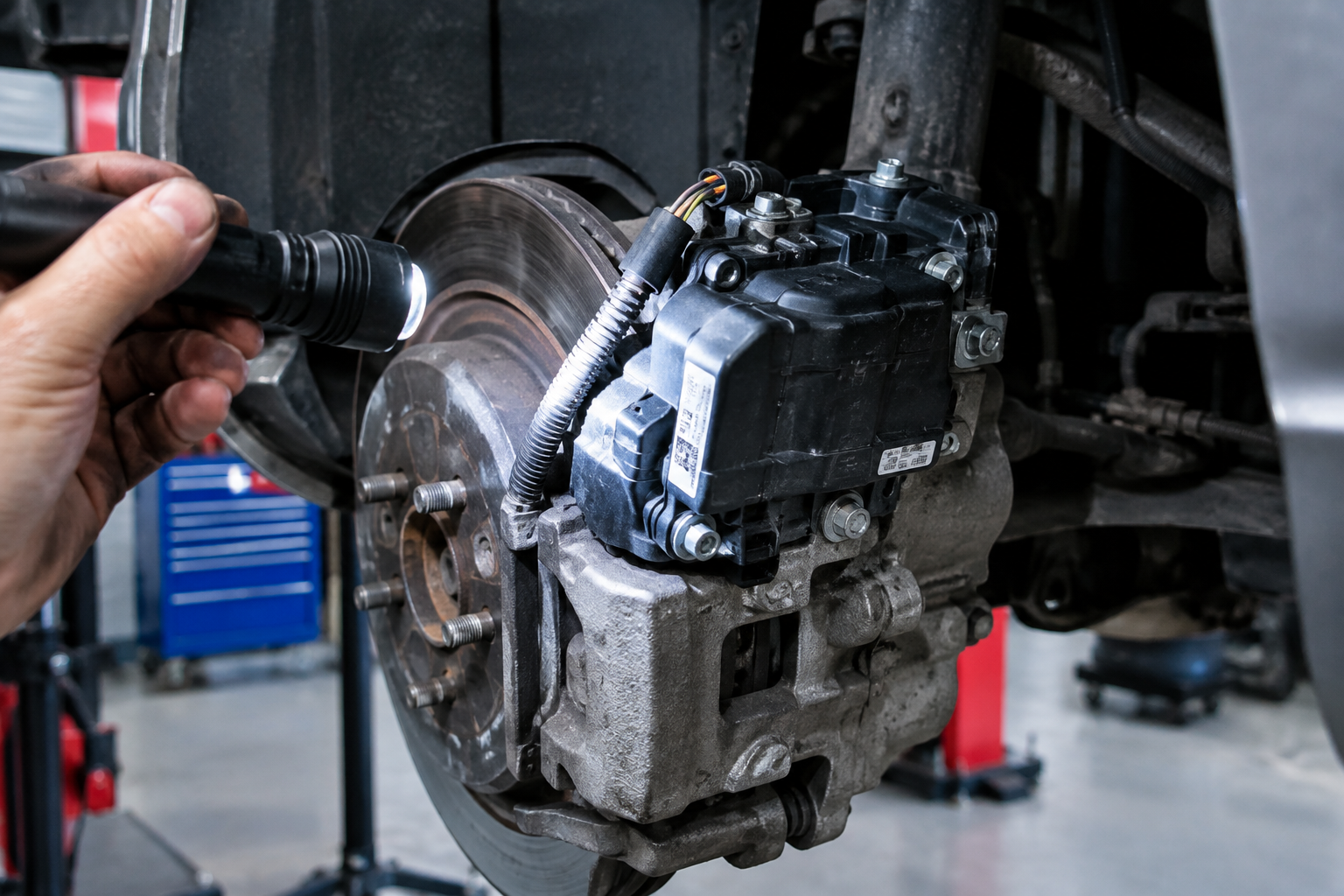
Each rear caliper on an EPB-equipped Santa Fe has a small motor built in that threads the piston in and out to clamp the pads. Over years of use, especially in salty or wet climates, that motor and its gearing can corrode, seize, or wear out entirely.
A failing actuator often shows up as one wheel that releases fine while the other doesn’t, or as unusual grinding or clicking noises from the rear of the vehicle during a release attempt. If you’ve noticed odd noises from the back of the car that get worse with speed, it’s also worth ruling out a wheel bearing or driveline issue using the checks in How to Fix a Loud Humming Noise from the Rear of Your Car That Gets Louder with Speed, since it’s easy to mix up brake and bearing noises if you’re not used to listening for the difference.
A stuck or seized actuator almost always needs a caliper replacement rather than a simple reset. This is mechanical wear, not a software glitch, and no amount of switch cycling or battery charging will fix a motor that’s physically jammed.
Service Mode and Why It Complicates Things
Hyundai technicians use a documented “service mode” or “maintenance mode” procedure to safely retract the EPB pistons during brake pad replacement. This mode exists specifically so a shop can work on the calipers without the motors trying to clamp down mid-repair.
The problem is that this same procedure, if triggered accidentally or left incomplete, can leave the EPB in a state where it won’t release normally until the correct exit sequence is followed. The steps to enter and exit service mode vary by model year and sometimes by trim, and using the wrong sequence for your specific Santa Fe can leave the system stuck in a strange in-between state.
If you or a previous shop recently had the rear brakes serviced, this is one of the first things to rule out. It’s a common enough issue that it’s worth asking directly whether the tech used a Hyundai-specific scan tool to properly exit service mode after the brake job was finished.
When to Call a Professional
If you’ve checked pedal input, ignition state, door and seat belt conditions, battery voltage, and you’ve confirmed there’s no leftover service mode issue, but the EPB still won’t release, it’s time to stop guessing. Do not attempt to drive or push the vehicle with the parking brake engaged, even for a short distance, since this can damage the caliper, the motor, or the rear brake components beyond simple repair.
Most Hyundai dealers and well-equipped independent shops have access to the emergency release procedure specific to your Santa Fe’s model year, which typically involves manually retracting the caliper piston through the service port. This is not something to improvise with generic tools, since the mechanism differs enough between model years that guessing can strip a piston or damage the actuator housing.
Frequently Asked Questions
Can I release the Santa Fe’s EPB with a dead battery?
No, not through the normal switch. The EPB motors need adequate voltage to retract, so a dead or severely weak battery will typically prevent release entirely. Jump starting the vehicle and letting the charging system stabilize the voltage is the first thing to try.
Is it safe to drive with the EPB warning light on if the brake seems to release?
If the light flashes or stays on after what looks like a successful release, don’t assume it’s fine. That warning usually means the module detected an inconsistency, and continuing to drive can mask a developing actuator or wiring fault that gets worse over time.
Does a bad alternator cause EPB problems on the Santa Fe?
Yes, indirectly. A failing alternator lets the battery voltage drop while driving, and if that drop happens while the EPB tries to engage or release, the module can log a fault or refuse to operate until voltage is restored. It’s worth checking charging system output whenever EPB symptoms show up alongside dimming lights or slow power window operation.
Since Santa Fe owners often deal with more than one driver-assist quirk over the life of the vehicle, it’s also worth bookmarking How to Turn Off Driver Attention Warning on Hyundai Santa Fe and How to Turn Off Lane Assist on Hyundai Santa Fe (and Whether It Stays Off) for a couple of other common electronic quirks on this model.
Related posts:
 Honda CR-V Electronic Parking Brake Won’t Release: Causes and Safe Checks
  Honda Pilot Electronic Parking Brake Won’t Release: Causes and Safe Checks
  Subaru Forester Electronic Parking Brake Won’t Release: Causes and Safe Checks
  Hyundai Tucson Electronic Parking Brake Won’t Release: Causes and Safe Checks
Leave a Reply