
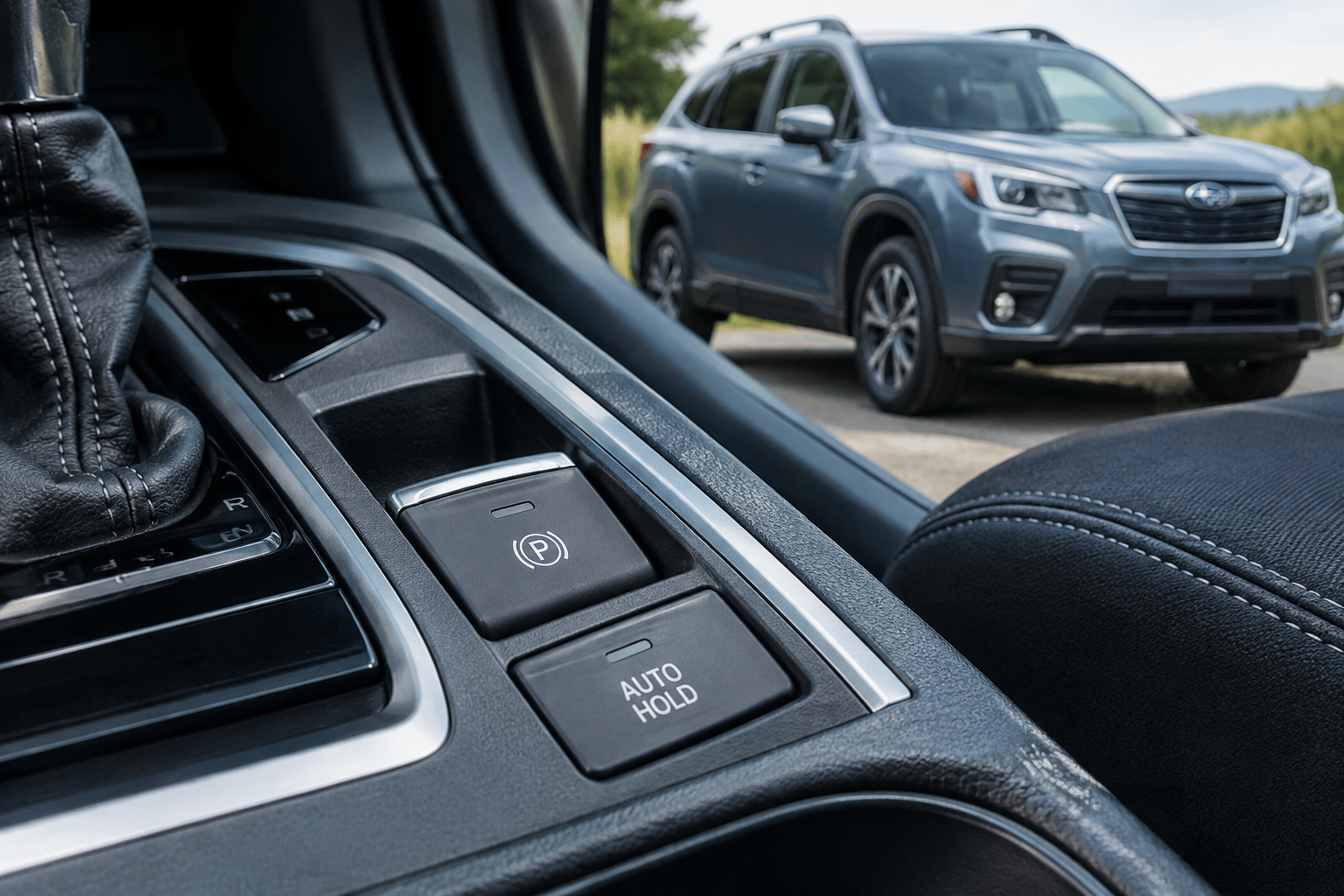
If your Subaru Forester’s parking brake light is flashing, chiming, or the electronic parking brake (EPB) just won’t let go no matter how many times you pull the switch, you’re dealing with one of the more nerve-wracking electrical quirks on modern Foresters. It’s not usually catastrophic, but it can leave you stuck in a parking spot, a driveway, or worse, a service bay with the rear wheels locked. Before you start guessing at parts, it helps to understand how the system actually works and where it tends to fail.
The Forester’s EPB, standard on the 2019 and newer SK-generation models, uses a small electric motor built into each rear caliper instead of a cable. When you pull the switch, a control module sends voltage to those motors to clamp or release the caliper pistons. That electronic middleman is convenient until it isn’t, and there are several points along that chain where things can break down.
Start With the Safe, Simple Checks
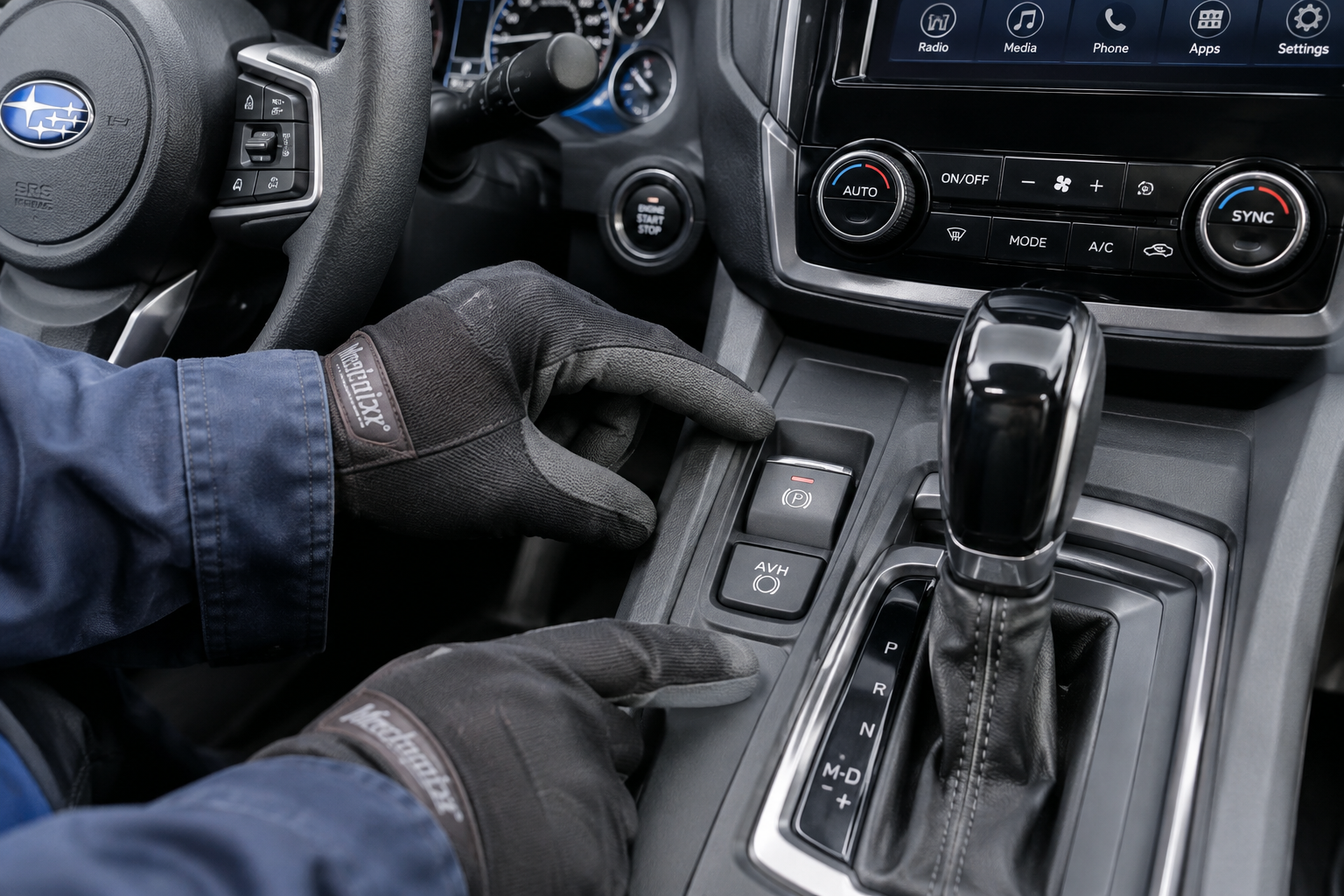
Before assuming you have a failed actuator or a dead module, run through the basics. Most EPB “failures” come down to something small that gets overlooked in the panic of a warning light.
- Press the brake pedal firmly with your foot before trying the EPB switch again. Many Subaru EPB systems require a confirmed brake pedal signal before they’ll release the rear calipers.
- Make sure the ignition is fully in the “on” or “run” position, not just accessory mode. The EPB module needs full power to cycle the motors.
- Close all doors and buckle the driver’s seat belt. Some Forester model years tie the EPB release logic to door and seat belt switches as a safety interlock, similar to how shifting out of park works.
- Check your owner’s manual for the exact release sequence for your model year. Subaru changed the EPB software logic more than once between 2019 and today, and the manual will have the correct steps for your specific car.
If you’ve run through all of that and the brake still won’t release, don’t try to force the vehicle to roll or drive away with it engaged. Doing so can damage the rear calipers, warp rotors, or strand you with a seized rear brake. It’s a safety system acting up, not a suggestion to override it with throttle.
Low Voltage Is the Most Common Culprit
A weak or dying battery is by far the number one reason Forester owners see EPB warning lights or a brake that refuses to release. The actuator motors draw a real amount of current, and if your battery voltage dips below what the module considers safe, it will refuse to cycle the calipers rather than risk leaving them half-engaged.
This shows up most often in colder weather, on batteries that are already three or four years old, or after the car has sat for a week or two without being driven. If your dash lights look dim when you crank the engine, or you’ve noticed slow cranking lately, that’s your first suspect.
A simple multimeter check at the battery terminals, looking for roughly 12.4 to 12.6 volts at rest and around 13.5 to 14.5 volts running, will tell you a lot in under a minute. If the battery tests weak, replace it before you spend money chasing anything else. It’s the cheapest fix on this whole list and solves the problem more often than any other single item.
NOCO Boost Plus Jump Starter
A compact jump starter is worth keeping in the cargo area so a weak battery never strands you with a locked parking brake.
Switch and Sensor Issues
The EPB switch itself, that small toggle near the shifter, can develop internal contact wear over years of use. When it fails, the module either doesn’t see a “release” request at all or gets a confused, intermittent signal. You’ll often notice this as inconsistent behavior: sometimes it releases fine, other times it does nothing until you cycle the ignition.
The brake pedal position switch is another common weak link. Since most EPB releases require a verified brake pedal press, a failing switch can make the module think you never pressed the pedal even when you did. This is also the same switch that affects brake lights, so if your brake lights are misbehaving alongside the EPB issue, that’s a strong clue pointing at the pedal switch rather than the parking brake hardware itself.
A code reader that can pull Subaru-specific body and brake control module codes will save you a lot of guesswork here, rather than just tossing generic parts at it.
Subaru Forester OBD2 Scanner
A scanner that reads manufacturer-specific codes will pinpoint whether the fault is the switch, the actuator, or the module rather than leaving you guessing.
Actuator and Caliper Faults
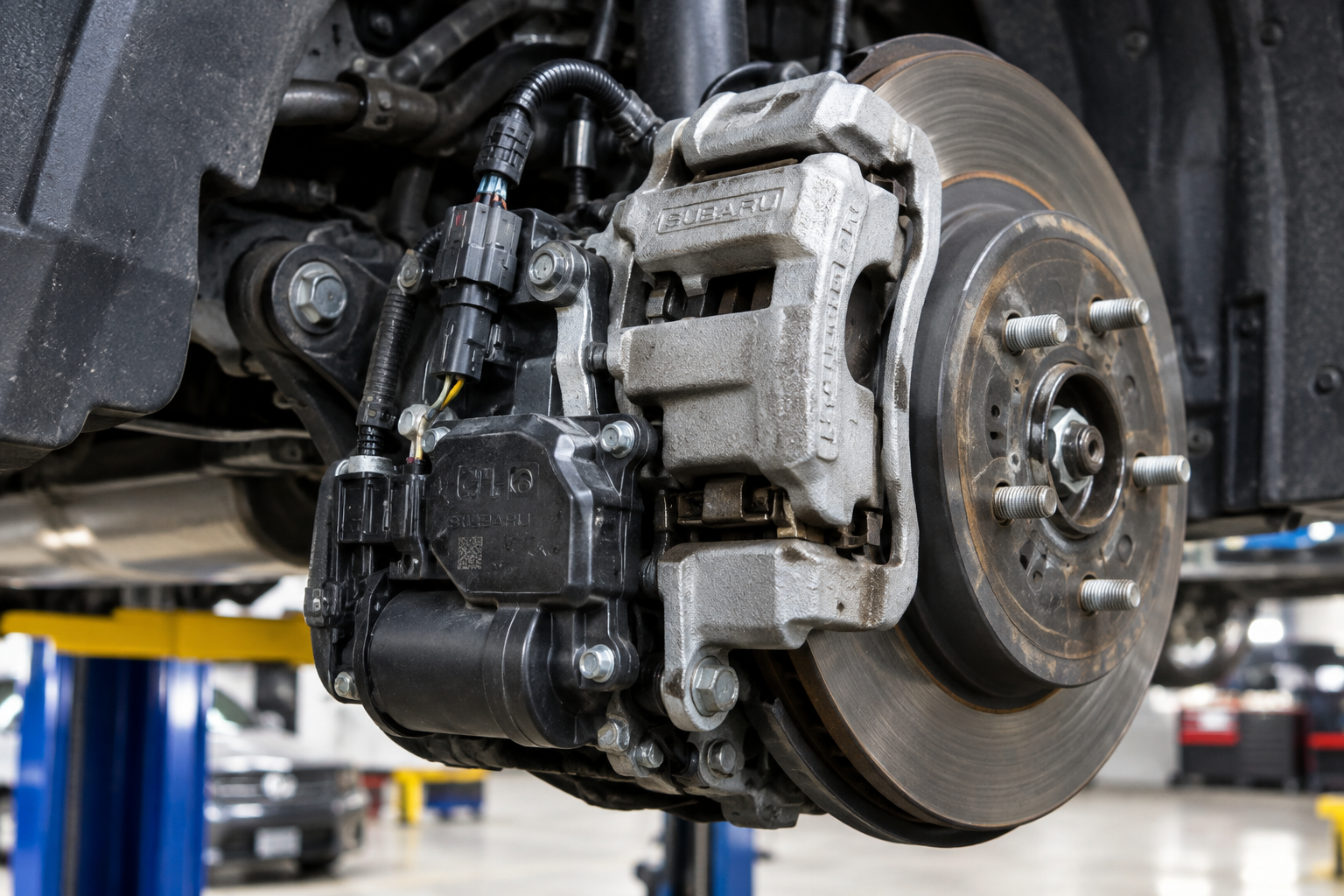
If voltage is good and the switches check out, the next suspect is the actuator motor itself, built into the rear calipers. These motors and their internal gear sets can wear out or seize, especially on Foresters that see a lot of stop-and-go driving in wet or salty climates where corrosion creeps into the caliper.
Symptoms of an actuator fault usually include a grinding or clicking noise from one rear wheel when you try to release the brake, or the EPB warning showing a specific caliper fault rather than a general system warning. This is different from ordinary brake wear, so if you’ve also noticed unusual noise from the back of the car at speed, it’s worth ruling out a wheel bearing or suspension issue too, which we cover in our guide on diagnosing a loud humming noise from the rear of your car.
Replacing an EPB caliper isn’t a huge job mechanically, but it does require the module to be put into a calibration or service mode afterward so the new actuator can be initialized correctly. Skipping that step is a very common reason a “repaired” EPB still throws warnings.
Service Mode Complications
Anytime rear brake pads are replaced on a Forester with EPB, the technician needs to put the system into service mode first. This retracts the caliper pistons fully so the pads can be swapped, and it needs to be exited properly afterward or the parking brake will refuse to function normally, sometimes getting stuck in a half-released or unresponsive state.
If your EPB trouble started right after a brake job, whether at a dealer or an independent shop, this is the first thing to ask about. The fix is usually just re-entering and properly exiting service mode with a factory-level scan tool, not a hardware replacement. This is also a good reminder that the exact steps differ by model year, since Subaru revised the service mode procedure between earlier and later SK Foresters, so always confirm the correct sequence for your specific year rather than following a generic online guide.
Owners dealing with other electronic driver aids acting up around the same time might also want to check our guide on turning off DriverFocus on the Subaru Forester, since a low system voltage event can sometimes trip multiple driver assist warnings at once, not just the EPB.
Emergency Release: Know the Procedure Before You Need It
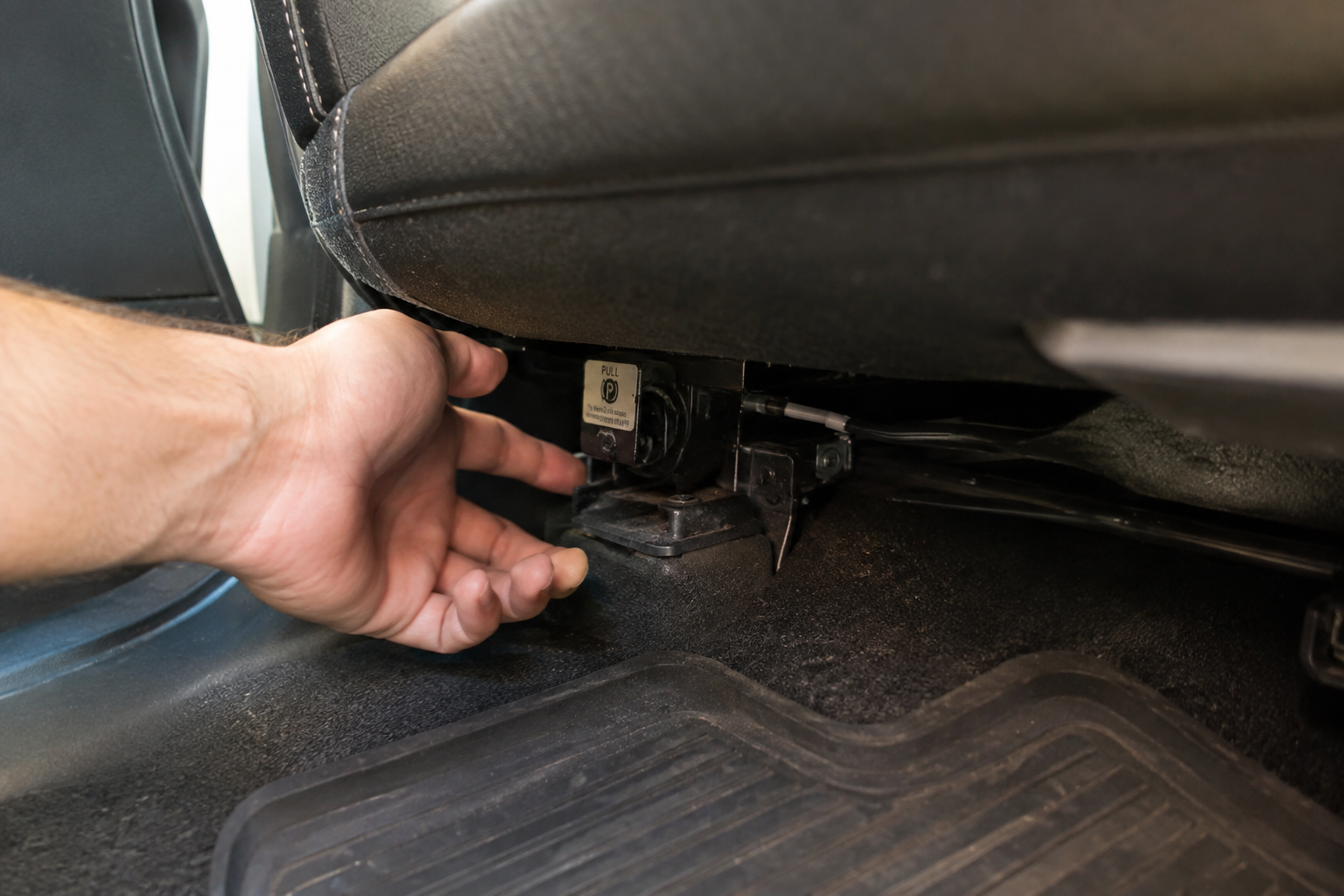
Every Forester with EPB has a manual emergency release, usually a mechanical lever or cable access point tucked under the center console or near the parking brake switch itself. This is meant for situations like a dead battery where you need to move the car a short distance safely, not as a routine way to bypass a stuck brake.
The exact location and steps vary by model year, so check your owner’s manual rather than relying on a generic video or forum post. Using the wrong procedure, or forcing a manual release without following the documented steps, can damage the caliper mechanism and turn a simple fix into an expensive one.
If you’re not confident locating or using the emergency release, that’s a reasonable moment to call for a tow rather than improvise. A shop with the right Subaru scan tool can diagnose and safely release the system in a fraction of the time it takes to troubleshoot it in a parking lot.
Frequently Asked Questions
Can a dead battery really cause the Forester’s parking brake to get stuck?
Yes, and it’s the single most common cause. The EPB actuator motors need adequate voltage to release the calipers, and the control module will often refuse to cycle them at all if voltage is too low, rather than risk an incomplete release.
Is it safe to drive with the EPB warning light on if the brake did eventually release?
If the brake fully released and the warning light cleared after a normal drive cycle, it’s generally fine to continue driving, though you should still get the system scanned soon. If the warning light stays on continuously, treat it as an active fault and get it diagnosed before relying on the parking brake again.
Do I need a dealer to fix an EPB actuator or service mode issue?
Not necessarily. Independent shops with a capable Subaru-compatible scan tool can perform the same service mode and calibration procedures as a dealer. What matters is that the tool supports the manufacturer-specific EPB functions, not just generic OBD2 code reading.
Chasing an EPB fault on a Forester is mostly about ruling things out in the right order: voltage first, then switches, then the actuators themselves, and always checking whether a recent brake job left the system in service mode. If you’re the type who likes to keep tabs on your Subaru’s overall health, it’s also worth reading up on which Subaru model years have had bigger reliability headaches, since electronic parking brake quirks are usually minor compared to some of the issues covered there. And if the EPB drama has you digging into other Forester electronics, our rundown on turning off Lane Assist on the Subaru Forester covers another system owners frequently ask about.
Related posts:
 Honda CR-V Electronic Parking Brake Won’t Release: Causes and Safe Checks
  Toyota RAV4 Electronic Parking Brake Won’t Release: Causes and Safe Checks
  Toyota Highlander Electronic Parking Brake Won’t Release: Causes and Safe Checks
  Subaru Outback Electronic Parking Brake Won’t Release: Causes and Safe Checks
Leave a Reply