
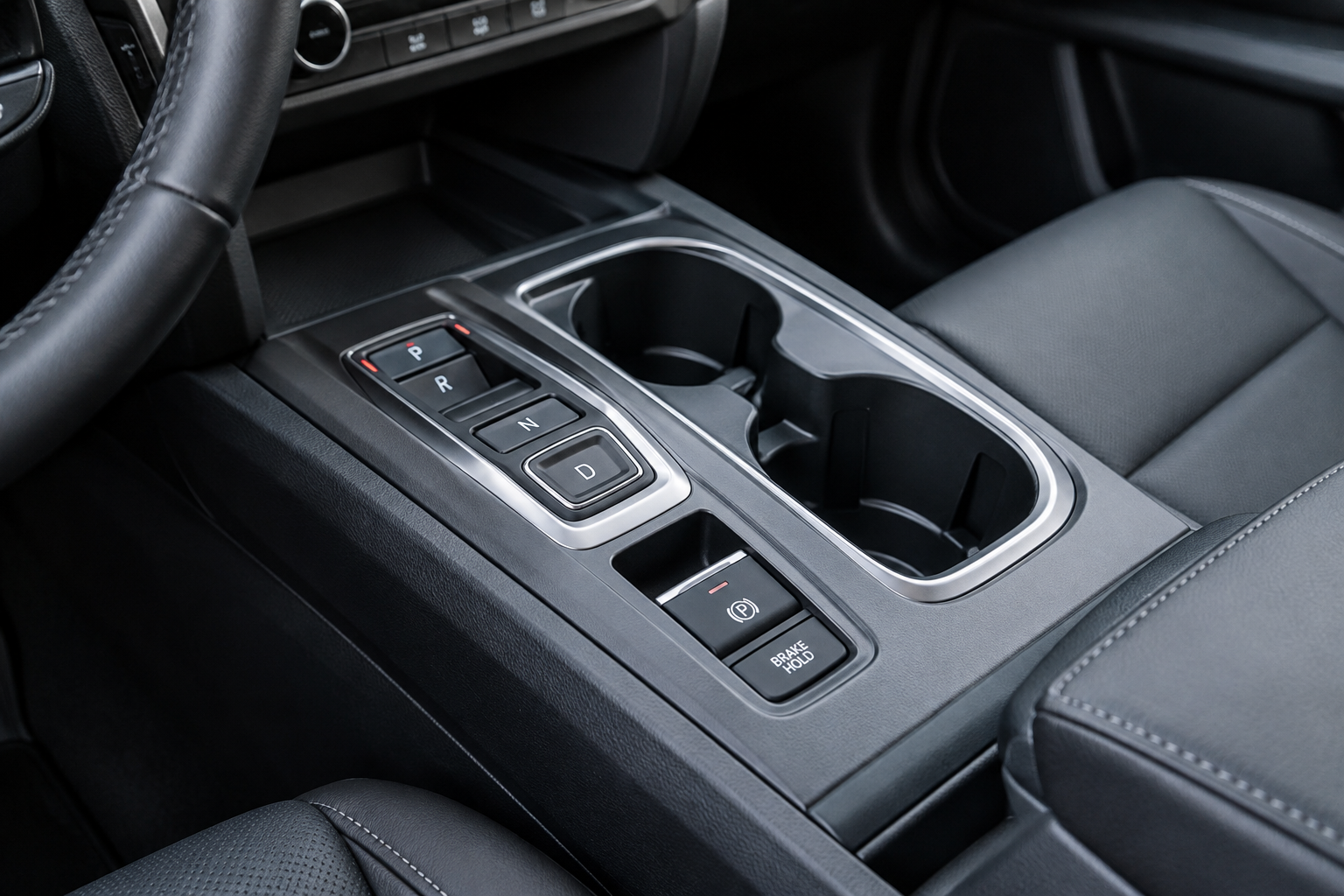
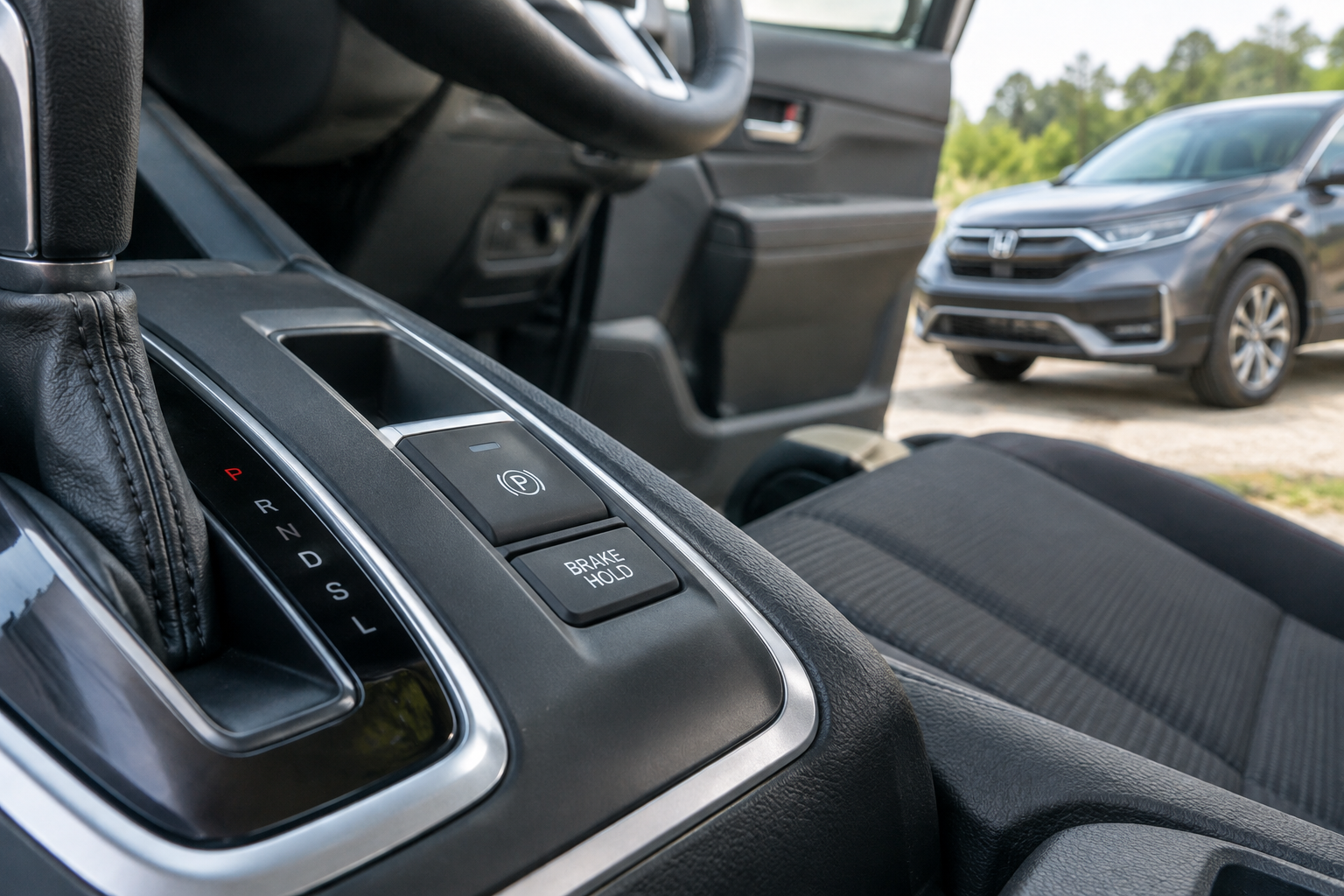
Nothing ruins a morning quite like starting your Honda Pilot and finding the parking brake light flashing, refusing to release no matter how many times you tap that little switch on the console. Your Pilot might chime at you, throw a warning message in the driver information interface, or just sit there with the rear brakes locked. Before you panic or start looking for a tow truck, there are several safe checks you can run through yourself in a few minutes.
The electronic parking brake (EPB) on the Pilot uses a small motor at each rear caliper to clamp and release the brake, controlled by a switch and a body control module. When any part of that chain has a hiccup, from low battery voltage to a stuck actuator, the system can refuse to release as a safety precaution.
Start With the Basics Before You Assume the Worst
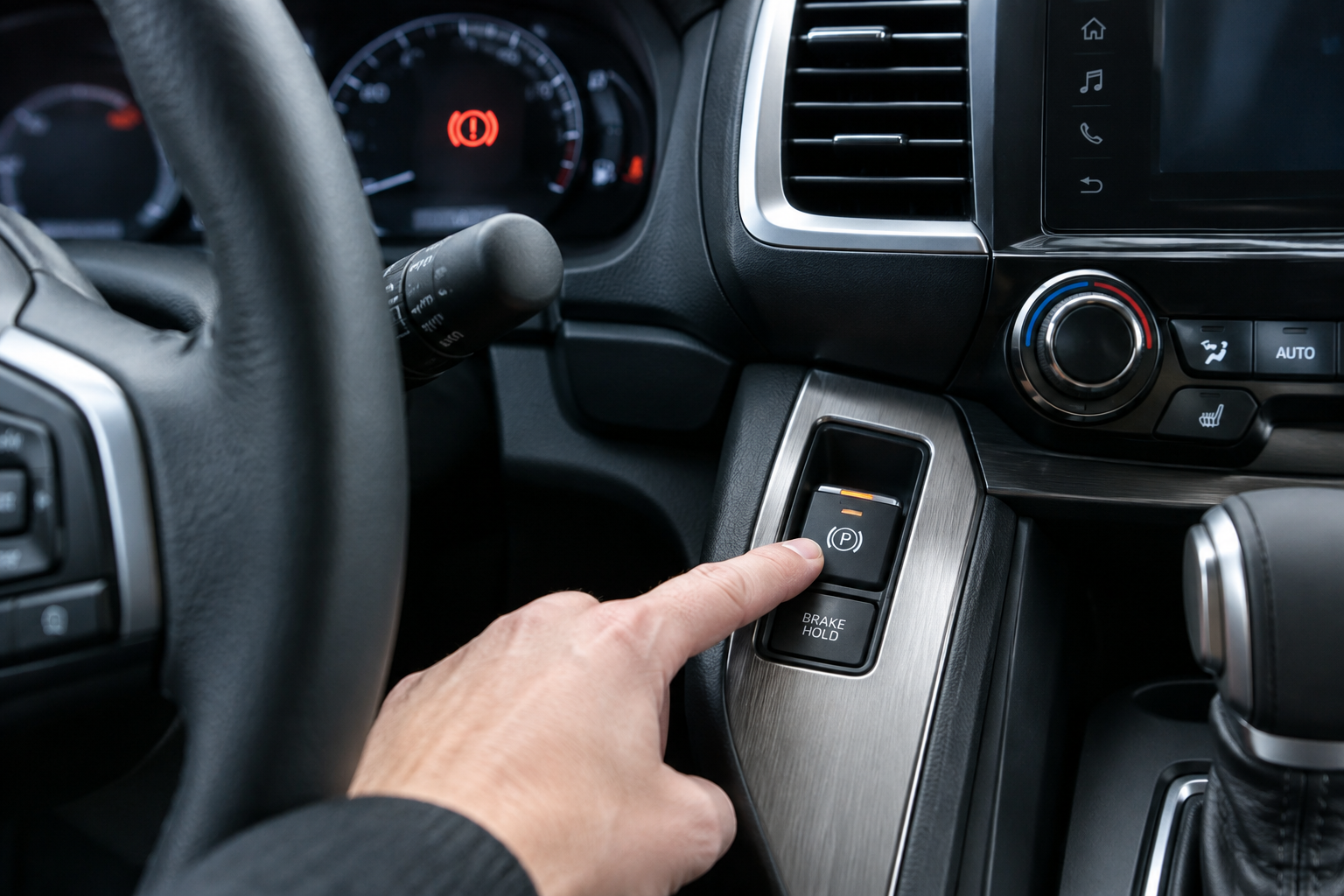
Most EPB “won’t release” complaints trace back to something simple. Work through these checks in order before assuming you need a shop visit.
- Press the brake pedal firmly first. The Pilot’s EPB requires brake pedal input before it will release, similar to how a shift-to-park interlock works. If your brake lights aren’t working or the pedal switch is faulty, the module never sees the signal it needs.
- Check your seat belt and door status. Some model years require the driver’s door closed and seat belt fastened before the switch will respond. It sounds minor, but it trips up a lot of owners.
- Confirm the ignition is fully on. The EPB switch won’t do anything in accessory mode on most Pilot trims. Push the start button twice without touching the brake, or turn the key fully, and try the switch again.
- Test your battery voltage. EPB actuators draw real current, and if your battery is weak or a jump-start connection is loose, the module may abort the release cycle to protect the motor. A voltage reading below roughly 11.8 volts at rest is a red flag.
If you’ve run through all of that and the light is still flashing, check your owner’s manual for the exact emergency release procedure for your model year. Third-generation Pilots (2016 and up) have a manual release cable and pull tab, usually located under a panel near the parking brake switch or in the trunk area, but the exact location and steps have changed across trims and refresh years. Never assume the 2019 procedure matches the 2023 one.
Diagnosing the Root Cause
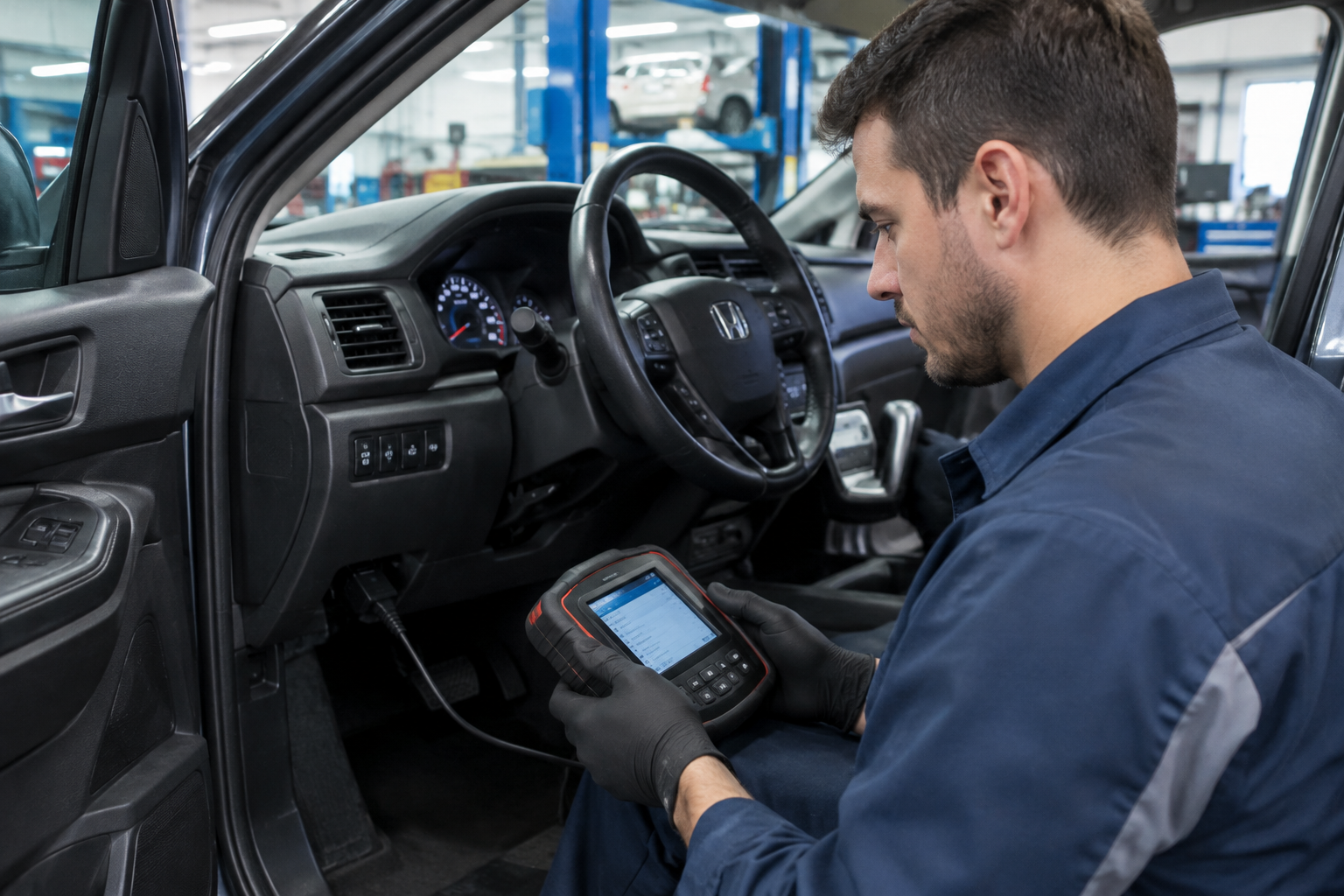
Once you’ve ruled out user-error type issues, the fault usually falls into one of a few categories.
Low Voltage or Charging System Faults
A tired battery, a failing alternator, or corroded battery terminals are the most common culprits. If your Pilot has been sitting for weeks, or you notice slow window motors and dim interior lights along with the EPB warning, start here. Cleaning the terminals and testing the battery under load often resolves the issue without touching the brake system at all.
Switch or Wiring Problems
The EPB switch itself can fail internally, or the wiring harness behind the center console can develop a bad connection from years of arm rests and elbows resting on it. A scan tool that reads Honda-specific body control module codes will usually flag a switch circuit fault immediately, saving you from guessing.
Actuator or Caliper Faults
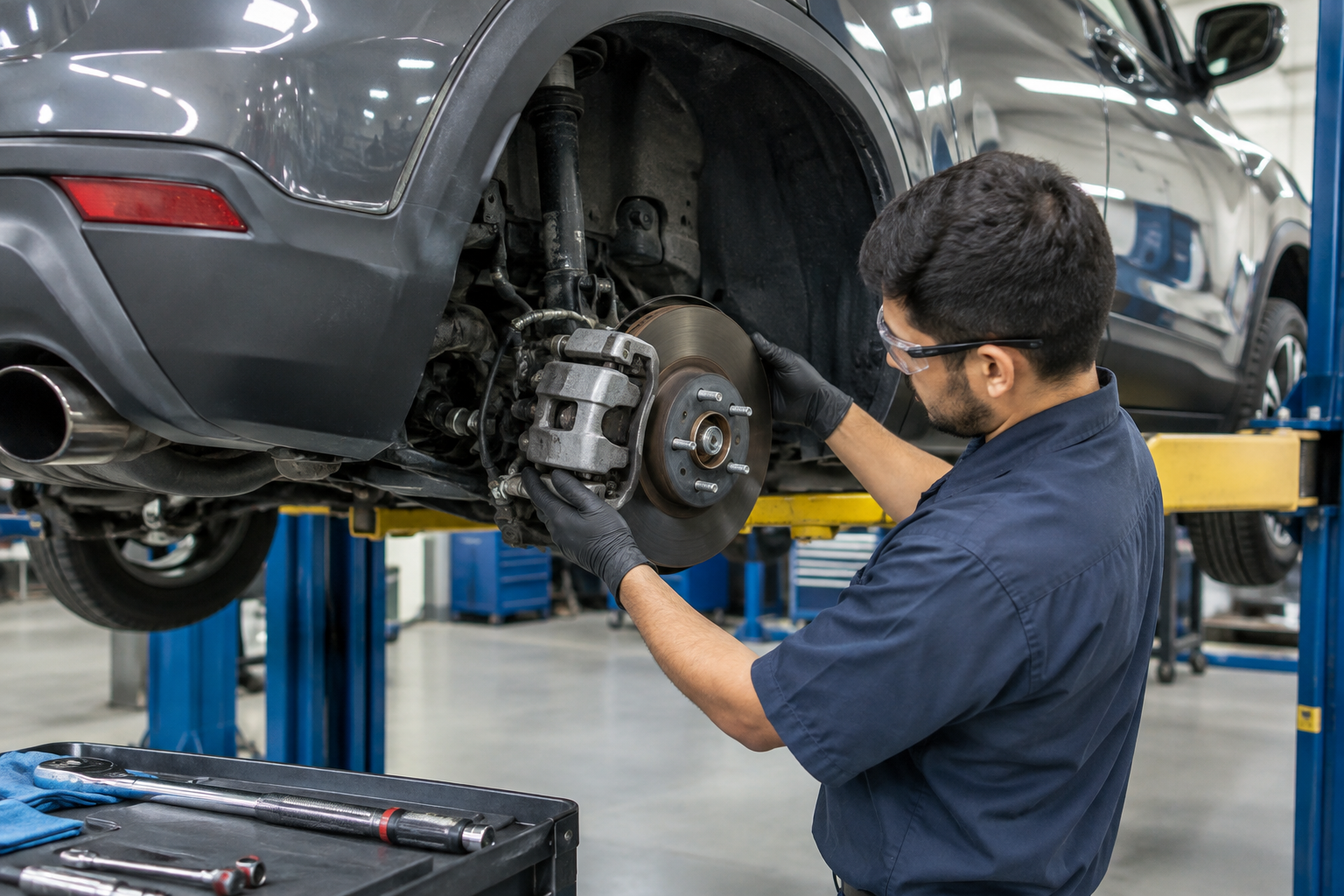
Each rear caliper has its own motor and gear assembly that clamps the brake. Corrosion, a seized caliper slide pin, or a worn actuator motor can prevent the module from confirming a full release, so it leaves the brake engaged as a safety default. This is more common on Pilots that see a lot of salted winter roads or sit unused for long stretches.
Service Mode Complications
If a shop recently did rear brake pads or rotors, the EPB actuators need to be put into a retraction or “service mode” before the calipers can be pushed back. Skipping that step, or not fully exiting service mode afterward, is a well-known reason Pilots come back with a parking brake that won’t release properly. If your warning light appeared right after a brake job, that’s the first thing to ask the shop about.
A basic OBD2 scanner that supports Honda-specific modules can save you a diagnostic fee by telling you exactly which circuit or actuator is throwing a fault. Something like an OBD2 scanner compatible with Honda models will pull body control module codes, not just basic engine codes, which matters here.
FOXWELL NT301 OBD2 Scanner
A budget-friendly scanner that reads beyond basic engine codes and works well for diagnosing EPB-related electrical faults on Honda models.
If you’re chasing a battery-related cause, a compact multimeter makes quick work of confirming voltage at the terminals versus voltage at the battery post itself, which helps you spot corrosion-related voltage drop.
Klein Tools Digital Multimeter
A reliable, easy-to-read multimeter for checking battery voltage and diagnosing low-voltage EPB faults at home.
What Not to Do
Don’t try to drive the Pilot with the parking brake still engaged, even a short distance, hoping it will “work itself loose.” This can overheat the rear brakes, damage the actuator motors, and in some cases warp the rotors. If the manual release procedure doesn’t restore normal operation, the vehicle needs to be towed with the rear wheels off the ground or on a flatbed, not driven or dragged on its own wheels.
This is also not a system to force with pliers, zip ties, or by disconnecting the battery mid-cycle. The actuator motors can be damaged if they’re interrupted while mid-travel, turning a simple fix into a caliper replacement.
Frequently Asked Questions
Can a dead battery really cause the parking brake to stay stuck?
Yes. The EPB actuators need a minimum voltage to complete a release cycle, and the module is programmed to abort and hold the brake applied if it senses insufficient power. This is one of the most common and easiest fixes, since a jump start or new battery often resolves it instantly.
Is it safe to drive my Pilot if the EPB warning light is on but the brake released?
If the brake fully released and you’re only seeing a warning light with no dragging or noise, you can typically drive it to a shop for diagnosis, though you shouldn’t ignore the warning long term. If you feel any dragging, pulling, or notice a burning smell, stop and have the vehicle towed instead.
Electronic parking brake issues on the Pilot are usually fixable once you identify whether it’s a voltage problem, a switch fault, or an actuator that needs attention. Working through the basic checks first will save you an unnecessary tow and possibly a diagnostic fee, but don’t hesitate to get a professional involved if the manual release procedure doesn’t restore normal function.

Leave a Reply