
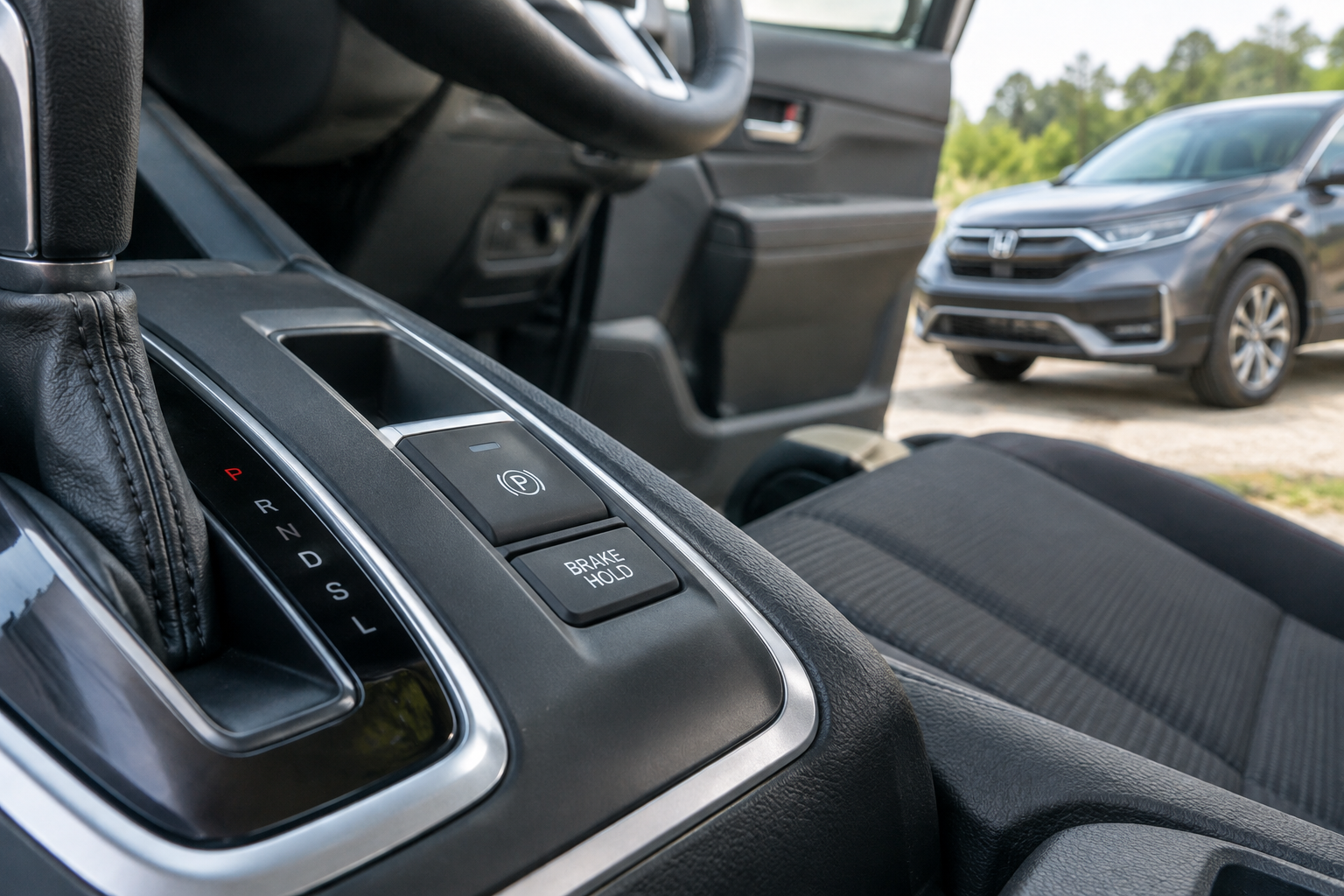
An electronic parking brake that won’t release can turn a quick errand into a stressful morning. Instead of the usual click and dashboard light going dark, you’re stuck staring at a parking-brake warning while the CR-V refuses to budge. Before you assume the worst, there are several simple checks that solve this problem more often than not.
This guide walks through the safe, correct steps to diagnose an EPB fault on a Honda CR-V, starting with the basics and working toward the more involved causes like actuator or caliper failure.
Start With the Safe, Basic Checks
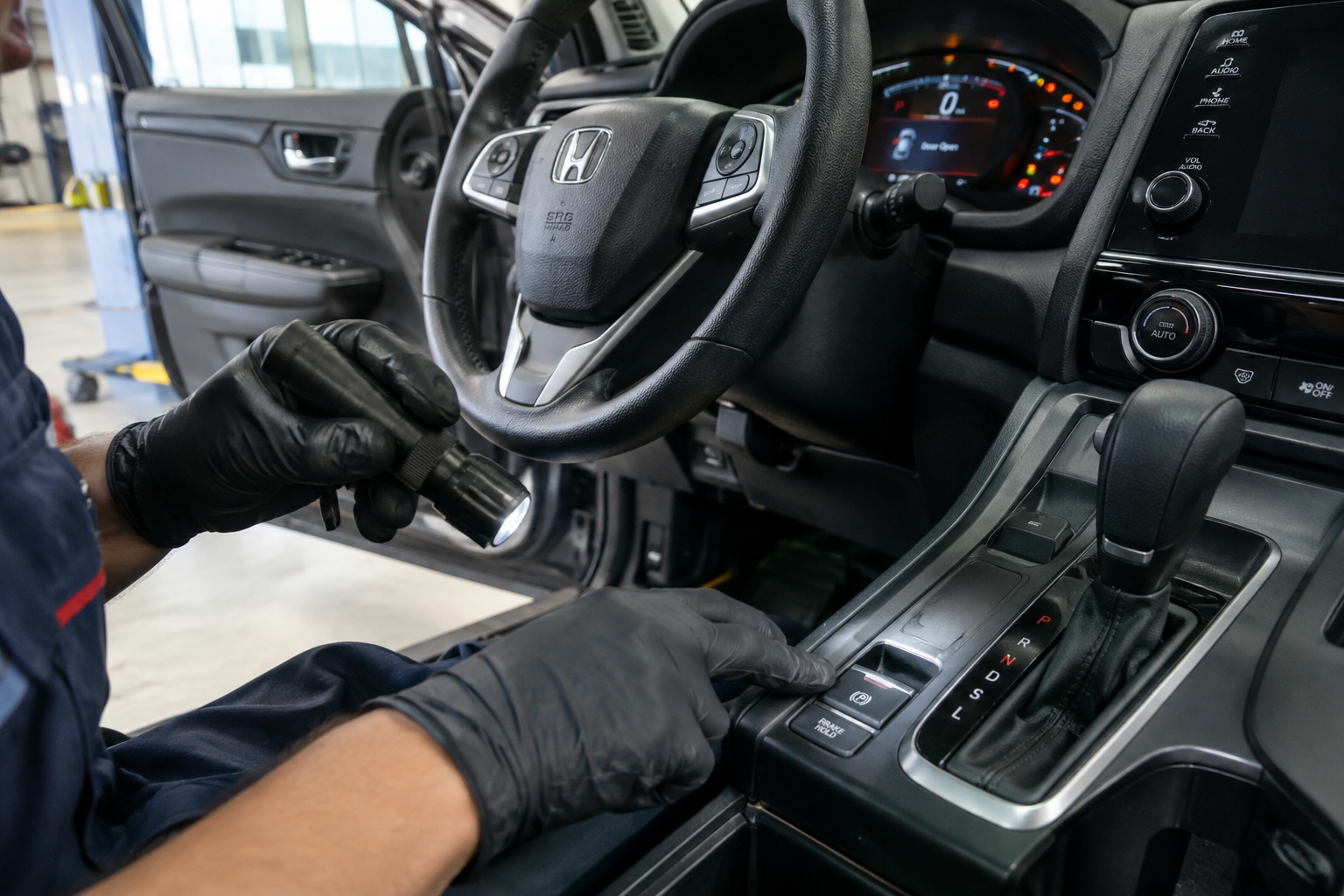
Most EPB release failures come down to something small. Work through these before assuming a part has failed.
- Foot on the brake pedal: The CR-V’s EPB requires firm, sustained pressure on the brake pedal while you pull the release switch. A light tap won’t register with the system.
- Ignition state: The engine needs to be running, or the ignition needs to be fully in the “On” position depending on your CR-V’s generation. Trying to release the brake with the ignition in accessory mode often fails silently.
- Driver’s seat belt and door status: Some CR-V model years won’t release the EPB unless the driver’s seat belt is buckled and the driver’s door is closed. This is a safety interlock, not a malfunction.
- Battery voltage: The EPB actuator motors draw a noticeable amount of current. If your battery is weak, aging, or the terminals are corroded, the system may refuse to release to protect the motor and prevent it from stalling mid-cycle.
If you’ve checked all of the above and the warning light is still on, glance at your owner’s manual for the exact release sequence for your model year. Honda revised the EPB switch logic and warning behavior across CR-V generations, so a 2017 and a 2023 CR-V won’t necessarily behave identically.
Low Voltage and Switch Faults
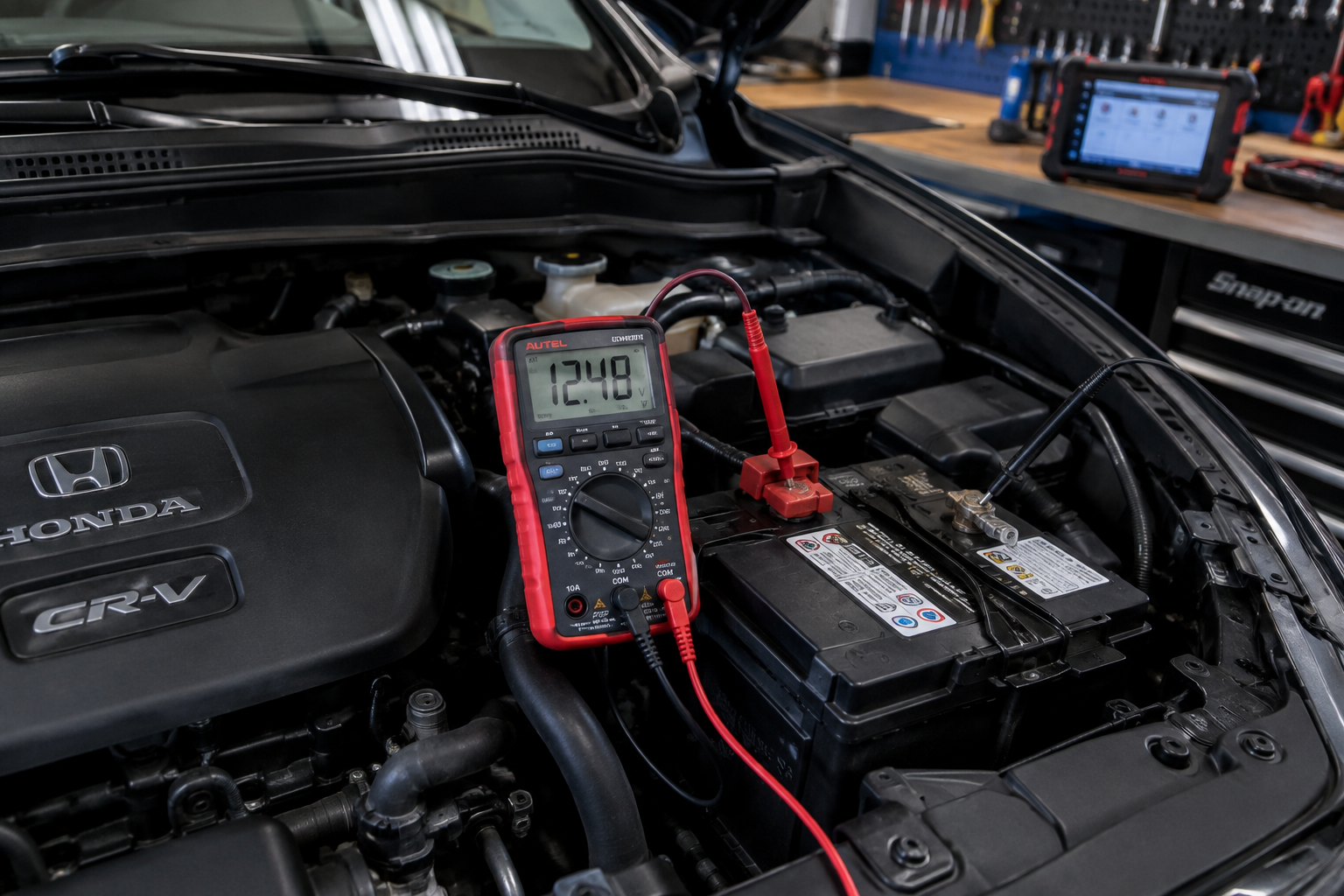
A surprising number of “dead” EPB systems are actually low-voltage issues. When the module senses voltage below its threshold, it locks the brake engaged as a fail-safe rather than risk leaving the actuator in an unknown position. If your CR-V has been sitting for a while, has an aftermarket accessory draining the battery, or you recently jump-started it, this is worth ruling out first.
A basic multimeter check at the battery terminals with the engine off should read close to 12.6 volts. With the engine running, you want to see something in the 13.5 to 14.7 volt range from the alternator. Anything noticeably lower points to a battery or charging issue rather than the parking brake itself.
The EPB switch itself can also fail. It’s a small toggle-style switch on the console, and like any switch it can wear out, stick, or develop a bad connection over time. If you pull it and hear or feel nothing, or the dash light doesn’t respond at all, the switch or its wiring harness is a likely suspect. This is also where an OBD2 scanner earns its keep, since it can pull stored EPB fault codes and tell you whether the module even registered your switch input.
Honda CR-V OBD2 Scanner
A scanner that reads EPB-specific codes helps you confirm a switch, actuator, or module fault before you start replacing parts.
A scanner that supports Honda-specific modules, not just generic OBD2 codes, will give you a much clearer picture. Generic code readers often can’t communicate with the parking brake module at all, which leaves you guessing.
Actuator, Caliper, and Service Mode Issues
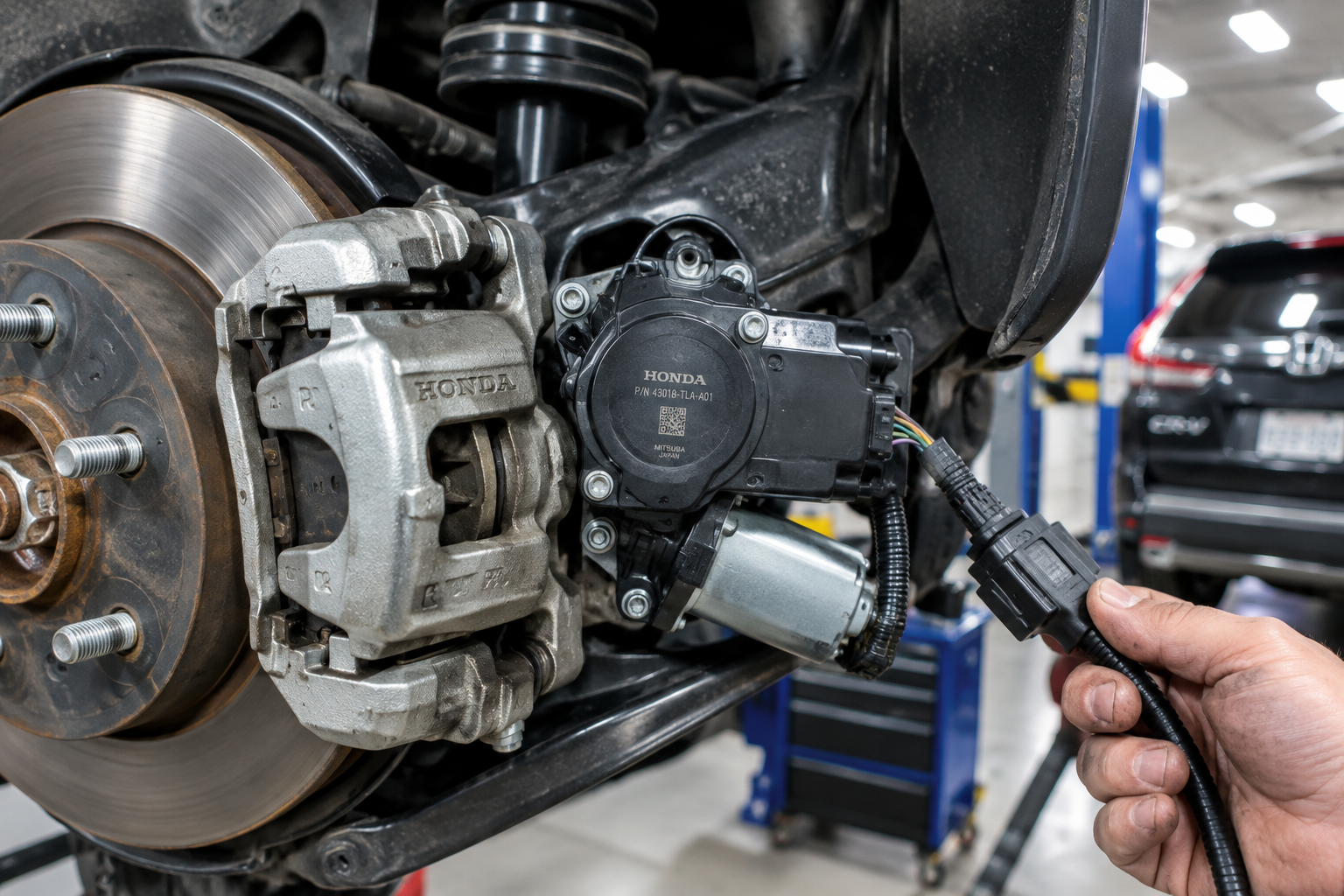
If voltage and the switch check out, the next suspect is the actuator motor itself, built into the rear brake calipers on most CR-V trims. These motors physically clamp and release the caliper piston. Corrosion, water intrusion, or a worn motor can cause the actuator to bind or stall partway through its cycle, which the system reads as a fault and refuses to release for.
Rear brake pad wear plays a role here too. If the pads are worn down close to the wear limit, the actuator has to travel farther to clamp and release, and on a marginal motor or weak battery that extra travel can be enough to trigger a fault. Combined with brake fluid or hydraulic issues elsewhere in the system, similar to what we cover in our piece on a brake pedal that goes to the floor after sitting overnight, this can compound into a system that’s reluctant to release at all.
Service mode is another common trap. Many Honda EPB-equipped models have a dealer or technician service mode meant to retract the actuators for brake pad replacement. If a previous shop left the system in service mode, or a battery disconnect confused the module, the CR-V may sit with the brake in an unusual state. Exiting service mode correctly requires the specific procedure for your model year, and it’s not something to guess at. This is one area where forcing anything, including trying to drive the vehicle with the brake still engaged, risks damaging the actuator motor or the rear calipers. If the manual procedure and basic checks don’t clear it, this is a job for a shop with proper Honda diagnostic software.
When to Call a Professional
If you’ve confirmed good battery voltage, verified the pedal and seat belt conditions, and the EPB still won’t release or throws a fault code your scanner can’t clear, it’s time to get it looked at. A stuck actuator or a module stuck in service mode isn’t something you want to force, since doing so can damage the rear brake hardware or leave you without a functioning parking brake entirely.
Frequently Asked Questions
Can I manually release the Honda CR-V parking brake in an emergency?
Some CR-V model years have a manual emergency release, often a cable or lever accessible under the rear cargo area or near the actuator itself, meant for situations like a dead battery. The exact location and procedure vary by model year, so check your owner’s manual before attempting it. Never try to drive the vehicle forward or backward with the parking brake still engaged to force a release.
Why does my EPB warning light stay on even after the brake releases?
A warning light that stays on after a successful release usually points to a stored fault code rather than a current mechanical problem. This can happen after a low-voltage event, a battery disconnect, or a service mode exit that wasn’t completed properly. Pulling codes with a Honda-compatible scanner will tell you whether it’s an active fault or just a code that needs clearing.

Leave a Reply