
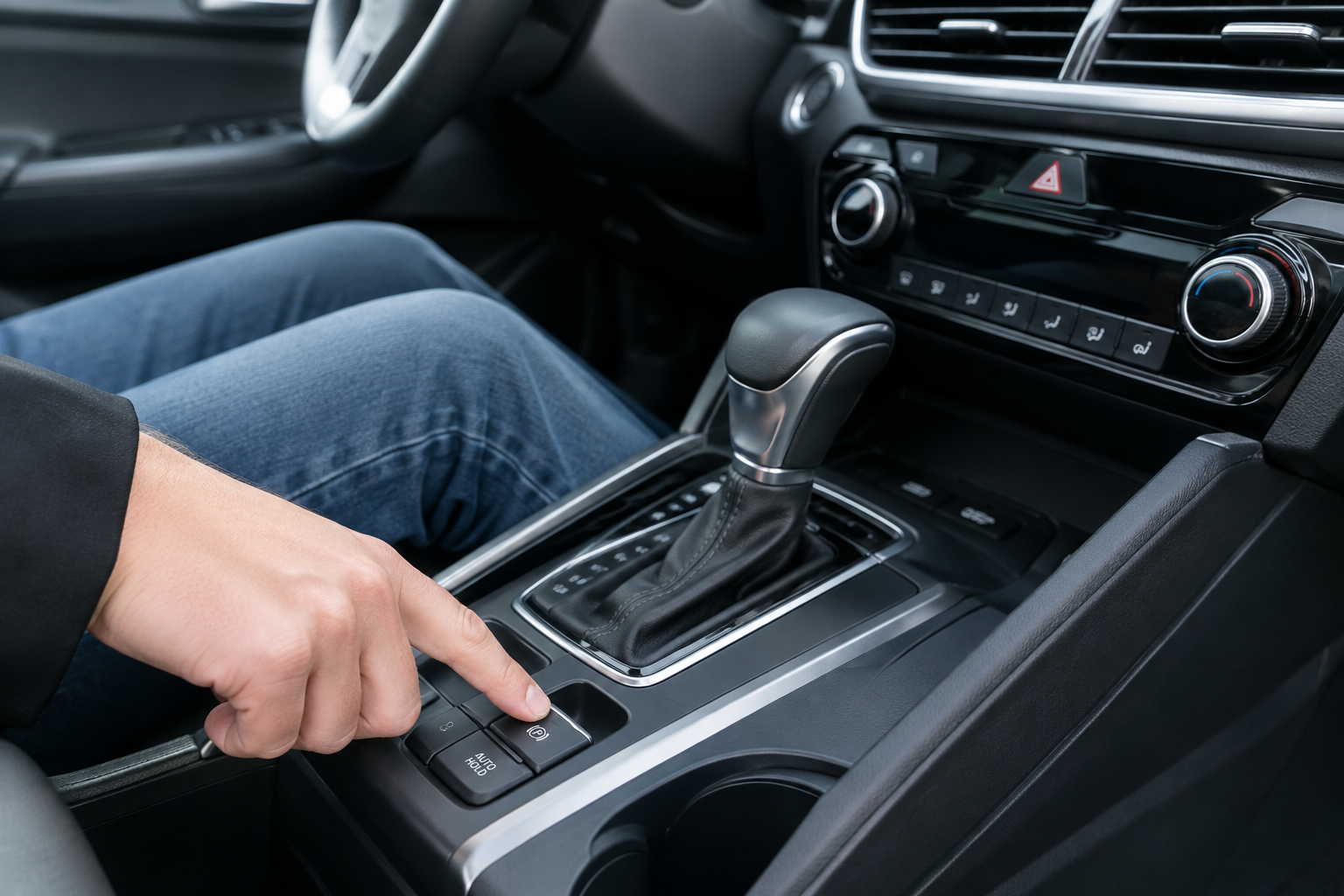
You press the Auto Hold button on your Hyundai Tucson, the light comes on, and for a few blocks everything works exactly like it should. Then you stop for coffee, shut the engine off, get back in ten minutes later, and the Tucson creeps forward the second you take your foot off the brake at the next red light. Auto Hold just doesn’t turn back on by itself, and if you’re not expecting that, it feels like something broke.
Most of the time, nothing is actually wrong. Auto Hold on the Tucson is designed to reset every time you restart the vehicle, and there’s a specific list of conditions it needs before it will engage at all. But there are also real failure points, from a low brake fluid sensor to a bad seatbelt buckle switch, that can stop the system from working even when you do everything right. This guide walks through both sides so you know which one you’re dealing with.
What Hyundai Actually Calls This Feature
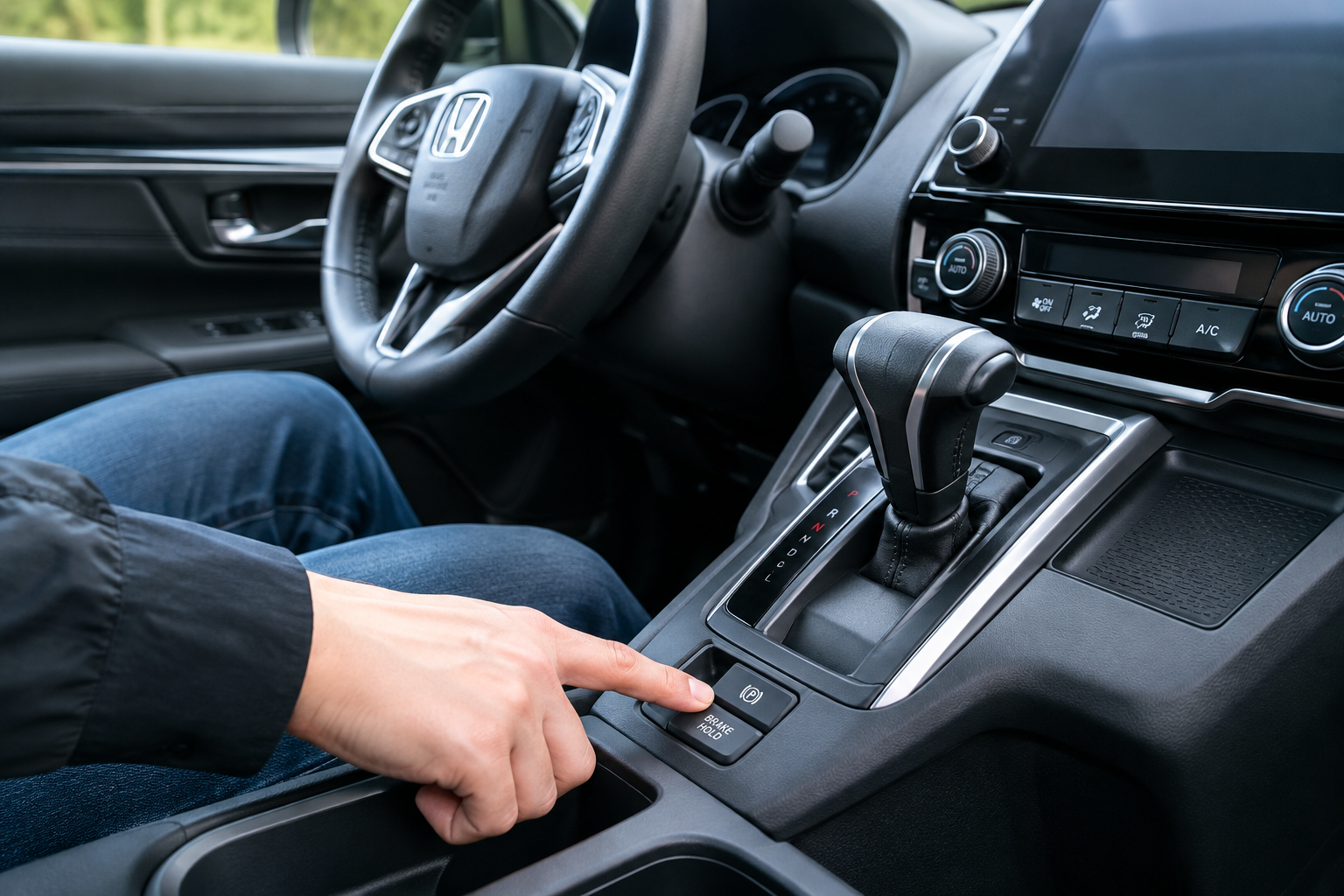
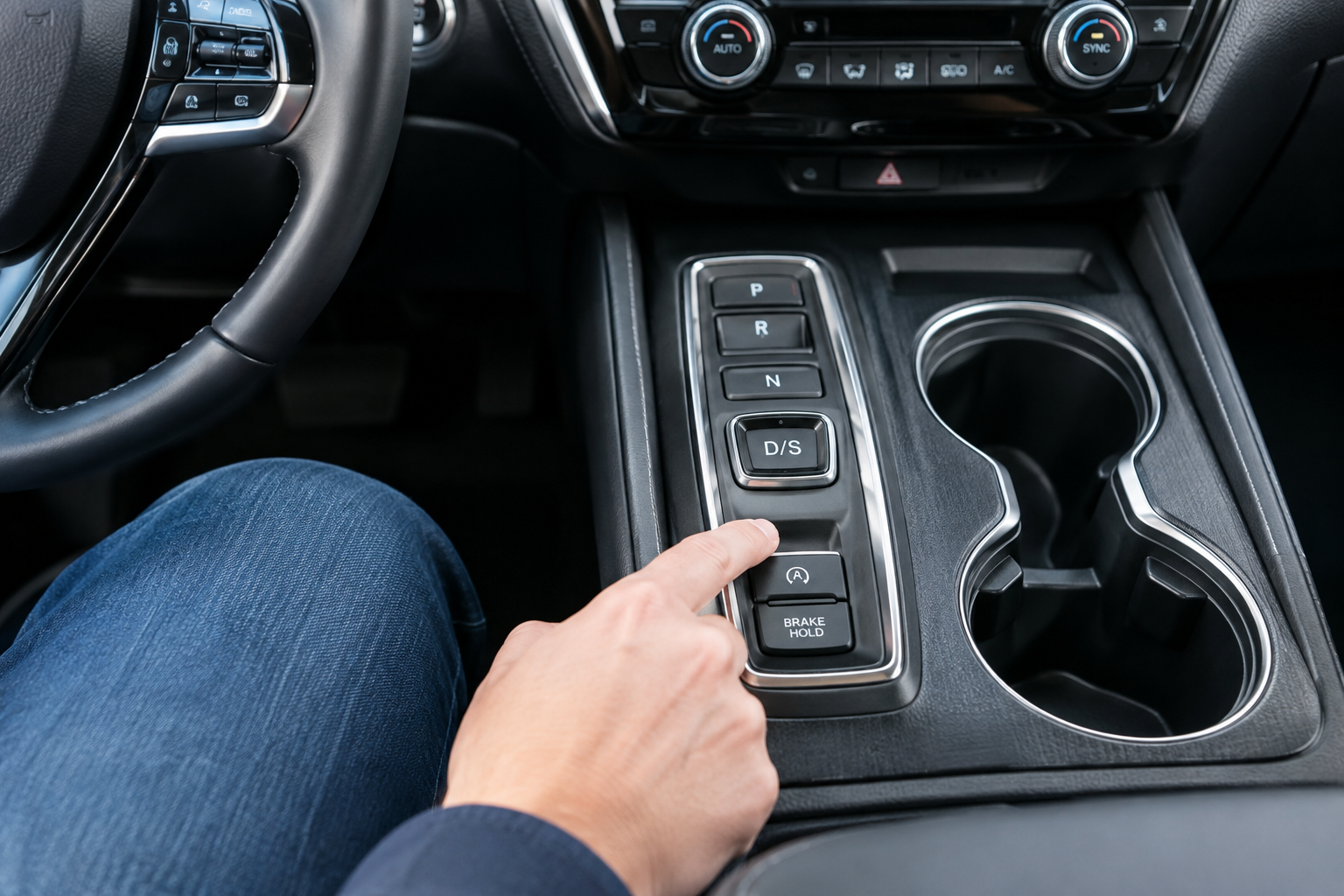
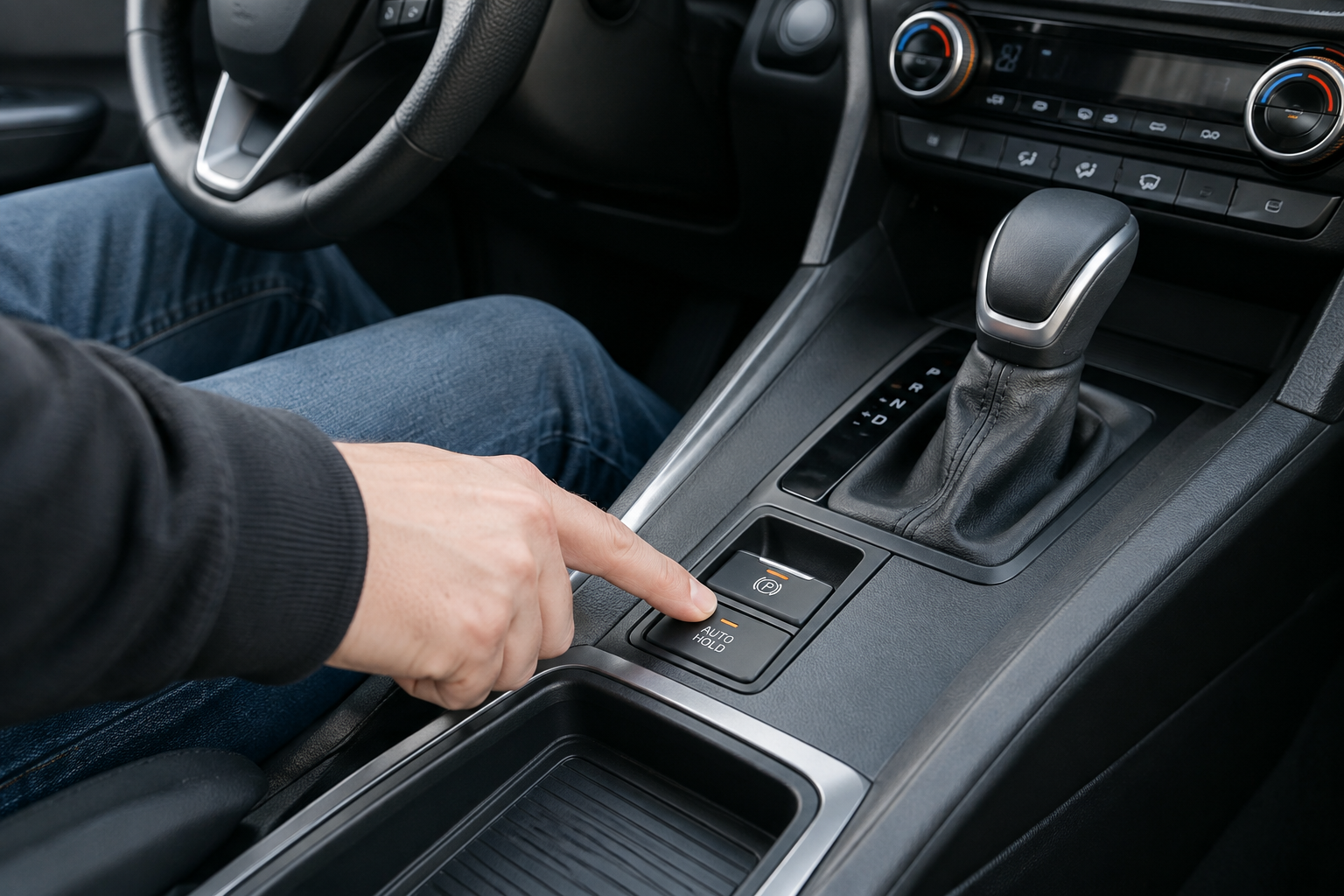
Hyundai’s official name for this feature is “Auto Hold,” and it’s tied directly to the Tucson’s Electronic Parking Brake (EPB). You’ll find the Auto Hold button next to the EPB switch, usually marked with an “A” inside a circle with brake lines, and a separate green indicator light in the instrument cluster that reads “AUTO HOLD” when the system is actively holding the vehicle.
This is different from a simple hill-hold assist, which only holds the brakes for a second or two on an incline. Auto Hold keeps the Tucson completely stationary at any stop, on flat ground or a hill, for as long as you need, using the electronic parking brake hardware in the background. When you’re ready to move, pressing the accelerator releases it automatically.
Not every Tucson trim has this feature, and availability has shifted across generations. On the third-generation Tucson (2016 to 2021), Auto Hold came bundled with the Electronic Parking Brake option, which wasn’t standard on every trim. On the fourth-generation Tucson (2022 and newer, including the Hybrid and Plug-in Hybrid), EPB and Auto Hold are far more widely available across the lineup. If you’re not sure your trim even has it, check your owner’s manual for your specific model year rather than assuming, since Hyundai has moved this feature around the trim ladder more than once.
Why Auto Hold Turns Off Every Time You Restart the Car
This is the part that trips up the most owners, and it’s normal behavior, not a defect. Auto Hold on the Tucson does not persist through an ignition cycle. Every time you turn the engine off, the system deactivates, and you have to press the button again the next time you start the vehicle if you want it active.
Hyundai designed it this way on purpose. Auto Hold is treated as a driving convenience feature you opt into for that trip, similar to how your seat position memory works differently from a safety system that has to default to “on.” So if you find yourself repeatedly pressing the button every morning, that’s not a glitch, it’s just how the feature is built across nearly every model year of the Tucson.
If you want a system that behaves differently, this is worth comparing to how other driver convenience features reset on Hyundai and Kia vehicles. Our guide on turning off Driver Attention Warning on the Hyundai Tucson covers a similar pattern where a setting doesn’t always stick between drives, and the same logic applies to lane keeping assist, which we break down in this piece on Lane Assist on the Tucson and whether it stays off.
Conditions Auto Hold Needs Before It Will Engage
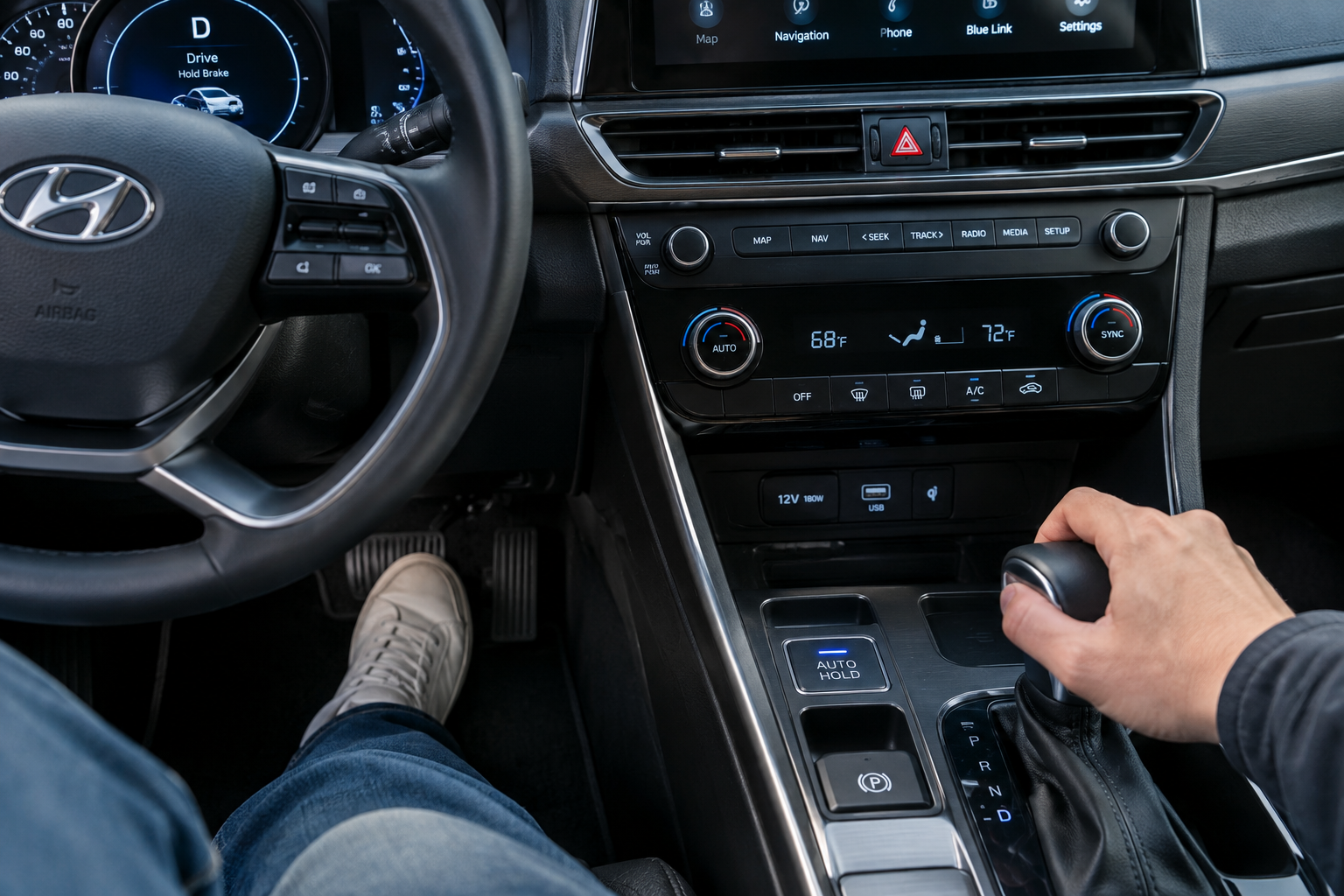
Even after you press the button and see the indicator light, Auto Hold won’t actually grab the brakes until several conditions line up. Miss one of these and the system will sit there armed but inactive, which owners often mistake for a malfunction.
- Driver’s seatbelt must be fastened. The Tucson’s body control module treats an unbuckled seatbelt as a signal that Auto Hold shouldn’t lock the brakes.
- Doors need to be closed. An open driver’s door, and on some trims any door, will prevent engagement or release an already-active hold.
- The vehicle must come to a complete stop. Auto Hold only activates once the Tucson reads zero speed, not while you’re still rolling to a stop.
- You need to apply firm brake pressure. A light tap on the pedal usually isn’t enough for the system to register the stop as intentional.
- The transmission should be in Drive or Reverse, not Park. Shifting to Park automatically hands control over to the standard electronic parking brake instead.
- The engine (or hybrid system) needs to be running. Auto Hold won’t engage with the ignition off or in accessory mode.
If any one of these isn’t satisfied, the AUTO HOLD light in the cluster typically stays off or flashes briefly, which is the system telling you it’s not ready rather than reporting a fault.
Common Reasons It Won’t Turn On or Shuts Off Unexpectedly
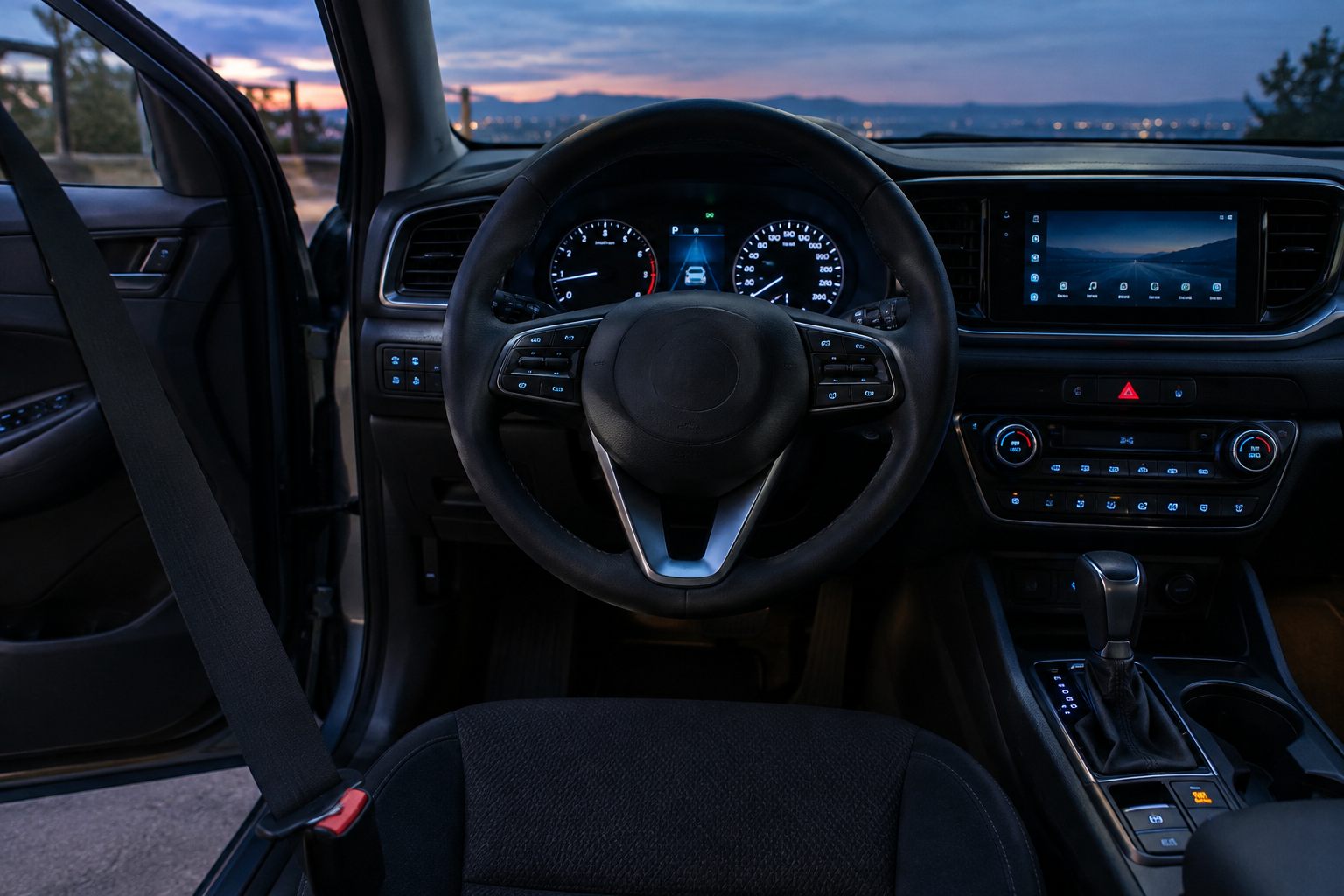
Beyond the basic checklist above, a handful of specific situations cause Auto Hold to behave oddly even when drivers feel like they did everything correctly.
Low Brake Fluid or a Brake Warning Light
If the brake fluid level drops below the sensor threshold, or if there’s an active ABS, EPB, or brake system warning light on the dash, the Tucson will lock out Auto Hold entirely. This is a safety interlock, not a bug. Low brake fluid is also a symptom worth taking seriously on its own, especially if you’ve noticed the pedal feeling soft or sinking after the car sits overnight, which we cover in detail in this article on a brake pedal that goes to the floor after sitting.
A Faulty Seatbelt Buckle Switch
Sometimes the belt is buckled, but the sensor inside the buckle has failed or gotten dirty and isn’t sending the “fastened” signal to the module. This is a cheap part to replace but easy to overlook, since visually everything looks normal.
Door Latch or Door Ajar Sensor Issues
A door that looks closed but has a worn latch sensor can trick the system into thinking a door is open. This usually shows up as an intermittent problem rather than something that happens every single drive.
Low Battery Voltage
The EPB module needs stable voltage to operate its motor and clamp the brakes. If your 12-volt battery is weak or the alternator is underperforming, Auto Hold can refuse to engage or release unpredictably, especially in cold weather when voltage sags further.
Shifting to Park Disengages It, and That’s Correct
A lot of owners assume Auto Hold “shut off on its own” when they park, but shifting into Park is designed to release Auto Hold and apply the standard electronic parking brake instead. That’s the system doing exactly what it’s supposed to.
When It’s a Genuine Malfunction
You’re looking at an actual problem, not normal behavior, if any of these show up consistently:
- The AUTO HOLD light flashes rapidly or stays amber/red instead of green after you’ve confirmed seatbelt, doors, and brake pressure are all fine.
- An EPB warning message or “Parking Brake Malfunction” alert appears on the cluster.
- The car rolls even a few inches after the AUTO HOLD light confirms it’s active.
- You hear a grinding or clicking motor noise from the rear brakes when Auto Hold or the parking brake engages.
- The system worked fine, then suddenly stopped engaging at all after a battery disconnect or dealer service, which can point to a module that needs to relearn its calibration.
Any of these situations point to a sensor, module, or actuator issue that needs a real diagnostic scan rather than guesswork.
How to Diagnose and Fix It
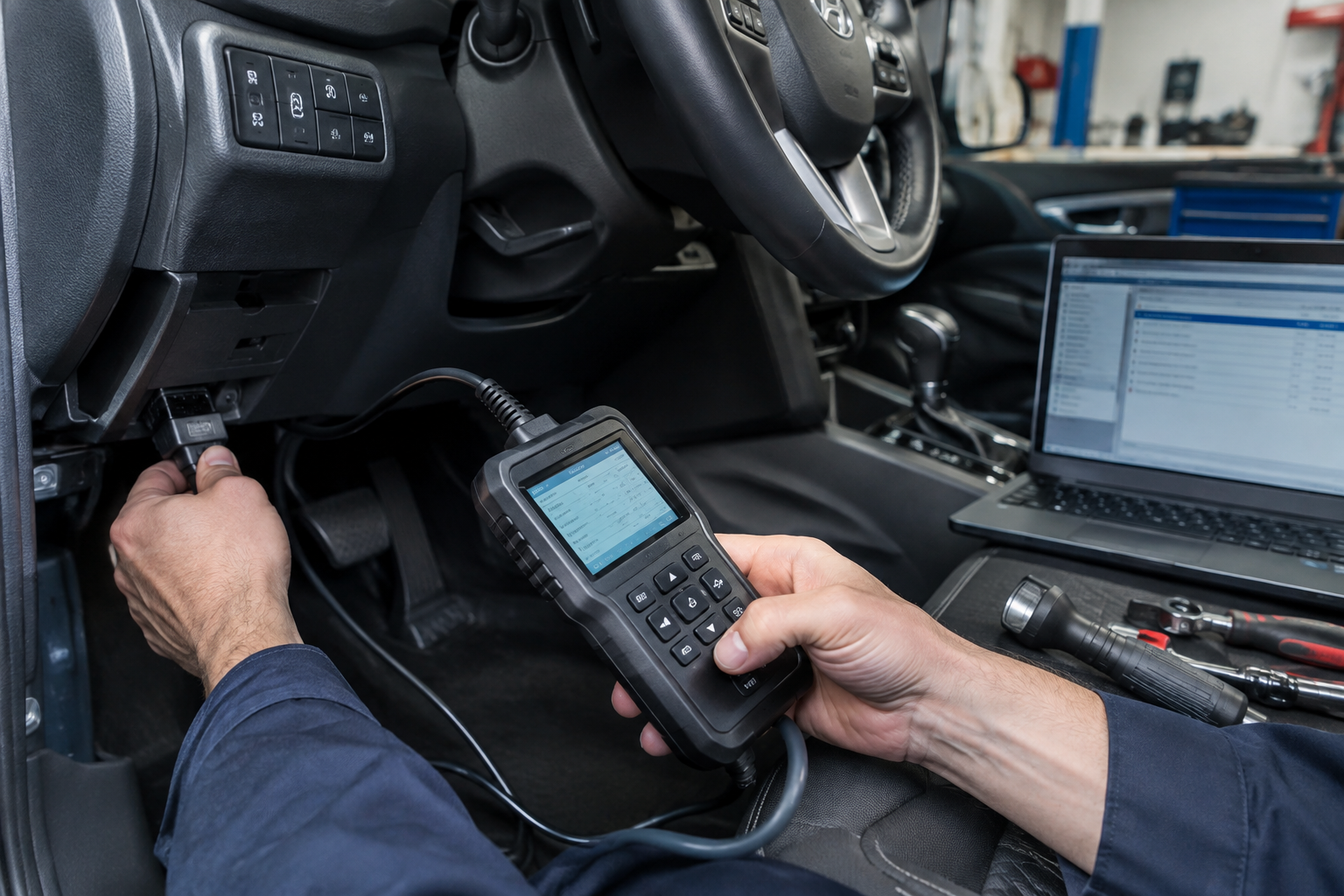
Because Auto Hold relies on the ABS/ESC module, the EPB control module, and a handful of body sensors talking to each other, guessing at parts rarely fixes it. The fastest path is pulling stored fault codes with a scanner that can read Hyundai-specific modules, not just generic engine codes.
Hyundai Tucson OBD2 Scanner (ABS/EPB Capable)
A scanner with ABS and EPB module access will pull the exact fault codes causing Auto Hold to lock out, saving you a diagnostic fee at the dealer.
Start with the basics before you assume a module has failed. Check your brake fluid level against the reservoir markings, look for any dashboard warning lights beyond just the Auto Hold indicator, and make sure the seatbelt buckle clicks firmly and stays latched under a firm tug.
DOT 3 brake fluid is the correct spec for most Tucson model years, and topping off a low reservoir is a five-minute job that rules out one of the most common lockout causes. If the fluid looks dark or you can’t remember the last flush, that’s also worth addressing since old fluid affects more than just Auto Hold.
If you’re chasing an intermittent electrical gremlin, like a door sensor or seatbelt switch, a simple multimeter helps confirm whether a sensor is actually sending a signal or just reading open circuit.
Automotive Multimeter
Useful for checking seatbelt buckle switches, door latch sensors, and battery voltage when Auto Hold behaves inconsistently.
If your Tucson is a hybrid and you’ve noticed the braking itself feels inconsistent alongside the Auto Hold issue, it’s worth ruling out a regenerative braking blend problem too. Our article on regenerative braking that feels weak or jerky in hybrids and EVs covers symptoms that can overlap with brake system faults, since both draw on some of the same sensors.
Frequently Asked Questions
Is it normal for Auto Hold to turn off every time I start my Tucson?
Yes. Hyundai designed Auto Hold to reset with every ignition cycle across all Tucson model years that offer it. You need to press the button again after every restart if you want it active for that drive.
Why won’t the Auto Hold light turn on even though I pressed the button?
Check that your seatbelt is buckled, all doors are fully closed, and you’re pressing the brake pedal firmly at a complete stop. Also glance at your dash for any ABS, brake, or EPB warning lights, since any of those will block Auto Hold from engaging.
Does Auto Hold work the same as the parking brake on the Tucson?
They share the same electronic parking brake hardware, but they’re not identical. Auto Hold keeps the brakes applied temporarily while you’re stopped in Drive or Reverse, while shifting into Park applies the parking brake function permanently until you shift out again.
Can a weak battery cause Auto Hold problems?
Yes. The EPB module needs consistent voltage to operate the brake actuator motors, and a weak or aging 12-volt battery can cause Auto Hold to fail to engage or release erratically, especially in cold weather.
Leave a Reply