
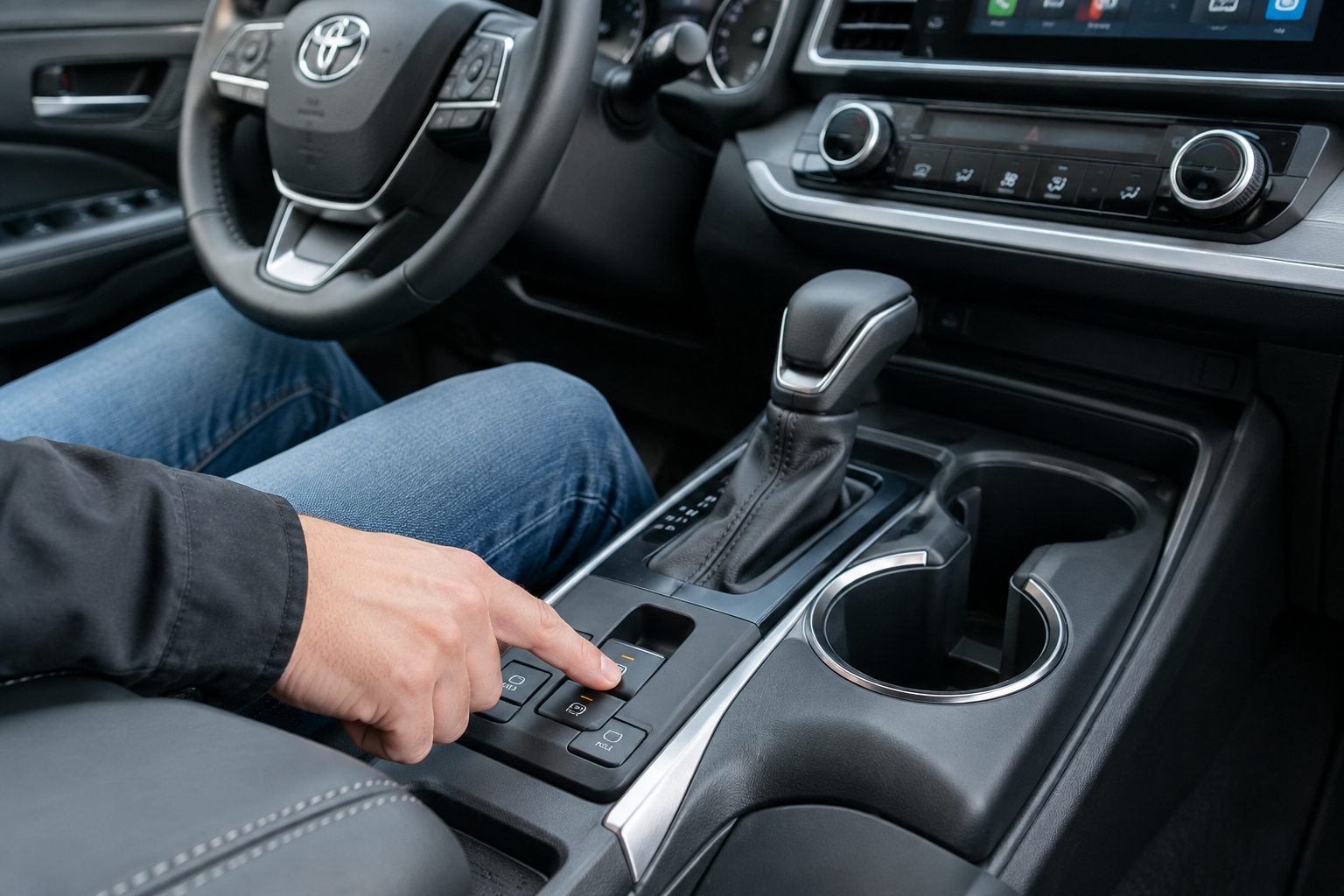
You press the Brake Hold button, the dash light comes on, and for a few minutes everything works fine at stoplights. Then somewhere between your driveway and the grocery store, you notice the light is off again and your Highlander is creeping forward when you take your foot off the brake. It’s one of the more confusing quirks of Toyota’s driver assistance suite, mostly because owners assume it should behave like Auto Hold on other brands.
The short version is that Toyota’s system is designed differently than what you might be used to from Honda, Hyundai, or Subaru. Some of what feels like a malfunction is actually normal behavior baked into the software. But there are also real failure conditions tied to sensors, switches, and warning lights that can knock the feature out entirely. This guide breaks down both.
What Toyota Actually Calls This Feature
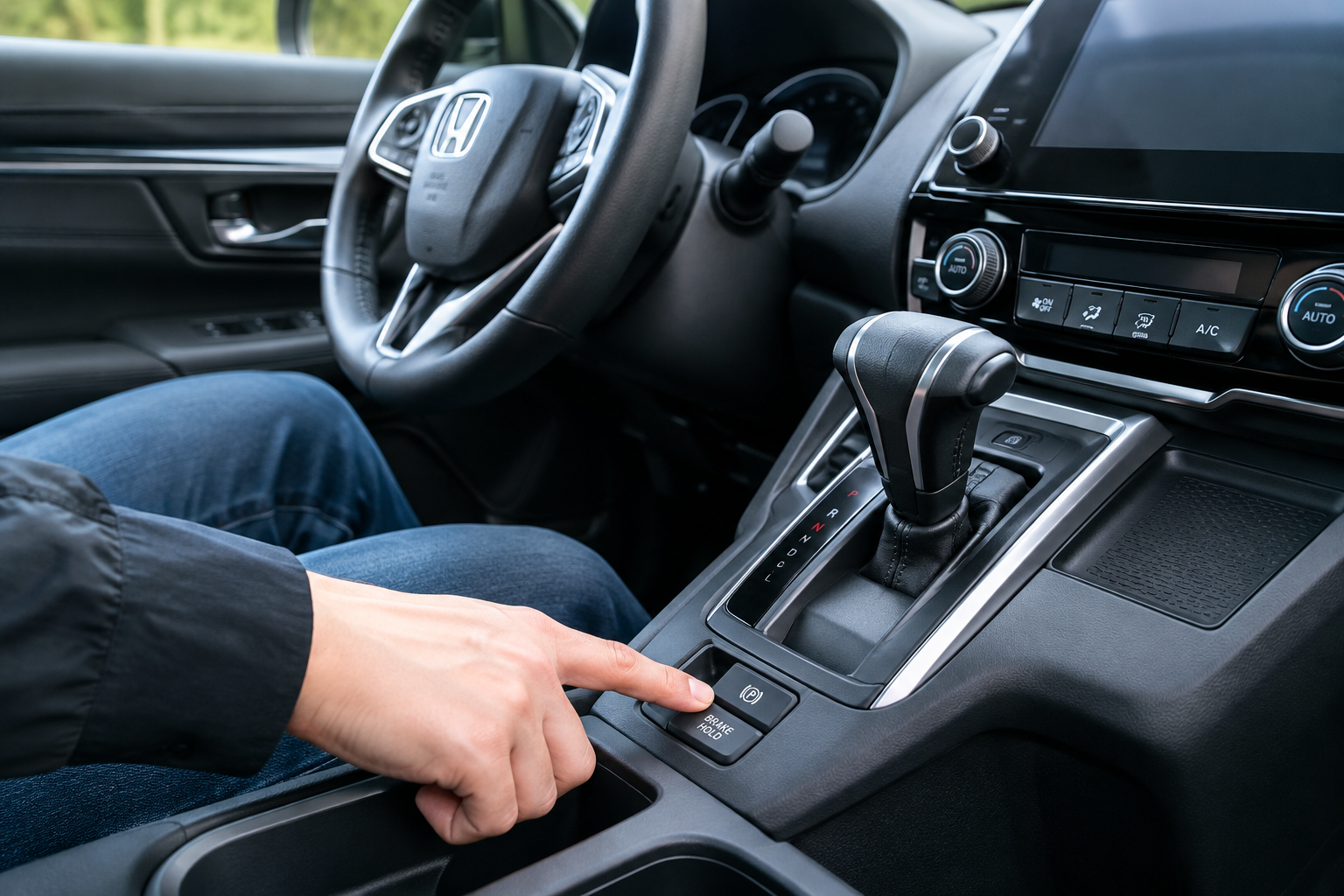
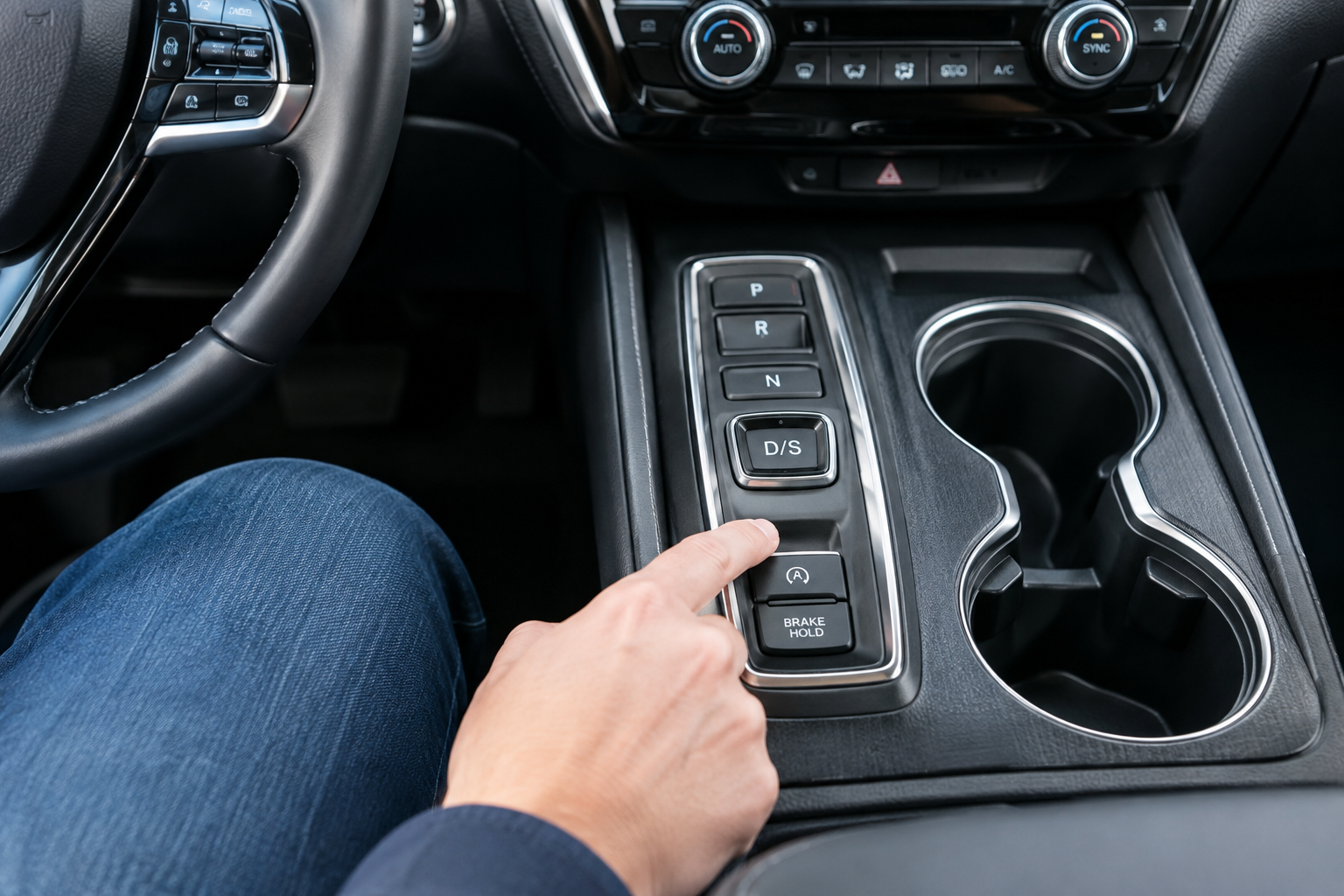
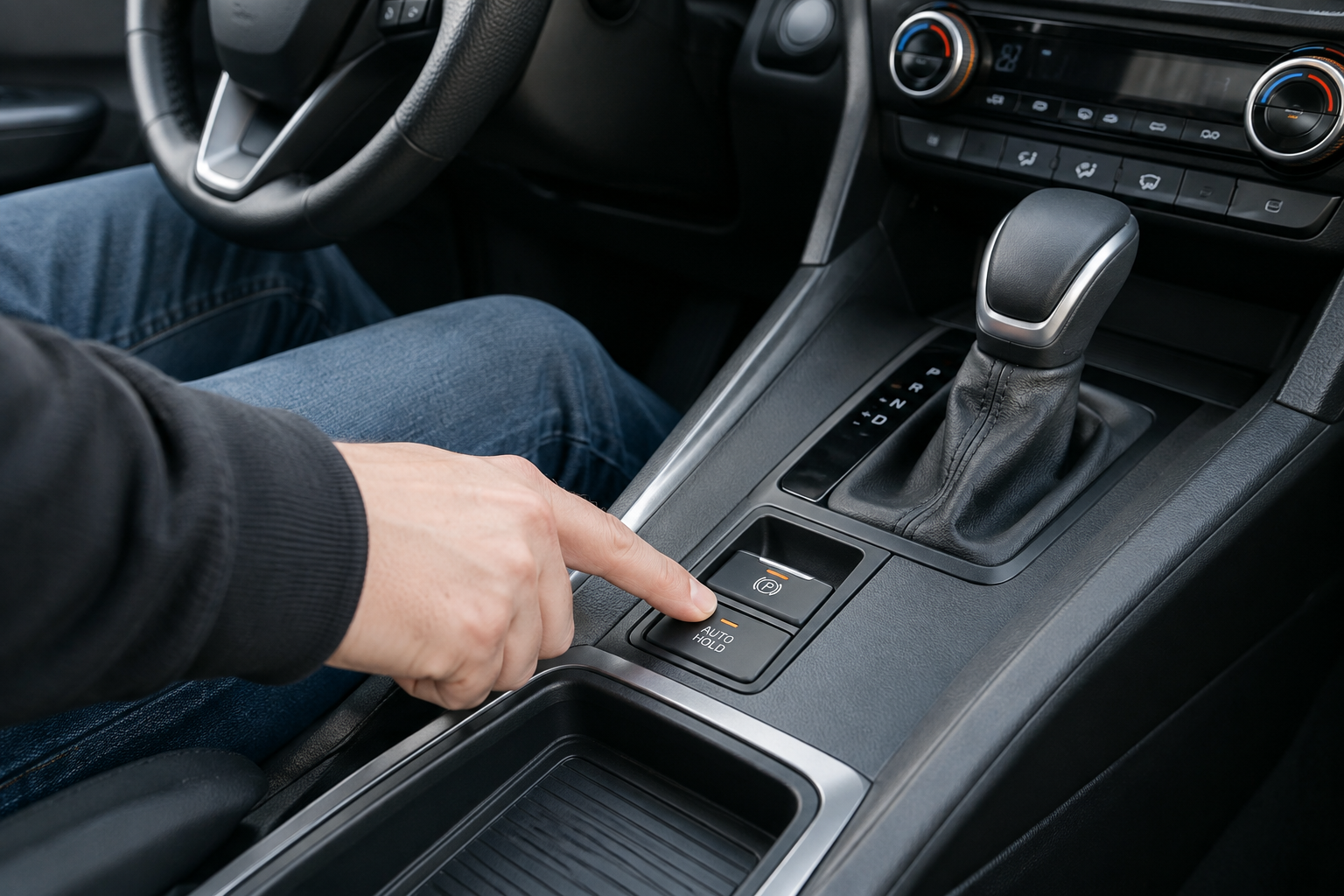
Toyota’s official name for this system is Brake Hold, not “Auto Hold.” You’ll find a small button labeled “HOLD” near the parking brake switch on the center console, usually right next to or below the electronic parking brake button. Owners often call it Auto Hold because that’s the more common industry term, but if you’re searching your owner’s manual, look for “Brake Hold.”
This feature became standard on Highlander trims equipped with the electronic parking brake, which includes most Hybrid and Limited/Platinum trims starting with the fourth-generation Highlander (2020 and newer). Lower trims without an electronic parking brake do not have Brake Hold at all, since the system relies on the same actuator that sets the electric parking brake.
The function itself is simple. Once activated, Brake Hold keeps the brakes clamped after you come to a complete stop, so you don’t have to keep your foot on the pedal at a red light or in stop-and-go traffic. Touch the accelerator, and the brakes release automatically.
Why Brake Hold Won’t Turn On
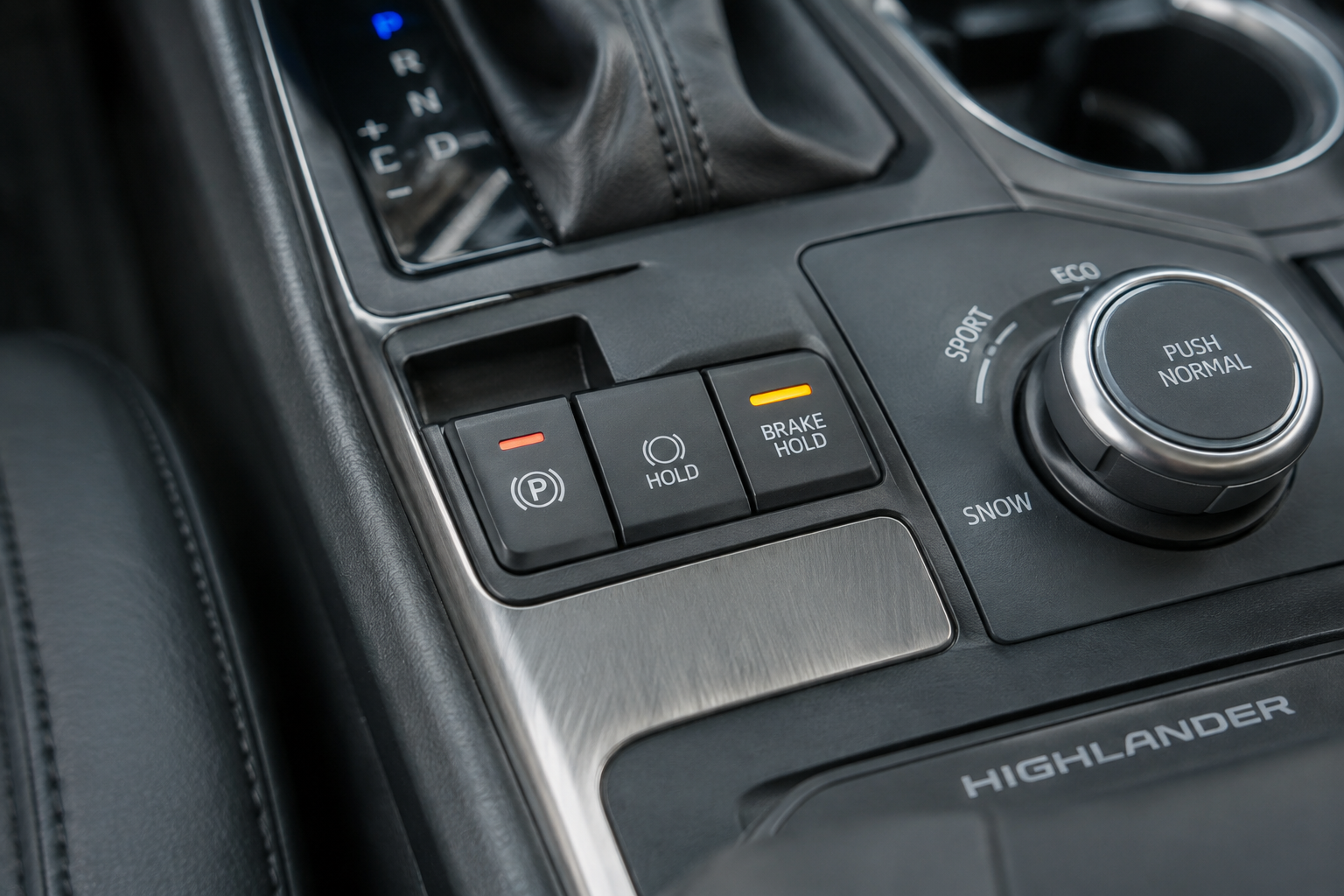
Toyota built several conditions into this system, and if any one of them isn’t met, the button press simply won’t do anything or the light will flash instead of staying solid.
- Driver’s seat belt must be buckled. The system checks the seat belt buckle switch before allowing activation.
- All doors need to be closed. An open door, including the liftgate on some model years, will block Brake Hold from engaging.
- The vehicle must be at a complete stop. Brake Hold won’t arm while you’re still rolling, even at very low speeds.
- Your foot needs to be firmly on the brake pedal with enough pressure for the system to register a full stop, not just light coasting pressure.
- The transmission should be in Drive or Sport mode, not Park or Neutral, when you press the button.
- The parking brake must be released before Brake Hold can take over braking duty. If the electronic parking brake is already applied, Brake Hold has nothing to do.
If you’re pressing the switch and getting a flashing indicator instead of a steady light, run through this list first. Nine times out of ten it’s an open door or an unbuckled belt, not an actual fault.
Why It Turns Itself Off or Won’t Stay On After Restart
This is where most of the confusion happens, and it’s important to understand that Toyota’s Brake Hold is not designed to remember your setting between ignition cycles. Unlike some competitor systems that save your last Auto Hold preference, Toyota resets Brake Hold to off every single time you start the vehicle. You have to press the button again after every start, every time, on every model year currently offered.
This is intentional, not a bug. Toyota treats Brake Hold as a temporary convenience feature rather than a persistent safety system, similar to how traction control defaults back on after a restart on many vehicles. If you’re expecting it to “stick” the way it might on a Kia Telluride or Hyundai Santa Fe, you’ll want to just build the button press into your startup routine.
Where things get trickier is when Brake Hold disengages mid-drive without you touching anything. A few scenarios cause that:
- Shifting into Park or Neutral automatically cancels Brake Hold.
- Opening a door while stopped, even briefly, will kick the system off.
- Unbuckling your seat belt while stationary cancels it immediately.
- Manually pulling the parking brake switch overrides and cancels Brake Hold.
- Extended idle time at a stop (in some configurations, several minutes) can cause the system to release the hold and let the vehicle creep, which is normal fail-safe behavior rather than damage.
None of that is a malfunction. It’s the system doing exactly what Toyota programmed it to do. If you want a deeper look at how these driver convenience features are structured on the Highlander, our article on turning off Lane Assist on the Toyota Highlander covers a similar pattern of settings that reset every time you restart the vehicle.
When It’s an Actual Malfunction
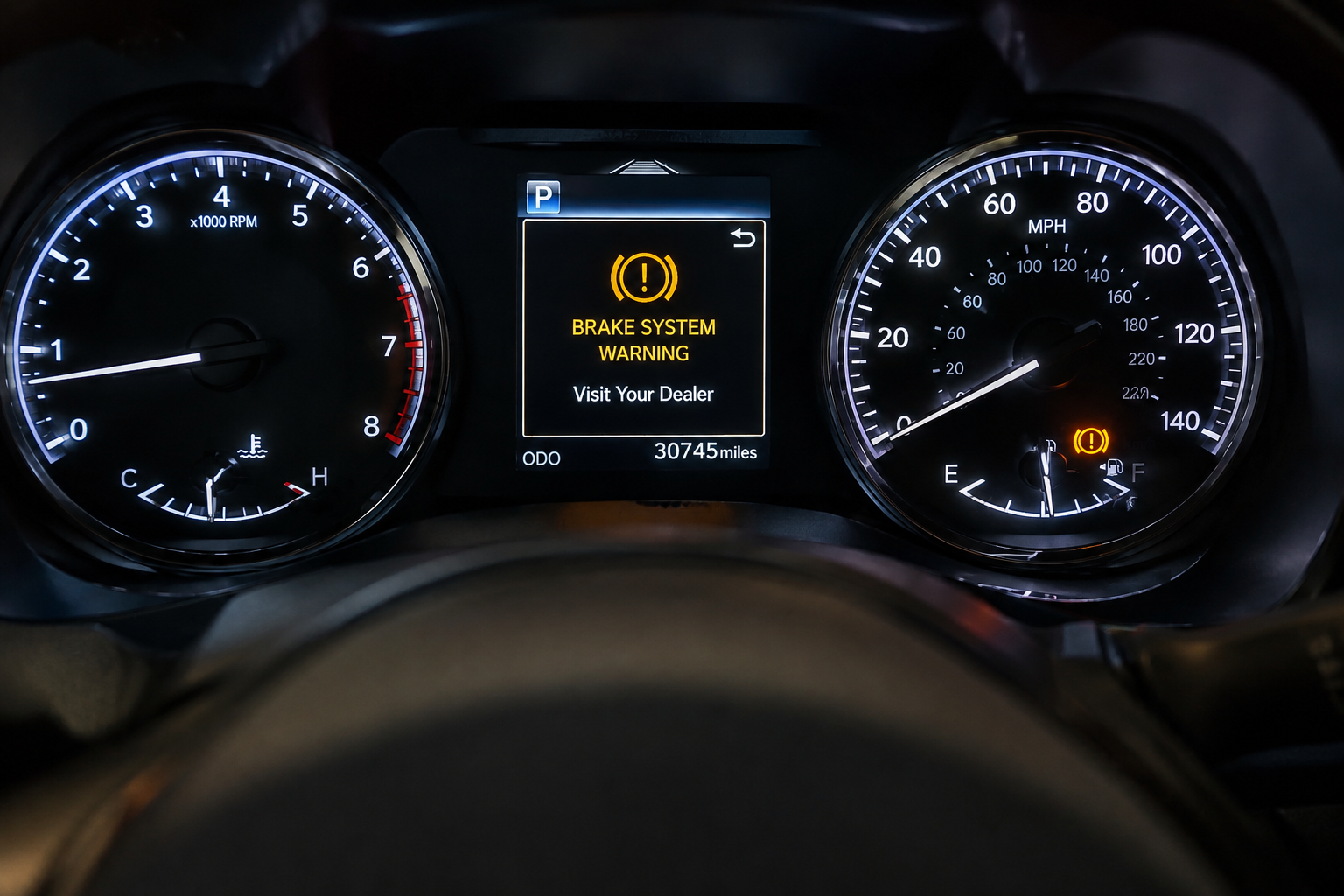
Normal quirks aside, there are legitimate failure conditions that will disable Brake Hold and are worth paying attention to.
Warning Lights That Point to a Real Problem
If the Brake Hold light won’t illuminate at all, even under perfect conditions, check for other dash warnings first. A lit ABS light, VSC (Vehicle Stability Control) light, or parking brake warning light will all block Brake Hold from functioning, because the system depends on data from the ABS module and the electronic parking brake actuator to work safely. These aren’t cosmetic warnings. They usually mean a wheel speed sensor, brake fluid level, or EPB motor issue needs attention before Brake Hold will come back online.
Brake Fluid and Pedal Feel
Low brake fluid or a soft, spongy pedal can also disable the system, since Brake Hold relies on the hydraulic brake system holding pressure accurately. If your pedal feels different than usual, especially if it sinks toward the floor after sitting, that’s a separate and more urgent issue. Our guide on a brake pedal that goes to the floor after sitting overnight walks through what to check before you drive the vehicle any further.
Electronic Parking Brake Faults
Since Brake Hold and the EPB share hardware, a failing EPB motor, worn actuator, or corroded connector at the rear calipers can take both features down together. If you notice the EPB button also behaves oddly, clicking without engaging, grinding, or throwing its own warning light, that’s a strong sign the fault lives in the parking brake actuator rather than the Brake Hold logic itself.
A basic OBD2 scanner that can read ABS and body control module codes, not just generic engine codes, will save you a lot of guesswork here. Toyota routes Brake Hold faults through the same modules as ABS and EPB, so a scanner limited to powertrain codes won’t show you anything useful.
Toyota Highlander OBD2 Scanner ABS EPB
A bidirectional scanner that reads ABS and EPB modules, not just check-engine codes, which is what you actually need to diagnose Brake Hold faults.
If you’re already dealing with braking behavior that feels inconsistent, whether it’s Brake Hold or something else, it’s also worth ruling out issues with your regenerative braking calibration if you have the hybrid Highlander. Our article on regenerative braking feeling weak or jerky covers overlapping symptoms that sometimes get mistaken for Brake Hold problems.
How to Reset Brake Hold Before Assuming It’s Broken
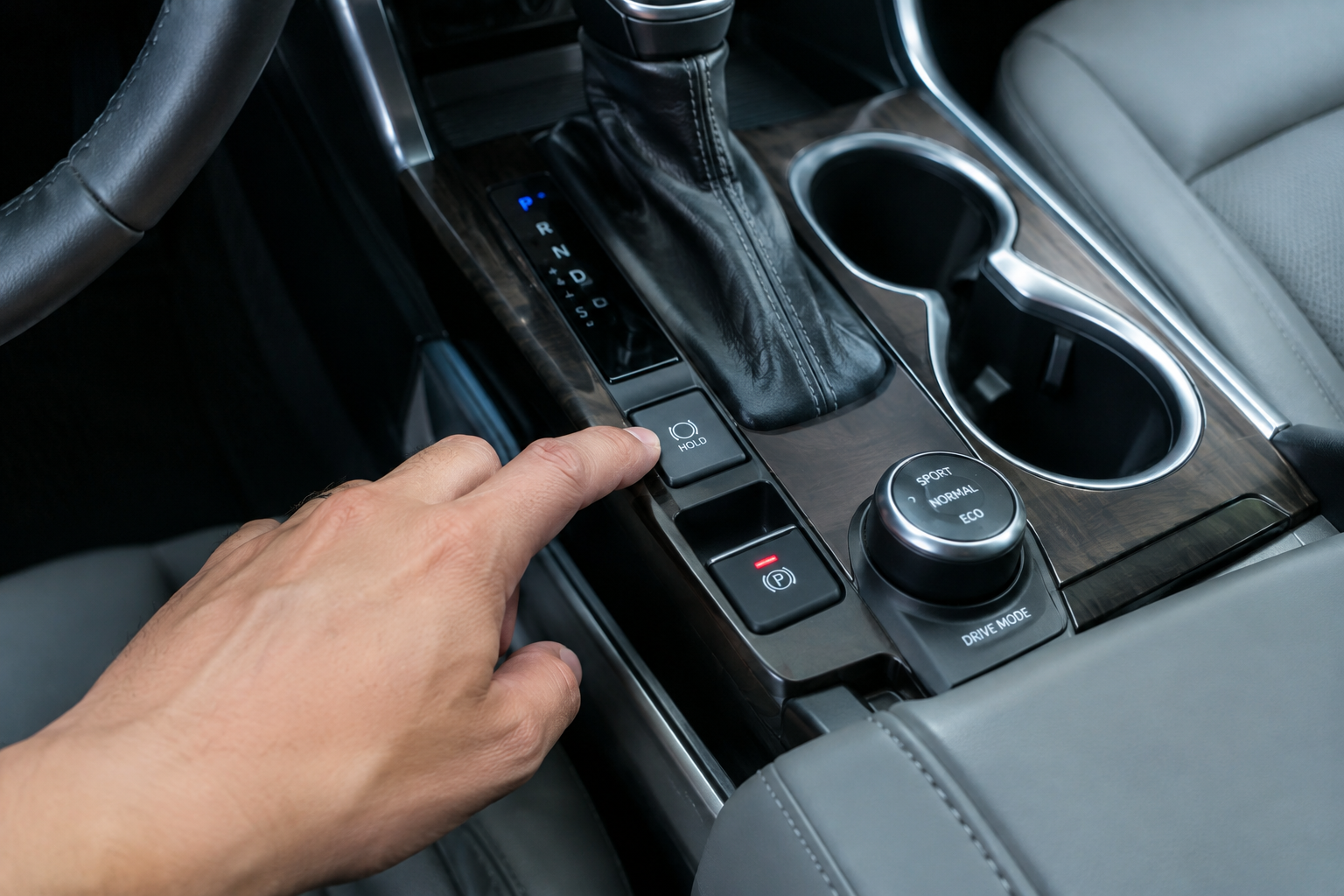
Before you book a dealer appointment, try a full reset. Turn the vehicle off completely, open and close the driver’s door, and restart. Buckle your seat belt before shifting into Drive, come to a complete stop with firm brake pressure, and press the Brake Hold button once. If the light comes on solid and stays on through a full stop-and-go cycle, the system is working correctly and whatever you experienced before was likely one of the normal cancellation triggers listed above.
If the light still won’t activate under those exact conditions, or it activates and then drops out randomly with no door, belt, or shifter changes involved, that’s when it’s time to pull codes or have a shop check the ABS and EPB modules directly.
Frequently Asked Questions
Does Toyota Highlander Auto Hold stay on after I turn off the car?
No. Toyota’s Brake Hold feature resets to off every time you shut off the engine, regardless of model year. You’ll need to press the HOLD button again each time you start the vehicle. This is standard behavior, not a defect.
Why does my Highlander roll forward even with Brake Hold on?
A small amount of creep can happen if you’ve been stopped for an extended period, since the system has a built-in timeout that releases brake pressure to prevent excessive strain on the actuator. If it’s rolling immediately after activation, check that a door isn’t ajar and that your seat belt is buckled, since either will silently cancel the hold.
Can a dead battery or low voltage affect Brake Hold?
Yes. The Brake Hold system depends on the electronic parking brake actuator and several control modules that need stable voltage to function. A weak battery or corroded ground connection can cause intermittent Brake Hold failures that look random but are actually electrical in nature. Testing battery voltage under load is a good first step if the issue comes and goes without a clear pattern.

Leave a Reply