
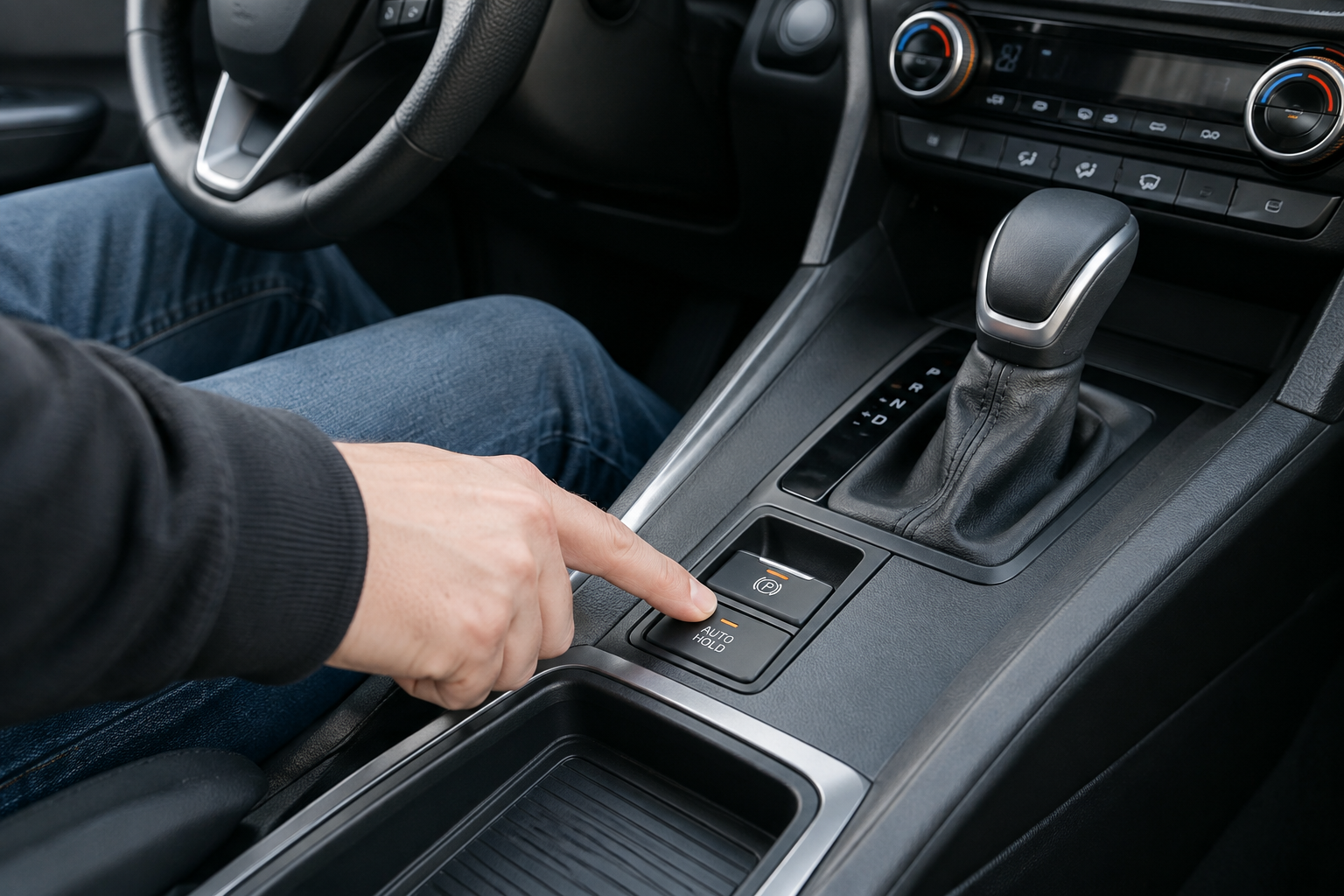
You start your RAV4, press the brake pedal, hit the Hold switch, and nothing happens. Or maybe it works fine for a few minutes, then quietly disengages at a red light and lets the vehicle creep forward. If you’ve been chasing this problem for weeks, you’re not imagining things, and you’re also not necessarily dealing with a broken car.
Toyota’s Brake Hold system (often called Auto Hold by drivers, though Toyota’s own manuals label the button “HOLD”) has a specific set of conditions it needs before it will activate or stay active. Miss one of those conditions and the system shuts off or refuses to engage at all, even though nothing is actually wrong with your RAV4.
What Toyota Actually Calls This Feature
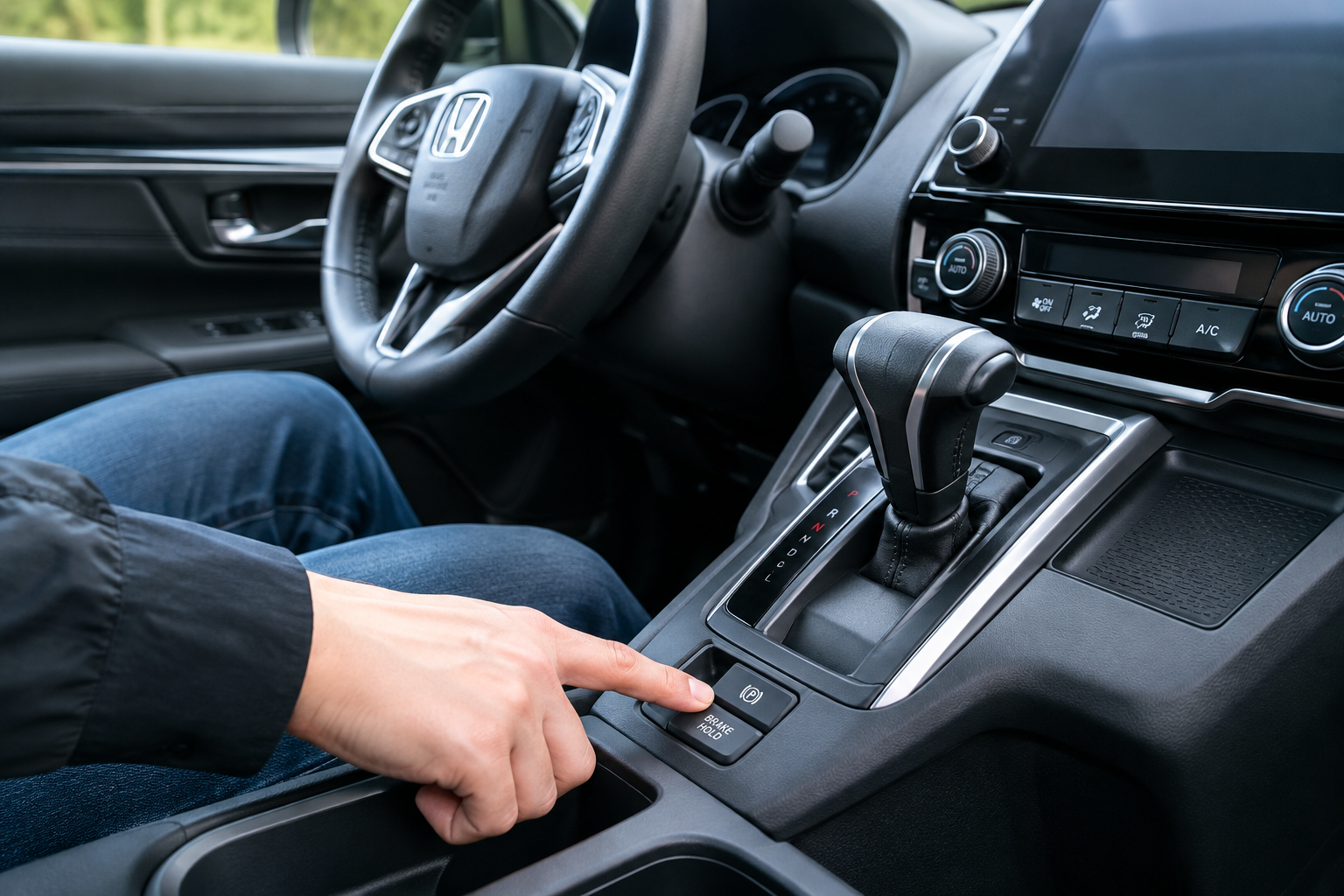
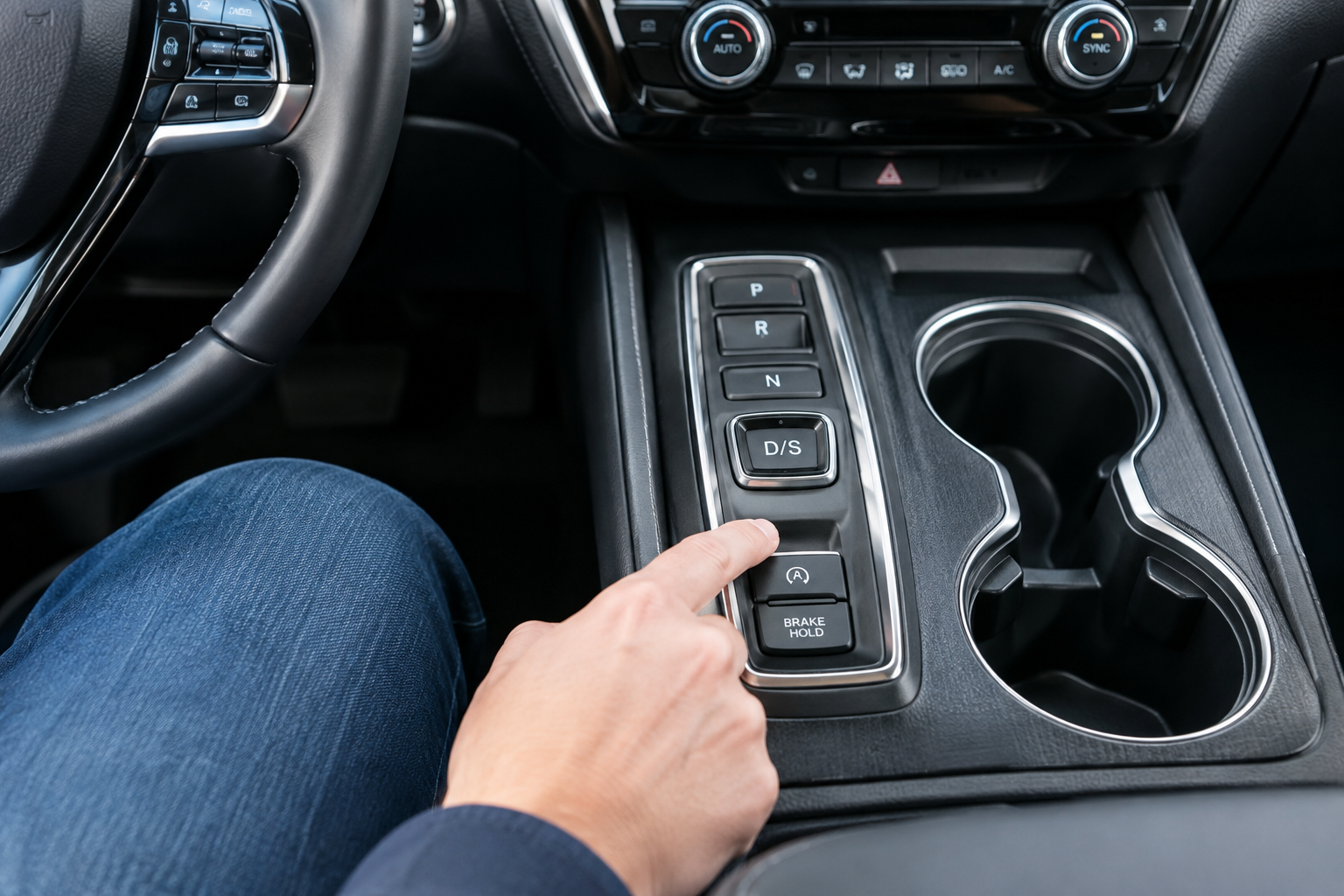
Toyota’s official name for this feature across RAV4 generations is Brake Hold, not Auto Hold. You’ll see a small “H” indicator light up in the instrument cluster when it’s active, and there’s usually a dedicated switch near the parking brake button or gear shifter, sometimes labeled “HOLD” directly.
Brake Hold has been available on RAV4 Hybrid and RAV4 Prime models since the feature was introduced, and it later expanded to more trims on the gas models as well. If your specific trim doesn’t have the switch at all, that’s not a malfunction, some lower trims simply never got the feature.
It’s easy to confuse Brake Hold with the electric parking brake, since both use similar buttons in the same console area. They work together but they’re not the same system. The parking brake locks the rear wheels mechanically, while Brake Hold uses the hydraulic brake system to keep the vehicle stationary temporarily, typically at stoplights or in traffic.
The Conditions Brake Hold Needs to Turn On
Toyota built several safety interlocks into this system, and all of them need to check out before Brake Hold will engage. If even one is missing, the system either won’t activate or will refuse to stay engaged.
- Driver’s seat belt fastened. Unbuckle it and Brake Hold will not engage, even if you press the switch.
- Doors closed. Opening the driver’s door, and on some model years any door, cancels Brake Hold immediately.
- Foot firmly on the brake pedal. The system needs enough pedal pressure to confirm you’re actually trying to stop, not just coasting.
- Transmission in Drive, Sport, or B mode. Shifting to Park, Neutral, or Reverse cancels the hold function on every RAV4 generation.
- Parking brake released. If the electric parking brake is engaged, Brake Hold won’t activate since the two systems aren’t meant to run at the same time.
- No active warning lights. ABS, VSC, or brake system warnings will block Brake Hold from working since the system relies on those same sensors and hydraulic components.
Most complaints about Brake Hold “not working” actually come down to one of these conditions not being met, often without the driver realizing it. A door that isn’t fully latched, for example, will silently prevent the system from engaging with no obvious warning message.
Why It Turns Itself Off Mid-Drive
If Brake Hold engages fine but then shuts off on its own a few seconds or minutes later, the cause is almost always one of the same interlocks getting interrupted. Shifting into Park at a long light, unbuckling to reach for something, or a door popping open slightly are the usual suspects.
On RAV4 Hybrid models, the Auto Start-Stop system can sometimes interact oddly with Brake Hold during extended stops, since the engine cycling off and on shifts how the brake system manages hydraulic pressure. This is generally normal behavior and not something to worry about. If you’re also noticing odd braking sensations on your Hybrid or Prime, it’s worth reading up on why regenerative braking can feel weak or jerky in hybrids, since the two systems share some of the same components.
A low brake fluid level is another common but often overlooked cause. Toyota’s brake system monitors fluid level as part of its safety checks, and if it drops even slightly below the minimum line, Brake Hold can disengage along with other brake-related warnings. If you’ve also noticed your brake pedal feeling soft or sinking after the car sits, take a look at our guide on what to check when the brake pedal goes to the floor after sitting overnight, since fluid and seal issues often show up in both places at once.
Does the Setting Reset Every Time You Start the Car?
Yes, and this trips up a lot of RAV4 owners who assume something is broken. Brake Hold is not designed to remember your last setting across an ignition cycle on any RAV4 model year currently on the road. Every time you turn the vehicle off and restart it, the system defaults back to off, and you’ll need to press the switch again if you want it active.
This is different from some other driver assist features on the RAV4. If you’re used to features that stay off permanently once disabled, like the ones covered in our guide on turning off Lane Assist on the Toyota RAV4 or disabling the Driver Monitor system, Brake Hold works the opposite way. It’s a per-drive convenience feature, not a permanent preference, and Toyota has kept this behavior consistent across every RAV4 generation with the feature.
Normal Operation vs. a True Malfunction
Most Brake Hold “problems” are just the system doing exactly what it’s designed to do. A true malfunction looks different, and it usually comes with additional warning signs beyond just the Hold feature not engaging.
Signs of an actual problem include:
- The Brake Hold indicator flashing rather than staying solid, which often points to a system fault rather than a normal interlock condition.
- ABS, VSC, or a brake system warning light illuminated on the dash at the same time Brake Hold refuses to work.
- A “Check Brake System” or similar message appearing in the multi-information display.
- The parking brake warning light staying on or flashing along with Brake Hold issues, which can point to an electric parking brake fault rather than the hold function itself.
If you’re seeing any of those, the underlying cause is typically a wheel speed sensor issue, a faulty brake switch, or a communication fault between the ABS module and the hybrid or electric parking brake control unit. These aren’t things you can diagnose by just watching the dash. You need to pull the actual trouble codes.
A basic OBD2 scanner that reads ABS and body control codes, not just the generic engine codes, will tell you within minutes whether you’re dealing with a sensor fault or something more serious. Look for a scanner rated for ABS and electric parking brake systems specifically, since a cheap engine-only code reader won’t show you anything useful here.
Toyota RAV4 OBD2 Scanner ABS EPB
A scanner that reads ABS and parking brake codes, not just engine codes, so you can actually diagnose a real Brake Hold fault.
Once you’ve confirmed there’s an active fault code tied to the brake system or ABS, that’s your signal to get the vehicle to a shop rather than keep troubleshooting on your own. Brake Hold relies on the same hydraulic control unit used for stability control and anti-lock braking, so a fault here shouldn’t be ignored even if it seems minor.
Quick Checklist Before You Assume It’s Broken
Run through this list before booking a service appointment. It solves the vast majority of Brake Hold complaints without spending a dime.
- Confirm your seat belt is fastened and clicked in properly, not just resting across your lap.
- Make sure all doors are fully closed and latched, not just pushed shut.
- Check that the transmission is in D, S, or B, not accidentally bumped toward N.
- Verify the electric parking brake is fully released before pressing the Hold switch.
- Look at the dash for any ABS, VSC, or brake warning lights.
- Remember to re-press the Hold switch after every restart, since it never stays on by default.
Frequently Asked Questions
Is Auto Hold the same thing as the parking brake on a RAV4?
No. Brake Hold uses the hydraulic brake system to keep the vehicle stationary temporarily while you’re still in Drive, mainly for stoplights and traffic. The electric parking brake is a separate mechanical system meant for actual parking, and the two work together but serve different purposes.
Why does my RAV4 forget my Auto Hold setting every time I start the car?
That’s expected behavior, not a fault. Toyota designed Brake Hold to default to off every time you cycle the ignition, so you’ll need to press the switch again each time you want it active. This has been consistent across every RAV4 model year that offers the feature.
Can low brake fluid cause Auto Hold to stop working?
Yes. Brake Hold relies on hydraulic pressure and sensor input from the same system that monitors brake fluid level. If fluid drops below the minimum threshold, the system can disable Brake Hold along with triggering other brake-related warnings on the dash.

Leave a Reply