
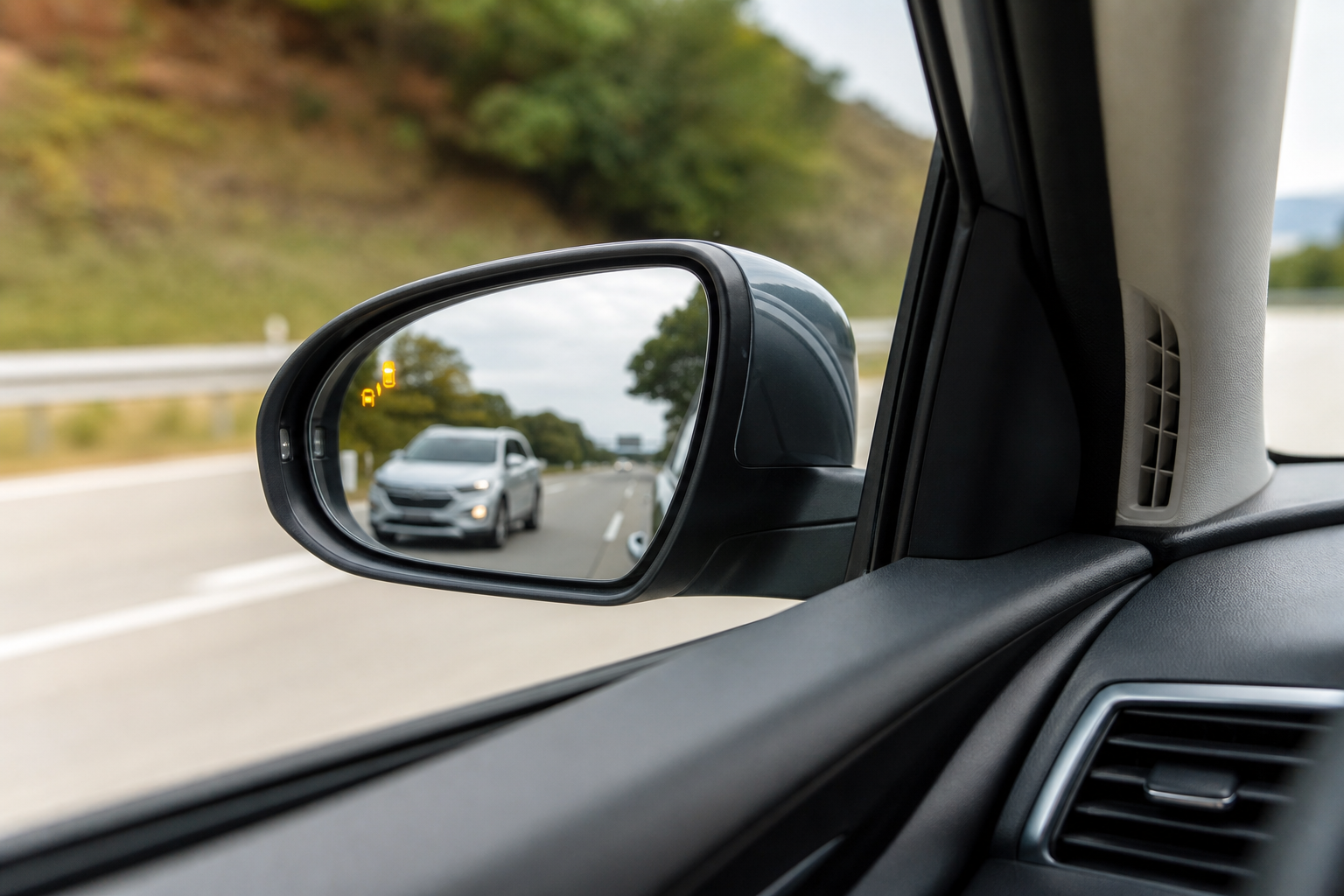
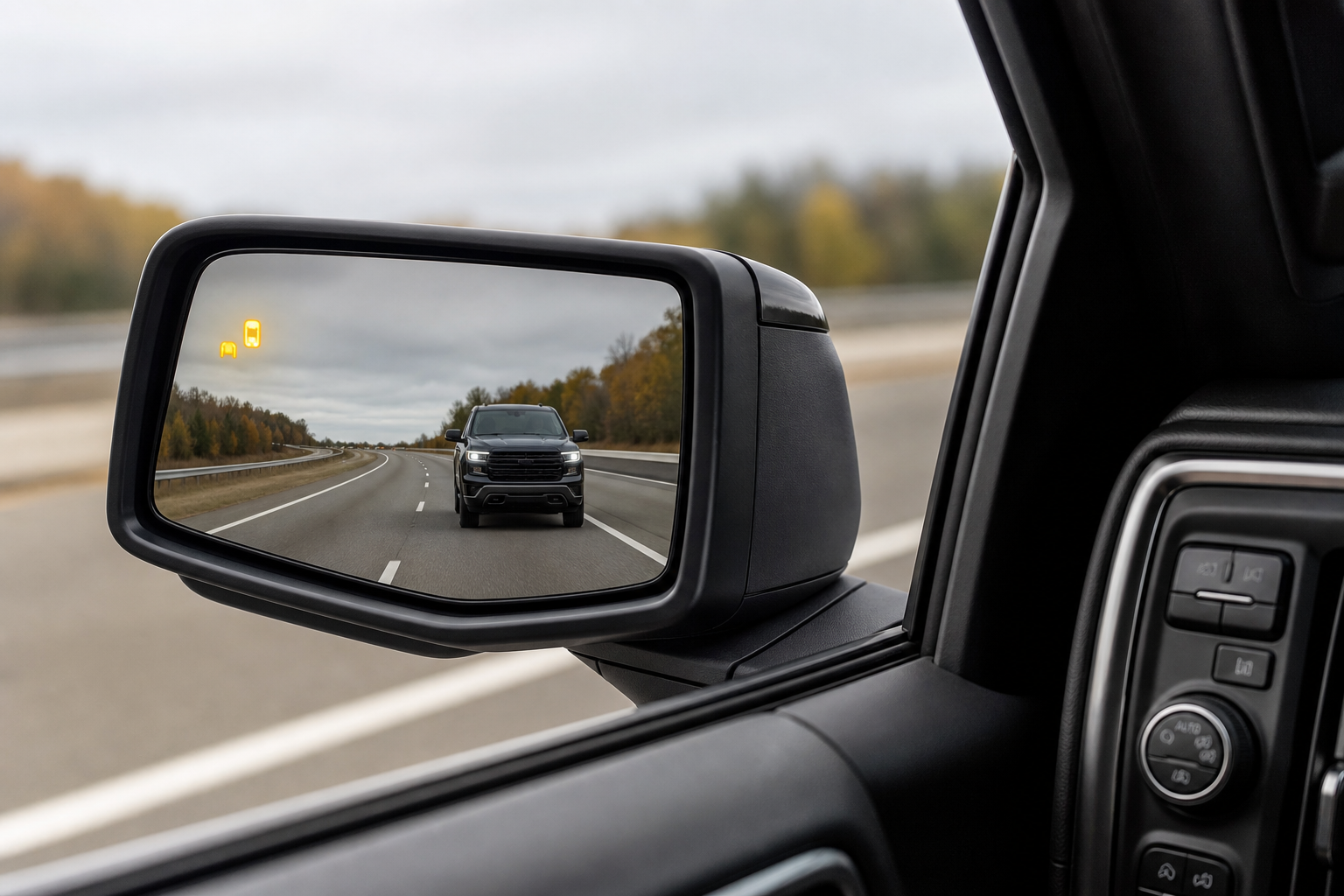
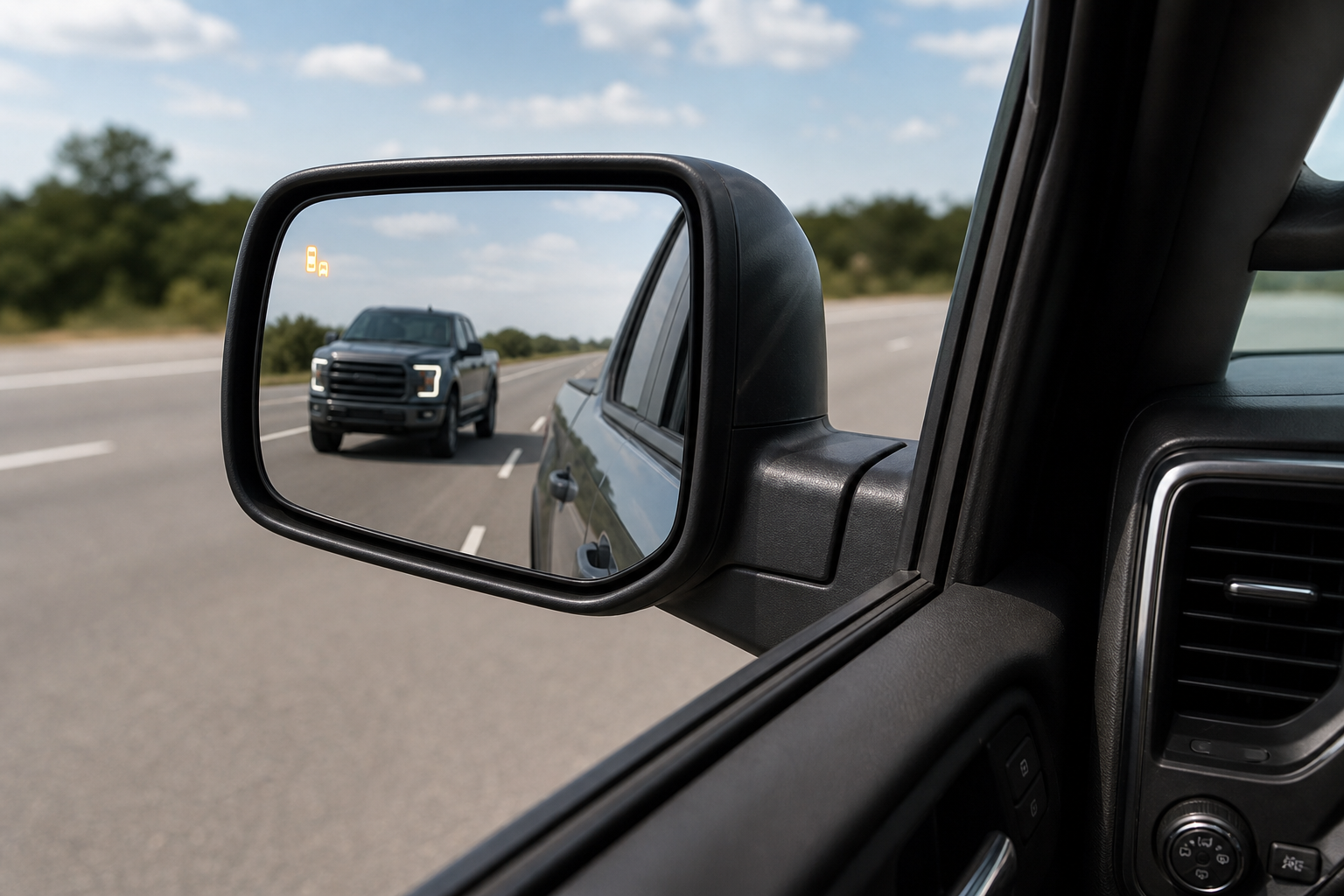
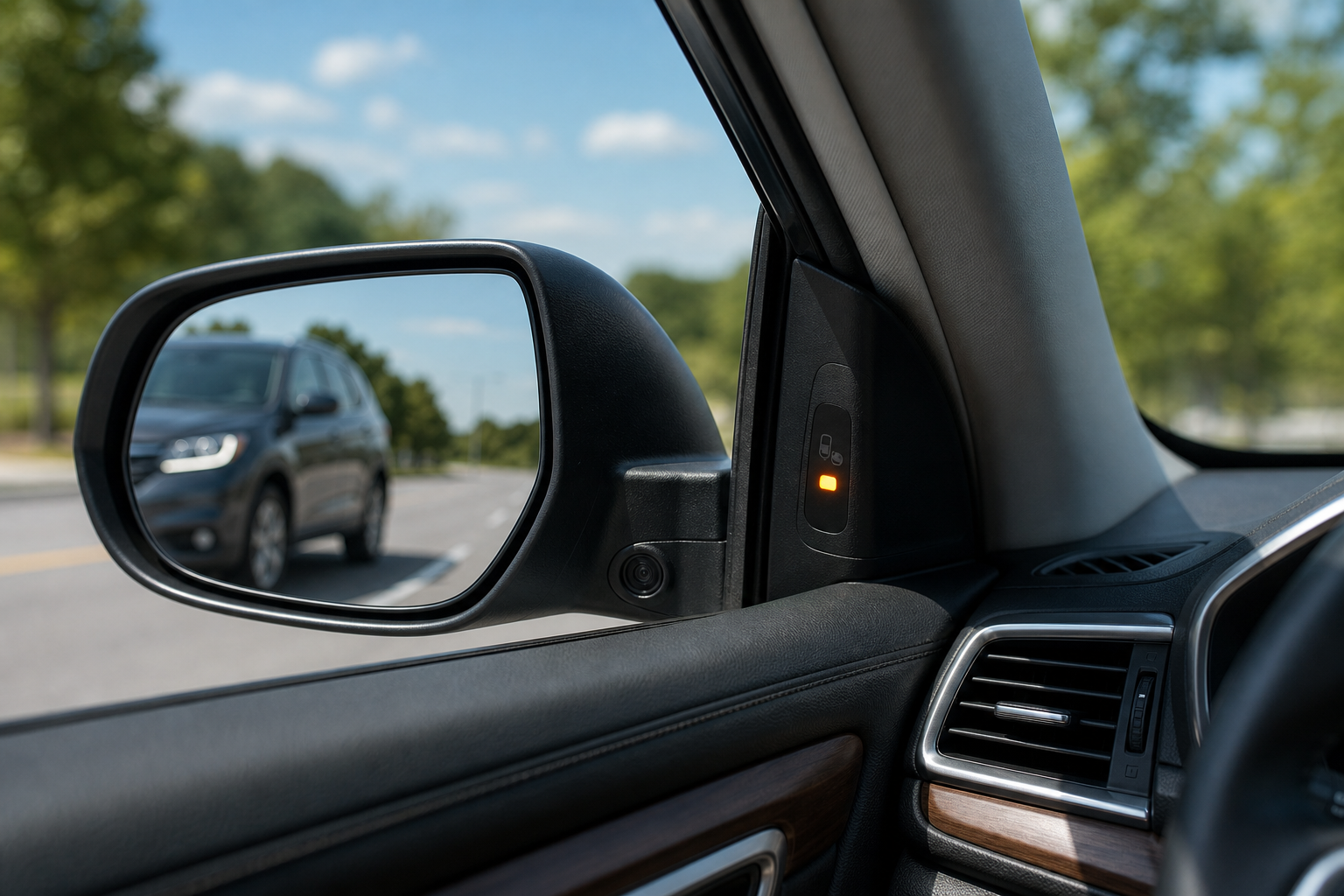
If the blind-spot warning light on your Hyundai Tucson’s side mirror suddenly goes dark, or you get a message saying the system is unavailable, it’s easy to assume something expensive just broke. Most of the time, though, the fix is something you can handle in your driveway with a rag and a few minutes, not a trip to the dealer. Before you panic about sensor replacement costs, let’s walk through what actually causes this and how to tell the difference between a quick fix and a real repair.
What the System Is Actually Called (and Where the Sensors Live)
Hyundai’s blind-spot system goes by a couple of different names depending on your Tucson’s model year and trim. On most Tucsons from 2022 and newer (the NX4 generation), it’s called Blind-Spot Collision-Avoidance Assist (BCA), which not only warns you but can apply light corrective braking if you drift toward a vehicle in your blind spot. On the older 2016-2021 Tucson (TL/JM generation), you’ll see it referred to as Blind-Spot Collision Warning (BCW), which is warning-only with no braking intervention.
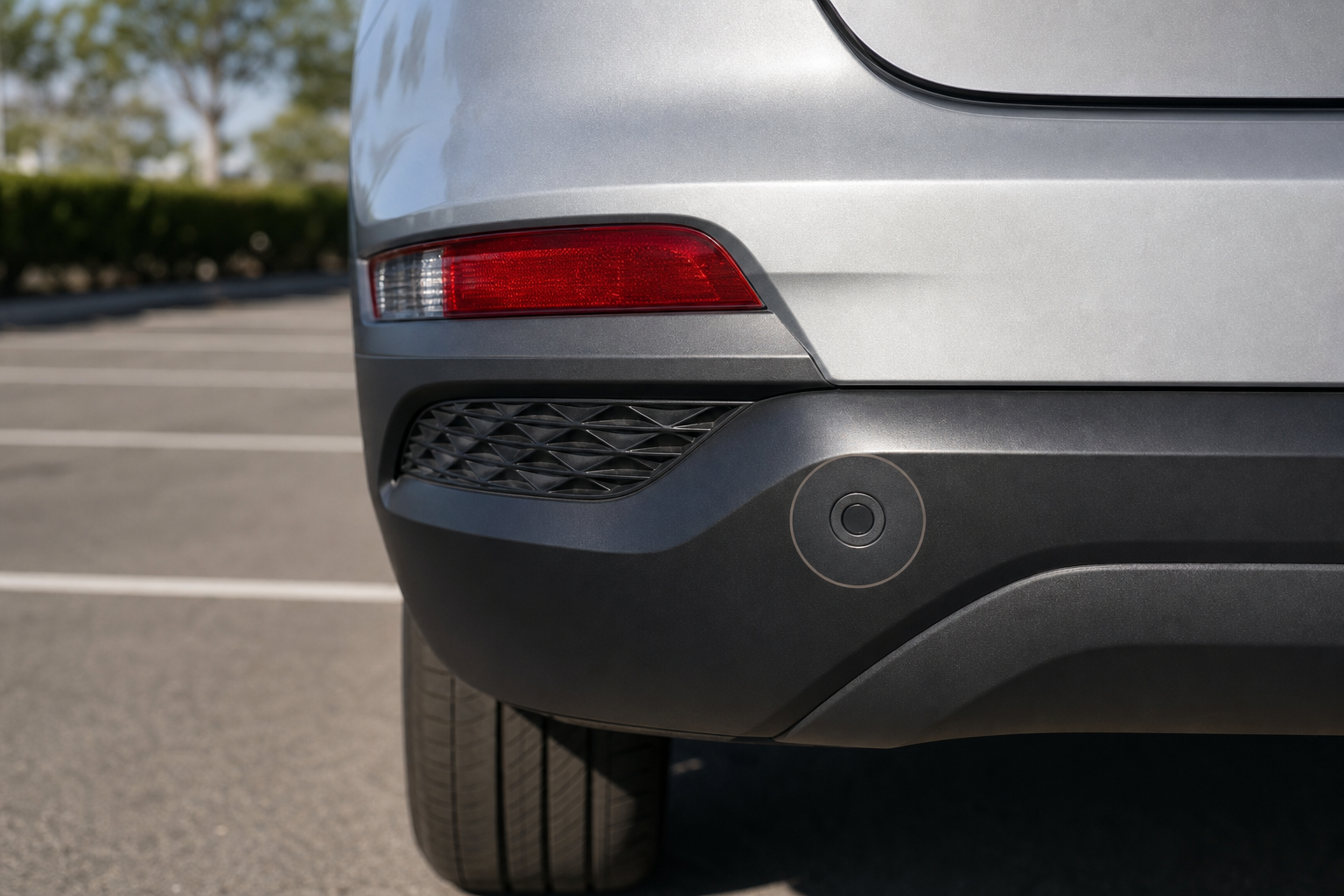
Both versions use radar sensors, not cameras, mounted behind the rear bumper cover on each side, roughly near the taillights. This matters because the sensors are hidden behind plastic, so a cracked bumper corner or aftermarket parking sensor installed in the wrong spot can throw off detection without any visible damage to the sensor itself.
Availability also varies by trim. On the current Tucson, BCA comes standard on SEL Convenience trim and above, but it’s not included on the base SE. On older Tucsons, it was often bundled into a Tech or Ultimate package rather than being standard equipment. If your Tucson never had the option to begin with, no amount of troubleshooting will make the feature appear, so it’s worth confirming your trim actually includes it before you start chasing a “fault” that was never there.
Simple Causes You Can Check Yourself
Before assuming a sensor is dead, run through these owner-level checks. They solve the majority of blind-spot warning complaints and cost you nothing.
Dirt, Road Grime, and Snow on the Rear Bumper
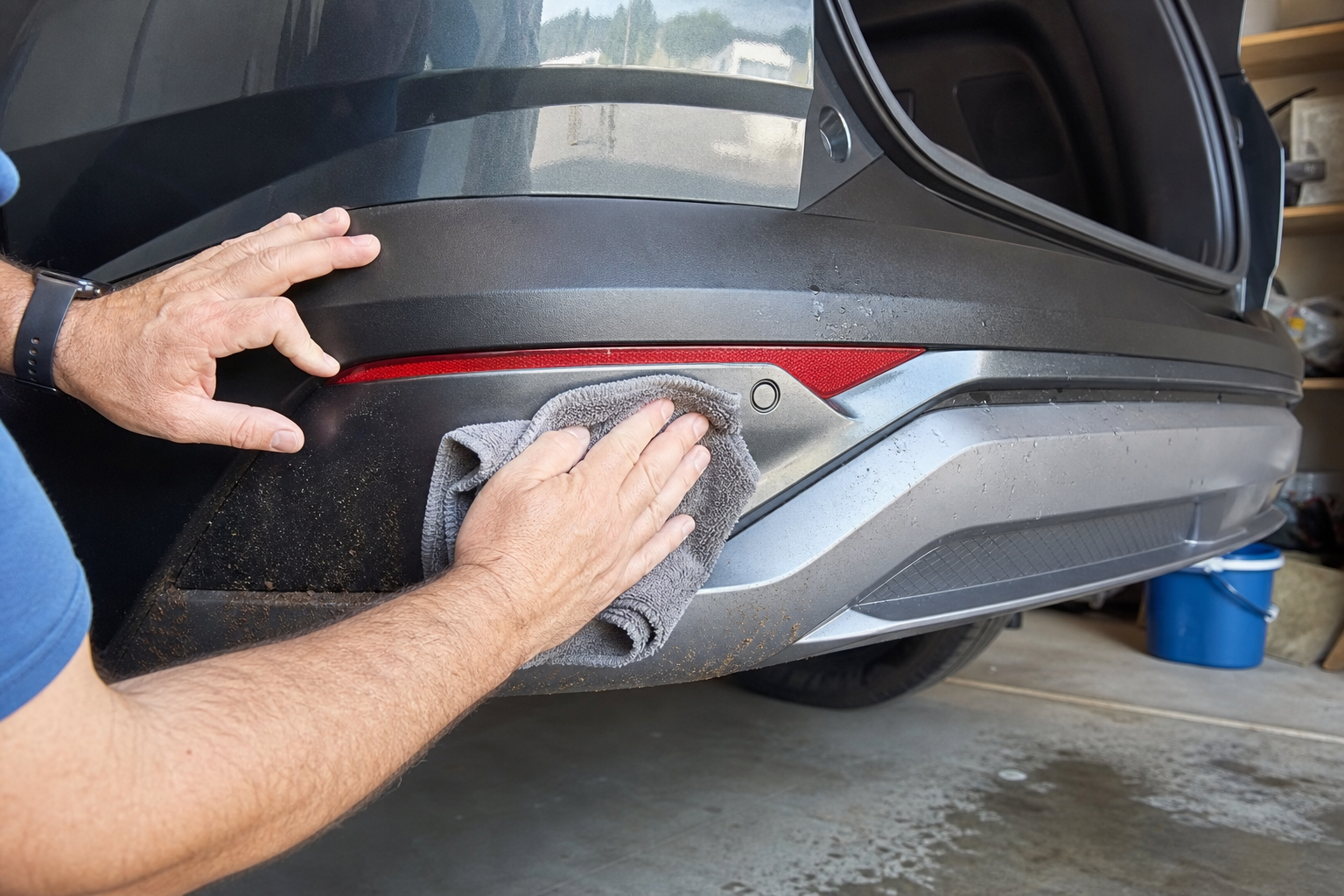
Radar sensors need a clear path through the bumper cover to work correctly. A thick layer of road salt, mud, or packed snow over the rear corners can be enough to trigger an “unavailable” message or make detection unreliable. Wipe down both rear corners of the bumper with a clean microfiber cloth and mild soap, then start the car and see if the warning clears.
Bumper Damage or Aftermarket Accessories
Even a minor parking-lot tap that doesn’t look serious can shift a sensor’s alignment behind the bumper cover. Check for cracks, dents, or gaps around the rear corners. If you’ve added a trailer hitch, bike rack, bumper guard, or any aftermarket accessory near the rear bumper, that’s a common culprit too, since metal brackets can interfere with radar signals or physically block the sensor’s field of view.
Towing a trailer will also disable the system automatically on many Tucson models, since the trailer itself sits in the sensor’s detection zone. This isn’t a malfunction, it’s the system doing exactly what it’s designed to do.
Low Battery Voltage
Hyundai’s driver-assist features are sensitive to voltage drops. If your battery is weak or a jump-start didn’t fully restore the charge, you might see blind-spot warnings alongside other electronic gremlins like flickering dash lights or a lane-keep assist that also refuses to engage. If your Tucson has been sitting for a while or the battery is more than three or four years old, a quick voltage test is worth doing before you look at the sensors at all. This is the same kind of underlying issue covered in our guide on a car battery that dies overnight even with a good alternator, and it’s more common than people expect.
Settings Turned Off Accidentally
It sounds obvious, but it happens constantly: someone (often a valet, a family member, or you scrolling through menus) turns the feature off in the settings menu. On the Tucson, check under Settings > Driver Assistance on the infotainment screen to confirm Blind-Spot Collision-Avoidance Assist is actually toggled on. If your Tucson also has driver attention warnings acting up, our guide on how to turn off driver attention warning on the Hyundai Tucson walks through that same settings menu in more detail.
Temporary Sensor Blockage from Weather
Heavy rain, fog, or a sudden temperature swing that causes condensation behind the bumper can temporarily confuse the radar. This usually resolves itself once conditions clear and the vehicle has been driven a few miles. If the warning disappears on its own after a dry, sunny drive, you were dealing with a weather-related blip, not a hardware failure.
When It’s a Real Sensor Fault or Needs Calibration
If you’ve cleaned the bumper, confirmed the settings, ruled out towing, and checked the battery, and the warning is still there consistently across multiple drives and weather conditions, you’re likely dealing with an actual fault. Common culprits at this point include a corroded or loose wiring connector at the sensor, a cracked sensor housing from impact damage, or a sensor that’s simply failed internally.
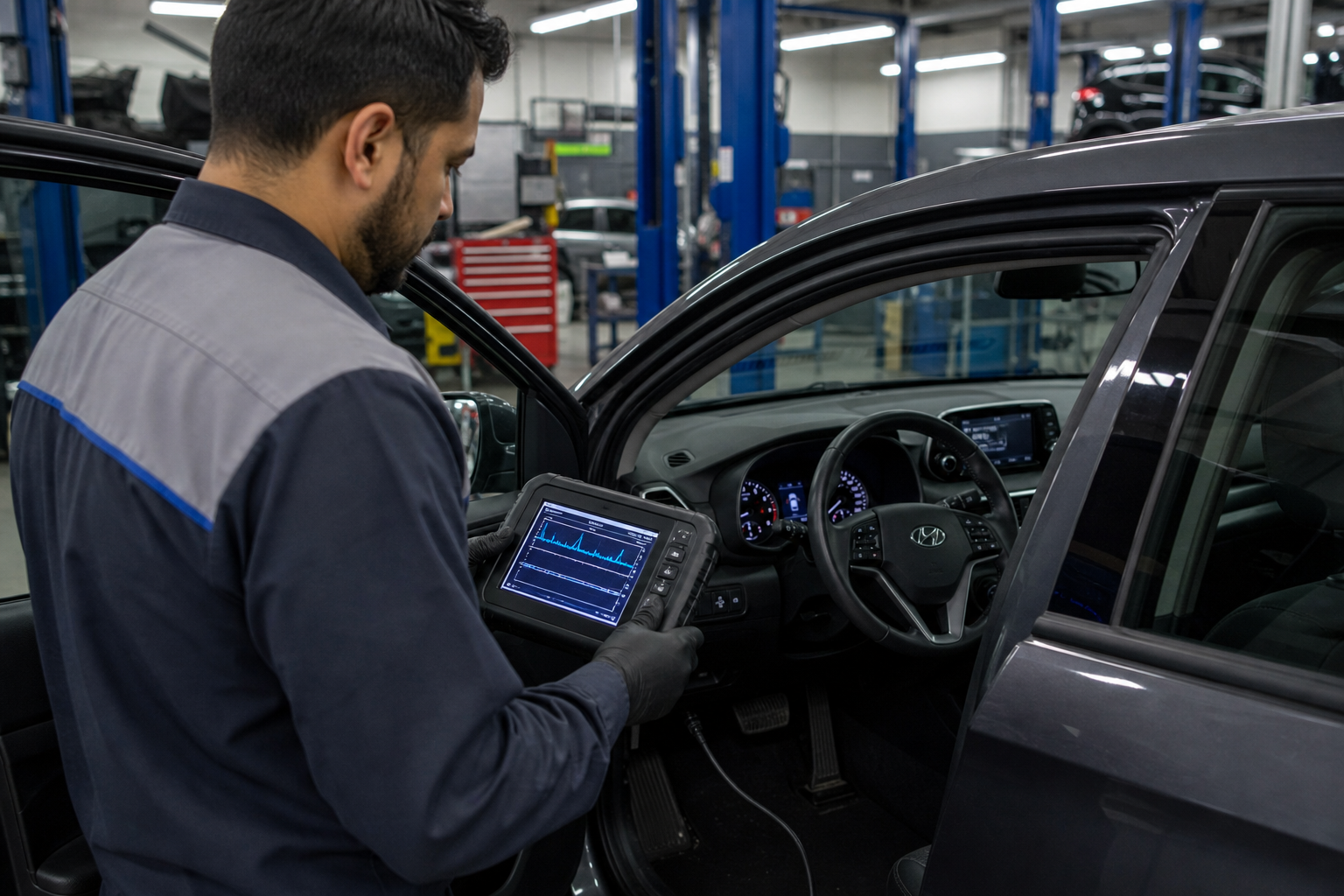
Hyundai’s blind-spot system will typically store a diagnostic trouble code when a sensor fault is present, and that code can only be read with a scan tool that supports Hyundai-specific modules, not a generic code reader. A shop or dealer will pull the code, confirm which side and which sensor is affected, and replace it as needed.
Just as important is calibration. Radar sensors on the Tucson need to be aimed correctly to a specific angle, and any time a sensor is replaced or the rear bumper is removed and reinstalled after bodywork, it needs a calibration procedure using Hyundai’s diagnostic software. This isn’t something you can eyeball or adjust by hand. Skipping calibration after a bumper repair is one of the most common reasons blind-spot warnings come back even after a “fixed” sensor.
If you’re comfortable pulling codes yourself before heading to a shop, a good bidirectional OBD2 scanner that supports Hyundai modules can save you a diagnostic fee. For general upkeep and to make sure a dirty sensor never becomes the story again, keeping a dedicated cleaning kit in the garage helps.
Hyundai Tucson Blind Spot Radar Sensor
Direct OEM-style replacement sensors matched to your Tucson’s rear bumper mounting point, useful reference when comparing part numbers with your dealer or shop quote.
Beyond the sensor itself, a lot of owners overlook basic bumper care as preventive maintenance. A microfiber detailing cloth kept in your trunk makes it easy to wipe down the rear corners before a long drive in bad weather, especially heading into winter when road salt builds up fast.
If your Tucson has been in a rear-end fender bender, even a minor one, it’s worth having the bumper inspected specifically for sensor alignment before you assume the warning light is unrelated. Body shops sometimes reinstall a bumper without realizing the radar sensor needs recalibration, and that’s an easy detail to miss unless you ask directly.
Frequently Asked Questions
Why does my Tucson say blind-spot monitoring is temporarily unavailable?
This message usually means the radar sensor’s view is blocked, either by dirt, snow, a trailer, or heavy rain. It can also appear briefly after a cold start before the system finishes its self-check. If it clears up after a short drive or a bumper cleaning, there’s no fault to worry about.
Can I clean the blind-spot sensors myself?
Yes. Wipe the rear bumper corners near the taillights with a soft cloth and mild soap and water, then dry them completely. Avoid high-pressure car washes aimed directly at that area, since forceful water spray can occasionally work into the sensor housing and cause temporary faults.
Does towing a trailer disable blind-spot monitoring on the Tucson?
On many Tucson models, yes, the system automatically disables when it detects a trailer connected through the wiring harness, since the trailer itself would trigger constant false warnings. This is normal behavior, not a malfunction, and the system should return to normal once the trailer is disconnected.
This article contains affiliate links. We may earn a small commission at no extra cost to you.

Leave a Reply