
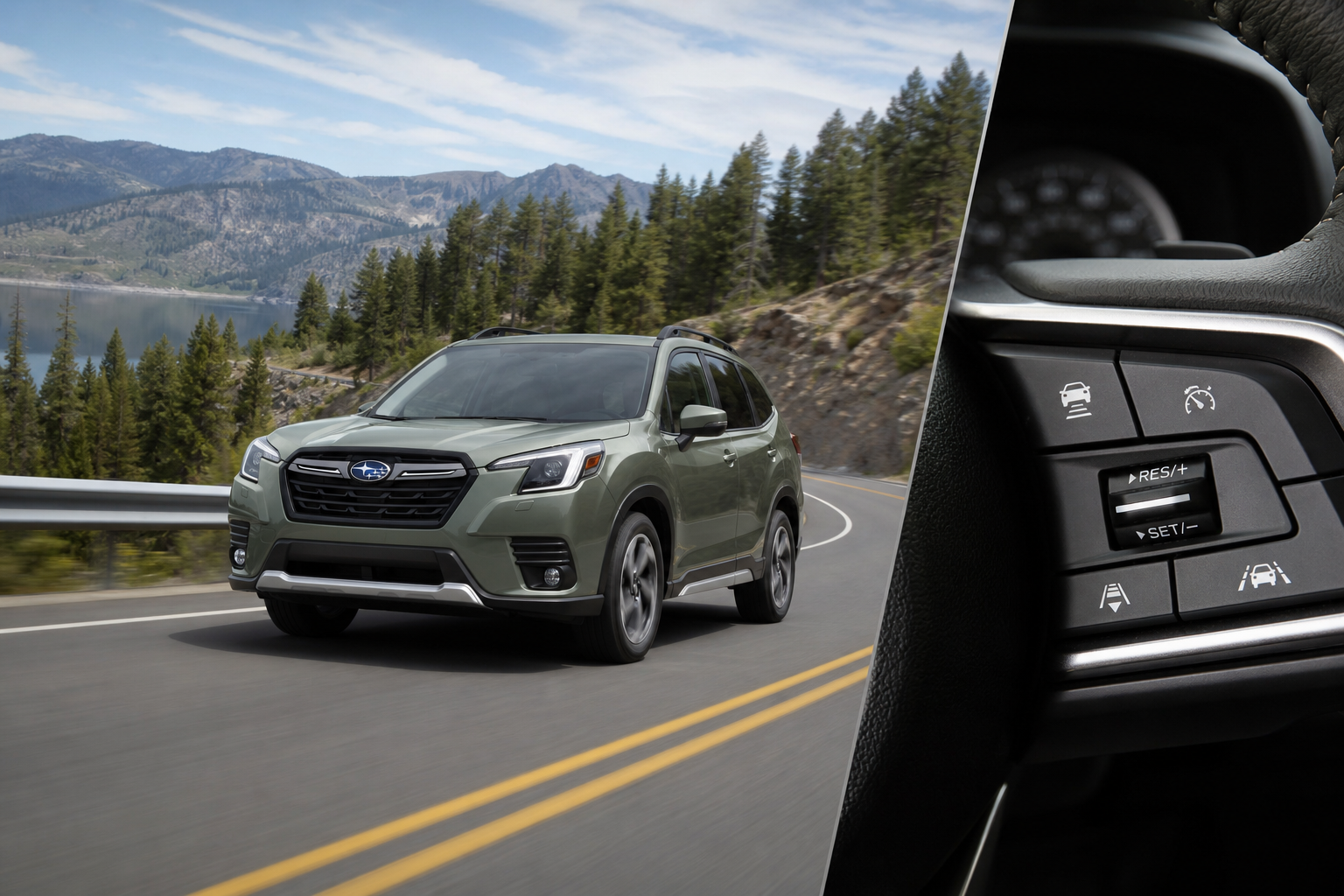
If you’ve spent any time searching for how to turn off adaptive cruise control on a Subaru Forester, you’ve probably landed on a lot of conflicting answers. Some forums claim there’s a hidden button combo. Others insist it’s impossible. The truth sits somewhere in between, and it depends heavily on which Forester you’re driving and whether it came with Subaru’s EyeSight system.
This article breaks down exactly what the Forester offers, what you can actually control from the steering wheel, and why Subaru designed the system the way it did.
Does the Forester Have a Separate Conventional Cruise Mode?
Here’s the part that surprises a lot of owners: on any Forester equipped with EyeSight, there is no toggle to switch between adaptive and conventional cruise control. Adaptive cruise isn’t an optional feature layered on top of standard cruise. It’s the only cruise control system in the car.
Subaru built EyeSight around a stereo camera setup mounted near the rearview mirror. That camera system handles lane centering, pre-collision braking, and cruise control all at once. Once you press the cruise control button, you’re using the adaptive system by default. There’s no button sequence, menu setting, or hidden combo that disables the radar and camera tracking while leaving cruise control active.
This is different from brands that offer both systems side by side and let you pick one. Toyota does something similar with its camera-based safety suite, which you can read more about in our breakdown of the pre-collision system on the Toyota Corolla. Subaru took the position that EyeSight should always be active when cruise is engaged, full stop.
What You Can Actually Adjust: Following Distance
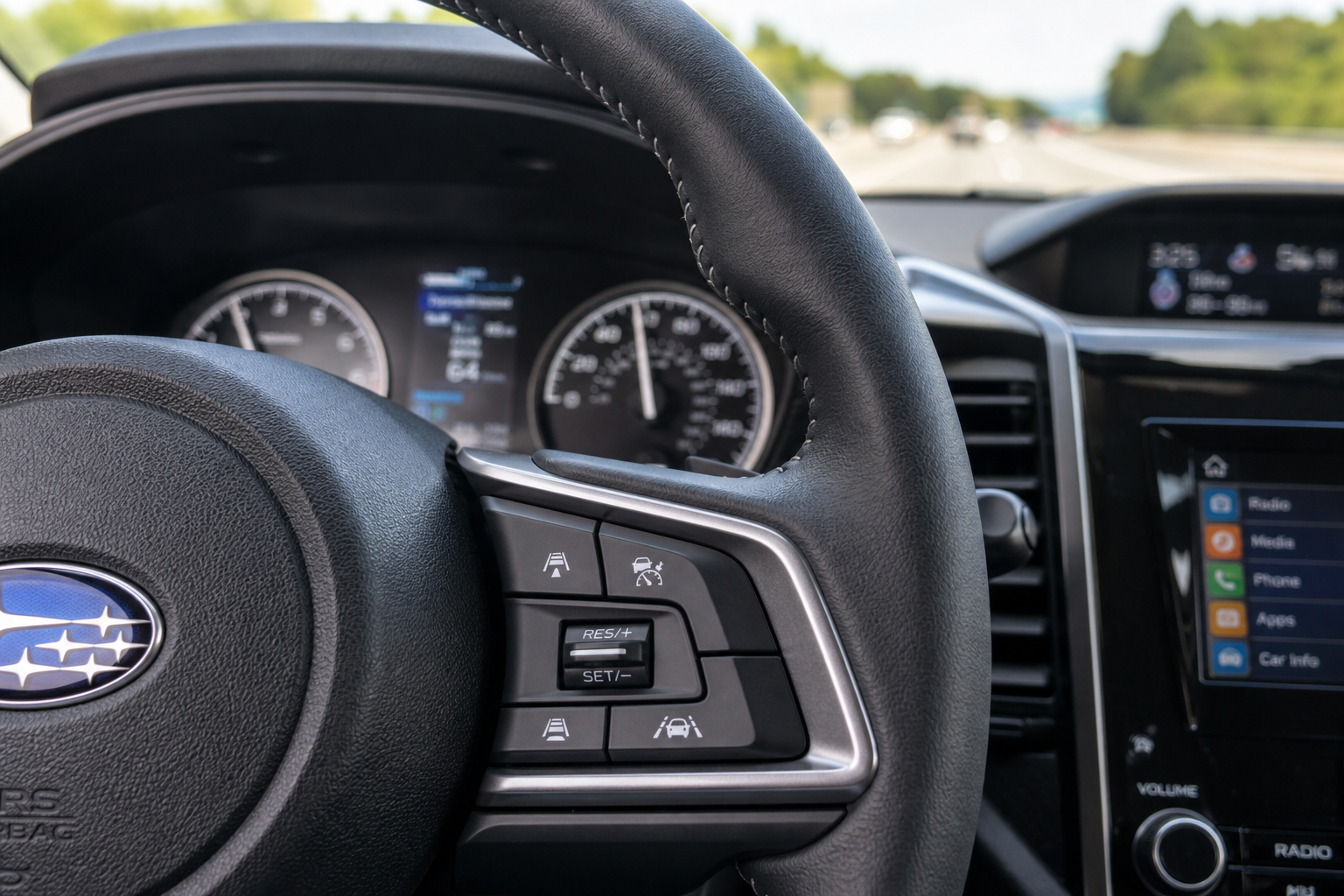
While you can’t disable adaptive functionality outright, you can push the following distance setting to its maximum level. This is the closest thing to conventional cruise behavior that the Forester offers, and it’s what most owners end up using on open highways.
Here’s the exact sequence on the steering wheel:
- Press the “SET/-” or “RES/+” button to engage cruise control at your desired speed.
- Locate the distance adjustment button, usually marked with a small car icon and radio-wave-style lines, positioned near the main cruise controls on the right spoke of the steering wheel.
- Press this button repeatedly to cycle through the available following distances. Most Foresters offer three or four bar settings, from closest to farthest.
- Select the farthest bar setting. This gives the system the most room before it reacts to a vehicle ahead, which minimizes how often you feel it slowing down on your behalf.
Even on the longest setting, the Forester will still brake if a slower car pulls into your lane or if you close in on traffic ahead. That’s expected behavior, not a malfunction. Subaru never disables collision mitigation entirely, even at the loosest following distance.
Reading the Dashboard Indicator
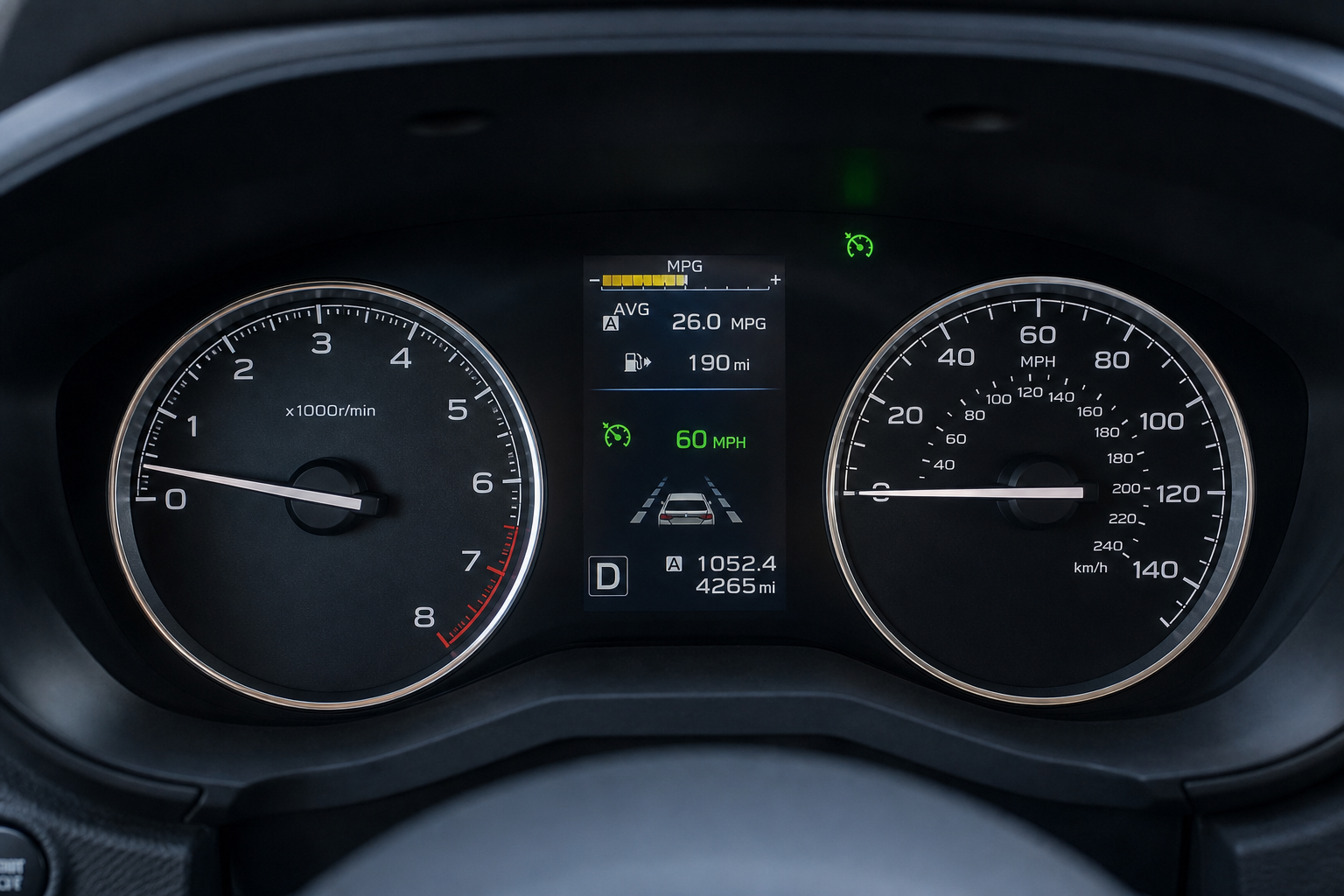
Your instrument cluster tells you exactly what mode the system is in, so you don’t have to guess. When cruise control is active, you’ll see the set speed displayed prominently, along with a small vehicle icon.
If that vehicle icon shows an outline of a car directly ahead of your own icon, EyeSight has detected a vehicle in your lane and is actively managing your following distance. When no icon appears ahead of you, the system is holding your set speed with no target vehicle in range, which is functionally identical to conventional cruise control until another car enters your path.
You’ll also see the following distance bars represented as small marks near the vehicle icon. More bars showing means a longer gap, fewer bars means a tighter follow distance. This display updates in real time as you cycle through settings, so you always know exactly where the system is set before you commit to a highway drive.
Manual Transmission Foresters: The One True Exception
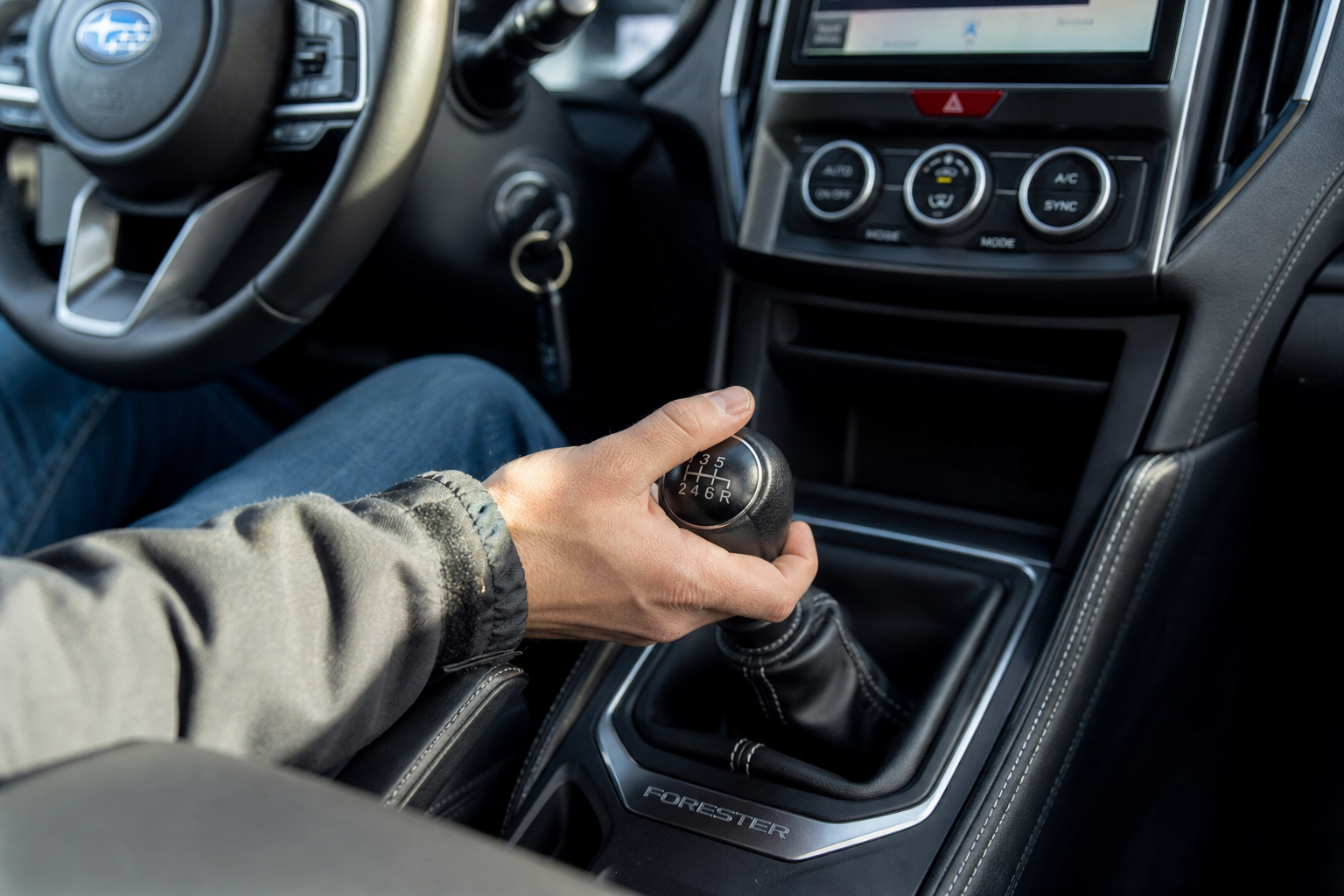
If your Forester came with a manual transmission, this entire conversation doesn’t apply to you, because your car likely doesn’t have EyeSight at all. Subaru never paired EyeSight with manual transmission Foresters, since the system’s automated braking and throttle inputs require an automatic or CVT to function.
That means manual Foresters, where they were offered, use genuinely conventional cruise control. Press the lever or button to set your speed, and the car holds it regardless of traffic ahead. There’s no camera, no radar, and no distance setting to worry about. It’s the simplest possible version of cruise control, and it works exactly like the systems found in cars from decades ago.
Subaru phased out the manual transmission option on the Forester entirely by the 2019 model year, so if you’re shopping for a Forester with true conventional cruise, you’ll need to look at older used models specifically equipped with a manual gearbox.
Model Year Differences You Should Know
The Forester’s cruise control setup has changed noticeably over the years, largely tied to when EyeSight became standard equipment.
- 2014-2016 (SJ generation): EyeSight was optional on select trims. If your Forester from this era doesn’t have the EyeSight package, it uses standard, non-adaptive cruise control by default.
- 2017-2018 (SJ generation, later years): EyeSight became more widely available across trims, though some base models still shipped without it.
- 2019-present (SK generation): EyeSight is standard on virtually every automatic-equipped trim. This is the generation where the adaptive-only cruise control experience became the norm across the lineup.
If you’re buying a used Forester and want conventional cruise control without any workarounds, your best bet is a pre-2017 model without the EyeSight package, or a manual transmission trim from before 2019. Anything newer will almost certainly come with adaptive cruise as the only option.
Why Subaru Designed It This Way
It’s easy to assume this is just corporate stubbornness, but there’s a real engineering logic behind it. EyeSight’s camera system needs to stay active to catch pedestrians, cross traffic, and lane departure in real time. Letting drivers fully disable the radar-and-camera tracking while cruise control remains active would undercut the entire safety case for the system.
Other manufacturers have made similar decisions as camera-based safety suites become standard. Ford’s intersection assist system, covered in our guide to the Intersection Assist and Evasive Steering features on the Explorer, works under a similar philosophy where the safety system stays engaged whenever cruise control is active. Subaru just took it a step further by never offering a separate conventional mode on EyeSight-equipped cars in the first place.
Tips for Getting the Most Natural Cruise Control Feel
If the adaptive braking feels intrusive on your highway commute, a few adjustments can smooth things out considerably.
Set your following distance to the maximum bar setting every time you get on the highway. This alone eliminates most of the unwanted deceleration you’d notice in stop-and-go traffic pockets.
Pay attention to the vehicle icon on your dash before you assume something’s wrong. A lot of owners think their cruise control is malfunctioning when really the system is just reacting appropriately to a car merging into their lane ahead.
Keep your windshield clean around the camera housing near the rearview mirror. EyeSight relies on a clear line of sight, and a dirty or cracked windshield section can cause the system to disengage cruise control unexpectedly, sometimes triggering a warning message on your dash.
If you notice unrelated vibration through the wheel while cruise control is engaged at highway speeds, don’t assume it’s related to EyeSight. That’s more likely a wheel balance or alignment issue, and our guide on steering wheel shakes at high speed walks through the most common causes.
Frequently Asked Questions
Can I turn off adaptive cruise control on a Subaru Forester without disabling regular cruise?
No. On EyeSight-equipped Foresters, adaptive functionality and cruise control are the same system. Setting your following distance to the maximum level is the closest workaround available.
Which Forester model years have true non-adaptive cruise control?
Foresters built before EyeSight became standard, generally 2014 through 2016 models without the EyeSight package, along with manual transmission trims offered through 2018, use conventional cruise control.
Why does my Forester slow down on its own even with cruise control set?
EyeSight detected a slower vehicle ahead of you and is automatically adjusting your speed to maintain the following distance you’ve selected. Check the dashboard icon to confirm.
Does increasing the following distance setting disable braking entirely?
No. Even on the farthest setting, the Forester will still brake for vehicles that merge into your lane or slow down ahead of you. The system never fully disengages collision mitigation while cruise control is active.
Related posts:
 How to Use Regular Cruise Control Instead of Adaptive Cruise on Toyota RAV4
  How to Use Regular Cruise Control Instead of Adaptive Cruise on Toyota Highlander
  How to Use Regular Cruise Control Instead of Adaptive Cruise on Honda CR-V
  How to Use Regular Cruise Control Instead of Adaptive Cruise on Honda Pilot
Leave a Reply