

If you drive a Nissan Sentra with auto start/stop technology, you already know the routine. You pull up to a red light, the engine cuts off, you inch forward, it restarts with a lurch, and you spend the whole drive feeling like the car is fighting you. It’s one of those features that looks great on a fuel economy spec sheet and feels terrible in everyday driving.
The Bottom Line
A plug-and-play module can make your Nissan Sentra remember your preference to keep Auto Start/Stop off, so you don’t have to press the button every time you start the vehicle.
The bigger annoyance is that Nissan gives you a button to turn it off, but the system ignores your preference every single time you restart the car. This guide covers exactly how to disable auto start/stop on the Nissan Sentra, why it keeps resetting, and the permanent fix that actually works.
Which Nissan Sentra Models Have Auto Start/Stop
Auto start/stop (Nissan calls it the Intelligent Stop/Start system, or ISS) came standard on the Sentra starting with the eighth generation, which launched for the 2020 model year. If your Sentra is a 2019 or older, you don’t have this system and you can stop reading here.
For 2020 and newer Sentras, ISS is standard across most trim levels, including the S, SV, SR, and SL. It works by shutting off the engine when the car comes to a complete stop and the brake is held, then restarting it when you release the brake pedal. Nissan designed it to reduce fuel consumption and emissions at idle, but many drivers find the constant stop/start cycle jarring, especially in stop-and-go traffic.
If you’ve been experiencing rough idle sensations at stops, it’s worth separating ISS behavior from actual mechanical issues. For reference, we covered a similar situation in this article on fixing Acura MDX vibration at idle in Drive, and many of the diagnostic principles apply across brands.
Using the Dashboard Button to Turn Off ISS
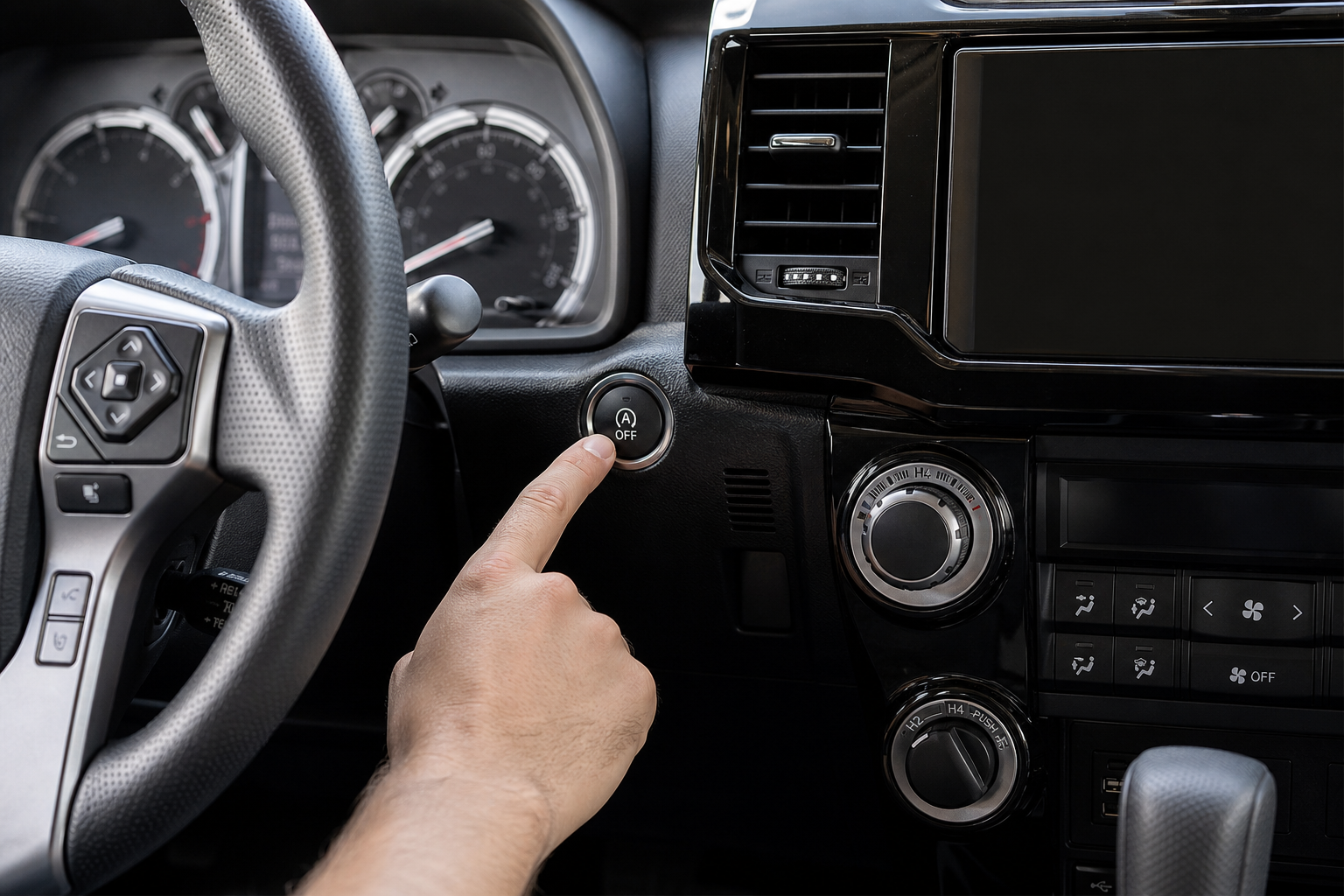
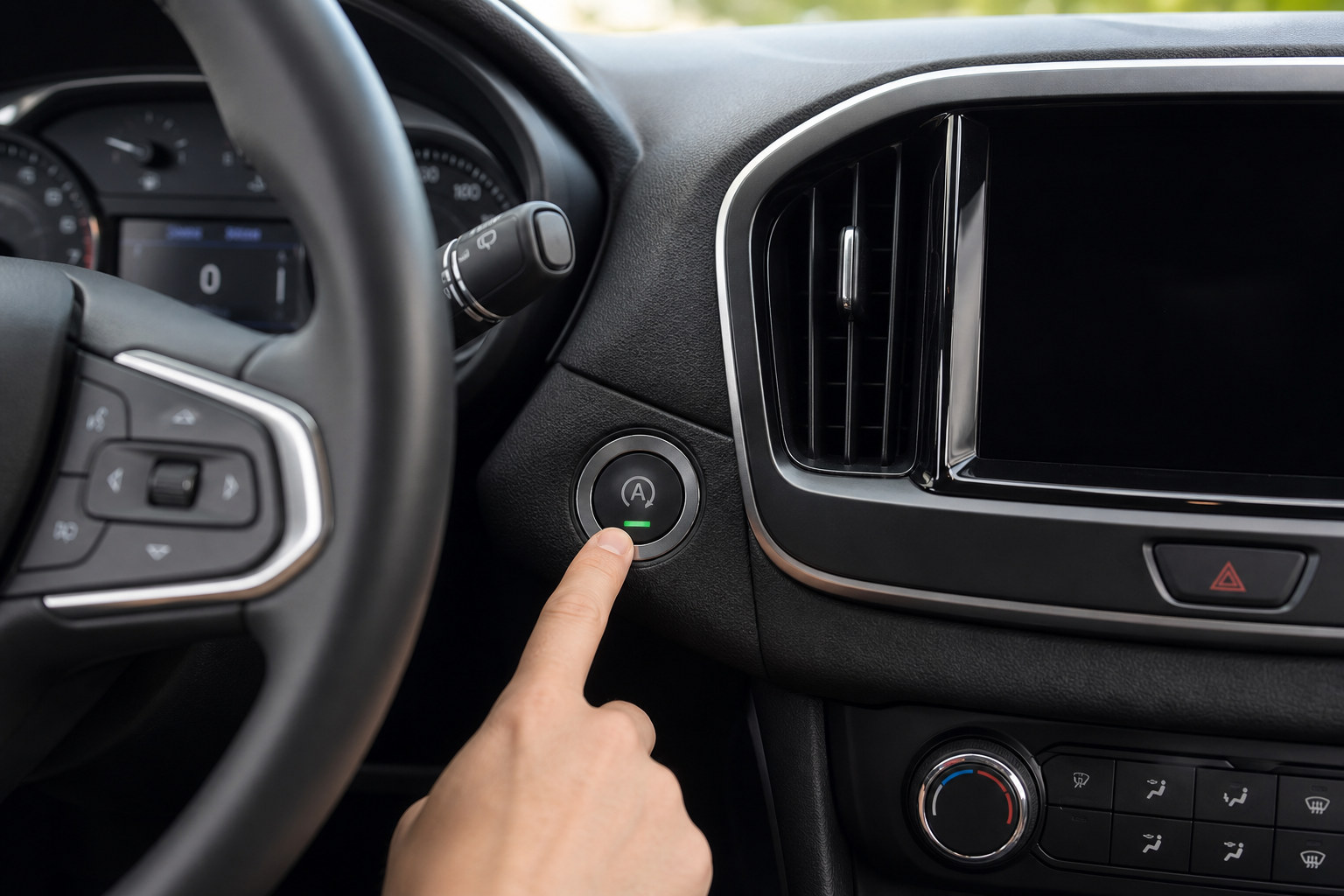
The Sentra has a dedicated button to disable the Intelligent Stop/Start system. Here’s how to use it:
- Start the vehicle and let it complete its startup sequence.
- Look for the ISS OFF button on the center console or instrument panel. On most 2020 to 2024 Sentras, it’s located near the TPMS and traction control buttons, below and to the right of the infotainment screen.
- Press the button once. A small indicator light or dashboard message will confirm that ISS is now disabled.
- Drive normally. The engine will no longer cut out at stops for the rest of that drive cycle.
This works perfectly well as a temporary fix. Every time you press that button, ISS stays off until you turn the car off. The problem is that the system resets to on automatically every time you start the engine again. Nissan programs it this way intentionally, partly for regulatory compliance and partly because ISS contributes to the vehicle’s official fuel economy rating.
For most drivers, pressing the button every single drive gets old fast. And if you frequently forget, you’re back to the lurching stops you were trying to avoid.
Why the Setting Keeps Resetting
This is the part that frustrates Sentra owners most. The ISS system is designed to default to active on every ignition cycle. There’s no menu option buried in the infotainment system that lets you save your preference. Nissan doesn’t offer a permanent disable through any factory setting or dealer software update for most model years.
Some owners have asked dealers to disable ISS through a software parameter change, and in rare cases dealers have done this, but it’s not a documented procedure and most dealers will decline. You’re generally left with three options: press the button every time, live with the system, or install an eliminator module.
This kind of default-on behavior is common across automakers right now. It’s the same reason features like lane keep assist and automatic high beams reset every drive on many vehicles. Manufacturers are required to meet certain standards, so they design these systems to always start active.
The Permanent Fix: Start/Stop Eliminator Modules
A start/stop eliminator is a small plug-and-play module that connects to your vehicle’s OBD2 port or an existing electrical connector under the dash or hood. Once installed, it automatically sends the signal to disable ISS every time you start the car, before you even get moving. You never have to touch the button again.
These modules don’t void warranties in most cases because they don’t modify any vehicle software or hardware permanently. They just mimic what you’d be doing manually by pressing the button. When you remove the module, the system returns to factory behavior immediately.

Nissan Sentra Start Stop Eliminator
A plug-and-play module that automatically disables ISS on every startup so you never have to press the button again.
Installation on the Sentra typically takes less than ten minutes. Most modules designed for the 2020 and newer Sentra connect directly to a connector located in the engine bay or under the driver’s side dash. No splicing, no permanent modifications. The module sits hidden from view and does its job quietly on every drive.
When shopping for one, make sure the listing specifically mentions compatibility with the 2020, 2021, 2022, 2023, or 2024 Nissan Sentra depending on your model year. Some generic modules claim broad compatibility but aren’t calibrated for Nissan’s ISS system and may not work reliably or could trigger a warning light. Check current pricing on Amazon and read the compatibility notes carefully before buying.
Installation Walkthrough
While exact steps vary slightly by brand, here’s the general process for most Sentra-compatible eliminators:
- Park on a flat surface and turn the engine off.
- Locate the target connector. Most Sentra eliminators tap into a connector near the battery, the brake pedal sensor harness, or a designated underdash connector. Your module’s instructions will specify the exact location with photos.
- Unplug the factory connector. Plug the eliminator module in line between the factory harness and the connector. It typically just clicks in.
- Tuck the module out of sight. Use the included zip ties or a small piece of hook-and-loop tape to secure it.
- Start the car and verify. The ISS OFF indicator light should activate on its own without you pressing anything.
If something looks off after installation, a basic OBD2 scanner can help you check for any fault codes before assuming there’s a problem. Most of the time the install goes smoothly, but it’s good to have one on hand for any DIY electrical work.
You can also reverse the whole thing in under five minutes if you ever want to sell the car or return it to stock. Just unplug the module and reconnect the original connector.

OBD2 Scanner for Nissan
Handy to have nearby any time you’re doing underdash electrical work, just in case a fault code shows up after installation.
Frequently Asked Questions
Will disabling ISS on the Sentra affect my fuel economy?
Technically yes, but the real-world impact is minimal for most drivers. The ISS system was designed to improve fuel efficiency in heavy stop-and-go traffic by reducing idle time. On open roads or light-traffic commutes, the difference is essentially negligible. If you spend most of your time on highways, you probably won’t notice any change at the pump.
Can a Nissan dealer permanently disable auto start/stop?
Most dealers will tell you they can’t, and that’s usually accurate. Nissan doesn’t provide a documented procedure for permanently disabling ISS through software for the 2020 and newer Sentra. Some dealers have done it by adjusting parameters with Nissan’s CONSULT diagnostic tool, but it’s not standard, not guaranteed, and not something most dealers will attempt. The eliminator module is a more reliable and accessible solution for most owners.
Does the start/stop eliminator affect the Sentra’s battery or alternator?
No. The eliminator module simply tells the ISS system to stay in the off state. It doesn’t change how the battery charges or how the alternator operates. The Sentra’s AGM battery and charging system continue to function exactly as designed. The eliminator uses a negligible amount of power draw and won’t cause any electrical issues when properly installed according to its instructions.
Final Thoughts
The Nissan Sentra’s Intelligent Stop/Start system is one of those features that’s hard to love in daily driving. Fortunately, you have a real solution that doesn’t require dealer involvement or permanent modifications. Press the button for now, and if you’re tired of doing that every single morning, a Nissan Sentra start/stop eliminator is an affordable and reversible fix that takes about ten minutes to install.
If you’re making other upgrades to your Sentra while you’re at it, this is a good time to look at other practical improvements like upgrading to LED headlights or picking up a quality dash cam for added protection on the road. Small improvements like these add up and make everyday driving noticeably better.
This article contains affiliate links. We may earn a small commission at no extra cost to you.
Leave a Reply