
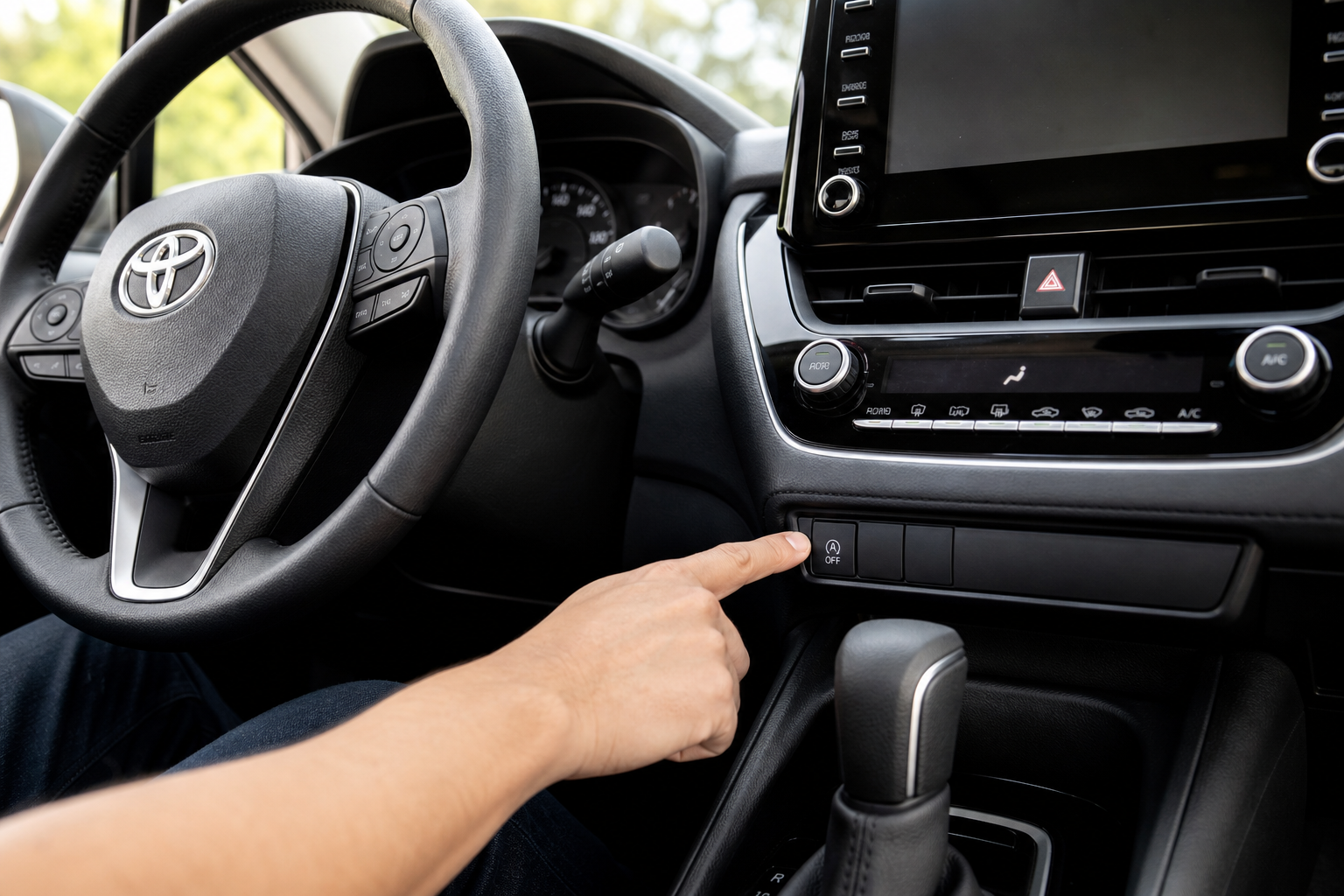
If you drive a Toyota Corolla with the automatic start/stop feature, you already know the routine. You pull up to a red light, the engine cuts off, and then it shudders back to life the moment you lift your foot off the brake. Toyota built this system to save a small amount of fuel and reduce emissions at idle, but for a lot of drivers it just feels intrusive and rough. The good news is there are a couple of ways to deal with it, ranging from pressing a button every single time you start the car to installing a module that handles it automatically.
The Bottom Line
A plug-and-play module can make your Toyota Corolla remember your preference to keep Auto Start/Stop off, so you don’t have to press the button every time you start the vehicle.
This guide walks you through both approaches, explains exactly why the factory button keeps resetting, and recommends the hardware fix that most Corolla owners end up going with after getting tired of the manual routine.
Which Toyota Corolla Models Have Auto Start/Stop?
Toyota introduced the auto start/stop system on the Corolla starting with the 12th-generation refresh (2020 model year) on most trim levels in North America. If you have a 2020 or newer Corolla LE, SE, XLE, or XSE, your car almost certainly has it. The base L trim on some model years was occasionally excluded, but it’s present on the vast majority of Corollas sold since then.
The 2025 Corolla also carries the system forward, so there’s no sign Toyota is dropping it anytime soon. The same applies to the Corolla Cross and Corolla Hybrid, though the hybrid version behaves slightly differently since the electric motor handles some of the transitions. This article focuses on the standard gasoline Corolla, but the button-based method works on the Cross as well.
Using the Factory Dashboard Button (The Manual Method)
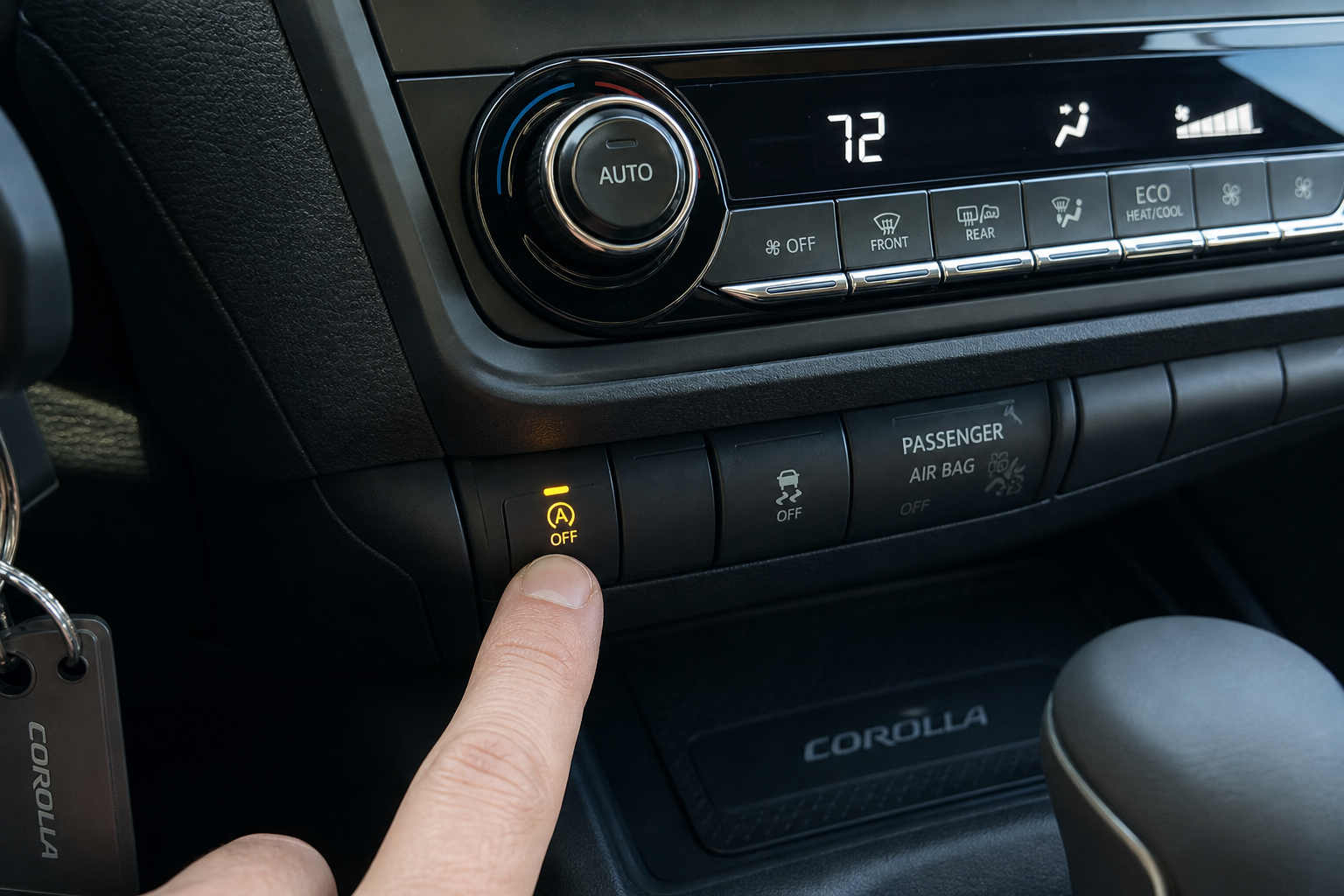
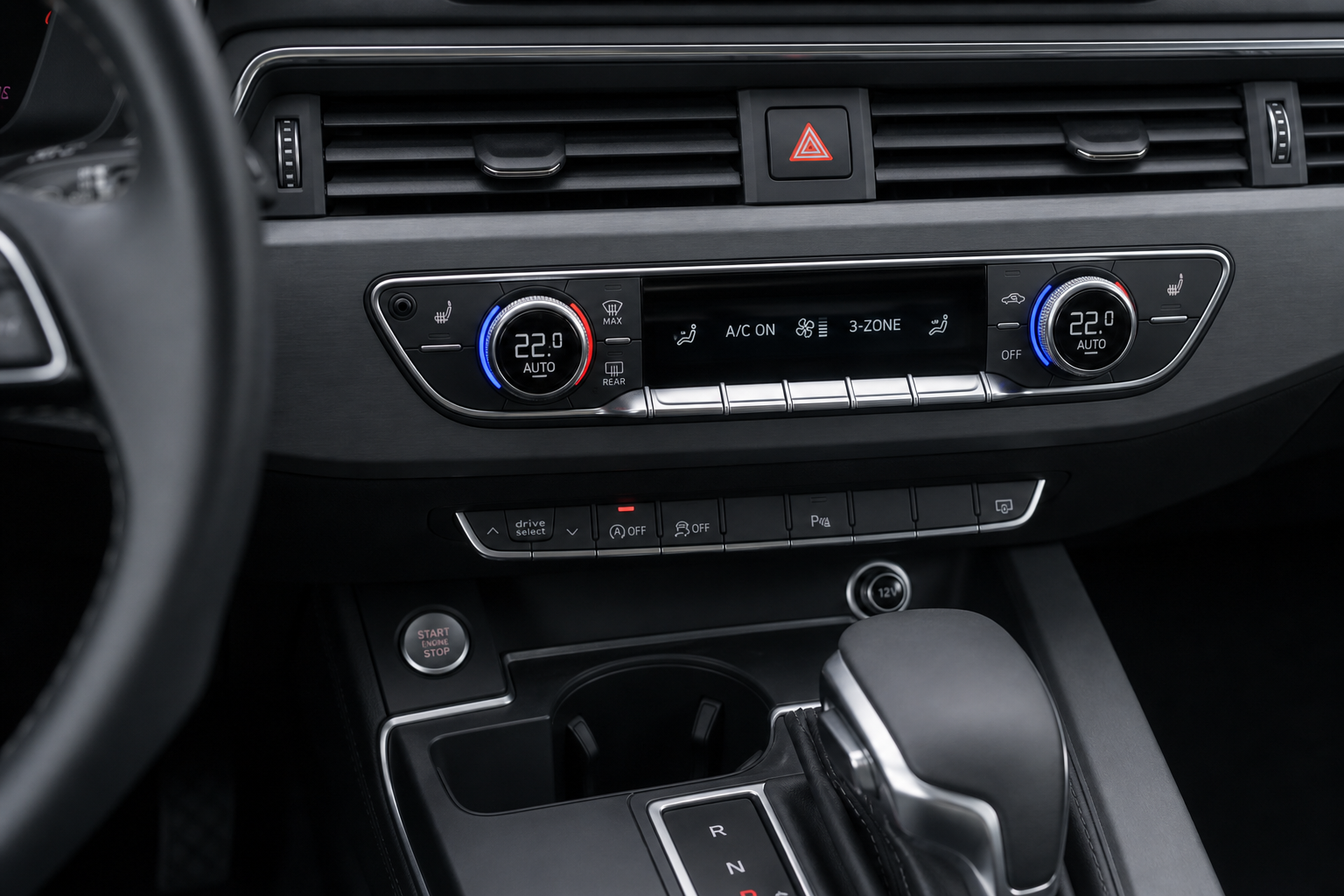
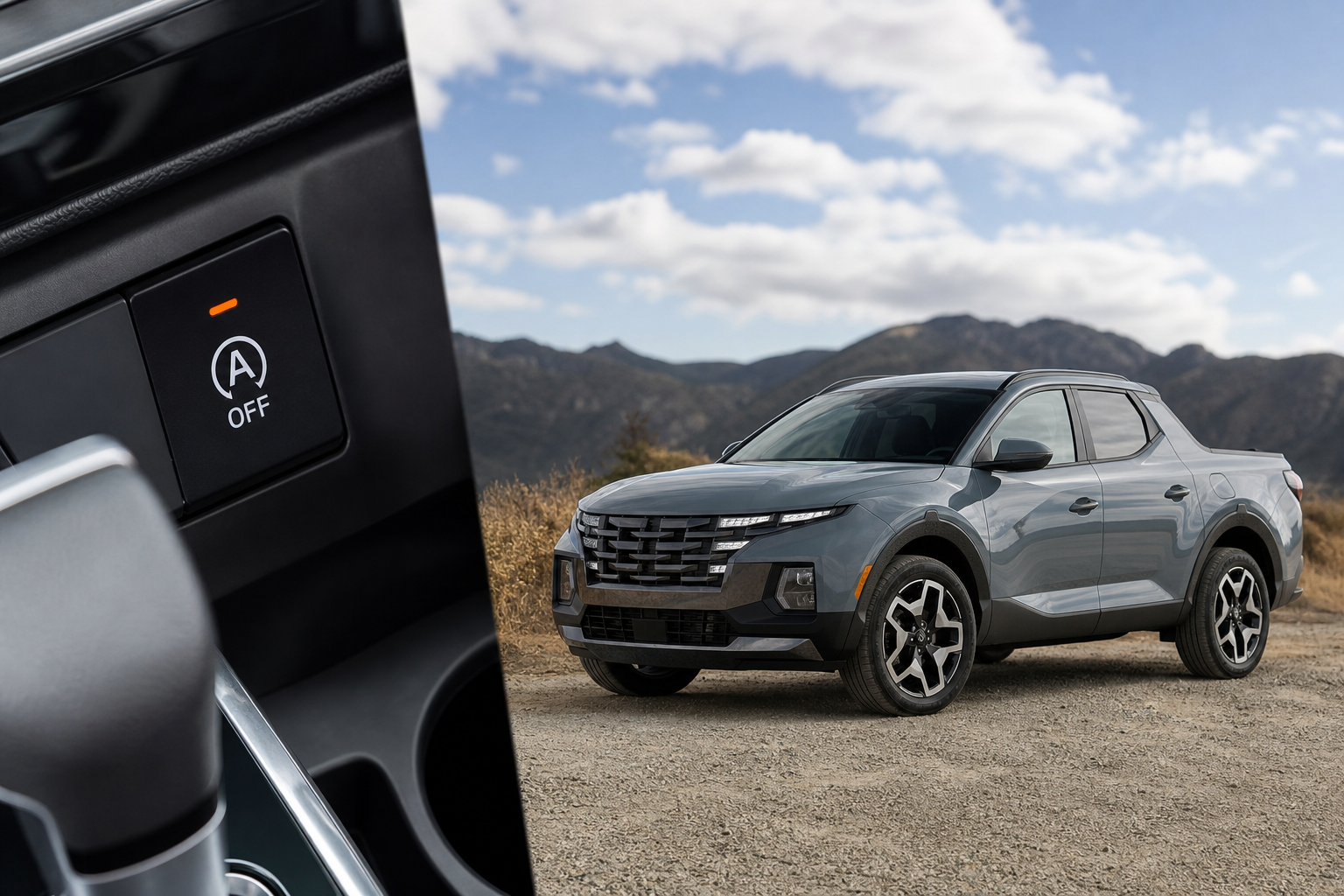
Toyota does give you an official way to turn off auto start/stop. There’s a dedicated button in the center console area, usually near the traction control button or below the climate controls depending on your trim level. It shows an A with a circle and a slash through it.
Here’s how to use it:
- Start your Corolla and let it fully wake up.
- Press the auto start/stop button once. A light on the button will illuminate, and you’ll see a notification on the instrument cluster confirming the system is off.
- Drive normally. The engine will no longer shut off at stop signs or traffic lights for the rest of that drive.
It takes about two seconds and it works every time. The problem is you have to do it every single time you start the car. Toyota designed the system to default back to ON with every new ignition cycle. There is no menu setting, no hidden dealer option, and no software toggle that changes this behavior permanently on the factory system.
Why Does It Reset Every Time?
This isn’t a bug or an oversight. Toyota deliberately programmed the system to reset to the active state whenever the ignition is cycled. From the factory’s perspective, the system is a fuel economy and emissions feature, and defaulting it to ON ensures it’s always contributing to those numbers. From a regulatory standpoint, automakers have an incentive to keep these systems running by default because they factor into fleet fuel economy ratings.
So no matter how many times you press that button, the car will reset it the next morning. If you only drive occasionally or share the car with someone else who doesn’t mind the feature, the manual button might be fine. For everyone else, the eliminator module is the practical solution.
The Plug-and-Play Eliminator Module (The Permanent Fix)
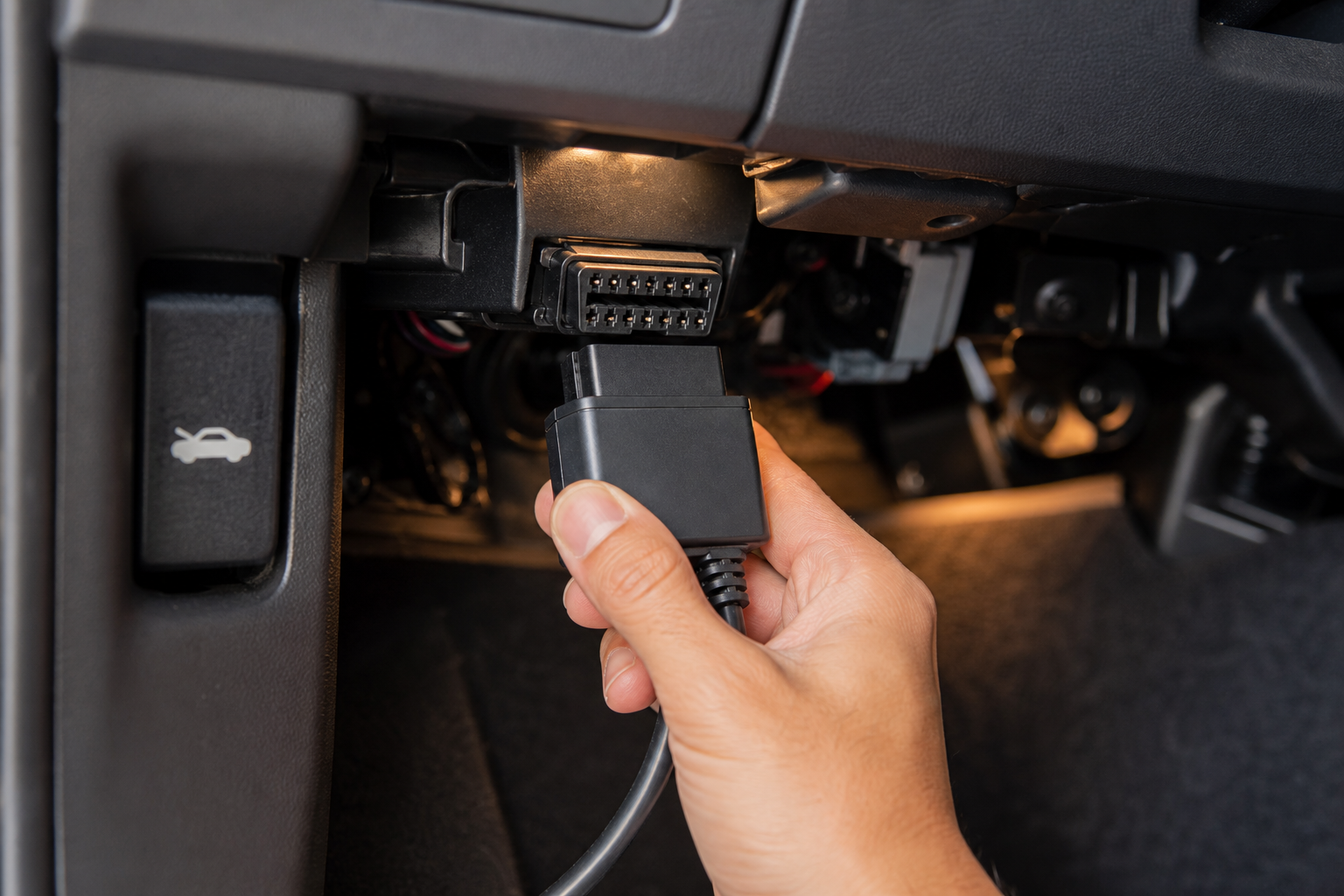
A start/stop eliminator is a small module that plugs directly into your car’s wiring harness without cutting any wires or doing any permanent modification. Once installed, it automatically simulates pressing the disable button every time you start the car, so the system is always turned off before you even put the car in drive.
The installation takes about five minutes and requires no tools. You locate the correct connector under the dash or behind the center console, unplug it, plug the module in between, and route the wire out of sight. That’s it.

Toyota Corolla Start Stop Eliminator Module
A plug-and-play module that automatically disables the auto start/stop system every time you start your Corolla, with no wiring or tools required.
When shopping for one, make sure the product listing specifically mentions compatibility with your model year. Most reputable units cover the 2020 through 2025 Corolla, but double-check before ordering. The modules work by intercepting the signal from the start/stop button circuit and sending the disable command automatically, so the behavior is exactly the same as pressing the button yourself, except it happens every time without any input from you.
Is It Reversible?
Yes, completely. Because these modules use a plug-in connector rather than spliced wires, you can unplug them at any time and return your car to factory behavior. This matters if you ever plan to trade in or sell the car, or if you want to pass an emissions inspection that checks for modified components. The car won’t know the module was ever there.
Will It Affect Anything Else?
A quality eliminator module affects only the start/stop system. It won’t interfere with your traction control, stability control, fuel trim, or any other system. It also won’t trigger any warning lights or throw error codes that would show up if you ran a diagnostic scan with an OBD2 scanner. The car treats the module’s output as a normal button press, so from the ECU’s perspective nothing unusual is happening.
Step-by-Step Installation Guide
The exact connector location varies slightly depending on your trim, but on most 2020 to 2025 Corolla models the relevant connector is accessible from below the center console or by removing the small panel near the gear selector.
- Turn off the ignition completely and wait about 30 seconds before starting.
- Locate the start/stop button connector. On most Corollas, you’ll find it by tracing the wiring behind the button cluster. Some owners access it from under the dash near the driver’s left knee area.
- Unplug the factory connector from the button assembly.
- Plug the eliminator module inline between the factory connector and the button harness. The connectors are keyed, so they only go in one way.
- Tuck the module and any extra wire out of sight. Most people zip tie it to an existing wire bundle to keep things clean.
- Start the car and verify that the auto start/stop indicator light is off. The system should be disabled without you touching the button.
If the start/stop light isn’t coming on or the system doesn’t seem to respond, double-check the connections and make sure the module is fully seated. These modules don’t have any separate power requirements, they draw what they need from the button circuit itself.
Does Disabling Auto Start/Stop Affect Fuel Economy?
Technically, yes, but the real-world impact is minimal for most driving patterns. The EPA testing that generates fuel economy sticker numbers is conducted under controlled conditions where start/stop makes a noticeable difference. In typical stop-and-go city driving, the system can improve efficiency by a small margin, typically somewhere in the range of 3 to 5 percent under ideal conditions.
For most Corolla drivers who do a mix of city and highway driving, disabling the system probably costs you a fraction of a mile per gallon over the course of a tank. Whether that tradeoff is worth it compared to the smoother driving experience is a personal call, but most people who go through the trouble of installing an eliminator have already made up their mind.
If you’re thinking about other ways to keep your Corolla running well, staying on top of basic maintenance goes a long way. Issues like unusual vibration at idle are sometimes a sign of other concerns, and it’s worth knowing how to distinguish a system quirk from an actual problem. We covered something similar in our writeup on diagnosing vibration at idle in the Acura MDX, and many of the same principles apply to four-cylinder engines in general.
Other Toyota Start/Stop Questions Worth Addressing
Does the Corolla Hybrid reset the same way?
The Corolla Hybrid and Corolla Cross Hybrid use a different architecture. The hybrid system’s engine stop function is more deeply integrated with the electric motor management, so a standard gasoline Corolla eliminator module may not work correctly. Some hybrid-specific modules exist, but verify compatibility carefully before ordering one for a hybrid trim.
Can a dealer permanently disable it through the OBD port?
Some Toyota dealers can disable auto start/stop through a software configuration change using dealer-level diagnostic tools, but this varies by region, dealership policy, and software version. A few dealers will do it on request, others won’t, and some may charge a service fee. It’s worth calling ahead and asking, but don’t count on it as a reliable solution. The plug-in module is a more dependable path.
If you own other Toyota vehicles in addition to your Corolla, you might also enjoy learning about other built-in features worth using. Our guide on using the wireless charging pad in the Toyota Camry is a good example of features that often go underused, and our walkthrough on the power sliding rear window on the Toyota Tundra covers another Toyota convenience feature that owners frequently overlook.
Top Product Recommendation
After looking at what’s available for the 2020 to 2025 Corolla, the plug-and-play eliminator module category has a handful of solid options that are all much easier to install than most people expect. When buying, prioritize units that include model-specific instructions and confirm they’re compatible with your exact trim level.
Toyota Corolla Auto Start Stop Eliminator
Plug-in module designed for the 2020-2025 Toyota Corolla that automatically disables the start/stop system on every drive without any permanent modifications.
You can also pick up a basic OBD2 diagnostic scanner if you want to confirm there are no codes stored after installation, though in practice this step usually isn’t necessary with a quality module.
Frequently Asked Questions
Will the start/stop eliminator void my Toyota Corolla’s warranty?
In most cases, no. Because the module is fully reversible and plug-in, it doesn’t modify any factory components permanently. Under the Magnuson-Moss Warranty Act, a dealer would need to prove the module caused a specific failure before denying warranty coverage on that component. If you’re ever bringing the car in for service and you’d rather not have any questions, just unplug the module beforehand. It takes about 30 seconds.
My Corolla doesn’t have a visible start/stop button. Does the system still apply?
If your Corolla has auto start/stop functionality, there should be a physical button to temporarily disable it. On some trim levels it’s located in a slightly different spot than expected, sometimes integrated into the cluster of buttons near the gear selector rather than on a dedicated panel. Check your owner’s manual under “engine stop/start system” for the exact button location for your specific trim.
Can I use this method on a 2019 or older Corolla?
Auto start/stop was not a standard feature on the 11th-generation Corolla (2014 to 2019), so if you own one of those you likely don’t have the system at all. Check your instrument cluster when you start the car. If you don’t see any start/stop indicator light or button, your model almost certainly doesn’t have it.
Are there any downsides to always driving with start/stop disabled?
The main tradeoff is a small reduction in fuel efficiency during stop-heavy driving, as mentioned earlier. Beyond that, some argue that the system reduces wear on the engine by limiting heat cycles and idle time, though this claim is debated and the difference over typical ownership periods is not well documented. The starter motor on modern start/stop-equipped vehicles is built to handle far more cycles than a conventional starter, so wear isn’t a major concern either way.
Final Thoughts
If the constant engine shutoff at every red light is bothering you, you have a clear path forward. The factory button works fine if you don’t mind pressing it every morning. For a set-it-and-forget-it fix, a Toyota Corolla start/stop eliminator module is a clean, reversible solution that takes only a few minutes to install. It does exactly one thing and it does it reliably, which is all you need.
If you’re the type of driver who likes to fine-tune how your car behaves, it might also be worth checking out our overview of throttle response controllers like the Pedal Commander and ShiftPower, which address a completely different system but are popular among Corolla and Camry owners who want a more responsive feel from the accelerator. Small upgrades like these can make a real difference in how enjoyable your daily commute feels.
This article contains affiliate links. We may earn a small commission at no extra cost to you.

Leave a Reply