
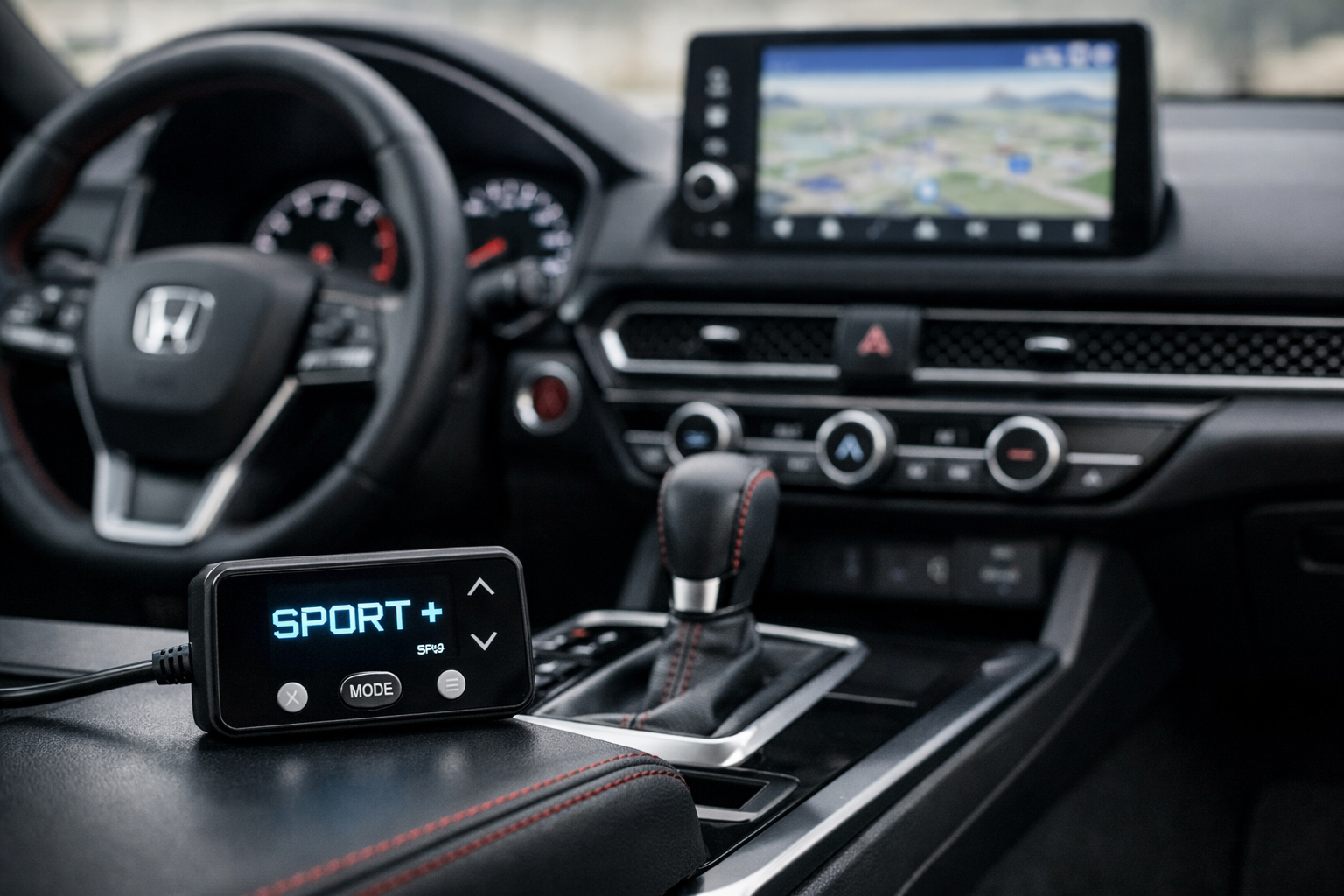
The 11th generation Honda Civic (2022+) is a refined, well-built compact car that suffers from a common modern complaint: the gas pedal feels disconnected from the engine. The 1.5L turbocharged four-cylinder, which powers the Sport and higher trims, has both electronic throttle lag and turbo spool time working against immediate response.
The 2.0L naturally aspirated engine on base trims has the electronic lag alone, but it’s still noticeable compared to older cable-throttle Civics. For a younger, more price-conscious audience, a throttle controller is an affordable first modification that transforms the Civic’s driving personality without any warranty risk or permanent changes.
Why the Civic Feels Disconnected
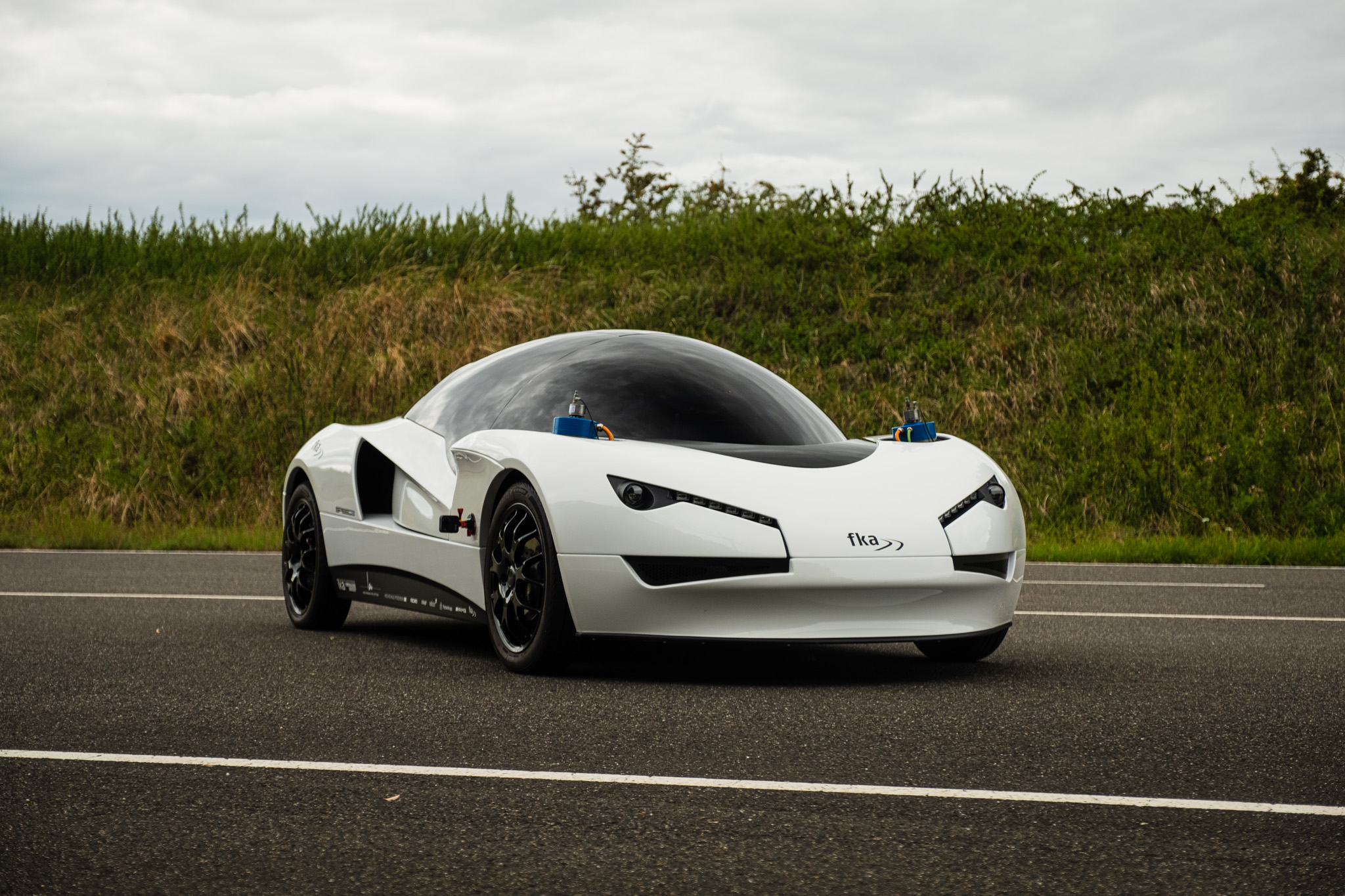
Honda’s drive-by-wire system on the Civic softens the first 15% to 20% of pedal travel to create smooth, refined acceleration that suits the car’s commuter positioning. The dead zone is smaller than what you’d find on a truck, but it’s still noticeable, especially if you’re coming from an older Honda Civic or any car with a more direct throttle feel.
The 1.5T engine compounds the issue with turbo lag at low RPM. The turbo needs a moment to build boost pressure, and the electronic throttle system adds its own delay on top of that natural lag. During part-throttle driving (which is where you spend 90% of your time), the combined hesitation makes the Civic feel slower than its 180 horsepower (or 200 in the Si) would suggest.
The 2.0L naturally aspirated engine doesn’t have turbo lag, but the electronic dead zone is still present. Civic owners with the 2.0L often describe the car as feeling “numb” or “appliance-like” during normal driving. The engine responds proportionally once you push past the dead zone, but that initial hesitation dulls the driving experience.
Honda’s CVT (Continuously Variable Transmission) adds another layer of disconnection. The CVT is programmed to simulate stepped gear ratios, but it still has the characteristic rubber-band feel that CVTs are known for. The combination of a soft throttle curve and a CVT creates a driving experience that feels distinctly less engaging than older Civics with conventional automatics or manual transmissions.
Best Controllers for the Honda Civic
Pedal Commander
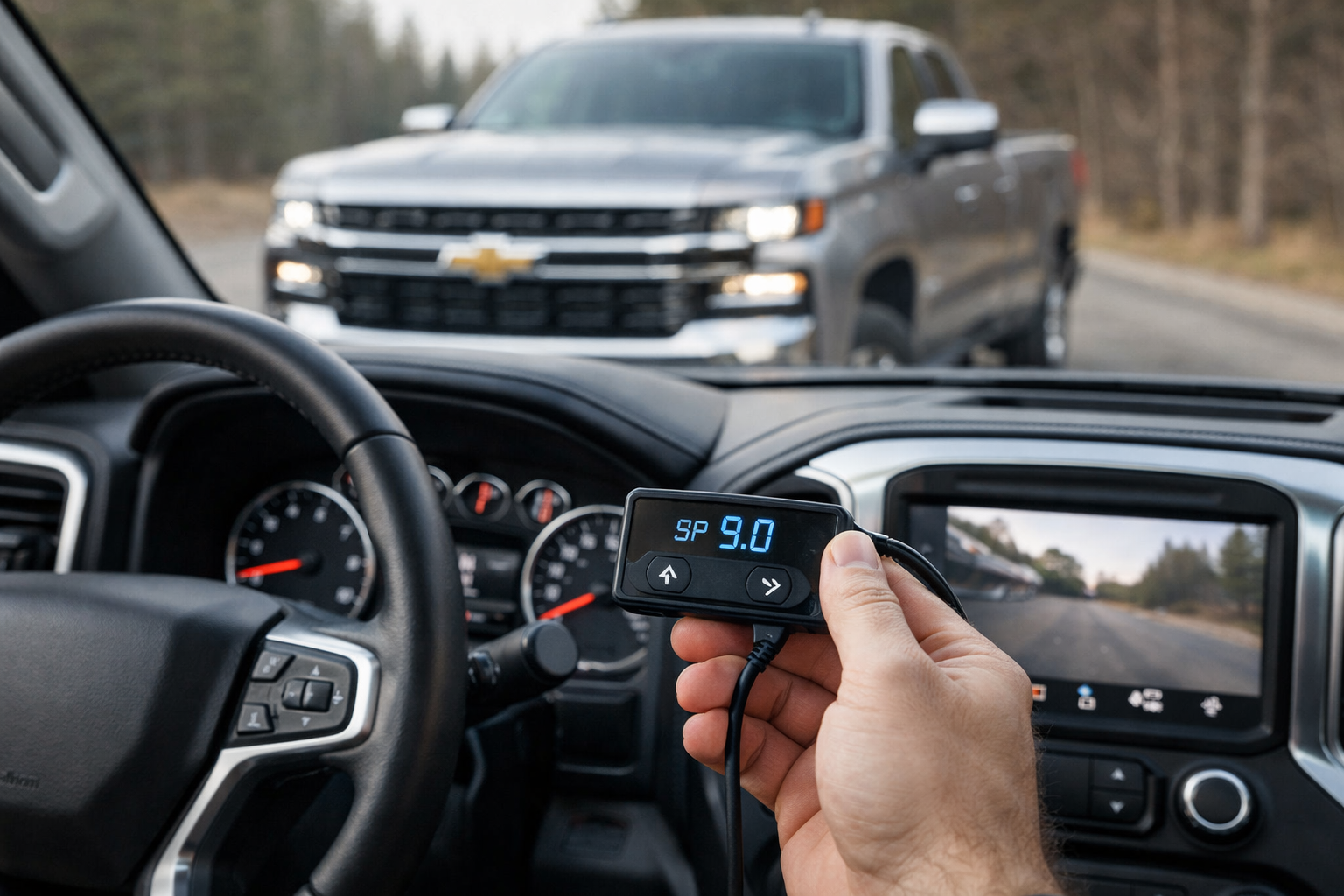
The Pedal Commander for Honda Civic provides the full 36-setting range with Bluetooth app control. City mode at level 4 to 5 is the sweet spot for daily driving, providing noticeably crisper response without making the CVT feel jerky.
Sport mode at mid levels is ideal for spirited driving on backroads where you want the 1.5T to feel responsive and engaging. For Civic Si owners with the manual transmission, Sport mode at higher levels (6 to 8) complements the sportier driving experience. Rev matching, heel-toe downshifts, and clutch engagement all improve when the engine responds immediately to throttle blips.

Pedal Commander for Honda Civic
Makes the Civic’s 1.5T feel quicker to respond with app-based mode control
Budget Controllers
Civic owners tend to be more budget-conscious than truck buyers, and the aftermarket reflects this. Generic Amazon controllers fit the Civic’s pedal connector and deliver real improvement in throttle response. They typically offer 3 to 5 modes with basic level adjustment.
Build quality is simpler, and there’s no smartphone app, but the core benefit (faster pedal response) is present. For many Civic owners, a budget controller is the gateway purchase that proves the concept. If you like what it does for the driving feel, upgrading to a Pedal Commander or ShiftPower later gives you the full feature set.
Does It Help the CVT?
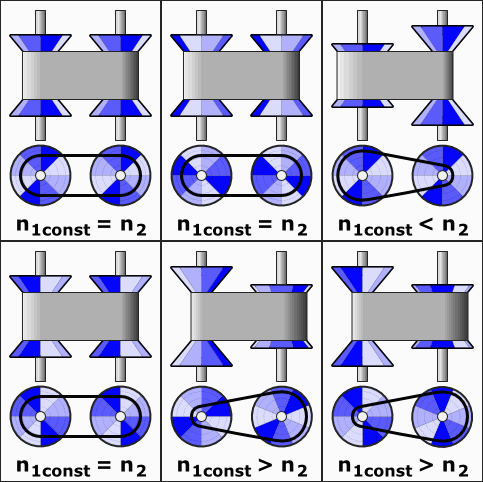
Honda’s CVT is programmed to simulate stepped gear ratios using what Honda calls “Sport Shift Logic.” This creates the illusion of traditional gear changes, but the underlying CVT behavior is still present, including the rubber-band effect during acceleration.
A throttle controller doesn’t modify CVT behavior directly, but faster pedal response gives the transmission a stronger and more definitive input signal. The CVT uses the throttle signal to determine its ratio strategy, and a crisper signal helps it commit to a ratio more quickly.
Many Civic owners report that the CVT feels less rubber-band-like with a controller installed because the transmission receives a clearer command about what the driver wants. The improvement is more pronounced during part-throttle driving.
At wide-open throttle, the CVT has already committed to maximum acceleration mode. It’s the in-between situations (merging, passing, accelerating up a hill) where the combination of soft throttle and CVT hesitation is most frustrating, and where the controller makes the biggest difference.
Installation
The Civic’s accelerator pedal connector is at the top of the pedal assembly in the driver’s footwell. The plug is compact and easy to access. Disconnect the factory connector, insert the Y-harness, and mount the control unit.
Total time is about 10 minutes. The installation is completely reversible and requires no tools.
Frequently Asked Questions
Is a controller worth it on the 2.0L base engine?
Yes. The 2.0L has the same electronic throttle dead zone as the turbo model. The improvement is proportionally similar; you just have less total power to work with. The 2.0L Civic feels noticeably more responsive with a controller, and the driving experience goes from “appliance” to “car I actually enjoy driving.”
Will it void Honda’s warranty?
A plug-and-play throttle controller doesn’t modify any Honda systems. It operates on the pedal signal only and can be removed in 30 seconds with no evidence. Under federal warranty law, Honda would need to prove the controller caused a specific failure, which is essentially impossible given how the device works.
Does Sport mode on the Civic do the same thing as a controller?
Honda’s Sport mode adjusts throttle mapping, steering weight, and CVT behavior as a bundled package. A throttle controller offers finer granularity over just the throttle response, and you can stack it with Sport mode for maximum effect. Many Civic owners pair the controller’s City mode with Honda’s Sport mode for a balanced combination of improved throttle response and sportier transmission behavior.
Can I use this on both the manual and CVT transmission models?
Yes. The throttle controller works identically on both transmission types because it modifies only the pedal signal, not the transmission itself. Manual transmission owners often prefer higher Sport mode settings because they have more direct control over gear selection, while CVT owners typically stick to lower City mode settings to avoid abrupt ratio changes.

Leave a Reply