
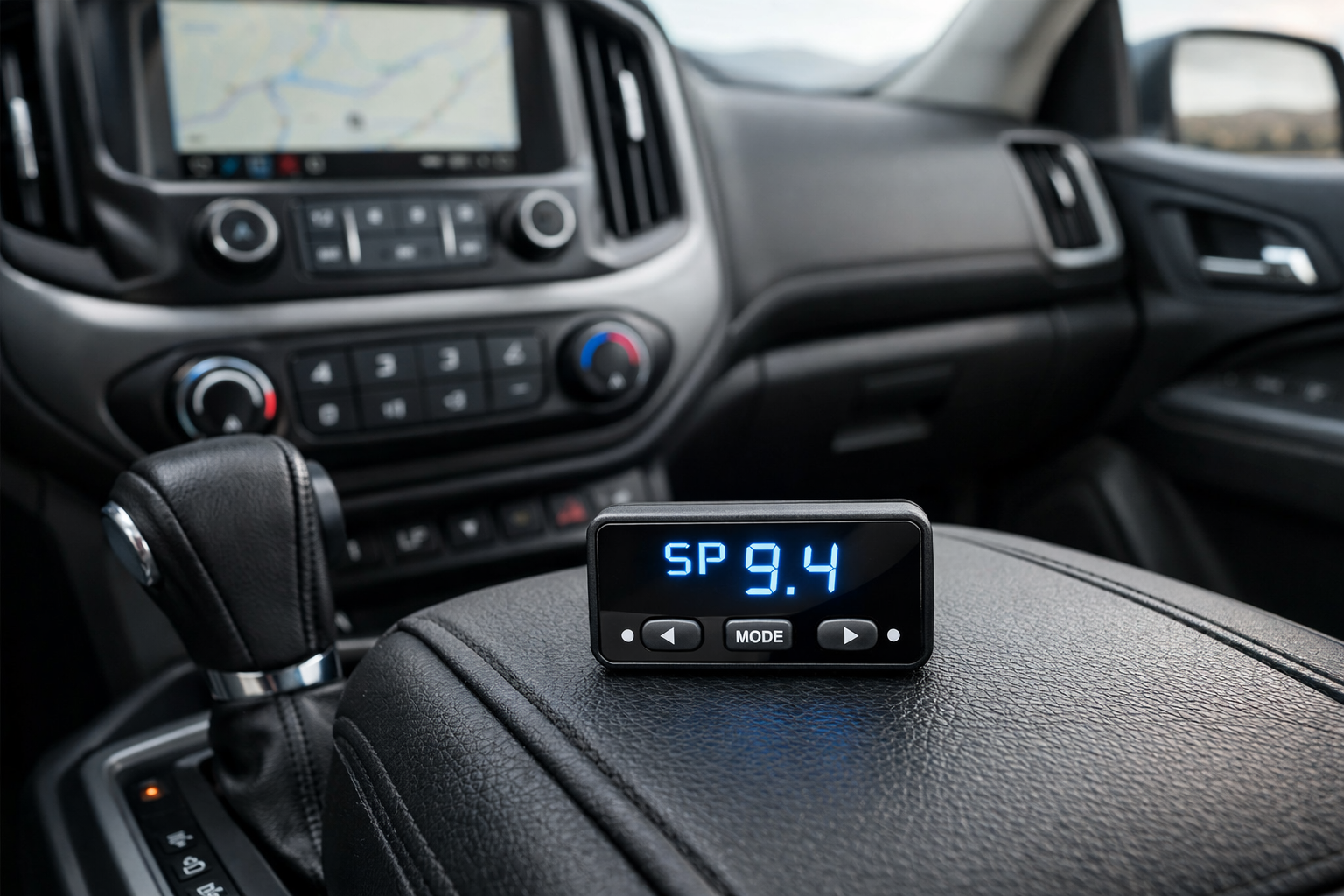
The Chevy Colorado and GMC Canyon are midsize trucks that punch above their weight in capability, but their throttle response doesn’t always match their ambition. The 2023+ 3rd generation models with the 2.7L turbo four-cylinder have a pronounced turbo lag plus electronic throttle delay combination that makes the truck feel hesitant during initial acceleration.
The 2015-2022 2nd generation models with the V6 and diesel options have the same electronic lag, just without the turbo component. A throttle response controller addresses the electronic half of the delay on all Colorado and Canyon models, and the improvement is especially noticeable on the turbocharged engines where the electronic lag compounds with boost buildup time.
Why the Colorado/Canyon Needs a Controller
The 2.7L turbo in the 3rd gen produces an impressive 310 HP and 430 lb-ft of torque, which are full-size truck numbers from a midsize platform. Accessing that power, however, requires waiting for both the electronic throttle system and the turbo to spool. From a standstill, there’s a noticeable pause before the engine delivers its full torque.
The truck feels slower than its spec sheet suggests, especially during the first few seconds of acceleration. This delay becomes particularly frustrating during highway merging or when you need quick power delivery.
The 2nd gen’s 3.6L V6 is naturally aspirated but still suffers from GM’s conservative throttle mapping. The first 20% of pedal travel produces minimal response, creating a dead zone that makes parking lot maneuvers, low-speed trail driving, and highway merging feel disconnected. The 2.8L Duramax diesel in the 2nd gen adds its own turbo lag on top of the electronic delay, creating a similar compound hesitation.
GM programmed the throttle curve to protect the 8-speed automatic transmission (2nd gen) and the new 8-speed automatic (3rd gen) from harsh inputs, and to optimize fuel economy. The result is a throttle that prioritizes smoothness over responsiveness, which works against the Colorado’s and Canyon’s positioning as capable, engaging midsize trucks.
Best Controllers for the Colorado/Canyon
Pedal Commander
The Pedal Commander for Chevy Colorado covers both generations with model-specific harnesses. City mode at moderate levels (4 to 6) is the daily driving sweet spot for all engines. For the 2.7T, even a low City setting makes a noticeable difference because you’re addressing the electronic half of a two-part lag problem.
For the V6 and diesel, City mode at slightly higher levels (5 to 7) provides the most natural improvement. The unit mounts cleanly inside the cab and includes Bluetooth connectivity for on-the-fly adjustments through your phone.

Pedal Commander for Chevy Colorado/GMC Canyon
Addresses both electronic throttle lag and turbo spool delay on the 2.7T
ShiftPower and Budget Options
ShiftPower offers comparable performance at a lower price point, and budget controllers work with the Colorado/Canyon pedal connector. The midsize truck community tends to be value-conscious, and budget controllers are popular for testing the concept before committing to a premium unit.
Most budget options lack the multi-mode adjustability of Pedal Commander but still deliver noticeable improvements in throttle response. Check current pricing on Amazon to compare options across different budget levels.
Is Sport+ Overkill for the 2.7 Turbo?
On the 3rd gen 2.7T, Sport+ at high levels can make the truck feel jerky because the turbo delivers a sudden burst of boost once it spools. The electronic delay being removed means the turbo gets its signal to build boost sooner, and when that boost arrives, the power delivery can feel abrupt at aggressive settings.
City mode or moderate Sport settings (level 3 to 5) provide the ideal balance of responsiveness and driveability on the turbocharged engine. You get quicker initial response without the harsh surge that comes with maximum Sport+ settings.
The 2nd gen V6 handles Sport+ better since there’s no turbo lag to contend with. The naturally aspirated engine delivers power linearly, so more aggressive throttle settings simply make the engine respond faster without the sudden boost surge that the turbo produces.
Off-Road and Towing Use
The Colorado ZR2 and Canyon AT4 are serious off-road trucks that benefit from precise throttle control on trails. Removing the electronic dead zone makes low-speed rock crawling and hill climbing more predictable. City mode at low to mid levels provides the best trail driving experience, giving you direct control over power delivery without making the pedal twitchy on loose surfaces.
For towing (the Colorado is rated up to 7,700 pounds on the 3rd gen), City mode at moderate levels provides the extra responsiveness needed for confident merging while loaded. Avoid Sport+ settings while towing, as the aggressive throttle mapping can cause uncomfortable power surges that the trailer amplifies.
When towing heavy loads, you want predictable power delivery rather than aggressive response. The gentler City mode settings give you better control over acceleration and make it easier to maintain steady speed on hills.
Installation
Both the 2nd and 3rd gen use a 6-pin accelerator pedal connector located at the top of the pedal assembly. The installation is plug-and-play, takes about 15 minutes, and requires no tools beyond possibly a flashlight to see the connector clearly.
Make sure to order the correct harness for your specific generation, as the connectors differ between the 2nd and 3rd gen platforms. Most manufacturers clearly label which model years and generations their harnesses support.
Frequently Asked Questions
Does the same controller work for both Colorado and Canyon?
Yes, within the same generation. They share the same platform and accelerator pedal connector. The same controller and harness work on both trucks. A 2nd gen Colorado harness works on a 2nd gen Canyon, and a 3rd gen Colorado harness works on a 3rd gen Canyon.
Does it help with the 2.8L Duramax diesel?
The diesel Colorado/Canyon benefits from a controller because the Duramax has its own turbo lag characteristics that compound with the electronic throttle delay. Faster pedal response helps the diesel feel more responsive during initial acceleration and highway passing. The improvement is similar to what you experience on the 2.7T gasoline turbo.
Will it help the 8-speed transmission shift better?
A crisper throttle input gives the transmission a clearer picture of your driving intentions, which can result in more decisive shift behavior with less hunting between gears. The controller doesn’t modify transmission programming directly, but the improved throttle signal quality benefits shift logic indirectly. Many users report fewer unnecessary downshifts and more confident gear selection.
Can you use a throttle controller with automatic start-stop technology?
Yes, throttle controllers work independently from start-stop systems. The controller modifies how the accelerator pedal signal is interpreted by the engine computer but doesn’t interfere with start-stop functionality. You can use both features simultaneously without any compatibility issues.
This article contains affiliate links. We may earn a small commission at no extra cost to you.


Leave a Reply