
The Subaru Outback is beloved by outdoor enthusiasts, families, and anyone who values standard all-wheel drive and wagon versatility. It’s earned a loyal following that borders on cult status.
The Outback has a well-known Achilles heel, though: head gasket failures on the 2.5L boxer engine that plagued multiple model years from 2001 through 2009. Understanding which years are affected, which engine fixed the problem, and what other issues to watch for helps used buyers navigate the Outback market confidently.
Outback Years to Avoid
2001-2009 (Head Gasket Failures on 2.5L EJ25)
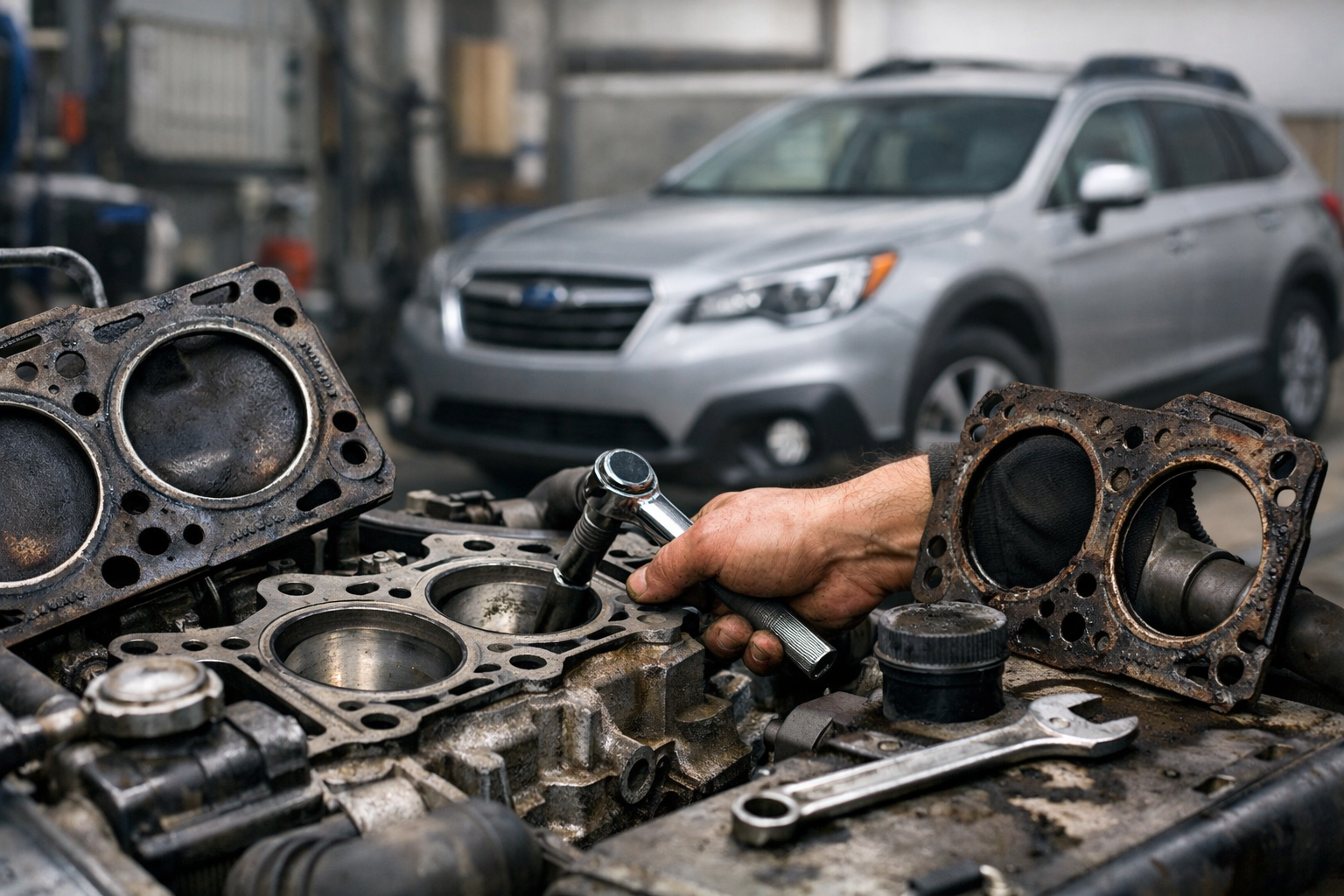
The 2.5L naturally aspirated EJ25 boxer engine used in 2001-2009 Outbacks is notorious for external head gasket leaks. The composite head gaskets used in these engines degrade over time, allowing engine oil and coolant to seep externally from the mating surface between the cylinder heads and the engine block.
You’ll often see oil or coolant staining on the bottom edges of the heads, sometimes dripping onto the exhaust and creating a burning smell. If you’re dealing with burning oil smells, the diagnostic process shares some similarities across different vehicles.
The design of Subaru’s horizontally-opposed (boxer) engine contributes to the problem. The head gaskets sit at the lowest point of the engine, where gravity pulls fluids toward the gasket sealing surfaces.
This orientation, combined with the composite gasket material that degrades faster than multi-layer steel gaskets, creates a failure-prone combination. Head gasket replacement is a labor-intensive job that costs several thousand dollars because the engine essentially needs to come apart from the top down.
Not every 2001-2009 Outback will develop the issue, but the failure rate is high enough that it should be assumed as an eventual maintenance item rather than an unlikely possibility. If you’re buying a used Outback from this era, factor the potential gasket replacement cost into your budget, and inspect for signs of leakage during the pre-purchase inspection.
2013 (Excessive Oil Consumption)
The 2013 Outback with the new 2.5L FB25 engine had documented oil consumption issues on some production units. Subaru acknowledged the problem and offered piston ring replacement on vehicles that could demonstrate consumption of a quart or more per 1,200 miles.
The documentation process was tedious, requiring multiple oil consumption tests at the dealer over several thousand miles.
2015 (CVT Issues)
The 2015 Outback introduced a CVT (Lineartronic) that had early reliability concerns including shuddering during low-speed acceleration, hesitation from a stop, and a general lack of refinement in its shift programming.
Subaru improved the CVT calibration significantly in 2016 and 2017, making the 2015 the least desirable year for the CVT-equipped Outback. For more details on how CVT transmissions work and their common issues, check out our guide on what is a CVT transmission and why some people hate them.
2020 (First-Year Redesign Problems)
The 6th generation Outback launched in 2020 with the new 11.6-inch vertical touchscreen and several first-year issues. The touchscreen was prone to freezing, slow response, and occasional black screens requiring a reboot.
Windshield cracking (without apparent cause) was reported at a higher-than-normal rate. Some 2020 models also had oil consumption reports with the 2.5L engine, though at lower rates than the 2013 model.
When the Head Gasket Issue Was Fixed
Subaru transitioned from the EJ25 engine to the FB25 engine starting in 2013. The FB25 uses multi-layer steel (MLS) head gaskets instead of the composite gaskets that plagued the EJ25.
MLS gaskets are significantly more durable and resistant to the type of degradation that caused the EJ25’s failures. Head gasket issues on 2013+ Outbacks with the FB25 are rare, meaning the problem is largely confined to the 2001-2012 model years.
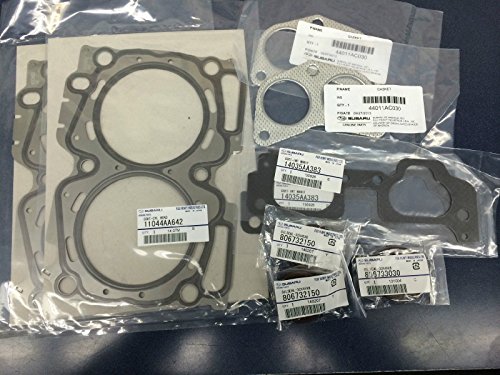
Subaru Head Gasket Repair Kit
Essential for preventing coolant and oil leaks on EJ25 engines
Outback Years to Buy
For the 4th gen (2010-2014): 2011 and 2012 are the safest picks if they use the FB25 engine (verify the engine code).
For the 5th gen (2015-2019): 2017 and 2018 benefit from refined CVT calibration, resolved infotainment issues, and mature production quality. These years represent solid choices for buyers seeking reliability without paying new car prices.
For the 6th gen (2020+): 2022 and later are well-sorted with resolved touchscreen and quality issues.
The 2.4L turbocharged boxer engine (available on Outback XT and Wilderness trims) has been reliable so far with no widespread issues reported. It uses MLS head gaskets and doesn’t share the EJ25’s failure mode. The turbo technology is similar to what you’ll find in our article on how turbocharging works and whether it reduces engine life.
Use an OBD2 scanner and visually inspect for oil seepage around the head gaskets on any used Outback, particularly 2001-2012 models. A thorough pre-purchase inspection should follow the same principles outlined in our guide on what to look for during a used car test drive.

OBD2 Scanner for Subaru
Check for engine and CVT codes before buying a used Outback
Comparing the Outback to Competitors
When shopping for a used adventure-ready vehicle, the Outback often gets compared to the Toyota RAV4. We’ve covered this matchup in detail in our Subaru Outback vs Toyota RAV4 for camping and outdoor adventures comparison.
The Outback offers more cargo space and standard all-wheel drive, while the RAV4 typically has fewer chronic engine issues across its model range. Your choice will depend on whether you prioritize the Outback’s practicality or the RAV4’s reputation for bulletproof reliability.
What to Check Before Buying a Used Outback
Beyond a visual inspection for head gasket leaks, you should always request a vehicle history report. Our article on how to read a vehicle history report and what the red flags are will help you identify potential problems before you commit.
Pay special attention to maintenance records showing regular oil changes and any documentation of head gasket work already completed. A replaced head gasket on a 2001-2009 model can actually be a positive sign if the work was done properly with quality parts.
For 2015 and newer models with CVT transmissions, ask about fluid change intervals. Regular CVT fluid changes every 25,000 to 30,000 miles significantly extend transmission life and prevent the shuddering issues that plagued earlier versions.
Frequently Asked Questions
Did Subaru fix the head gasket issue?
The FB25 engine (2013+) uses multi-layer steel head gaskets that are far more durable than the composite gaskets in the EJ25. Head gasket failures on 2013+ models are rare. The problem is largely resolved for buyers shopping the 2013 and newer Outback models.
Is the Outback CVT reliable?
Subaru’s Lineartronic CVT has improved significantly since its 2010 introduction. The 2017+ models have a solid reliability track record. Regular CVT fluid changes (every 25,000 to 30,000 miles) help extend transmission life. The 2015 CVT is the least refined; 2017+ is much better.
Is the 2.4L turbo Outback reliable?
The 2.4L turbocharged boxer engine (FA24F) available on Outback XT and Wilderness trims has been reliable across all model years since its introduction. It uses MLS head gaskets, doesn’t have the EJ25’s failure history, and provides strong performance with reasonable fuel economy.
Should I buy a high-mileage Outback with the head gasket already replaced?
If the head gasket replacement was done correctly with quality parts and you have documentation, a high-mileage 2001-2009 Outback can be a good value. The job is expensive enough that having it already completed removes your biggest financial risk. Just verify the work was done at a reputable shop or Subaru dealer and that they replaced other wear items like the timing belt and water pump at the same time.
This article contains affiliate links. We may earn a small commission at no extra cost to you.

Leave a Reply