
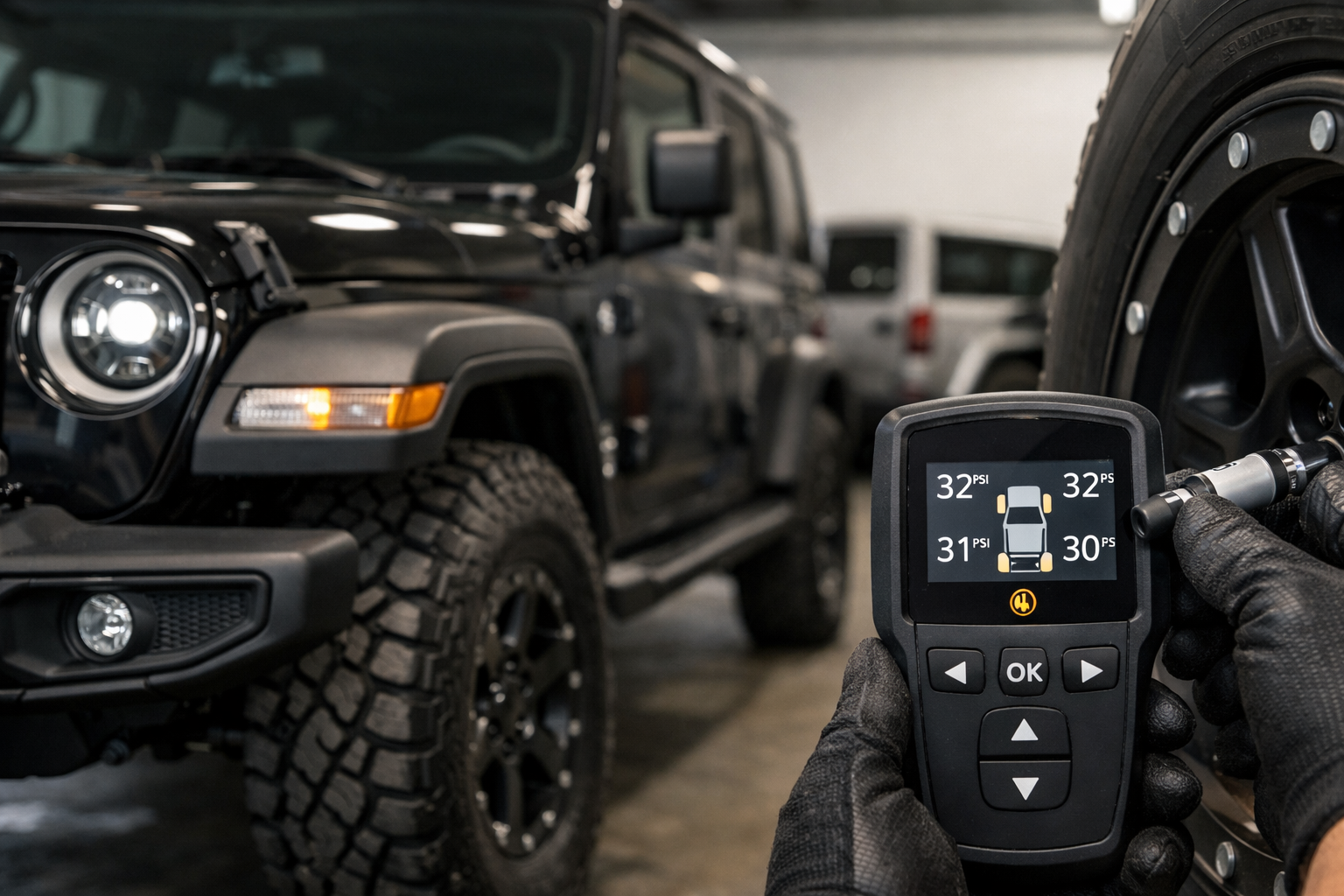
Wrangler owners frequently swap between street and off-road tire and wheel setups, making TPMS management a regular occurrence rather than a rare event. The JK (2007-2018) and JL (2018+) use direct TPMS with physical sensors inside each wheel, and both generations support auto-relearn functionality that makes sensor position mapping relatively painless.
Understanding how the system handles wheel swaps, beadlock wheels, and aftermarket sensor options covers the most common Wrangler-specific TPMS scenarios. If you’re considering a Jeep Wrangler vs Ford Bronco for off-road use, keep in mind that both vehicles have similar TPMS systems that require occasional relearning.
JL Wrangler (2018+): Uconnect Menu Method
Inflate all tires to the correct pressure. On the Uconnect touchscreen, navigate to Vehicle > Tire Pressure > Reset or Vehicle Settings > TPMS > Relearn. The exact menu path varies by Uconnect software version.
The system enters relearn mode. Drive for 15 to 20 minutes at speeds above 25 mph. The JL’s TPMS auto-relearns sensor positions during this drive, identifying which sensor ID is at which wheel position based on signal strength and wheel speed correlation.
If the auto-relearn doesn’t complete successfully and the light persists after 20+ minutes of driving, a TPMS activation tool can force each sensor to transmit in sequence. This is the manual relearn method. Trigger sensors in the LF-RF-RR-LR order, waiting for a horn chirp confirmation at each wheel.
JK Wrangler (2007-2018): Auto-Relearn
The JK’s TPMS system also auto-relearns after driving. Inflate all tires to the correct pressure and drive for 15 to 20 minutes at 25+ mph. The system correlates sensor IDs with wheel positions during this drive and updates the receiver module’s position map.
If the light persists after driving, a TPMS activation tool provides the manual override.
Off-Road Tire and Wheel Swap Scenarios
This is where Wrangler TPMS management gets unique. Many Wrangler owners maintain two complete wheel and tire sets: one for street driving and one for off-road or overlanding use. The TPMS handles each scenario differently depending on whether the off-road set has sensors installed.
If your off-road wheel set has TPMS sensors, the system recognizes them during the auto-relearn drive after each swap. Install the off-road wheels, inflate to the appropriate pressure for those tires, and drive for 15 to 20 minutes. The system picks up the new sensor IDs and maps them to positions.
When you swap back to the street set, the same process repeats. No manual intervention is needed beyond driving.
If your off-road wheels don’t have sensors, which is common with beadlock wheels since the bead-locking ring can interfere with sensor placement, the TPMS light will stay on permanently while those wheels are installed. This is a cosmetic annoyance only. The truck functions normally otherwise.
Some Wrangler owners use a TPMS bypass module to silence the warning light when running sensorless wheels.
Aftermarket TPMS sensors for the Jeep Wrangler are available from several manufacturers and can be installed in off-road wheel sets to maintain TPMS functionality year-round. Many tire shops can clone your original sensor IDs to aftermarket sensors, which means the Wrangler recognizes them without a new relearn cycle. This is the most efficient approach for frequent wheel swaps.

TPMS Sensors for Jeep Wrangler
Aftermarket sensors for off-road wheel sets to maintain TPMS function
Running Larger Tires
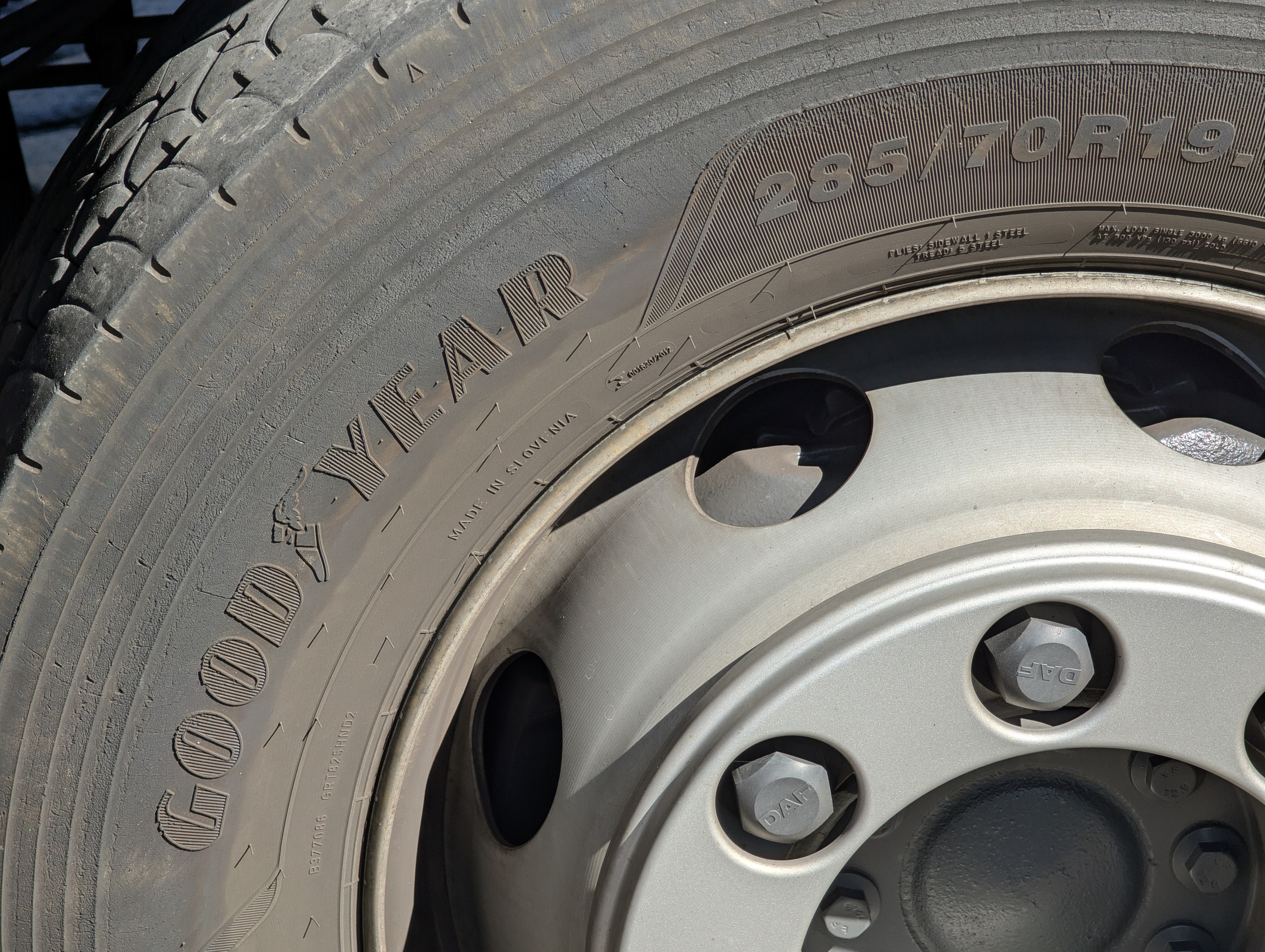
Upsizing tires, which is a near-universal Wrangler modification, doesn’t affect TPMS sensor function. The sensors measure air pressure inside the tire, not tire size. A 35-inch tire and a 33-inch tire on the same wheel use the same sensor and report the same pressure.
Just make sure you inflate to the pressure appropriate for your specific tire size and load rating, which may differ from the factory door jamb sticker if you’ve changed tire sizes significantly. Proper tire pressure becomes especially important for fuel efficiency, similar to making your truck more fuel efficient through other modifications.
Frequently Asked Questions
Do I need to relearn sensors every time I swap wheels?
If both wheel sets have TPMS sensors, the system auto-relearns after 15 to 20 minutes of driving. A TPMS tool speeds up the process but isn’t strictly required on most Wrangler models. The auto-relearn handles the swap in the background.
Can I run beadlock wheels without TPMS issues?
The TPMS light will stay on with sensorless beadlock wheels, but the truck functions normally otherwise. A bypass module can silence the warning. Alternatively, some beadlock-compatible TPMS sensors are available that mount inside the tire without interfering with the bead ring.
Why does my JK’s TPMS light flash?
A flashing light that turns solid indicates a sensor malfunction, typically a dead battery, rather than low pressure. JK models from 2007-2012 are now 13+ years old, well past the typical sensor battery lifespan. Replacement sensors are the fix.
Will aftermarket sensors work with my factory TPMS system?
Yes, most aftermarket TPMS sensors work with both JK and JL Wranglers. Many tire shops can clone your original sensor IDs to new sensors, which allows the Wrangler to recognize them immediately without requiring a relearn cycle. Check current pricing on aftermarket TPMS sensors for Jeep Wrangler to find compatible options for your model year.

Leave a Reply