
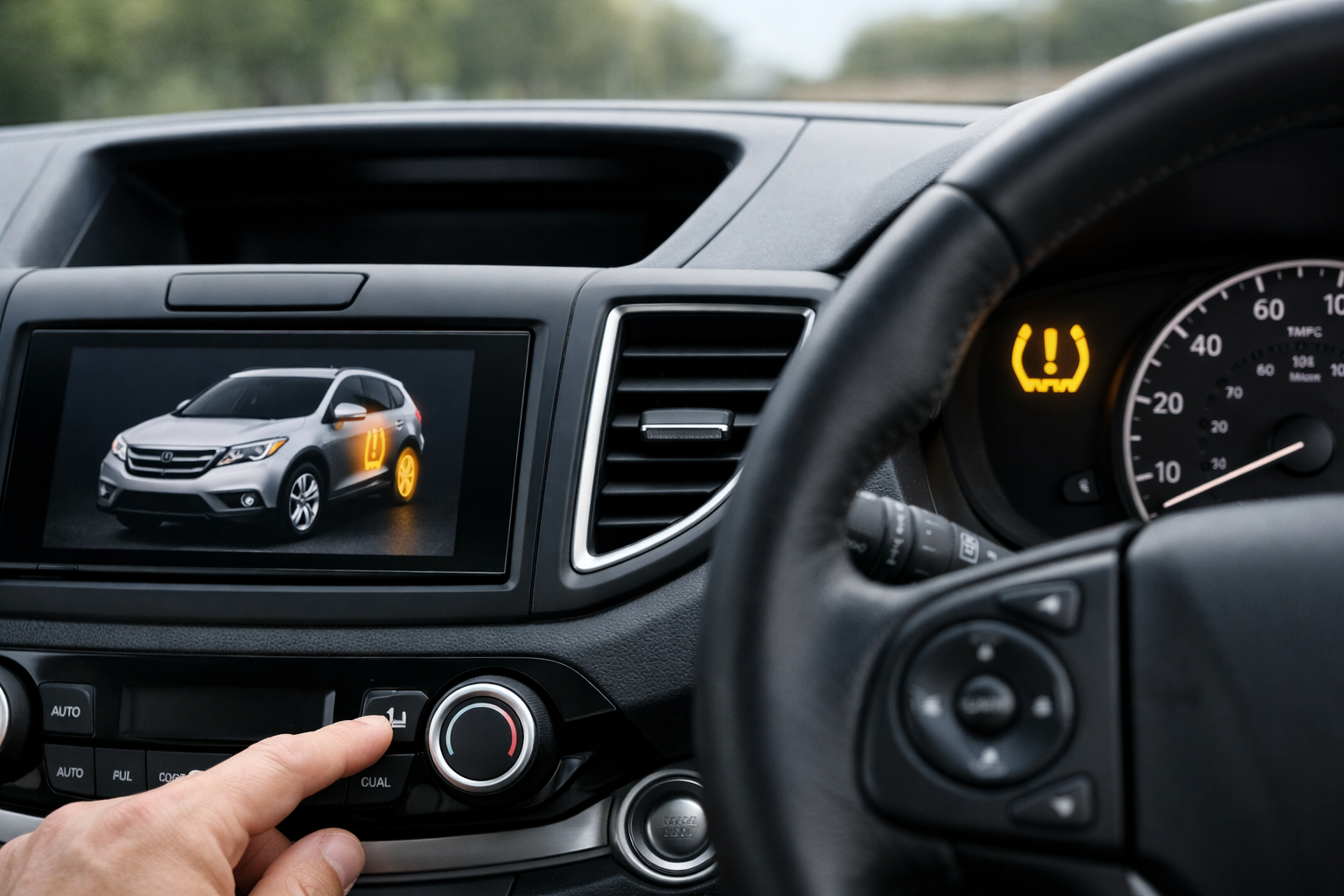
Most Honda CR-V trims use an indirect TPMS system that calculates tire pressure from wheel speed sensors rather than physical pressure sensors inside each wheel. This design saves money on sensor replacement long-term but requires a recalibration procedure after any tire inflation adjustment, rotation, or tire replacement.
Understanding the difference between indirect and direct TPMS is key to performing the correct reset on your CR-V. The system works differently than many other vehicles, which is why the reset procedure focuses on calibration rather than a simple button press.
6th Gen CR-V (2023-2024): Infotainment Menu
Inflate all four tires to the correct pressure listed on the driver’s door jamb sticker. On the touchscreen, navigate to Home > Settings > Vehicle > TPMS Calibration > Calibrate. Confirm the selection.
Drive normally for 20 to 30 minutes at various speeds (mix of city and highway) to complete the recalibration. The system needs data from multiple speed ranges to establish accurate baseline rotation rates for each tire in its current position.
5th Gen CR-V (2017-2022): Touchscreen Method
Inflate all tires to the correct pressure. Press Home > Settings (gear icon) > Vehicle > TPMS Calibration > Calibrate on the touchscreen. The system begins recalibration during your next 20 to 30 minutes of driving.
The TPMS light turns off once calibration completes. Avoid driving at a single constant speed during calibration. The system needs speed variation to triangulate accurate wheel rotation data.
4th Gen CR-V (2012-2016): Button Method
Inflate all tires to the recommended pressure. Locate the TPMS button on the left side below the steering column. With the ignition ON (engine can be running or off), press and hold the TPMS button until the indicator light blinks twice, then release.
Drive for 20 to 30 minutes at mixed speeds to complete the recalibration. This generation requires the physical button press, but the calibration drive works the same way as newer models.
Indirect TPMS: How It Works on the CR-V
Honda’s indirect TPMS doesn’t use physical pressure sensors inside the wheels. Instead, it piggybacks on the ABS (Anti-lock Braking System) wheel speed sensors that are already part of the vehicle’s safety equipment. The system works because an underinflated tire has a slightly smaller effective rolling circumference and therefore rotates faster than a properly inflated tire traveling at the same speed.
The TPMS computer continuously monitors the rotation speed of all four wheels and compares them. When one wheel’s rotation speed deviates beyond a threshold (indicating it’s spinning faster because it’s smaller due to low pressure), the system triggers the low-pressure warning.
This is why recalibration is necessary after any pressure adjustment. When you inflate or deflate a tire, its rolling circumference changes, which changes its rotation speed. Without recalibration, the system’s baseline values are wrong, and it can’t accurately detect future pressure changes.
The 20 to 30 minute calibration drive gives the system enough data to establish new, accurate baselines for the current tire pressures. Think of it as teaching the computer what “normal” looks like for your tires at their current inflation levels.
Advantages and Disadvantages
The advantage of indirect TPMS is no physical sensors to replace. The ABS wheel speed sensors are durable components that last the life of the vehicle. You won’t face the battery-replacement costs that plague direct TPMS systems.
The disadvantage is less precision. Indirect TPMS can’t display individual tire pressures on the dashboard, and it may not detect uniform pressure loss across all four tires (since the relative speeds wouldn’t change). It’s also less responsive to gradual pressure loss compared to direct systems.
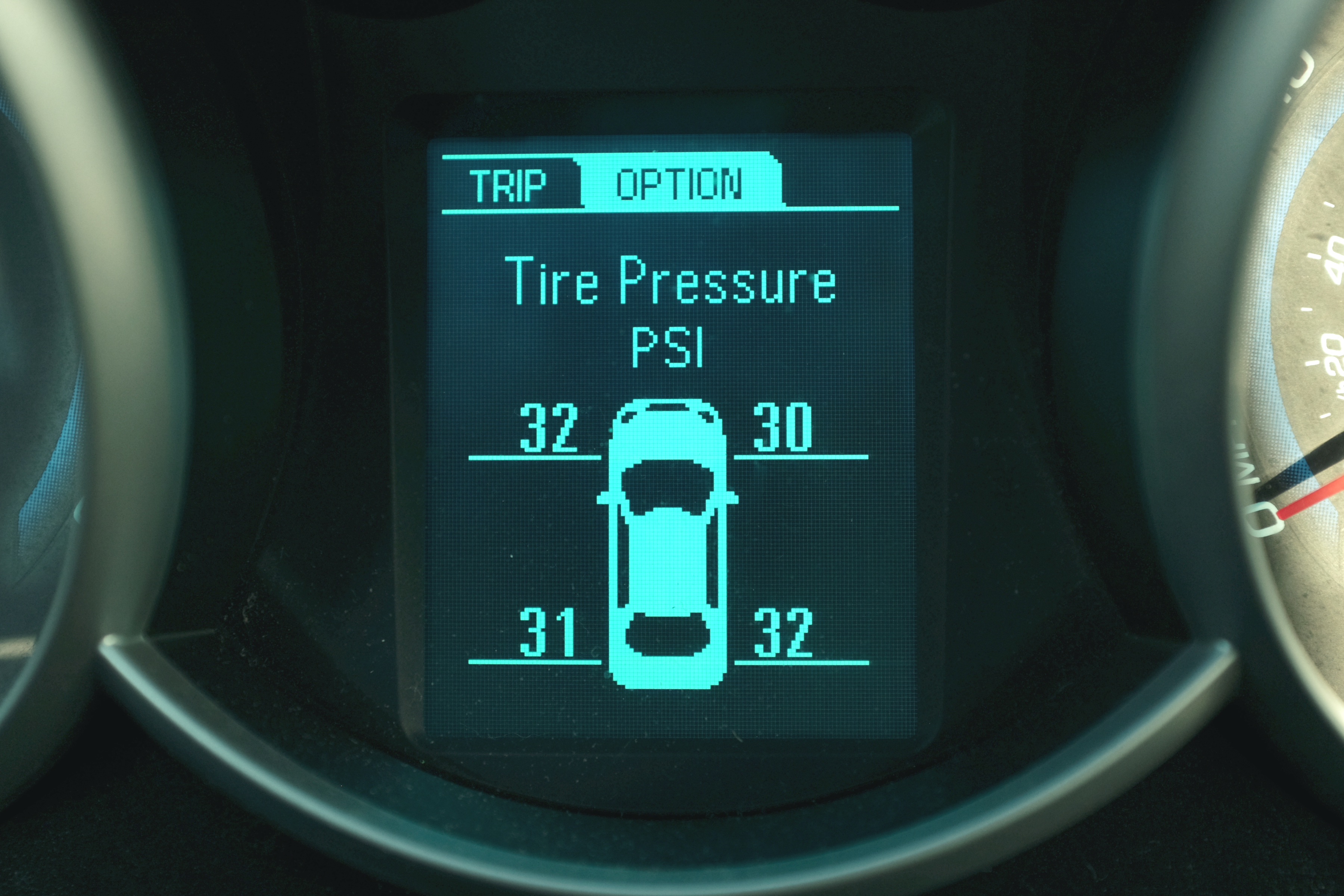
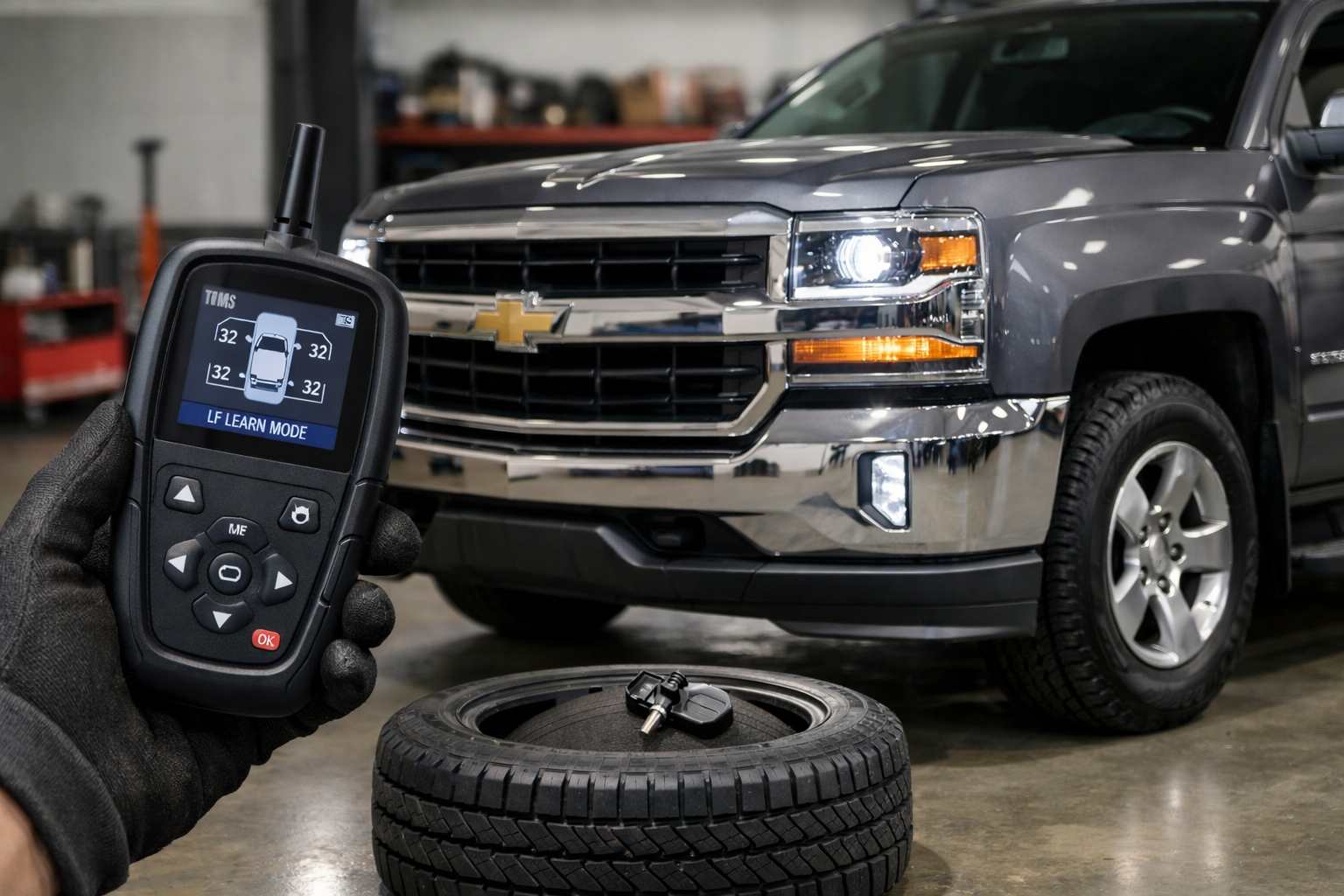
Higher-trim CR-Vs may use direct TPMS with physical sensors inside each wheel. These sensors transmit actual pressure readings wirelessly and can display individual tire pressures on the dashboard. A TPMS activation tool is useful for testing individual sensors on direct-equipped models.

Troubleshooting Persistent TPMS Warnings
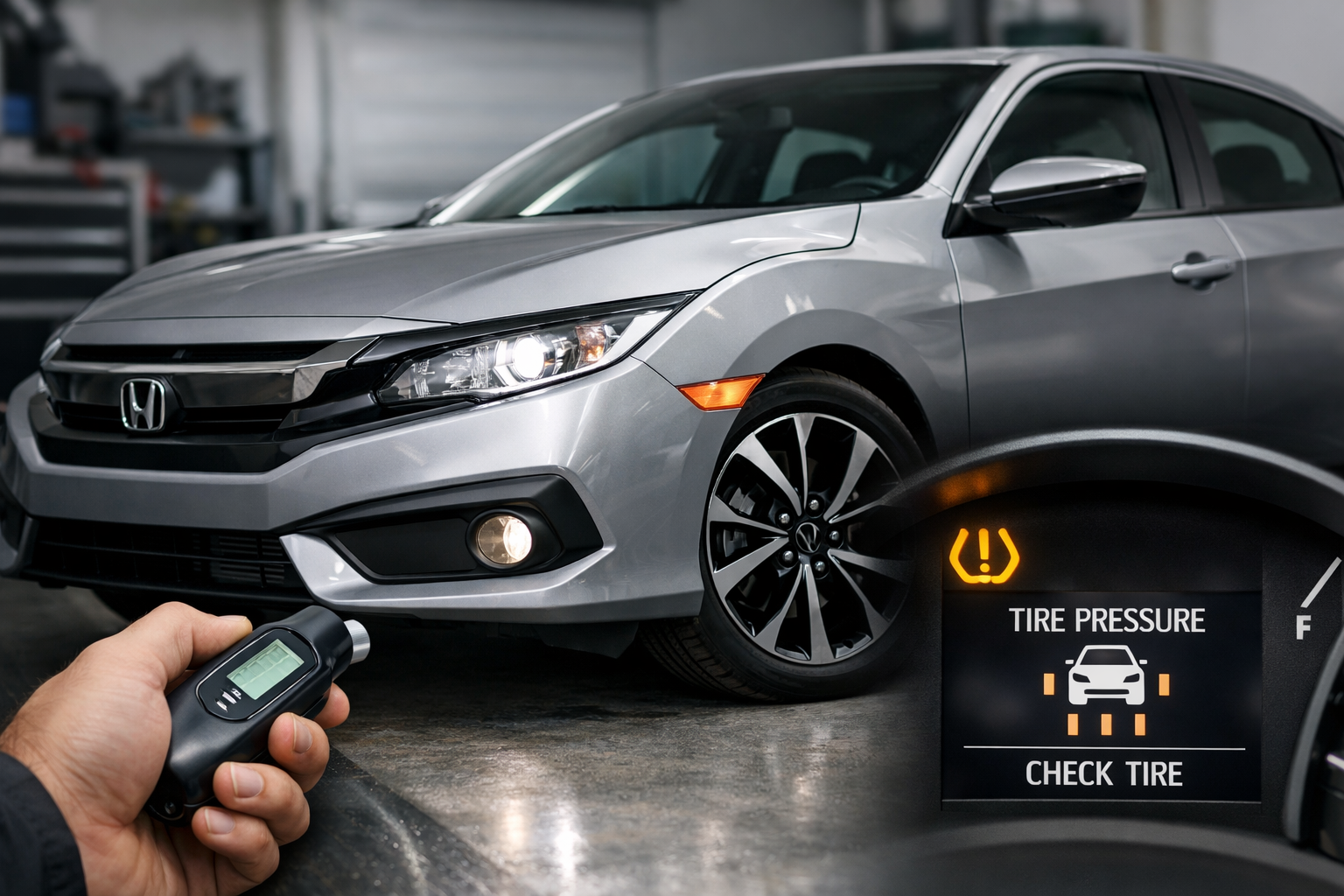
If the TPMS light persists after calibration and confirmed correct pressures, try the following steps. First, verify all four tire pressures with a known-accurate gauge. Gas station gauges can be off by 2 to 3 PSI, so investing in a quality tire pressure gauge ensures you’re working with accurate readings.

Digital Tire Pressure Gauge
More accurate than gas station gauges for proper TPMS calibration
Drive for a full 30 minutes at mixed speeds to ensure the calibration cycle has time to complete. If the light still persists, initiate calibration a second time. Occasionally the first attempt doesn’t complete successfully due to driving pattern or signal processing conditions.
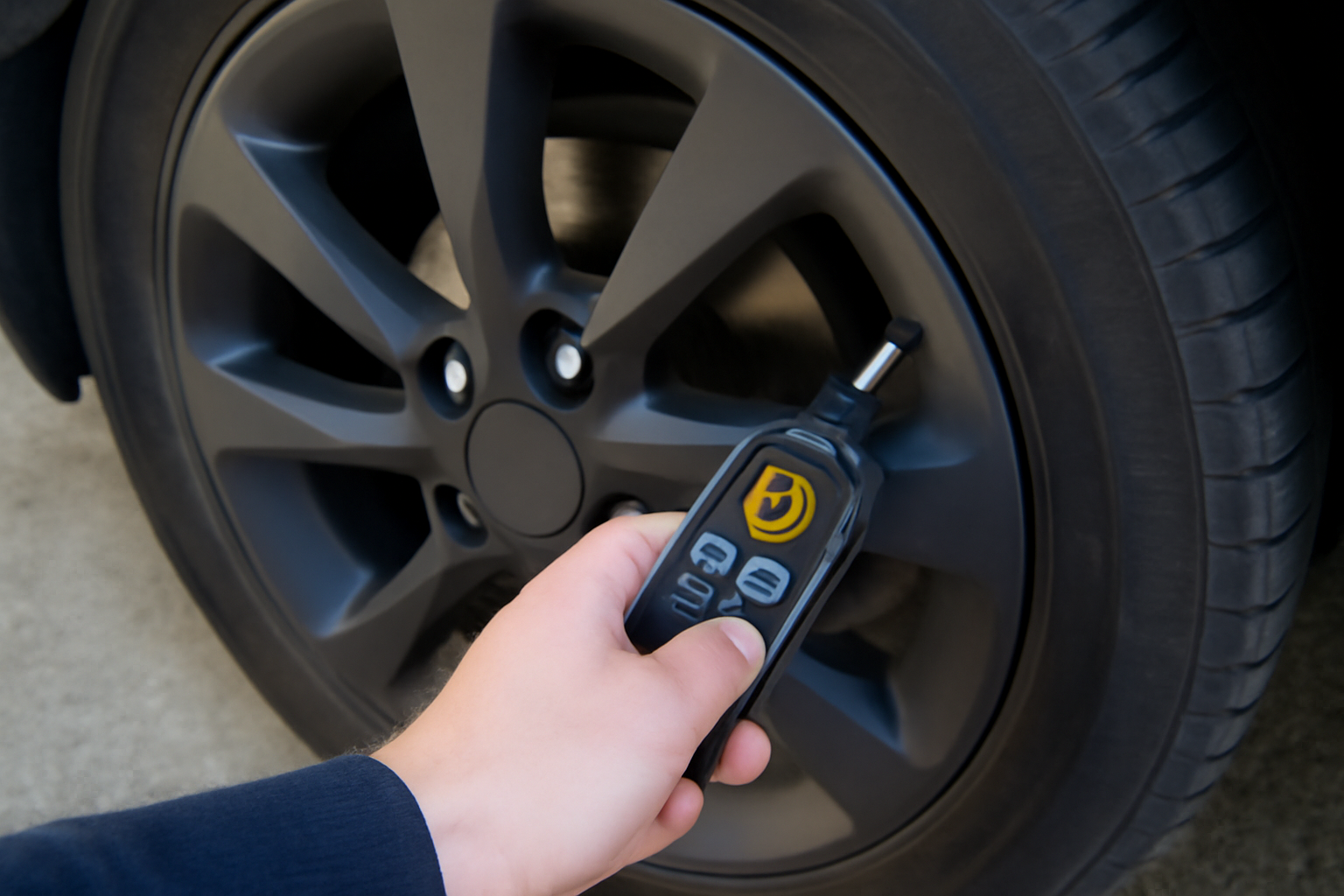
For CR-Vs with direct TPMS, a persistent warning after confirmed correct pressures usually indicates a failed sensor. The sensor’s battery has died and it’s no longer transmitting. A TPMS tool held against each valve stem can identify which sensor isn’t responding.
When to Check Your Tire Pressure
Temperature changes trigger most TPMS warnings. Cold weather causes tire pressure to drop (about 1 PSI for every 10-degree temperature decrease). If your warning light comes on during the first cold snap of fall, check and adjust your pressures rather than assuming a calibration issue.
Check your tire pressures at least monthly and before long trips. Cold tires (driven less than a mile) give the most accurate readings. Don’t rely on visual inspection alone. A tire can look properly inflated but be several PSI low.
Similar to other Honda and Toyota crossovers, the CR-V’s tire pressure specifications are designed for a balance of comfort, handling, and fuel efficiency. Following the door jamb recommendations ensures optimal performance.
Frequently Asked Questions
Do I need to replace TPMS sensors on my CR-V?
If your CR-V uses indirect TPMS (most trims), there are no sensors to replace. The system relies on ABS wheel speed sensors built into the hub assemblies, which last the life of the vehicle. Only CR-Vs with direct TPMS have replaceable sensors with limited-life batteries.
Why does calibration take 20 to 30 minutes?
The indirect system needs to collect wheel rotation data at multiple speeds and under varying conditions to establish statistically accurate baselines. It’s essentially averaging many data points to determine the “normal” rotation rate for each tire at its current pressure. Quick trips around the block won’t provide enough data variety.
Can I drive safely with the TPMS light on?
Check all four tires with a gauge first. If all pressures are correct and you’ve initiated calibration, the light will turn off once the driving portion completes. If a tire is genuinely low, inflate it before driving. A significantly underinflated tire affects handling, braking, and can fail at highway speeds.
Will tire rotation trigger the TPMS light?
Yes, because the tires are now in different positions with different baseline rotation patterns. After any tire rotation, you’ll need to recalibrate the system using the procedure for your model year. The computer needs to learn which rotation speed corresponds to which wheel position.

Leave a Reply