
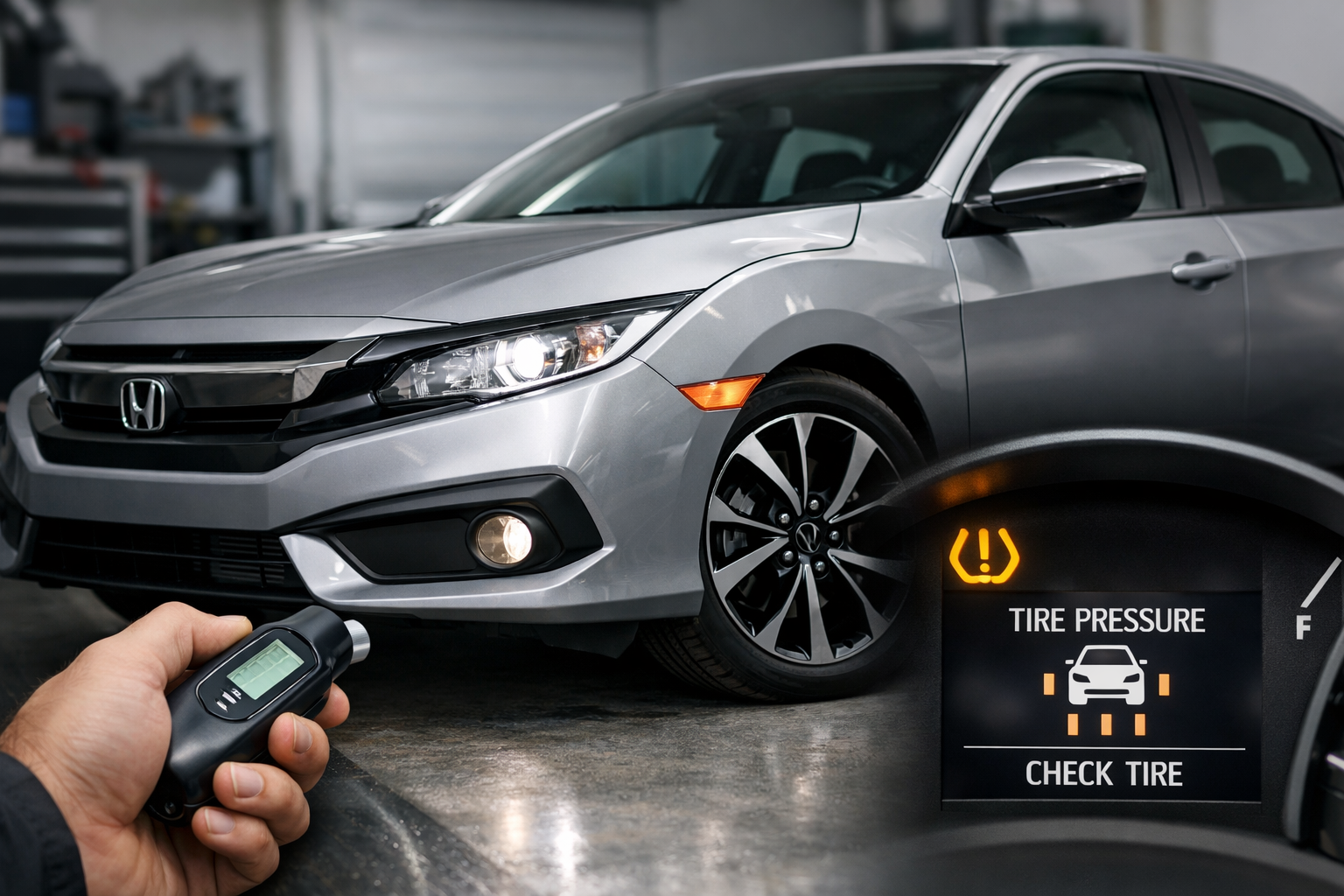
Honda’s TPMS system works differently from most other brands. Many Civic trims use indirect TPMS that measures tire pressure through wheel speed sensors rather than physical pressure sensors inside each wheel. This means the “reset” is actually a recalibration of the system’s baseline, and the process is slightly different from vehicles with direct pressure sensors.
Understanding which system your Civic has determines the correct reset method. The calibration procedure varies by generation, but the basic principle remains the same across all models.
11th Gen Civic (2022+): Steering Wheel and Infotainment
Inflate all four tires to the correct pressure listed on the driver’s door jamb sticker. Press the Home button on the steering wheel, then use the scroll wheel to navigate to Vehicle Settings > TPMS Calibration > Calibrate. Confirm the selection.
The system will recalibrate while you drive over the next 20 to 30 minutes at various speeds. The TPMS light turns off once calibration completes successfully.
10th Gen Civic (2016-2021): Infotainment Menu
Inflate all tires to the correct pressure. From the home screen, press Settings (gear icon) > Vehicle > TPMS Calibration > Calibrate. The system begins recalibration during your next 20 to 30 minutes of mixed-speed driving.
Avoid exclusively highway or city driving during calibration. The system needs data from multiple speed ranges to establish accurate baselines.
9th Gen Civic (2012-2015): Button Method
Inflate all tires. With the ignition ON, locate the TPMS button below the steering column on the left side. Press and hold it until the indicator light blinks twice, then release.
Drive for 20 to 30 minutes at various speeds to complete the recalibration. If no button is present on your trim, the reset may be accessible through the instrument cluster display using the steering wheel controls.
Indirect vs. Direct TPMS: What Your Civic Has
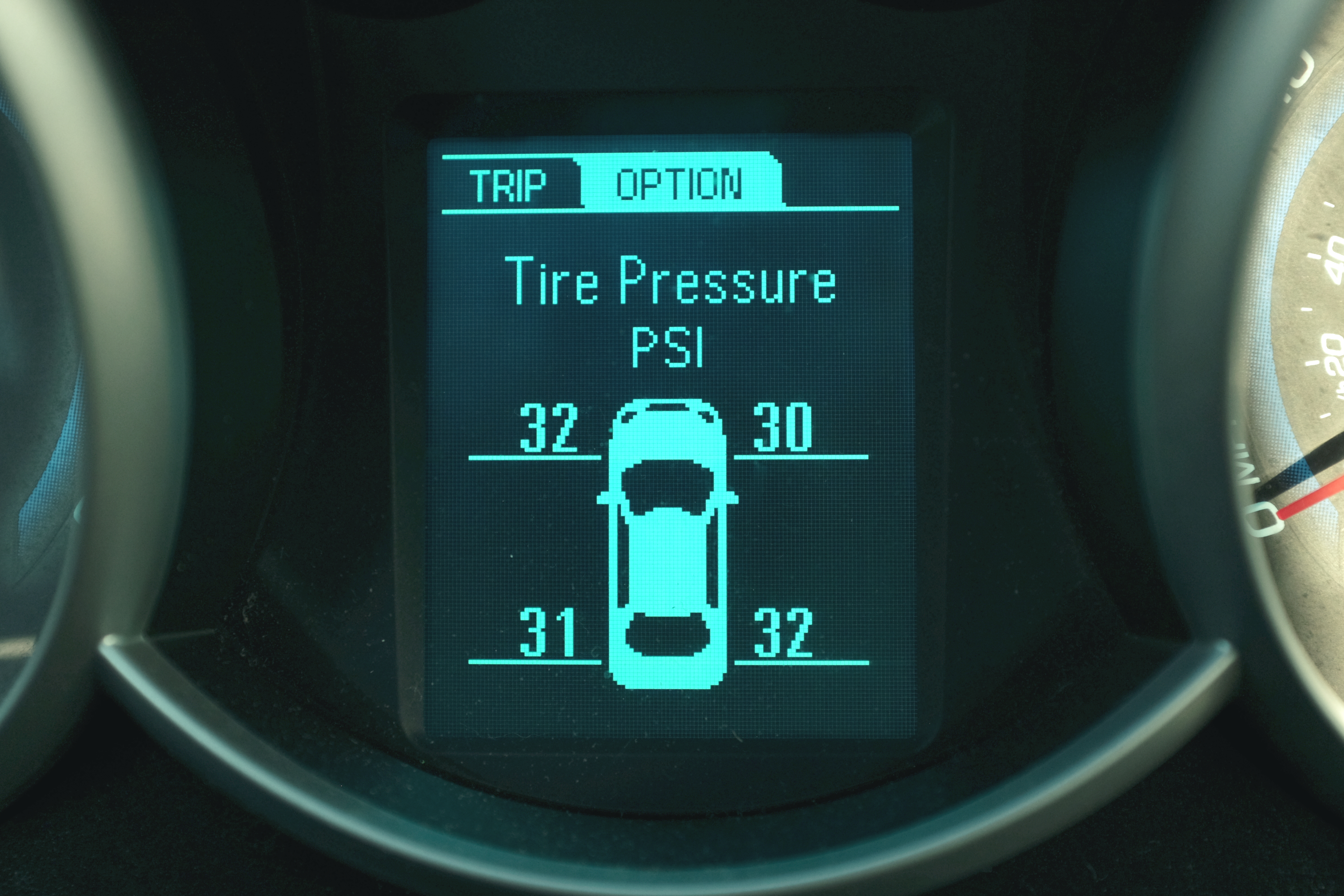
Honda’s indirect TPMS calculates tire pressure based on wheel rotation speed using the ABS wheel speed sensors that are already part of the anti-lock braking system. An underinflated tire has a slightly smaller effective diameter and rotates faster than a properly inflated one. The TPMS computer compares rotation speeds across all four wheels and triggers the warning when one deviates significantly from the others.
The advantage of indirect TPMS is that there are no physical pressure sensors inside the wheels to replace. This saves money long-term because there are no sensor batteries to die and no sensors to damage during tire changes. The disadvantage is that the system must be recalibrated after every inflation adjustment, tire rotation, or tire change because the baseline values need updating.
Some higher-trim Civics (particularly the Touring trim on the 10th and 11th gen) use direct TPMS with physical pressure sensors mounted on the valve stems inside each wheel. These sensors transmit actual pressure readings wirelessly to a receiver module. Direct TPMS provides more accurate pressure readings and can display individual tire pressures on the dashboard, but the sensors have batteries that eventually die (5 to 10 year lifespan).
Check your owner’s manual to confirm which system your specific Civic has. If your dashboard displays individual tire pressure readings for each wheel, you have direct TPMS. If it only shows a warning light without specific pressures, you likely have indirect TPMS.
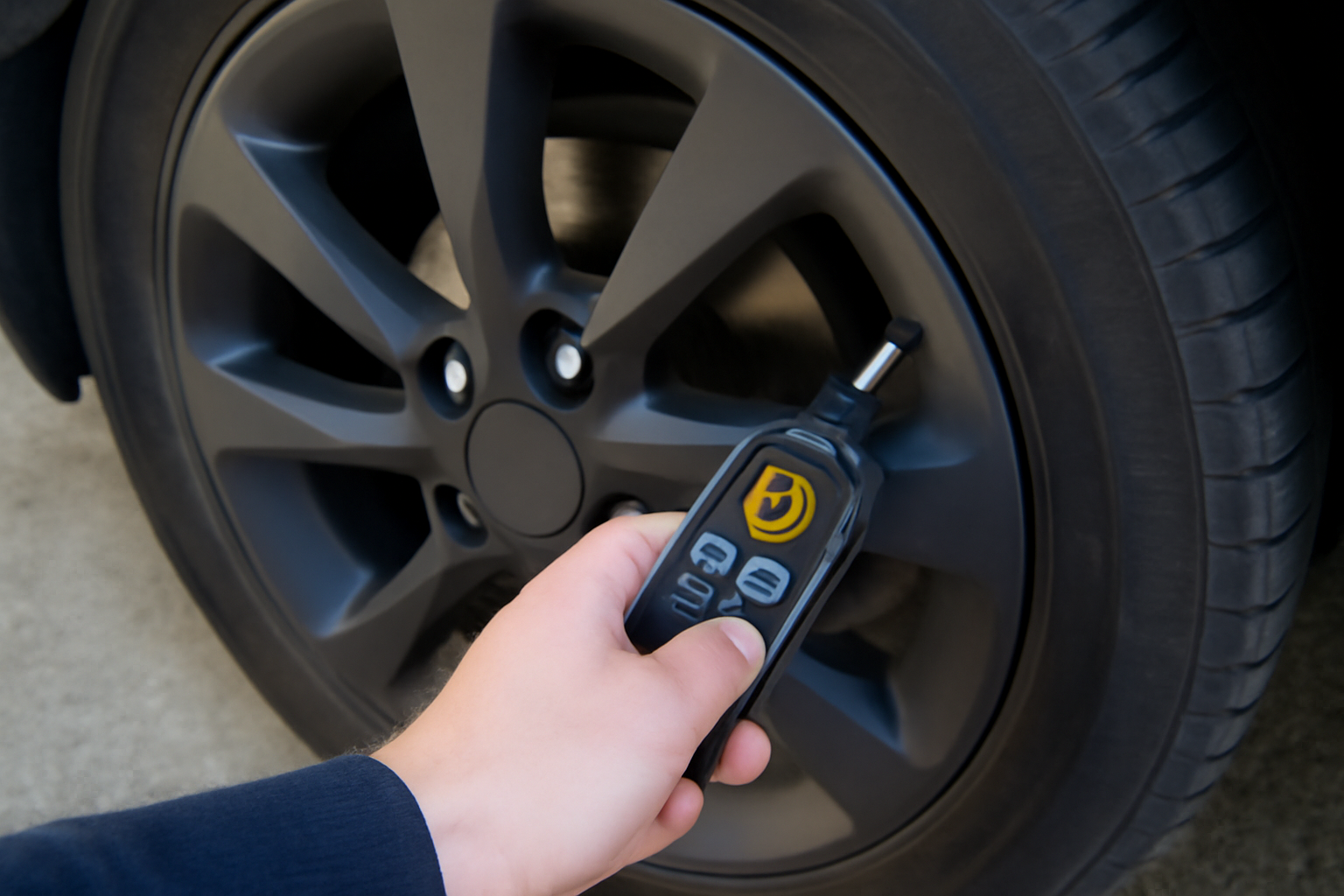
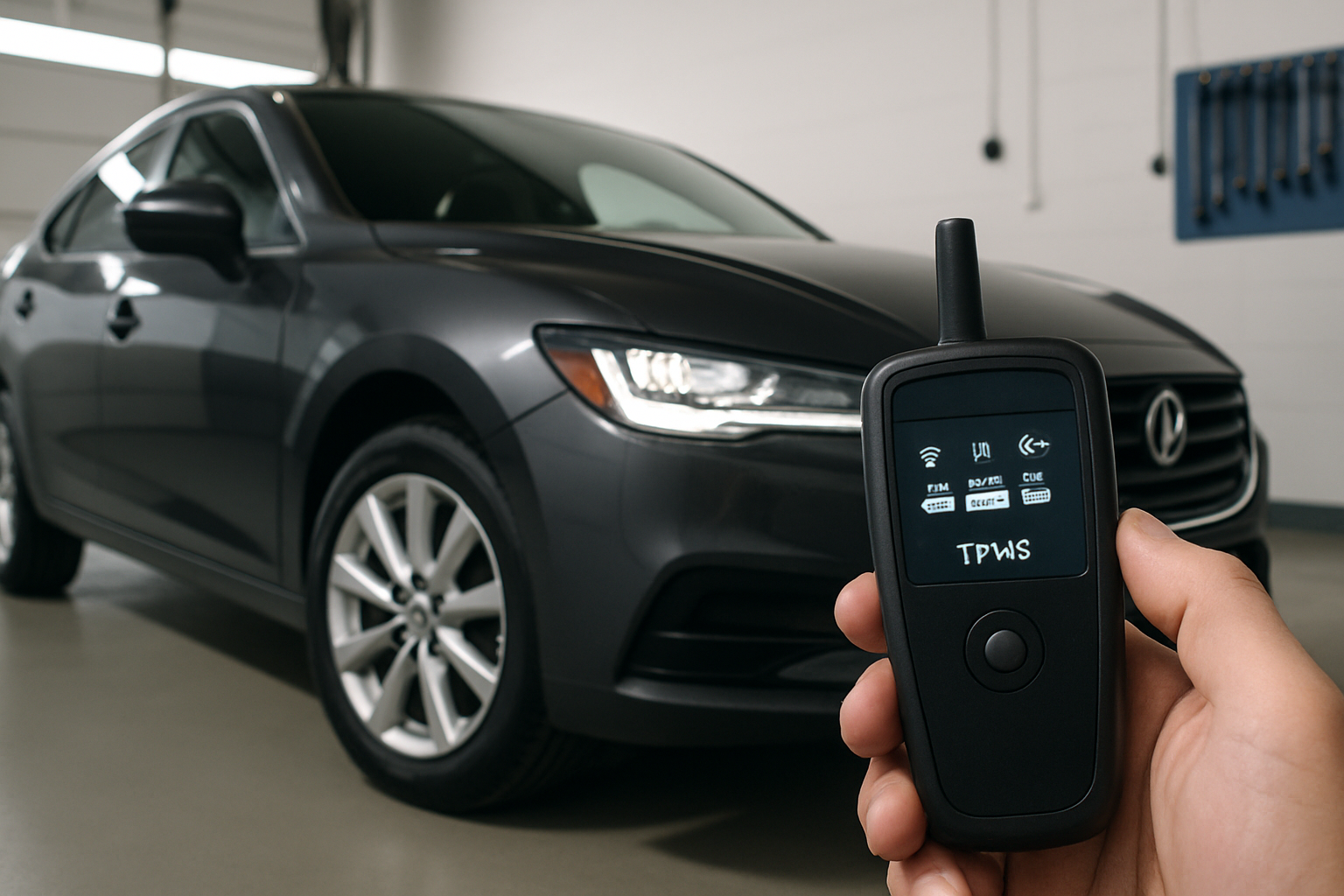
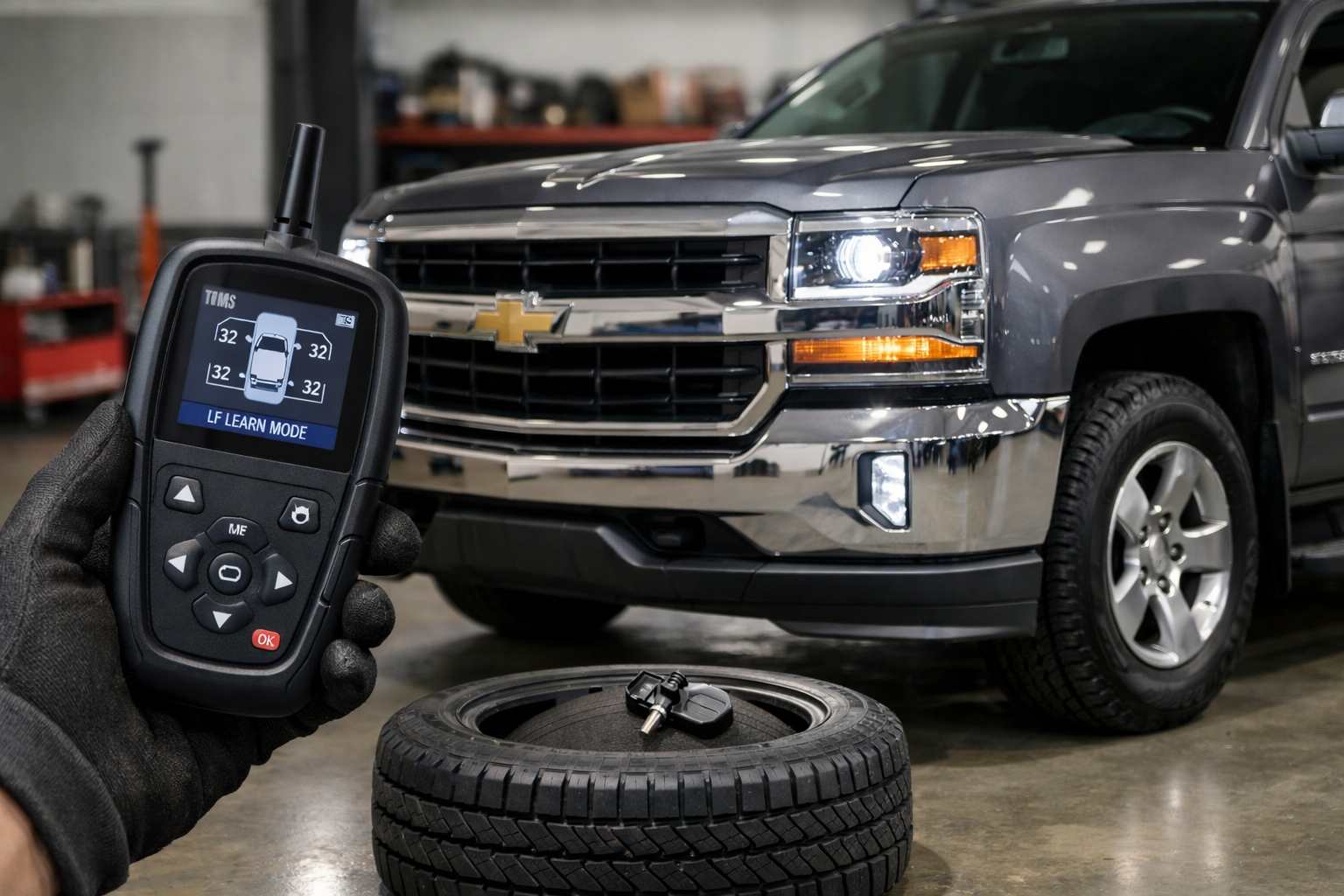
For Civics with direct TPMS, a TPMS activation tool can test individual sensors to verify they’re functioning properly.

TPMS Tool for Honda
Activates and reads direct TPMS sensors on equipped Honda Civic trims
Troubleshooting: Light Won’t Turn Off After Reset
If the TPMS light persists after calibration and confirmed correct pressures, try the following. First, verify that all four tires are actually at the correct pressure using a known-accurate gauge (not the gauge at a gas station, which can be inaccurate). A digital tire pressure gauge provides more reliable readings than the analog stick gauges.

Digital Tire Pressure Gauge
More accurate than gas station gauges for proper TPMS calibration
Second, drive for a full 30 minutes at mixed speeds to ensure the calibration cycle has completed. Third, check whether you have a full-size spare with a direct TPMS sensor that may have lost pressure.
If the light still won’t clear, initiate the calibration a second time. Occasionally, the first attempt doesn’t complete successfully due to driving conditions or signal interference. Two consecutive calibration drives usually resolve any persistent issues.
Similar to dashboard rattles in the Civic, TPMS issues can be frustrating but are typically straightforward to resolve with the right approach.
Frequently Asked Questions
Why does the TPMS light come on after tire rotation?
With indirect TPMS, the system learned the rotation speed of each tire in its previous position. After rotation, the tires are in different positions with potentially different circumferences (due to varying tread wear), and the system needs recalibration to establish new baselines for each position.
Can I skip the calibration and just wait for the light to go off?
The light will eventually turn off on its own after extended driving as the system passively recalibrates, but this can take several days of mixed driving. Running the calibration manually is much faster and ensures accurate monitoring resumes promptly.
Does the Civic have sensors I need to replace?
Most Civic trims use indirect TPMS with no physical sensors. Higher trims with direct TPMS have sensors that last 5 to 10 years before the battery dies. The base and mid-level trims rely entirely on the ABS wheel speed sensors, which are built into the hub assembly and last the life of the vehicle.
How is Honda’s TPMS different from other vehicles?
Unlike many other manufacturers that use direct TPMS with sensors in every wheel, most Honda Civics use an indirect system that piggybacks on existing ABS wheel speed sensors. This eliminates the need for battery-powered sensors but requires recalibration after any tire service. The Civic’s approach differs from the Corolla, which uses direct TPMS on most trims.

Leave a Reply