
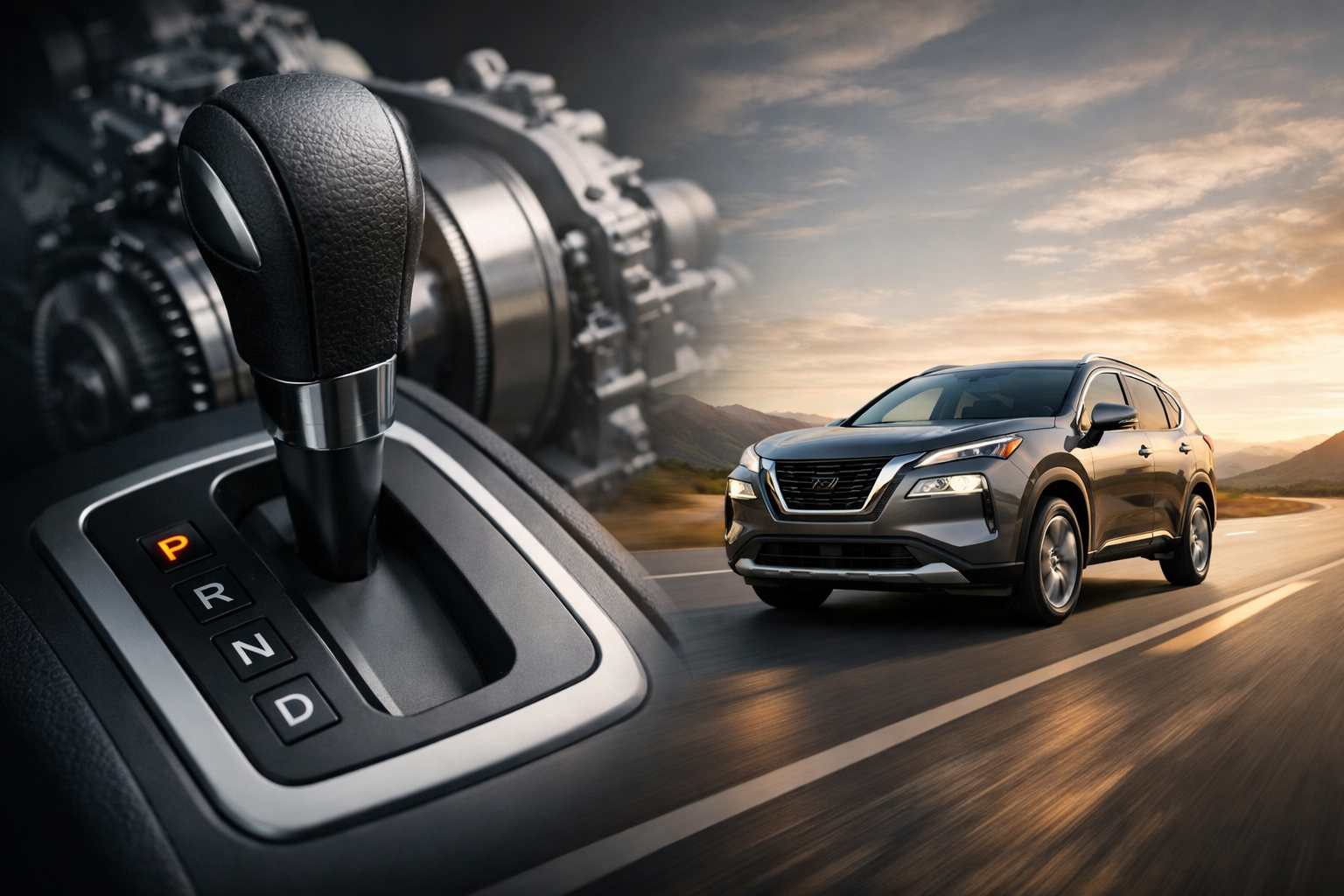
The Nissan Rogue is one of the best-selling compact SUVs in America, and the used market is saturated with options at attractive prices. Like the Altima, the Rogue’s biggest weakness is its Jatco CVT transmission, which has a documented history of premature failure on certain model years.
Understanding the difference between the T32 (2014-2020) and T33 (2021+) platforms is key to finding a reliable used Rogue, because the newer generation made significant improvements to the CVT that may have finally addressed the durability concerns. If you’re shopping for a used Rogue, you’ll want to know what to look for during a test drive to catch transmission issues early.
Rogue Years to Avoid
2014-2016 (Worst CVT Failure Rates)
The worst Rogue years for CVT reliability mirror the Altima’s problems. The 2014-2016 models have the highest complaint rates for transmission shudder, overheating, slipping, and premature failure.
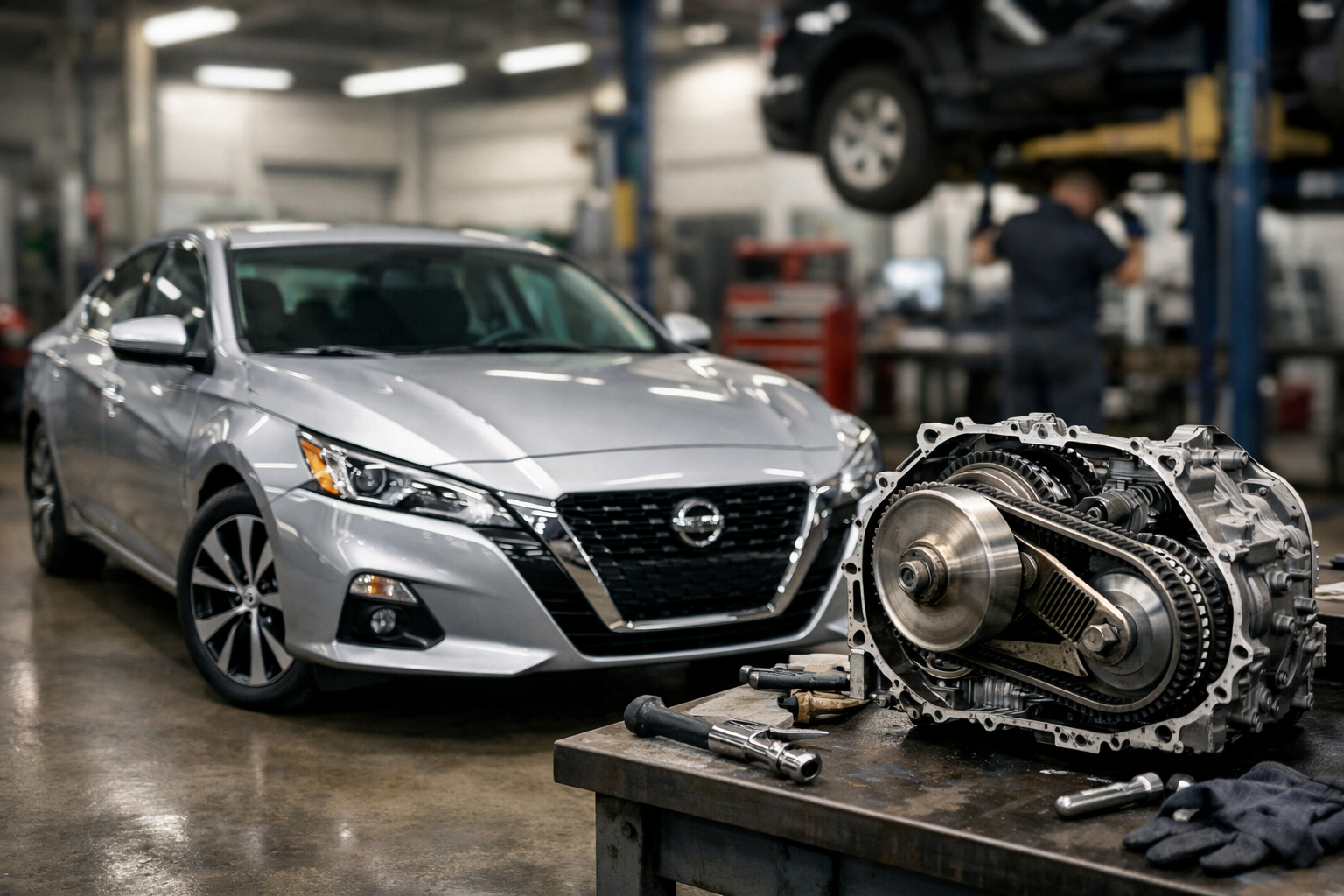
The CVT in these models uses the same Jatco design that plagued the Altima, and the failure pattern is identical: shuddering during acceleration, delayed power delivery, and eventual complete failure, typically between 60,000 and 100,000 miles. For more context on how these transmissions work and why they fail, check out our guide on what CVT transmissions are and why some people hate them.
Nissan extended the CVT warranty on affected models to 10 years/120,000 miles, but many 2014-2016 Rogues have now exceeded that coverage. If you’re considering one of these years, verify the warranty status and check whether the CVT has already been replaced (a replaced CVT is actually a positive since the replacement unit has fewer miles).
2008 (Excessive Oil Consumption)
The first-generation Rogue’s 2.5L QR25DE engine had oil consumption issues on some early production units, burning a quart every 2,000 to 3,000 miles. The problem was traced to piston ring design and affected a portion of 2008 production.
2018 (AC Compressor Failures)
The 2018 Rogue had an above-average rate of AC compressor failures, which is a significant repair because the compressor can send metal debris through the AC system when it fails, requiring replacement of multiple components.
T32 vs. T33 Platform: The Important Distinction
The T32 Rogue (2014-2020) uses the older CVT design that’s most prone to problems. These are the years where the transmission reputation was established, and the complaints are well-documented across owner forums, NHTSA databases, and consumer reporting sites.
The T33 Rogue (2021+) received a completely redesigned CVT with improved cooling capacity, updated belt and pulley materials, and revised calibration software. While the long-term track record is still being established, the T33 models have significantly fewer transmission complaints than any T32 year.
Early data suggests Nissan made meaningful improvements, though only time will confirm whether the durability concerns have been fully resolved.
For used buyers, this platform distinction matters more than almost any other factor. A 2020 T32 Rogue and a 2021 T33 Rogue are only one model year apart but are fundamentally different vehicles with different transmissions.
Rogue Years to Buy
For the T32 (2014-2020): 2018 and 2019 benefit from improved CVT calibration and software updates, and they’re still covered by the extended warranty in many cases. Verify warranty status before purchasing.
For the T33 (2021+): 2022 and later are the best picks, with a full year of production refinement beyond the first-year 2021 model. The T33’s redesigned CVT, improved interior, and more powerful 1.5L turbo three-cylinder engine make it a significantly better vehicle than the outgoing T32.
Use an OBD2 scanner to check for CVT-related codes on any used Rogue. Listen for whining noises during acceleration and pay attention to any shuddering or delayed power delivery during the test drive.

OBD2 Scanner for Nissan
Essential for checking CVT health before purchasing a used Rogue
What to Inspect on a Used Rogue
Drive the Rogue for at least 15 to 20 minutes during the test drive, including highway speeds and stop-and-go traffic. The CVT problems are most noticeable when the transmission is warm and under varying loads.
Pay attention to any shuddering during acceleration from 20 to 40 mph, any delay between pressing the gas and the vehicle actually accelerating, and any whining or buzzing noise that changes with vehicle speed. These symptoms are similar to what you’d see in a Honda Pilot with transmission shudder, though the underlying causes differ.
Check the CVT fluid condition if possible (some Rogues have a dipstick). Fresh CVT fluid is amber or light red. Dark, discolored, or burnt-smelling fluid indicates the transmission is overheating and may be on borrowed time.
Check service records for CVT fluid changes; regular fluid changes every 30,000 miles significantly extend CVT life. You can find Nissan CVT transmission fluid for maintenance intervals, though professional service is recommended for transmission work.

Nissan CVT Transmission Fluid
Regular fluid changes every 30,000 miles can significantly extend CVT lifespan
Before finalizing any used Rogue purchase, make sure you understand how to read a vehicle history report and what the red flags are to avoid buying a problem vehicle.
Frequently Asked Questions
Did the 2021 redesign fix the CVT?
The redesigned T33 platform has a revised CVT with improved cooling and updated internals. Early reliability data is promising, with significantly fewer complaints than any T32 year. The long-term track record is still being established, but the initial signs are very positive.
How long do Rogue CVTs last?
With regular fluid changes every 30,000 miles, a T32 Rogue CVT can last 150,000+ miles. Without regular fluid changes, failures often occur between 60,000 and 100,000 miles. The T33’s redesigned CVT may prove more durable, but the data is still accumulating.
Is the Rogue Sport the same as the Rogue?
The Rogue Sport (2017-2022) is a smaller, different vehicle based on a different platform. It shares similar CVT concerns but is not interchangeable with the standard Rogue. The Rogue Sport was discontinued after 2022.
What happens if the CVT fails on a Rogue I’m still paying off?
If you’re facing a major CVT repair on a financed Rogue and the repair cost exceeds the vehicle’s value, you may wonder what happens if you total a car you still owe money on. While a transmission failure isn’t the same as a total loss, understanding your financing obligations is important when facing expensive repairs.
This article contains affiliate links. We may earn a small commission at no extra cost to you.


Leave a Reply