
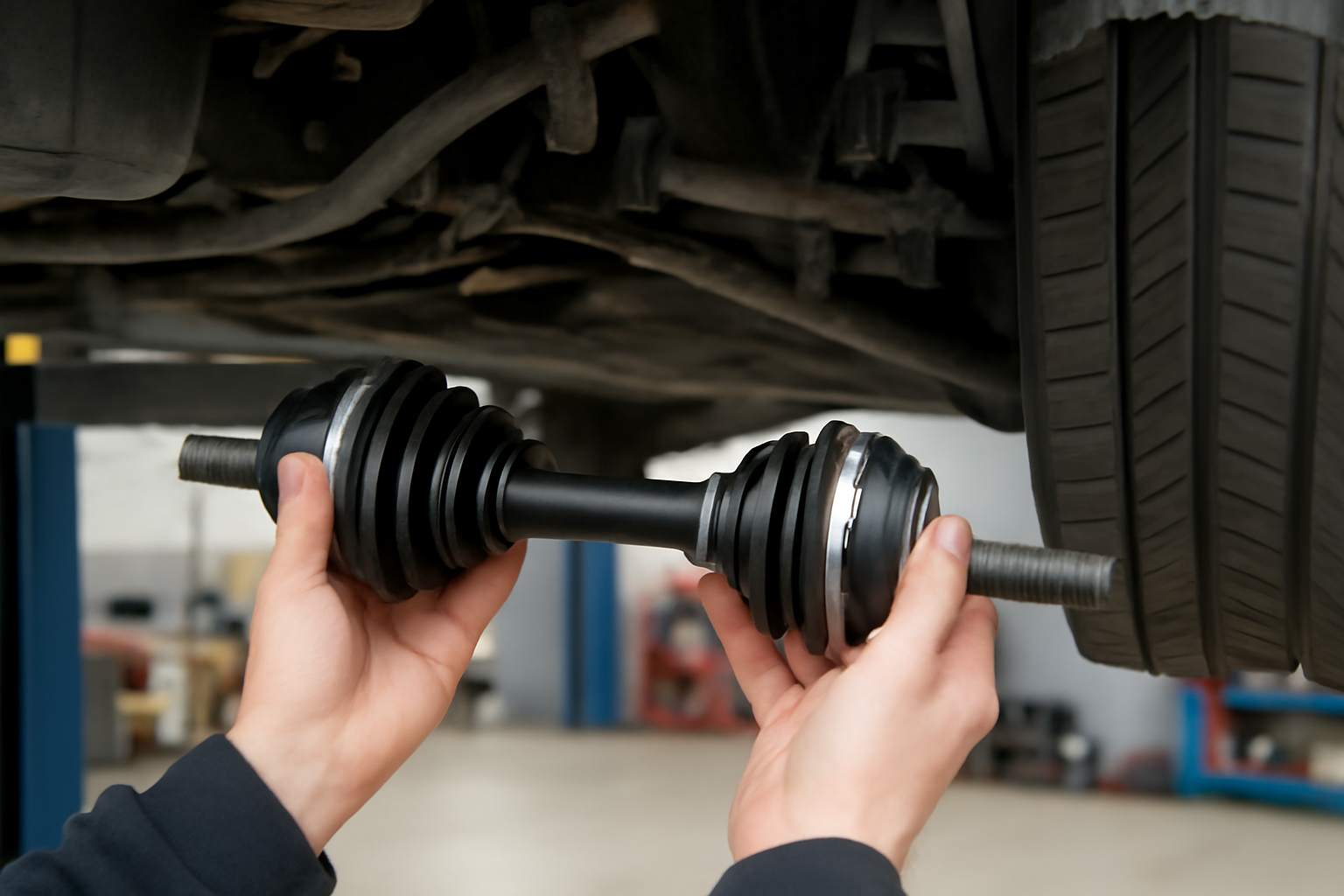
A rhythmic clicking or popping noise that starts when you turn the steering wheel, especially at low speeds, almost always points to a worn CV joint. It’s one of the most recognizable sounds in automotive diagnostics, and catching it early saves you from a much more expensive repair down the road.
What CV Joints Do
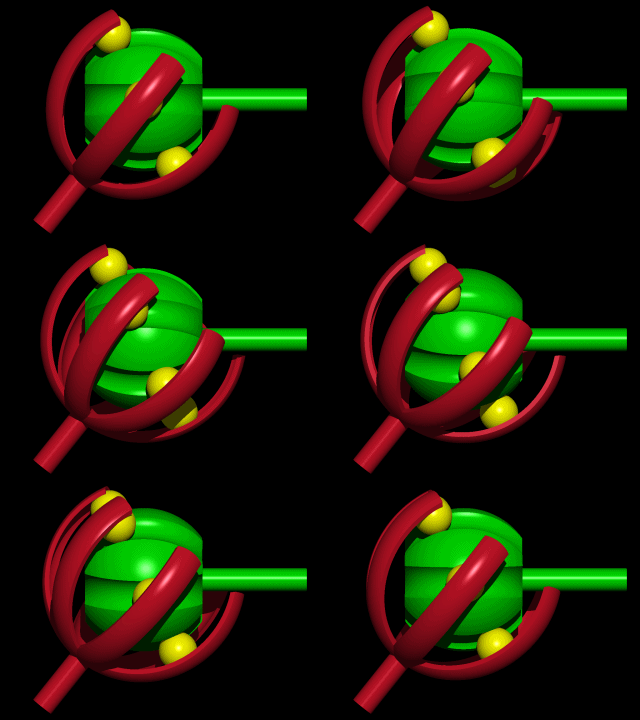
Constant velocity (CV) joints connect your transmission to the wheels while allowing the wheels to turn and move up and down with the suspension. Front-wheel-drive and all-wheel-drive vehicles have them on both front axles. Each axle has an inner and outer CV joint, and it’s the outer joint (closest to the wheel) that usually fails first because it operates at sharper angles during turns.
CV joints are packed with grease and sealed inside a rubber boot. When the boot cracks or tears, the grease leaks out and dirt gets in. Without lubrication, the joint wears rapidly and starts clicking.
How to Confirm It’s a CV Joint
The classic test is turning the steering wheel to full lock in one direction while driving slowly in a circle (like in a parking lot). If the clicking gets louder, it’s almost certainly the outer CV joint on the side you’re turning toward. Turn right and hear clicking? The right outer CV joint is worn. Turn left? Left side.
Inspect the CV boots visually by turning the wheels to full lock and looking behind the front tires. A torn boot appears cracked, split, or covered in thrown grease. Dark grease splattered on the inside of the wheel and surrounding components is a clear sign a boot has been torn for a while.
How Urgent Is the Repair?
A clicking CV joint has some life left, but it’s on borrowed time. The joint will progressively get louder and eventually can seize or break, potentially leaving you stranded. In rare cases, a severely worn CV joint can cause the axle to separate from the wheel entirely, which is dangerous at any speed.
If you catch a torn boot before the joint starts clicking, replacing just the boot and repacking the grease is a much cheaper fix. Once the clicking has started, the joint itself needs replacement.
Repair Options
Most mechanics replace the entire CV axle assembly rather than just the joint. A complete CV axle assembly comes with both joints, the shaft, and new boots already installed. It’s faster, more reliable, and often less expensive than rebuilding individual joints.

CV Axle Assembly
Complete replacement assemblies are typically the most reliable option for DIY repairs
For DIYers with moderate experience, this is a doable home repair that takes 1-2 hours per side. You’ll need basic tools, a large socket for the axle nut, and the patience to deal with some stubborn components. It’s one of the more rewarding intermediate DIY repairs.
Other Causes of Clicking When Turning
Several other suspension and steering components can produce clicking noises during turns. Knowing the difference helps you avoid misdiagnosis.
Strut Mount Bearing
The upper strut mount includes a bearing that allows the strut to rotate with the steering. A worn bearing produces a creaking or popping sound during turns, usually felt through the steering wheel. This noise happens at any speed, not just during sharp turns.
Tie Rod Ends
Worn tie rod ends create play in the steering linkage. They can produce clicking or popping during turns, often accompanied by loose or wandering steering. A tie rod that’s loose enough to click needs prompt replacement.
Wheel Bearing
A failing wheel bearing produces more of a humming or growling sound that changes with speed, but in early stages it can sound like clicking during turns. The noise from a bad bearing usually increases when turning in one direction (loading the affected bearing) and decreases when turning the other way.
Frequently Asked Questions
Can I drive with a clicking CV joint?
For short distances at low speeds, yes. The joint is wearing out, not about to fall apart immediately. Avoid highway driving and schedule the repair within a few weeks. The longer you wait, the worse the joint gets, and a seized joint can lock up the wheel.
How much does a CV axle replacement cost?
Parts for a CV axle assembly are quite reasonable when you check current pricing. Professional labor adds to the cost. DIY replacement requires basic tools, a large socket for the axle nut, and the patience to deal with some stubborn components.
Do rear wheels have CV joints?
On rear-wheel-drive and all-wheel-drive vehicles, the rear axles have CV joints (or U-joints) that can also wear and click. The diagnosis is the same: listen for the noise during turns and inspect the boots for damage.
What’s the difference between inner and outer CV joints?
Each axle has an inner CV joint near the transmission and an outer CV joint near the wheel. The outer joint operates at sharper angles during turns and typically fails first. When it does, you’ll hear that distinctive clicking noise while turning.
This article contains affiliate links. We may earn a small commission at no extra cost to you.

Leave a Reply