
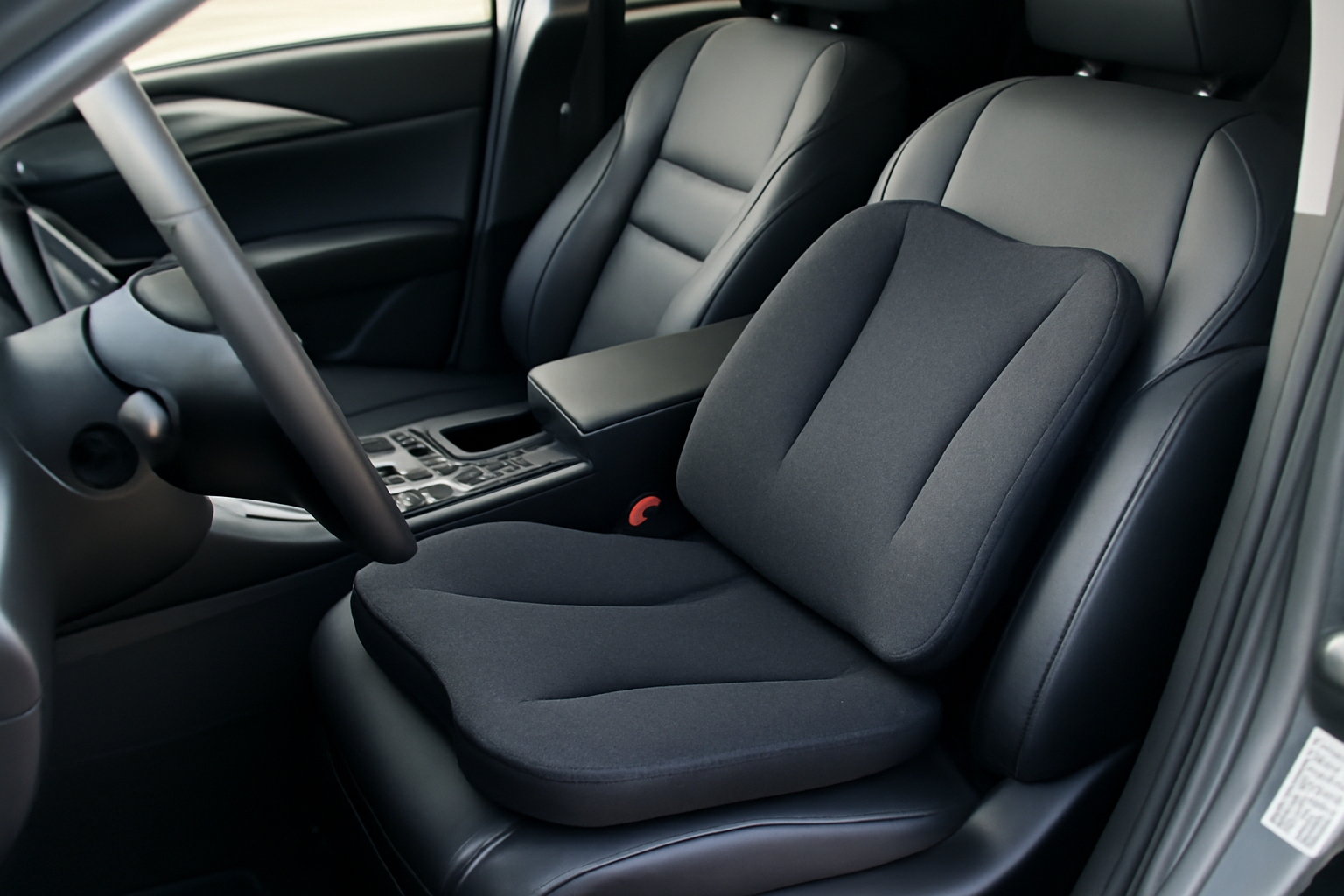
Long drives take a toll on your back, hips, and tailbone, even in cars with decent seats. After two or three hours, most drivers start shifting around trying to find a comfortable position. A quality seat cushion or lumbar support transforms a painful commute or road trip into something your body can actually handle.
Why Car Seats Cause Pain
Most factory car seats are designed for the average body type, which means they don’t fit anyone perfectly. The seat bottom is often too flat, offering little support under the thighs.
The lumbar area frequently lacks enough curve to support the lower spine’s natural arch. Over hours of sitting, these small misalignments compound into real discomfort.
This is particularly noticeable during longer commutes, whether you’re driving a reliable used car for your daily routine or taking extended road trips.
Types of Seat Cushions
Memory Foam Seat Cushions
Memory foam contours to your body shape and distributes weight evenly across the seat surface. Good memory foam cushions have a coccyx cutout (a U-shaped notch at the back) that relieves tailbone pressure. This design is particularly helpful for anyone with sciatica or tailbone pain.
A quality memory foam seat cushion should be dense enough to support your weight without bottoming out. Cheaper foam compresses flat within weeks. Look for high-density foam rated at 3-4 lbs per cubic foot for long-lasting support.
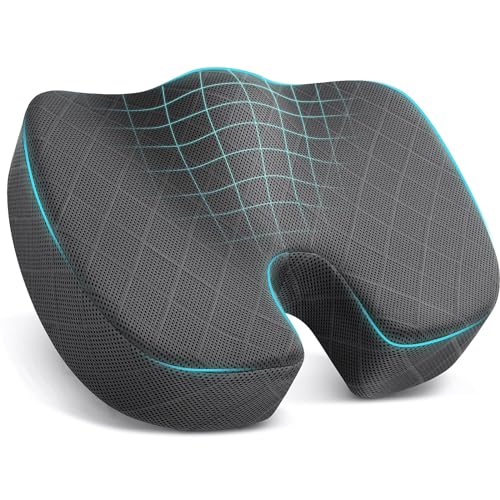
Memory Foam Car Seat Cushion
Best for daily commuters dealing with tailbone pain and pressure relief
Lumbar Support Pillows
If your main issue is lower back pain, a dedicated lumbar support pillow straps to the backrest and fills the gap between your lower spine and the seat. Adjustable-inflation models let you fine-tune the firmness with a small hand pump. Position it at belt level for the best support.
Gel and Hybrid Cushions
Gel-infused or gel-topped cushions run cooler than pure memory foam, which is a real advantage during summer or in cars with heated seats that warm up the foam. Hybrid designs combine a memory foam base with a gel top layer, giving you both support and temperature regulation.

Gel Memory Foam Hybrid Seat Cushion
Ideal for hot climates and summer driving with superior cooling performance
Choosing the Right Cushion
For daily commuters dealing with 30-60 minute drives, a basic memory foam cushion with a non-slip bottom handles the job. Road trip enthusiasts and long-haul commuters should invest in a combination: a seat bottom cushion plus a lumbar pillow. This two-piece approach addresses both pressure points and spinal alignment.
Check the cushion dimensions against your car seat. Some cushions are too wide for sports car seats or too thick for drivers who already sit high in their vehicle. You need enough headroom after adding the cushion.
Whether you’re driving an SUV with multiple car seats or a compact sedan, making sure the cushion fits properly prevents it from becoming a distraction rather than a solution.
Features That Make a Difference
A non-slip rubber bottom keeps the cushion from sliding forward during driving. A removable, washable cover extends the cushion’s life. Straps that attach to the seat back prevent the cushion from shifting when you get in and out of the car.
Breathable mesh covers prevent sweat buildup on longer drives. Solid fabric covers trap heat, which defeats the purpose of a comfort upgrade during summer months.
Frequently Asked Questions
Will a seat cushion interfere with my seatbelt or airbag?
A properly sized cushion that sits on the seat bottom won’t interfere with either. Avoid cushions that raise you so high that the seatbelt crosses your neck instead of your shoulder.
Backrest-mounted lumbar pillows should be thin enough that they don’t push you forward into an unsafe position relative to the steering wheel.
How thick should a car seat cushion be?
Most quality cushions are 2-3 inches thick. Thicker isn’t always better. A 4-inch cushion raises your seating position significantly, which can affect your view of the road and your reach to the pedals.
Test the cushion in your car before committing to long drives.
Can a seat cushion help with hip pain?
Yes. Cushions with contoured edges and a wider base distribute hip pressure more evenly than a flat seat. Memory foam molds to your hip shape over a few minutes of sitting, reducing pressure points that cause numbness and soreness.
How long do car seat cushions last?
High-density memory foam cushions typically last 2-3 years with daily use. Lower-quality foam may compress and lose effectiveness within 6-12 months. Gel cushions tend to maintain their shape longer than pure foam options.
Look for cushions with removable, washable covers to extend their lifespan and keep them fresh during regular use.
Leave a Reply