
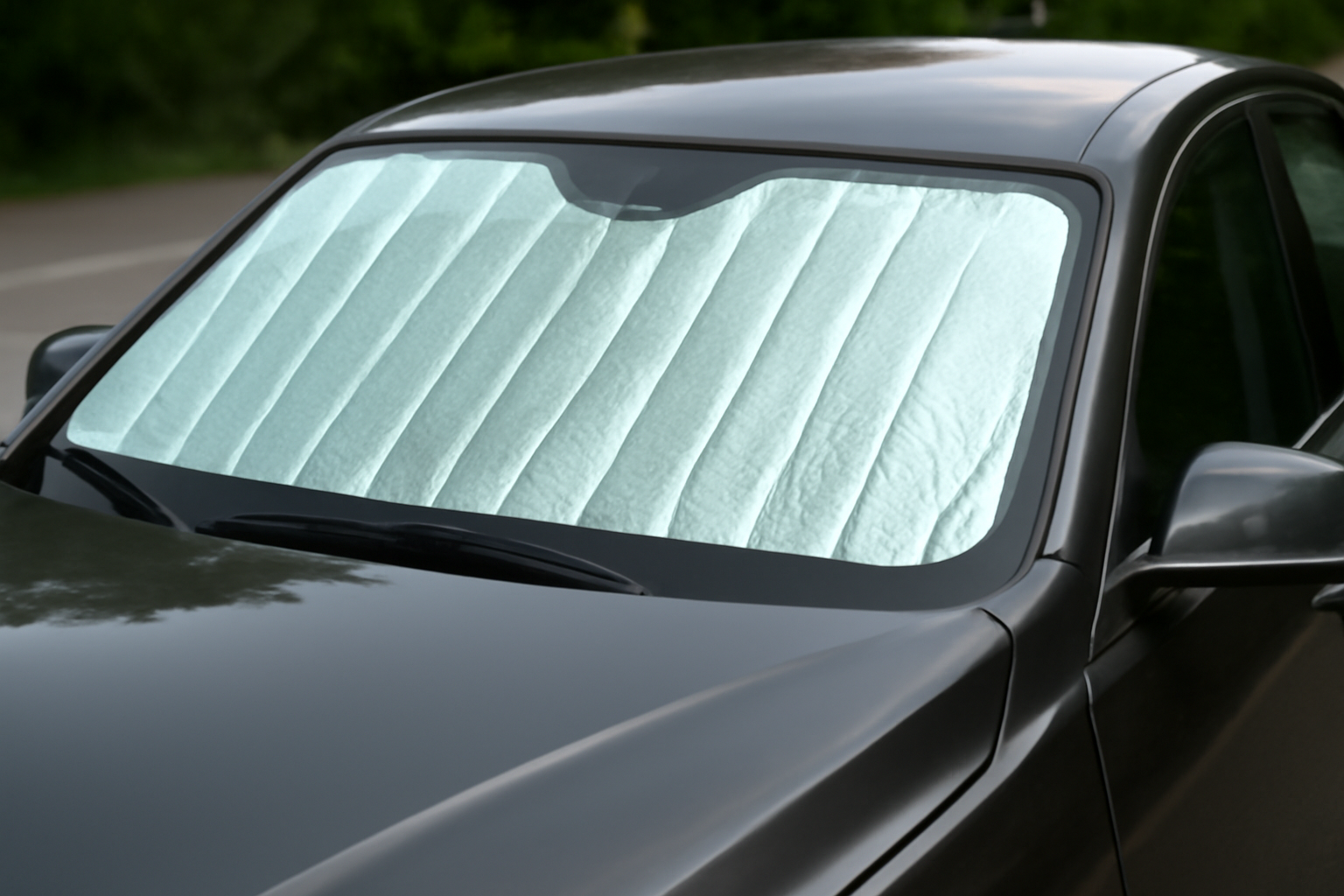
A parked car in direct sunlight can reach interior temperatures above 150°F. That heat damages your dashboard, fades upholstery, and makes the first few minutes of driving miserable.
A windshield sun shade reduces interior temperature by 20 to 30 degrees and protects your dashboard from UV cracking. Whether you park outside at work every day or just need relief during summer road trips, the right shade makes a real difference.
Types of Sun Shades
Foldable panel shades are the most common. They unfold to cover the windshield, fold back into a compact shape, and store behind a seat or in the trunk. Most use reflective material on the outer surface to bounce sunlight away.
Umbrella-style shades open like a small umbrella and prop against the inside of the windshield. They’re faster to deploy and store than foldable panels but may not fit as tightly against the glass.
Custom-fit shades are cut to match your specific windshield dimensions. They provide the best coverage with no gaps, but cost more and only work for one vehicle.
Best Foldable: EcoNour Windshield Sun Shade

EcoNour Windshield Sun Shade
Durable double-layered reflective material with a folding mechanism that won’t fail after a few months
The EcoNour sun shade comes in multiple sizes to match different windshield dimensions. The double-layered reflective material blocks UV rays effectively, and the folding mechanism is more durable than budget options that lose their spring after a few months.
An elastic strap keeps it compact when stored. This works well for families who might need sun protection for SUVs with multiple car seats or first cars for teenage drivers.
Best Umbrella Style: Lamicall Umbrella Sun Shade

Lamicall Umbrella Sun Shade
Deploys in five seconds and fits in a door pocket for maximum convenience
The umbrella-style sun shade deploys in about five seconds and folds down to fit in a door pocket. It’s the fastest option for people who get in and out of hot cars multiple times a day.
The slight gap between the shade and windshield edges means it doesn’t block quite as much heat as a full-coverage panel, but the convenience trade-off is worth it for many drivers.
Sizing Matters
A shade that’s too small leaves exposed glass that heats the dashboard anyway. Too large and it won’t sit properly, falling away from the windshield or bowing in the middle.
Measure your windshield width and height before ordering, and check the manufacturer’s sizing chart. Most universal shades come in small, medium, and large sizes that cover common vehicle classes.
Custom-cut shades offer the best fit but are limited to specific vehicle models. They’re particularly useful for vehicles with unusually shaped windshields.
Additional Window Coverage
Side and rear window shades add more protection, especially for back-seat passengers and interior surfaces. Static-cling or suction-cup side shades are easy to install and remove.
For SUVs and hatchbacks, a rear cargo shade blocks sunlight from heating the entire back section. This helps protect any cargo you’re carrying and keeps the overall cabin temperature lower.
Proper sun protection is just one part of keeping your vehicle running well. If you’re dealing with overheating issues when the AC is on, addressing both cooling system problems and heat reduction through shades can make a big difference.
Frequently Asked Questions
Does a sun shade actually lower interior temperature?
Yes, significantly. Studies show windshield shades reduce dashboard temperatures by 30 to 40°F and overall cabin temperature by about 15 to 20°F compared to an unshaded vehicle. The steering wheel and seats are noticeably cooler.
Should the reflective side face in or out?
The reflective side faces outward (toward the windshield) to bounce sunlight away from the car. The inner surface is typically a non-reflective material that insulates against the remaining heat.
Can I use a sun shade with a dashcam?
Most sun shades require removing them before driving, which means your dashcam’s parking mode recording will show the shade rather than the exterior. Some drivers cut a small notch in the shade near the dashcam to allow the lens to see through. Custom-fit shades with dashcam cutouts exist for popular vehicles.
What size sun shade do I need for my car?
Measure your windshield width and height in inches, then compare to the manufacturer’s size chart. Most vehicles fall into standard small (sedans), medium (mid-size SUVs and trucks), or large (full-size SUVs and trucks) categories. When in doubt, go slightly larger rather than smaller for better coverage.
This article contains affiliate links. We may earn a small commission at no extra cost to you.

Leave a Reply