
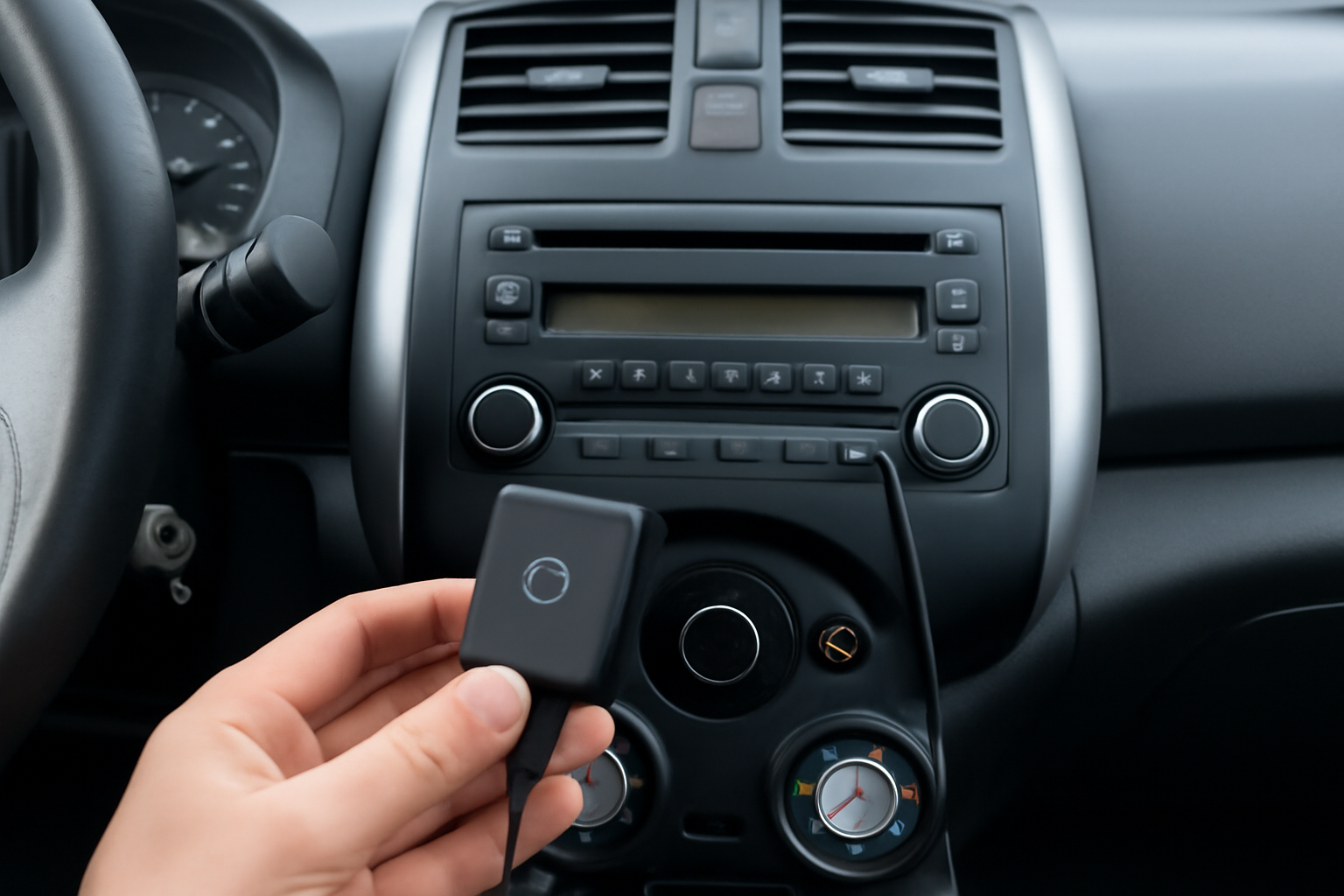
If your car was built before Bluetooth became standard, you’re stuck with an aux cable, a CD player, or the radio. Adding Bluetooth to an older vehicle takes about two minutes and gives you wireless music streaming, hands-free calling, and the convenience of never plugging in a cable again.
This is especially useful if you’re driving an older car that still has plenty of life left but lacks modern connectivity features.
Types of Bluetooth Adapters
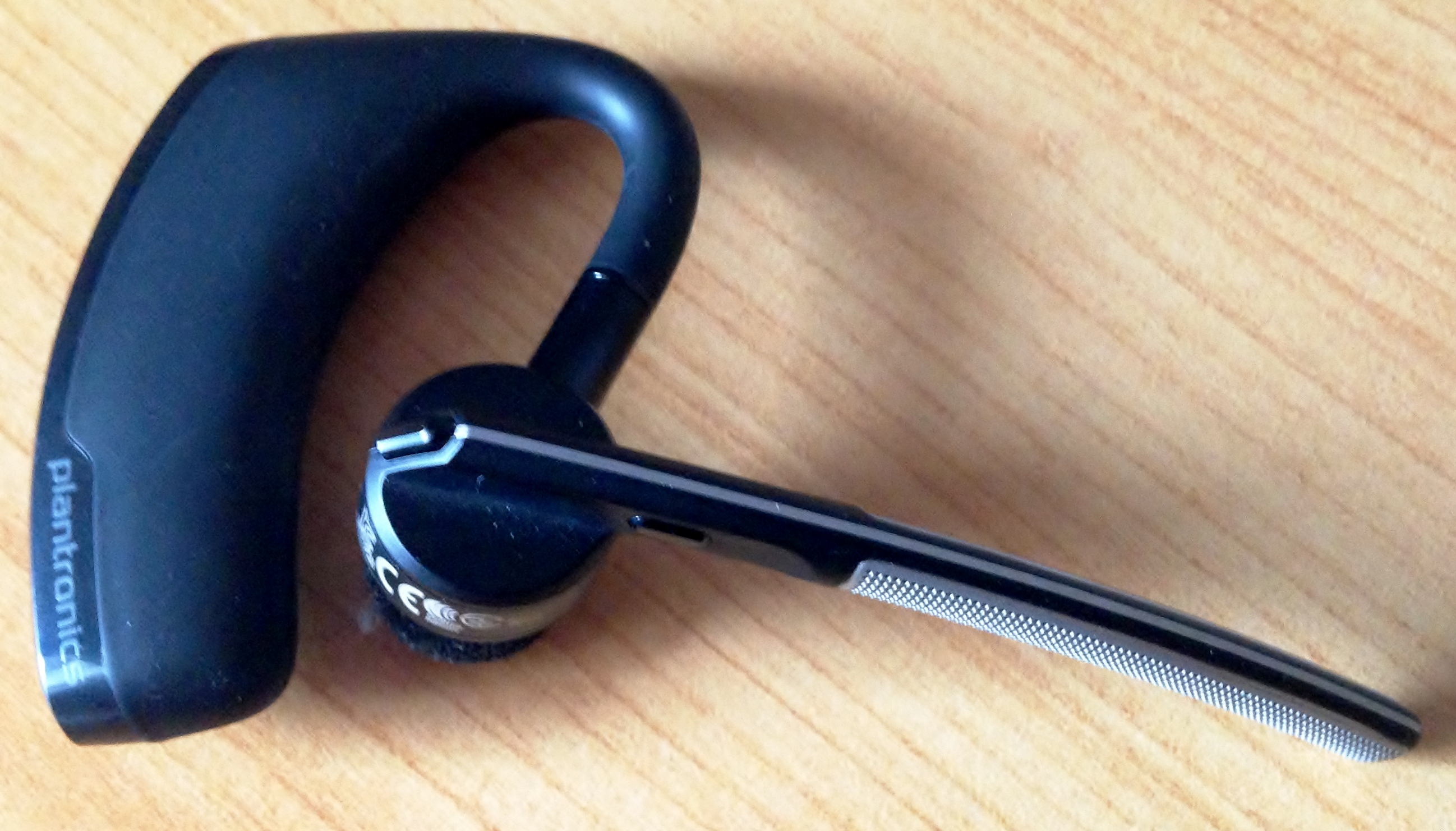
Aux-in adapters plug into your car’s 3.5mm auxiliary jack and receive audio wirelessly from your phone via Bluetooth. They’re the simplest option and deliver the best audio quality. If your car has an aux input, this is the way to go.
FM transmitter adapters broadcast your phone’s audio over a short-range FM signal that your car radio picks up. They work in cars with no aux input, but audio quality depends on finding a clear FM frequency in your area. In cities with crowded radio bands, you may hear interference.
Cassette adapters with Bluetooth fit into the cassette deck and receive audio wirelessly. If your car still has a tape deck, this is a surprisingly effective solution with better audio quality than FM transmitters.
Best Aux Adapter: Mpow BH129 Bluetooth Receiver

Mpow BH129 Bluetooth Receiver
Best overall aux adapter with stable Bluetooth 5.0 and 10-hour battery life
The Mpow BH129 plugs into your aux port and pairs with your phone in seconds. It supports Bluetooth 5.0 for stable connections and minimal latency. A built-in microphone handles hands-free calls, and the rechargeable battery lasts about 10 hours between charges.
Best FM Transmitter: Nulaxy Bluetooth FM Transmitter

Nulaxy Bluetooth FM Transmitter
Top choice for cars without aux input, includes USB charging and easy frequency switching
The Nulaxy FM transmitter plugs into the 12V outlet and broadcasts your phone’s audio to the car radio. It includes a USB charging port, a small display showing the FM frequency and song info, and bass boost. The large dial makes it easy to change frequencies without looking away from the road.
Getting the Best Audio Quality
For aux adapters, audio quality is typically excellent since you’re sending a direct analog signal to the stereo. Keep the adapter’s volume at about 80% and use the car stereo’s volume knob for fine adjustment. This prevents distortion from overdriving the input.
For FM transmitters, finding the right frequency is critical. Scan your radio for the clearest, most static-free frequency (usually at the low or high end of the FM band). Once you find a quiet spot, set both the transmitter and radio to that frequency. Avoid frequencies used by strong local stations.
Hands-Free Calling
Most Bluetooth car adapters include a microphone for phone calls. Audio quality varies significantly between models. Adapters with external microphones (on a clip or visor mount) produce clearer call quality than units with the mic built into a 12V plug deep in the dashboard.
If clear call quality is a priority, look for adapters with noise cancellation technology. The road noise in an older car (before improved sound insulation became standard) can make calls difficult without active noise filtering.
Frequently Asked Questions
Will a Bluetooth adapter drain my car battery?
Aux adapters with their own rechargeable battery won’t affect your car battery at all. FM transmitters that plug into the 12V outlet draw a tiny amount of power, roughly the same as a phone charger. Neither will drain your battery during normal driving.
Can I pair two phones to the same adapter?
Most adapters support pairing with multiple phones but only connect to one at a time. Switching between paired phones usually requires disconnecting one and connecting the other through your phone’s Bluetooth settings.
Is it worth upgrading the whole stereo instead?
If you want Apple CarPlay, Android Auto, or significantly better sound quality, a new head unit is a bigger investment but a much bigger upgrade. For basic music streaming and hands-free calling, a Bluetooth adapter gets the job done at a fraction of the cost.
This is particularly true if you’re driving a budget-friendly older car where investing hundreds in a new stereo system might not make financial sense.
This article contains affiliate links. We may earn a small commission at no extra cost to you.
Leave a Reply