
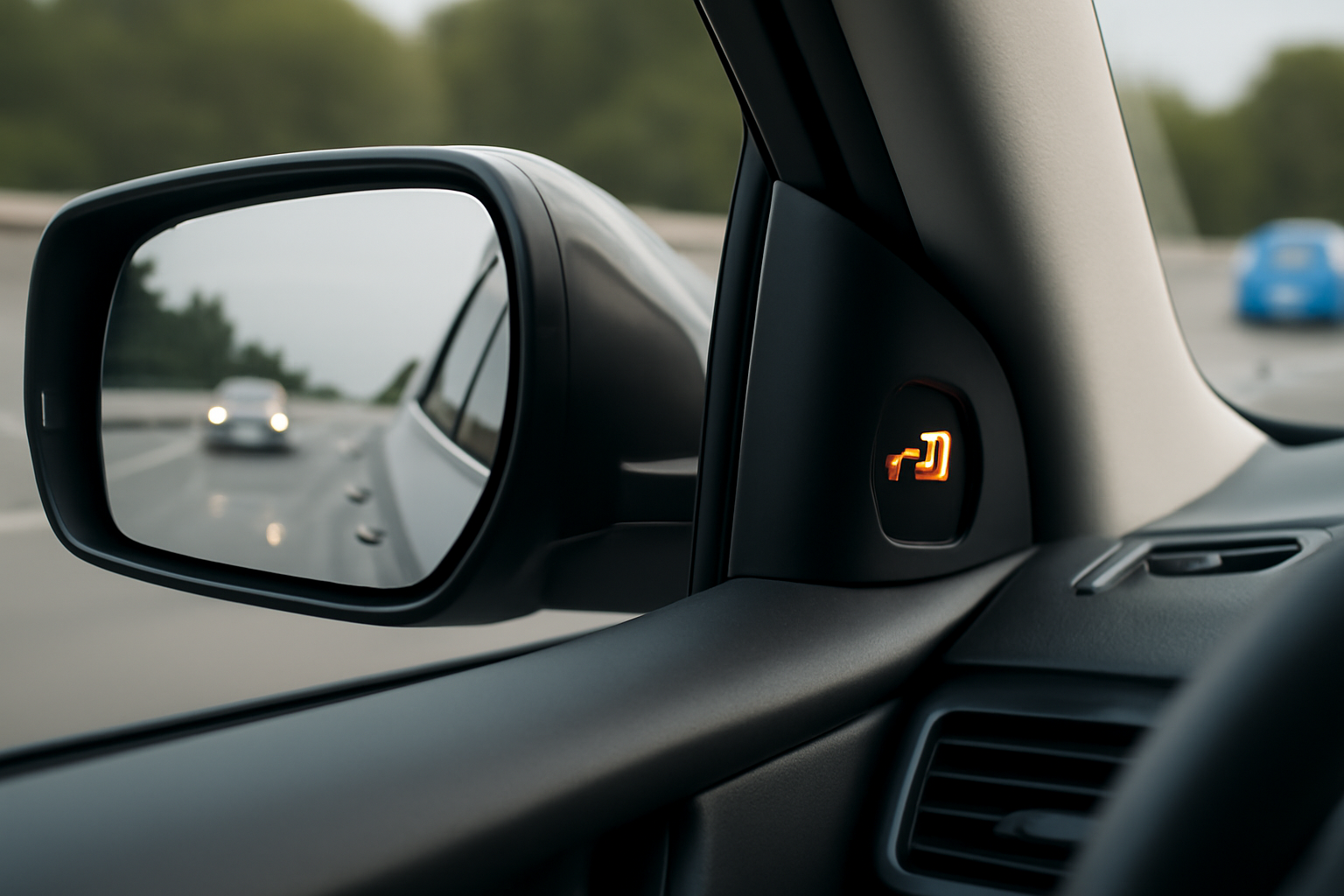
Blind spots are the zones beside your car that your side mirrors can’t cover. Every driver has them, and they’re the cause of countless sideswipe accidents during lane changes. If you’re a new driver building confidence or you own an older car without built-in blind spot monitoring, adding mirrors or sensors is one of the cheapest safety upgrades available.
This is especially important if you’re shopping for a first car for a new teenage driver, where safety features matter most.
Stick-On Blind Spot Mirrors
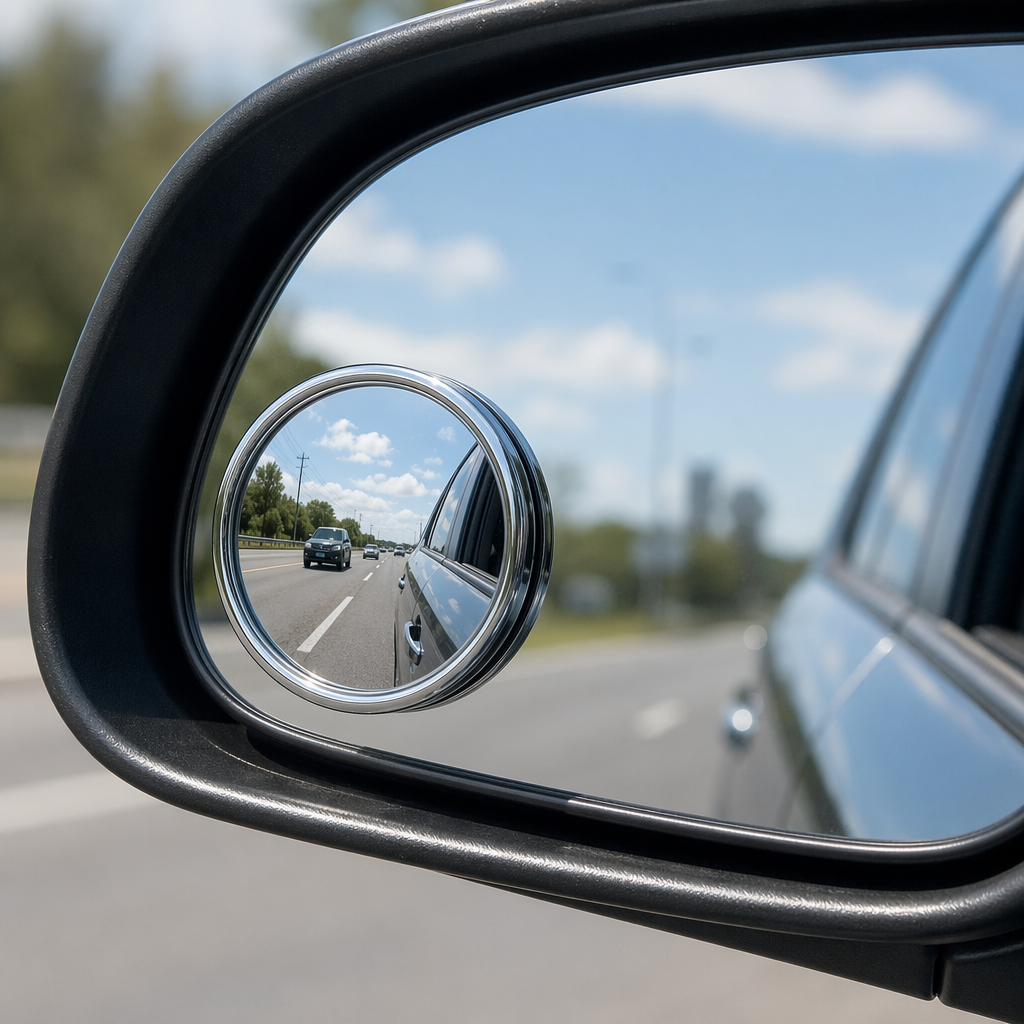
Small convex blind spot mirrors attach to the corner of your existing side mirrors with adhesive. They widen your field of view enough to see vehicles in the adjacent lane that would otherwise be invisible. At roughly the size of a silver dollar, they add coverage without blocking your regular mirror view.
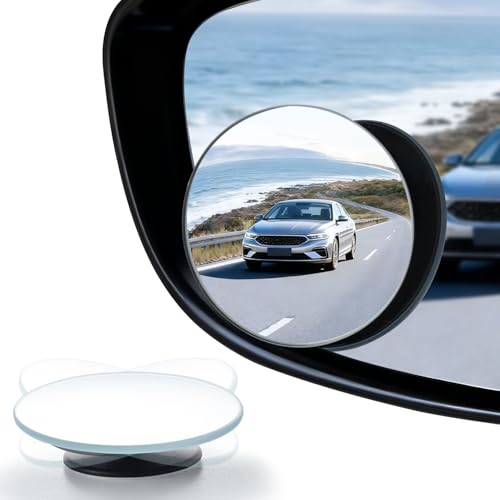
Blind Spot Mirrors
Budget-friendly option that installs in seconds and provides immediate blind spot coverage
Place them on the upper outside corner of each side mirror. This position provides the widest blind spot coverage while keeping the main mirror area clear for standard rearview use. Adjustable-angle versions let you fine-tune the view to your driving position.
The image in a convex mirror is smaller than reality, so objects appear farther away than they actually are. This takes a day or two to get used to, but it becomes second nature quickly. The key is using the blind spot mirror as an additional check, not a replacement for a head turn.
Aftermarket Blind Spot Monitoring Systems
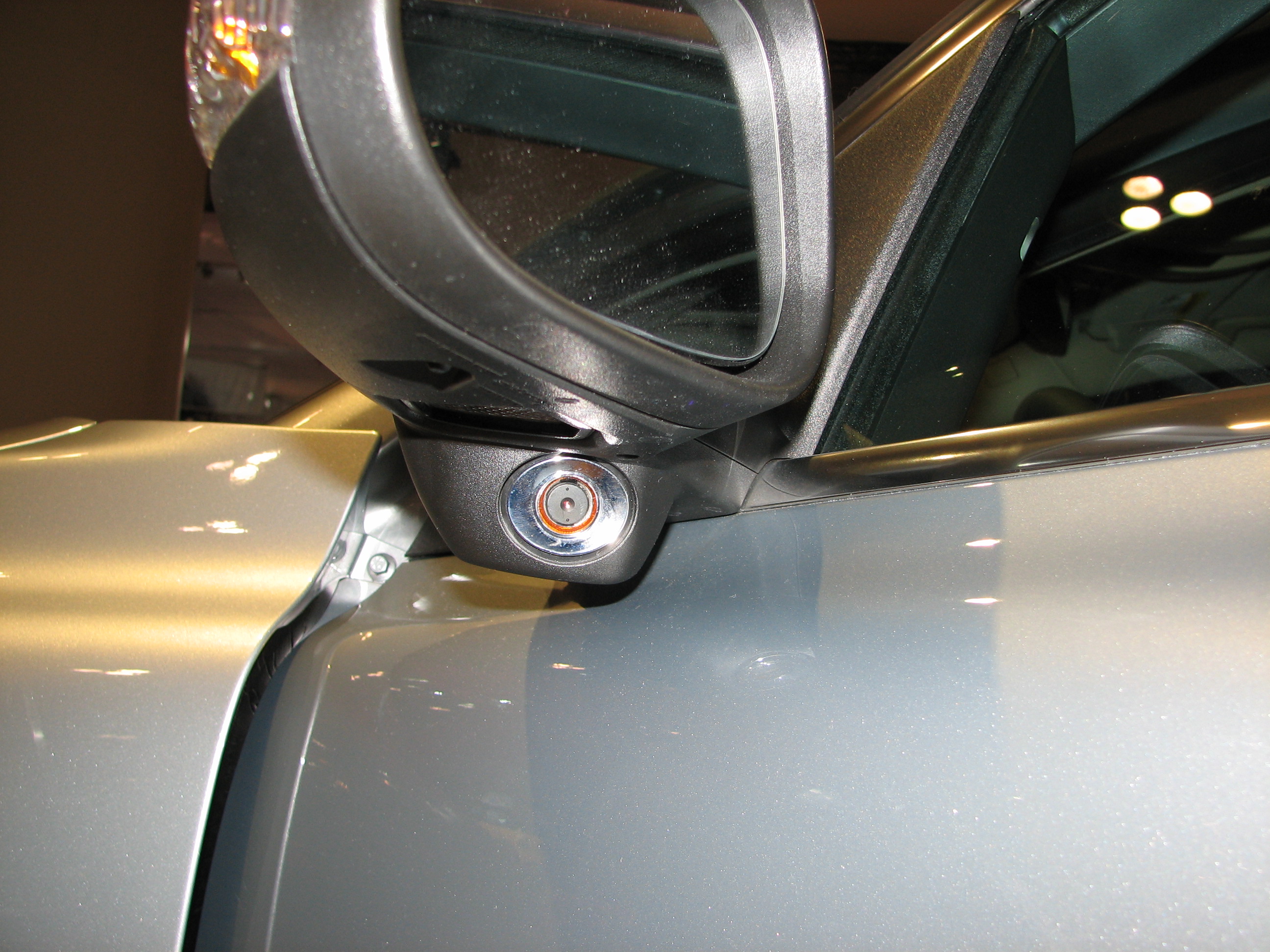
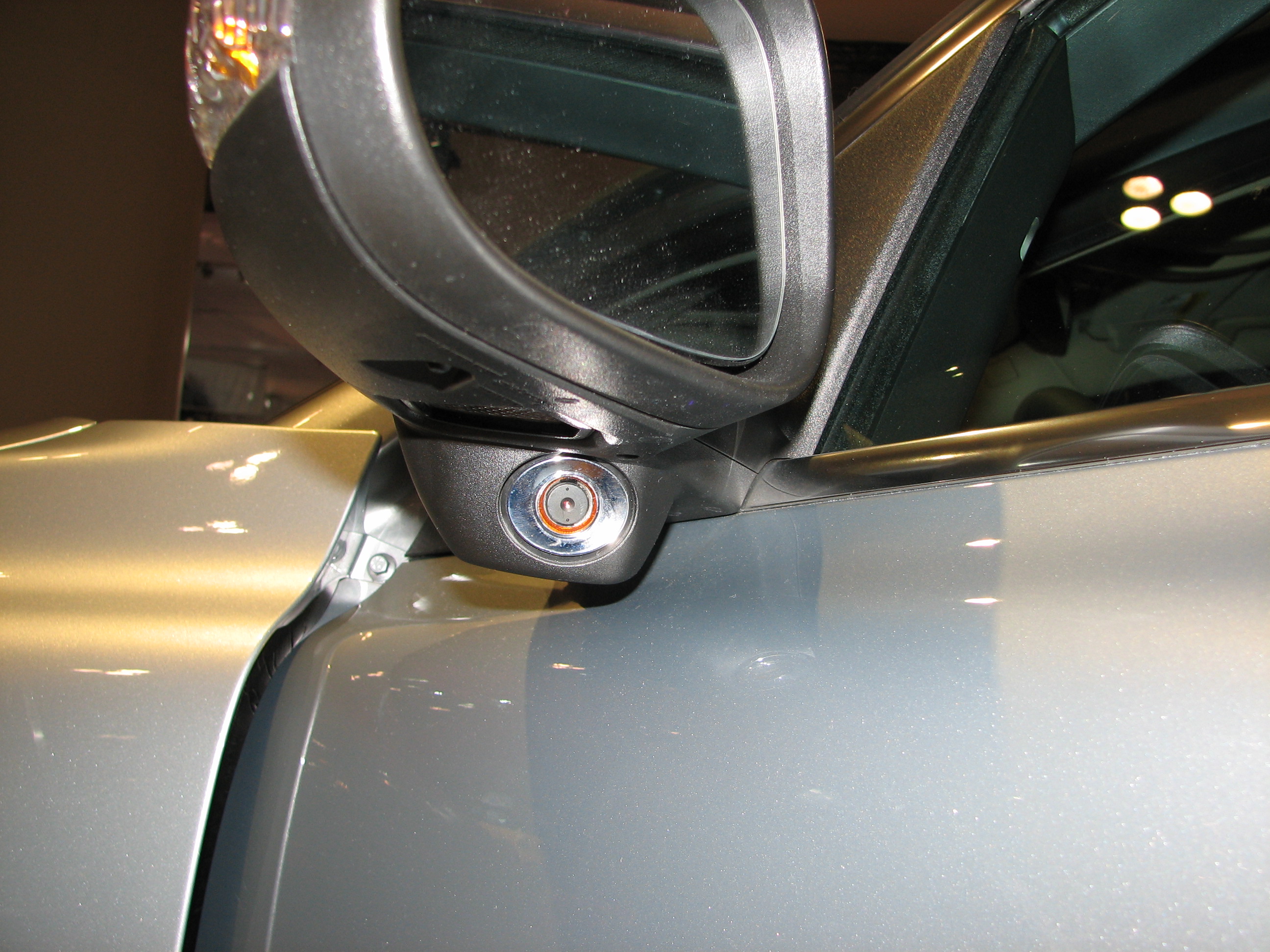
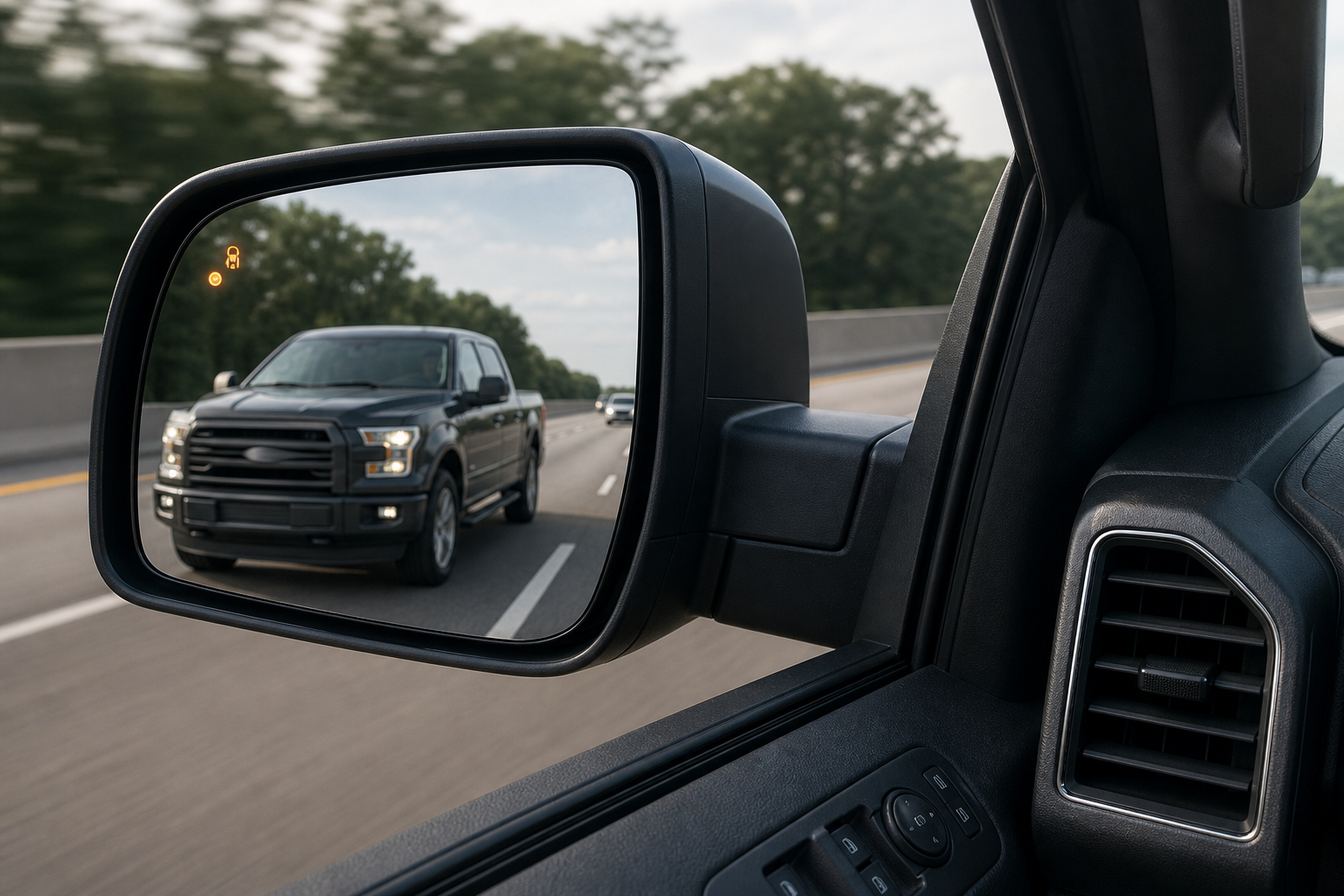
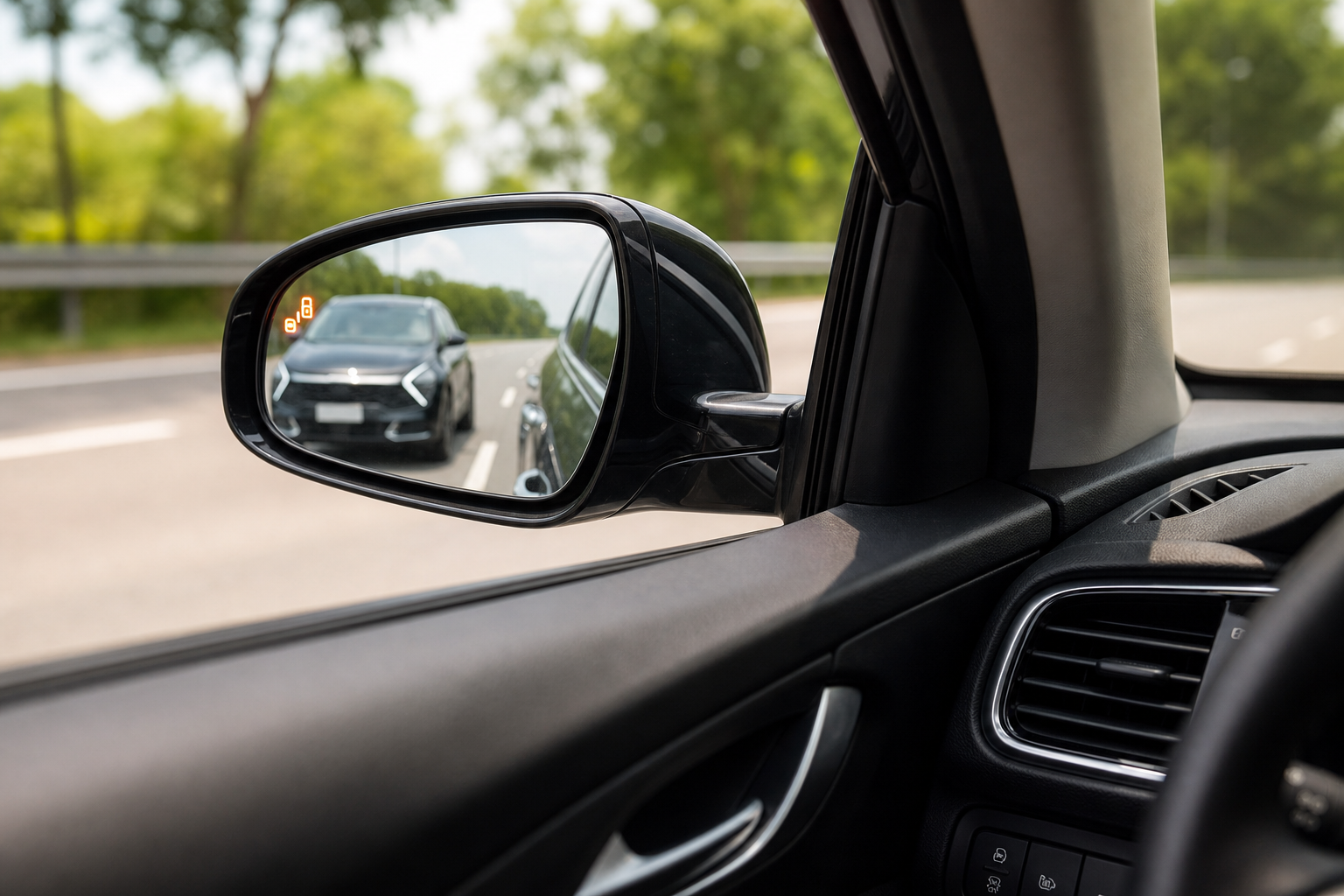
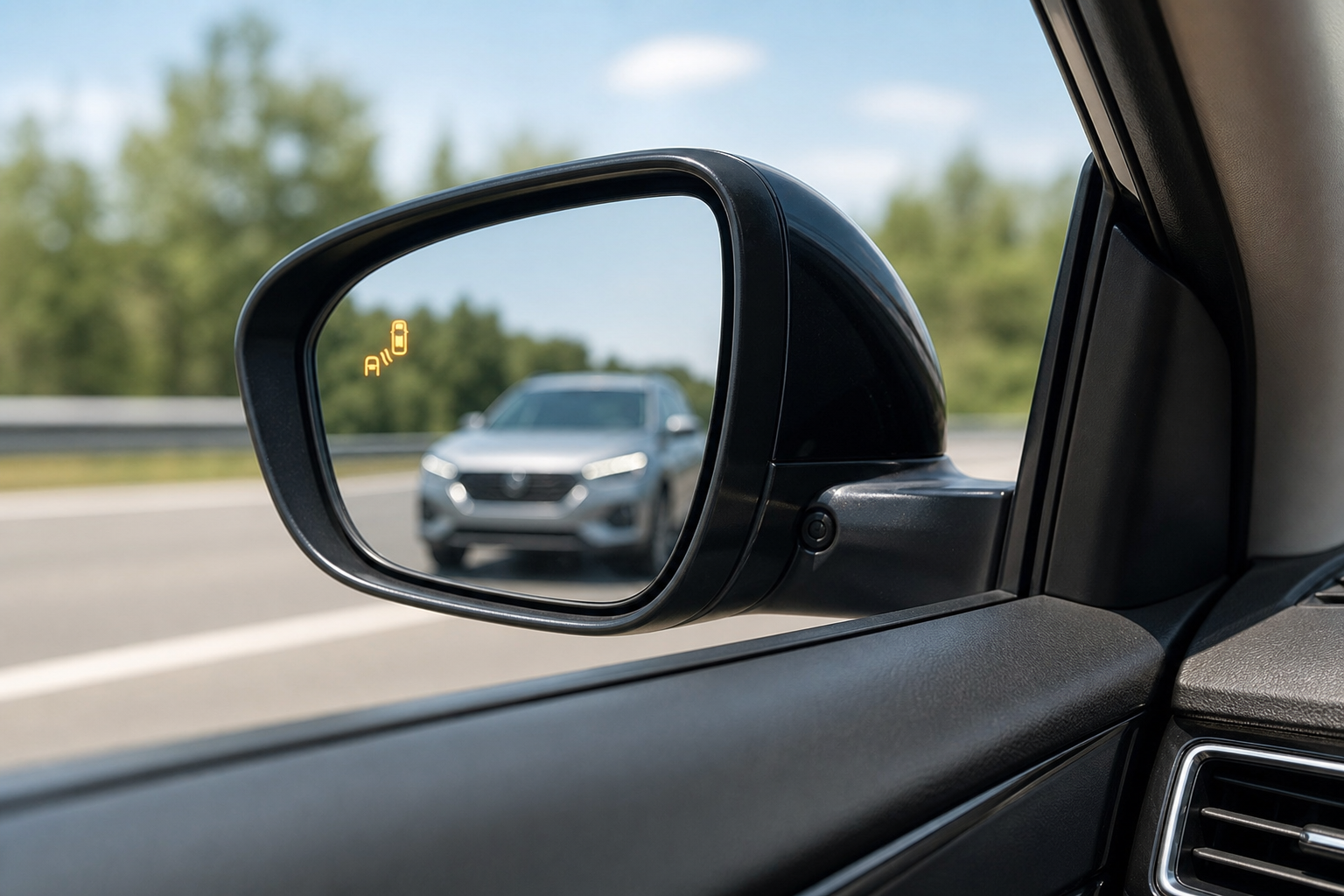
For drivers who want the same technology that newer cars have built in, aftermarket blind spot monitoring (BSM) systems use radar or ultrasonic sensors mounted in the rear bumper to detect vehicles in your blind spots. When a car enters your blind zone, a warning LED lights up on or near the corresponding side mirror.
Installation involves mounting sensors in the rear bumper, running wires to the dashboard area, and placing small LED indicators near each mirror. Professional installation is recommended since it involves drilling into the bumper and routing wires through the interior.
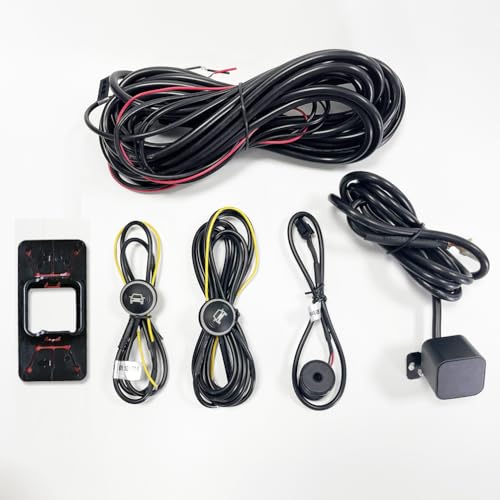
Aftermarket Blind Spot Detection Systems
Professional-grade technology that provides automatic alerts with LED and audible warnings
These systems work well and provide reliable detection at highway speeds. Higher-end kits add an audible alert when you activate your turn signal while a car is in your blind spot.
Choosing Between Mirrors and Sensors
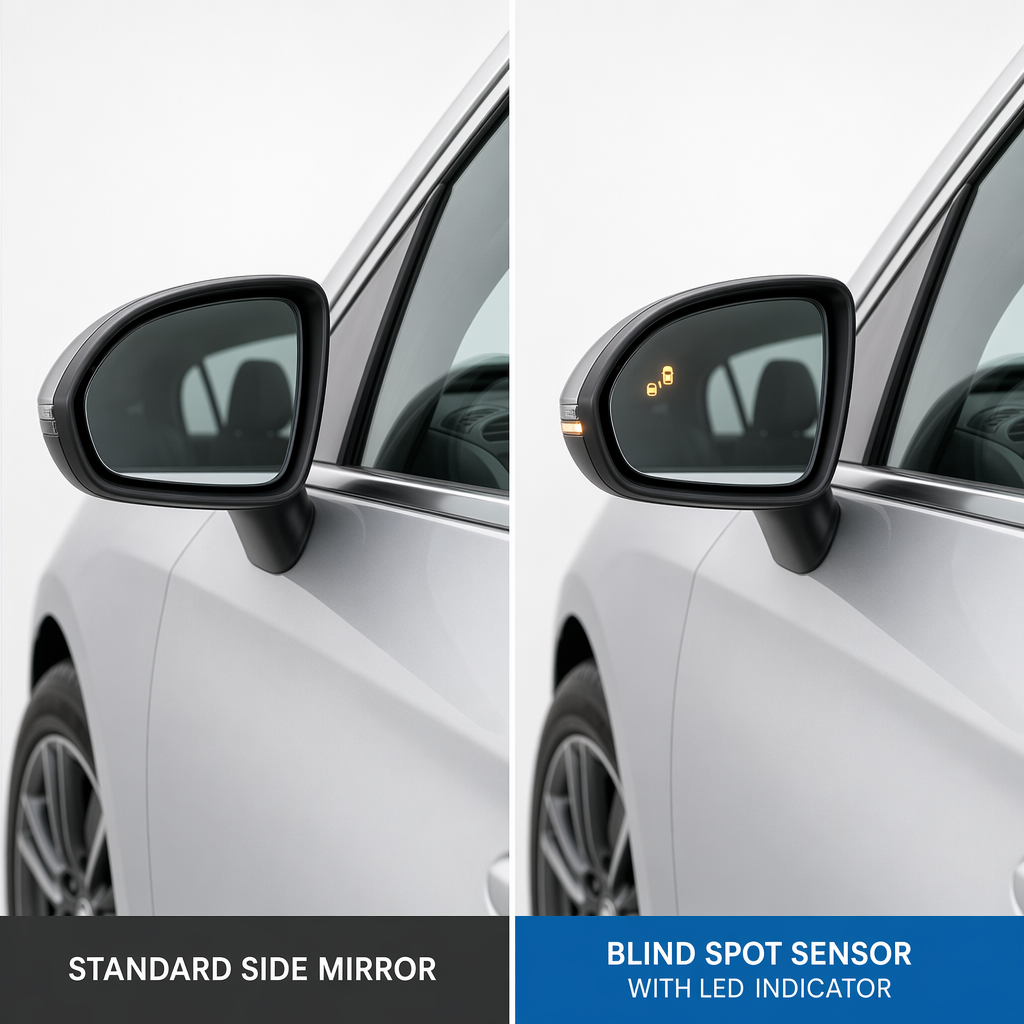
Stick-on mirrors install in 30 seconds and work immediately. They’re the best choice for budget-conscious drivers, new drivers wanting extra confidence, and anyone who wants a simple solution without wiring or installation.
Aftermarket BSM sensor systems provide automatic alerts without requiring you to check a mirror. They’re better for distracted-prone drivers and anyone who wants a technology-based solution. The cost and installation effort are significantly higher, but the safety benefit is also greater.
Tips for Eliminating Blind Spots
Properly adjusted side mirrors reduce blind spots dramatically on their own. Most drivers point their side mirrors too far inward, duplicating the view from the rearview mirror. Instead, lean your head toward the driver’s window and adjust the left mirror until you can just barely see the side of your car. Lean toward the center console and do the same for the right mirror. This “wide setting” covers much more of the adjacent lanes.
Even with mirrors and sensors, always do a quick head check (shoulder glance) before changing lanes. Technology and mirrors supplement your awareness but shouldn’t replace it entirely.
These safety upgrades are valuable additions whether you’re driving a family SUV or a reliable used car under competitively priced.
Frequently Asked Questions
Do blind spot mirrors fall off?
Quality mirrors with proper adhesive stay on for years. Clean the side mirror surface with rubbing alcohol before applying the adhesive for the strongest bond. Cheap mirrors with weak adhesive may fall off in extreme heat. If a mirror starts to loosen, reapply with automotive double-sided tape.
Are aftermarket blind spot sensors reliable?
Reputable aftermarket BSM systems perform well in most conditions. They can occasionally false-trigger near guardrails or in heavy rain, but modern systems have improved significantly. Read reviews from users with your vehicle type before purchasing.
Can I just adjust my mirrors to eliminate blind spots?
Proper mirror adjustment reduces blind spots substantially, but can’t eliminate them completely. There’s always a small zone between what the side mirror covers and what your peripheral vision catches. Blind spot mirrors and sensors fill that remaining gap.
Which option is better for new drivers?
Stick-on blind spot mirrors are ideal for new drivers because they’re inexpensive, simple to install, and help build awareness of the blind spot zones. They also reinforce the habit of checking mirrors before lane changes. Advanced drivers who want automated alerts may prefer sensor systems, but mirrors are perfect for learning the basics.
Leave a Reply