
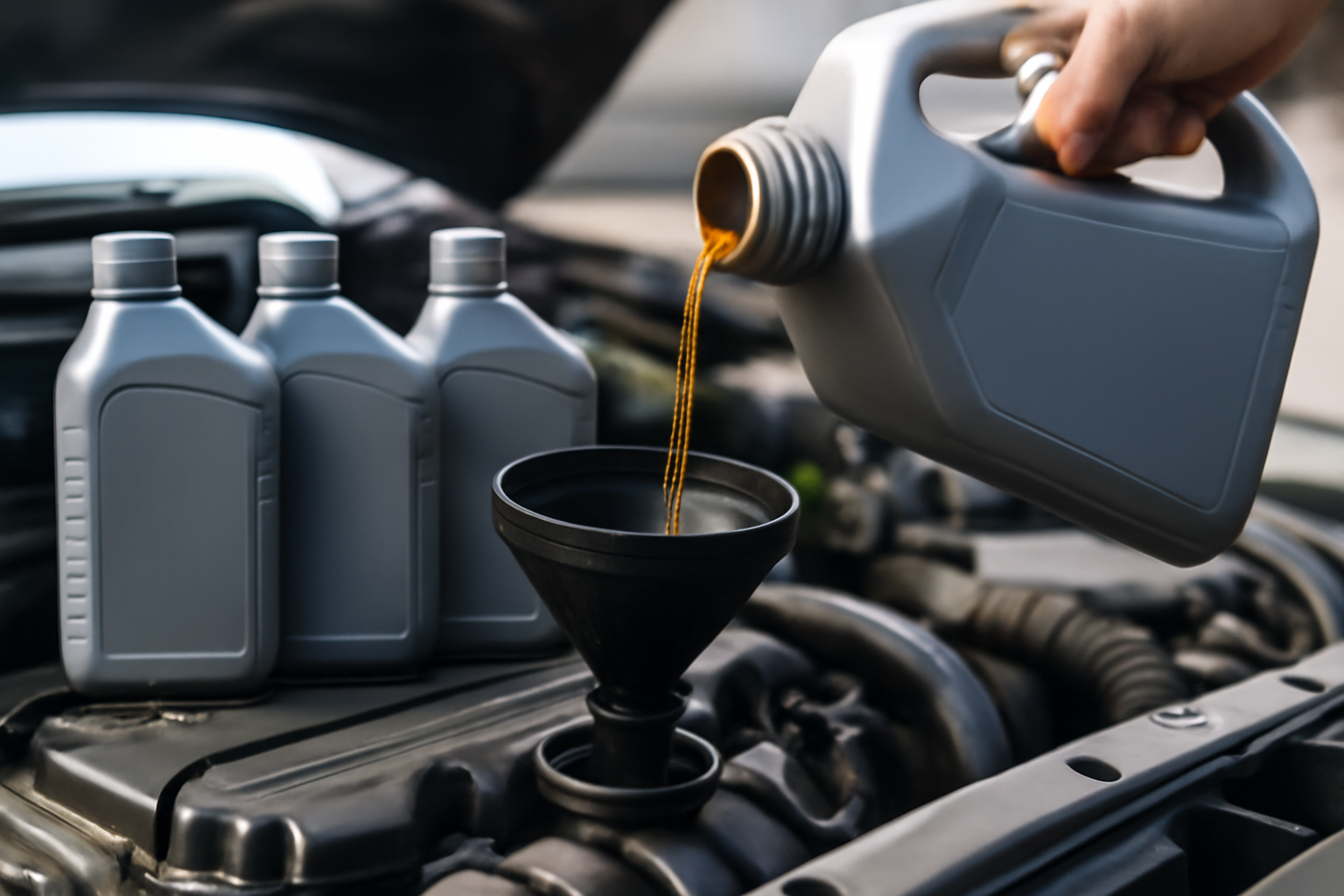
Once your odometer passes 75,000 miles, your engine starts telling a different story. Gaskets stiffen, seals shrink slightly, and oil consumption may creep up. High-mileage motor oils are formulated specifically for these aging engines, with seal conditioners and additives that standard oils don’t include.
This guide covers the best high-mileage oils for 2026, what makes them different from standard formulas, and how to choose the right one for your engine.
What Makes High-Mileage Oil Different
High-mileage formulas contain seal conditioners that cause aged rubber seals and gaskets to swell slightly, restoring their ability to prevent oil leaks. They also include higher doses of anti-wear additives, detergents to clean sludge deposits, and antioxidants that resist oil breakdown.
These additives don’t replace worn metal parts, but they can reduce oil consumption, minimize leaks, and extend the functional life of engines with over 75,000 miles. If your engine is burning a quart of oil every 3,000 miles or leaving spots on the driveway, high-mileage oil is worth trying.
This becomes especially important when you’re evaluating high-mileage vehicles for purchase or maintaining one you already own.
Top High-Mileage Motor Oils for 2026
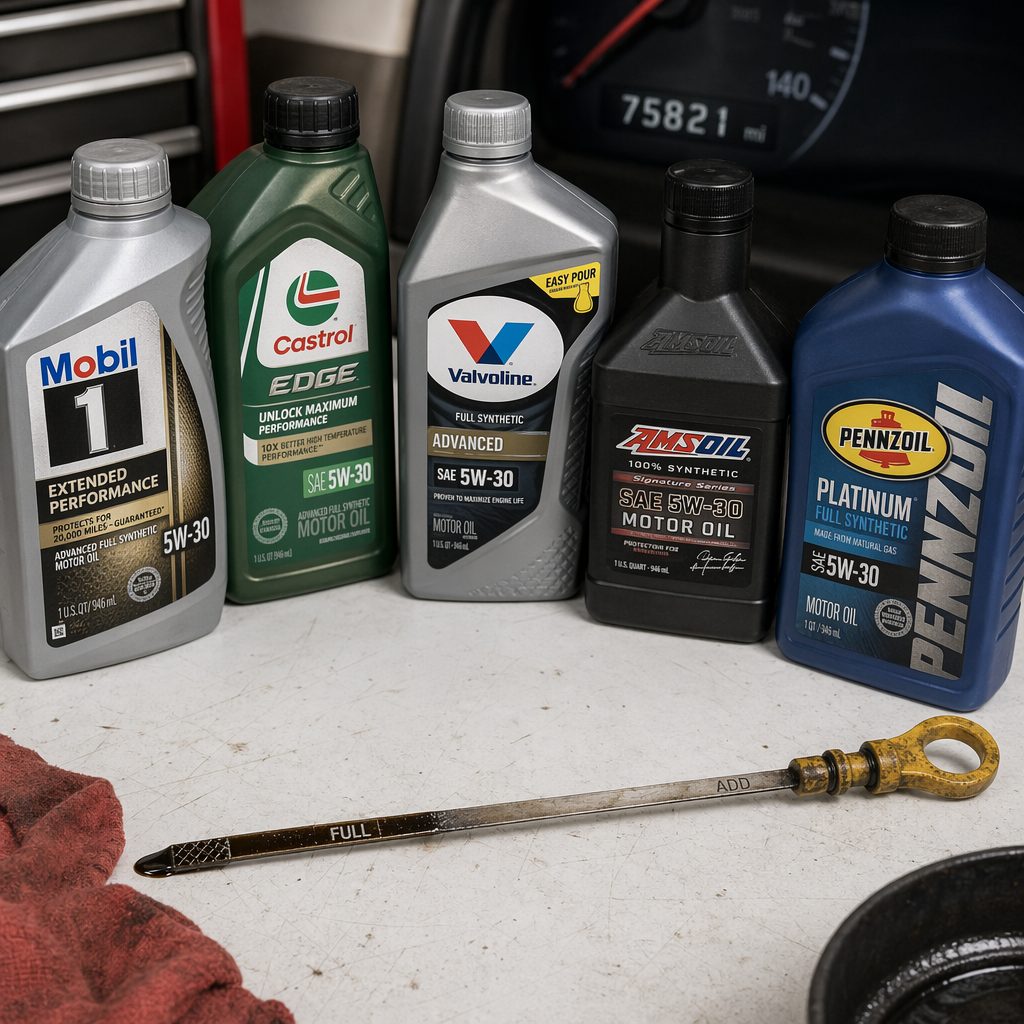
Valvoline High Mileage with MaxLife (Best Overall)
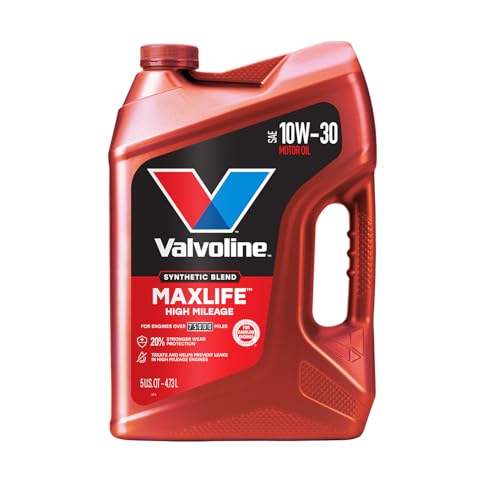
Valvoline High Mileage with MaxLife
Best overall high-mileage oil with fast-acting seal conditioners and wide viscosity availability
Valvoline High Mileage with MaxLife is the most widely recommended high-mileage oil for good reason. Its seal conditioning agents work quickly, and many drivers report reduced oil consumption within the first oil change. Available in all common viscosities including 0W-20, 5W-20, 5W-30, and 10W-30.
Mobil 1 High Mileage (Best Full Synthetic)

Mobil 1 High Mileage
Premium full synthetic option with extended drain intervals and superior temperature protection
Mobil 1 High Mileage combines full synthetic base oils with high-mileage additives for the best of both worlds. The synthetic base provides superior high-temperature stability and cold-flow performance, while the seal conditioners address age-related leaks.
This is the premium choice for drivers who want maximum protection and extended drain intervals (up to 10,000 miles on many engines).
Castrol GTX High Mileage (Best Value)
Castrol GTX High Mileage uses a synthetic blend formula that provides high-mileage protection at a budget-friendly price compared to full synthetics. Its phosphorus replacement technology protects the catalytic converter (a concern with high-additive oils), and the seal conditioners perform comparably to more expensive brands.
Pennzoil High Mileage (Best for Sludge Cleaning)
Pennzoil High Mileage uses PurePlus base oil derived from natural gas, which starts cleaner than petroleum-based oils. The formula excels at cleaning existing sludge deposits, making it an excellent choice for engines with unknown maintenance histories or engines that have gone too long between oil changes.
Amazon Basics High Mileage (Best Budget)
Amazon Basics High Mileage meets all API SN Plus and ILSAC GF-6 specifications at the most affordable price point. It includes seal conditioners and enhanced anti-wear protection. For drivers who change oil frequently and prioritize value, it’s a solid performer that covers all the basics.
When to Switch to High-Mileage Oil
Most oil manufacturers recommend switching at 75,000 miles. If your engine shows no signs of oil consumption or leaks, you can continue with standard oil longer, but the seal conditioners in high-mileage formulas act as preventive maintenance even before problems appear.
There’s no downside to using high-mileage oil in a healthy engine. The additives won’t cause harm, and the extra protection provides insurance against age-related issues developing later.
Many vehicles that last over 300,000 miles benefit from high-mileage oil well past their initial 75,000-mile mark.
Choosing the Right Viscosity


Always use the viscosity specified in your owner’s manual, regardless of mileage. Don’t switch to a thicker oil to “reduce consumption” unless your mechanic specifically recommends it. Modern engines are designed with precise tolerances, and the wrong viscosity can increase wear and reduce fuel economy.
For most 2026 engines, that means 0W-20 or 5W-30 in a high-mileage formula. The high-mileage additives work within these standard viscosities.
Frequently Asked Questions
Can I mix high-mileage oil with regular oil?
Yes. High-mileage and standard oils are fully compatible and can be mixed without issues. If you’re between changes and need to top off, any oil of the correct viscosity works fine.
Will high-mileage oil fix an oil leak?
It can reduce or stop minor seepage from aging seals and gaskets. It won’t fix a major leak from a cracked gasket, damaged pan, or worn rear main seal. If you’re losing more than a quart every 1,000 miles, professional diagnosis is needed.
Is synthetic high-mileage oil better than conventional?
Synthetic high-mileage oil provides better protection at temperature extremes, lasts longer between changes, and flows better at startup. It costs more, but the extended drain intervals and superior protection make it the better value for most drivers.
Can high-mileage oil prevent engine overheating?
While high-mileage oil offers better thermal stability than worn conventional oil, it’s not a solution for overheating problems. If you’re experiencing overheating issues with your AC on, you’ll need to address the underlying cooling system problem rather than relying on oil alone.
This article contains affiliate links. We may earn a small commission at no extra cost to you.

Leave a Reply