
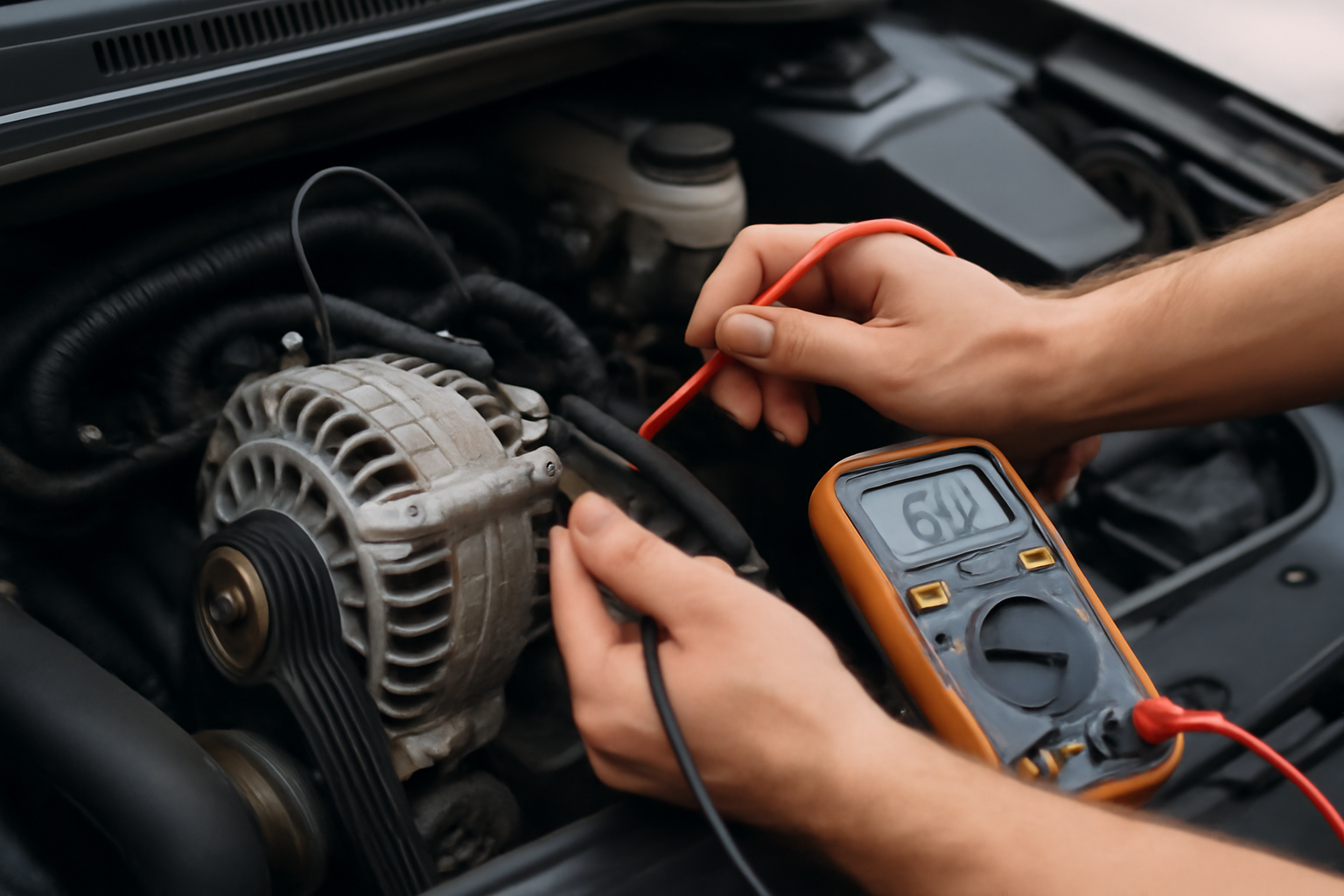
Your alternator charges the battery and powers the electrical system while the engine runs. When it starts failing, the battery gradually drains over a few drives until the car won’t start. Testing the alternator takes less than five minutes with a basic multimeter and can save you from a roadside breakdown.
Signs of a Failing Alternator

Dimming headlights at idle that brighten when you rev the engine are a classic symptom. Other warning signs include a battery-shaped warning light on the dashboard, flickering interior lights, slow power window operation, and a dead battery that keeps coming back even after replacement.
An unusual whining or grinding noise from the front of the engine can indicate a failing alternator bearing. This noise changes pitch with engine RPM and is distinct from belt squeal.

Digital Automotive Multimeter
Essential for diagnosing electrical issues and testing your alternator voltage
Voltage Test with Engine Off
Set your multimeter to the 20V DC range. Connect the red lead to the battery’s positive terminal and the black lead to the negative terminal. A healthy, fully charged battery should read between 12.4 and 12.7 volts.
If the reading is below 12.2 volts, the battery is partially discharged. Charge it fully before testing the alternator, since a weak battery can skew your results.
Voltage Test with Engine Running
Start the engine and let it idle. With the multimeter still connected to the battery terminals, the voltage should read between 13.5 and 14.5 volts. This confirms the alternator is charging the battery.
A reading below 13.0 volts means the alternator isn’t producing enough output. Above 15.0 volts indicates the voltage regulator is failing, which can overcharge and damage the battery. Both conditions require alternator repair or replacement.
Load Test
With the engine running, turn on the headlights, AC, and radio to create an electrical load. The voltage at the battery should stay above 13.0 volts. If it drops significantly under load, the alternator is struggling to keep up with demand and is likely on its way out.
Rev the engine to 2,000 RPM and watch the voltage. It should remain stable between 13.5 and 14.5 volts. Voltage that fluctuates wildly or drops with RPM increase points to internal alternator problems like worn brushes or a failing diode.
Belt Inspection
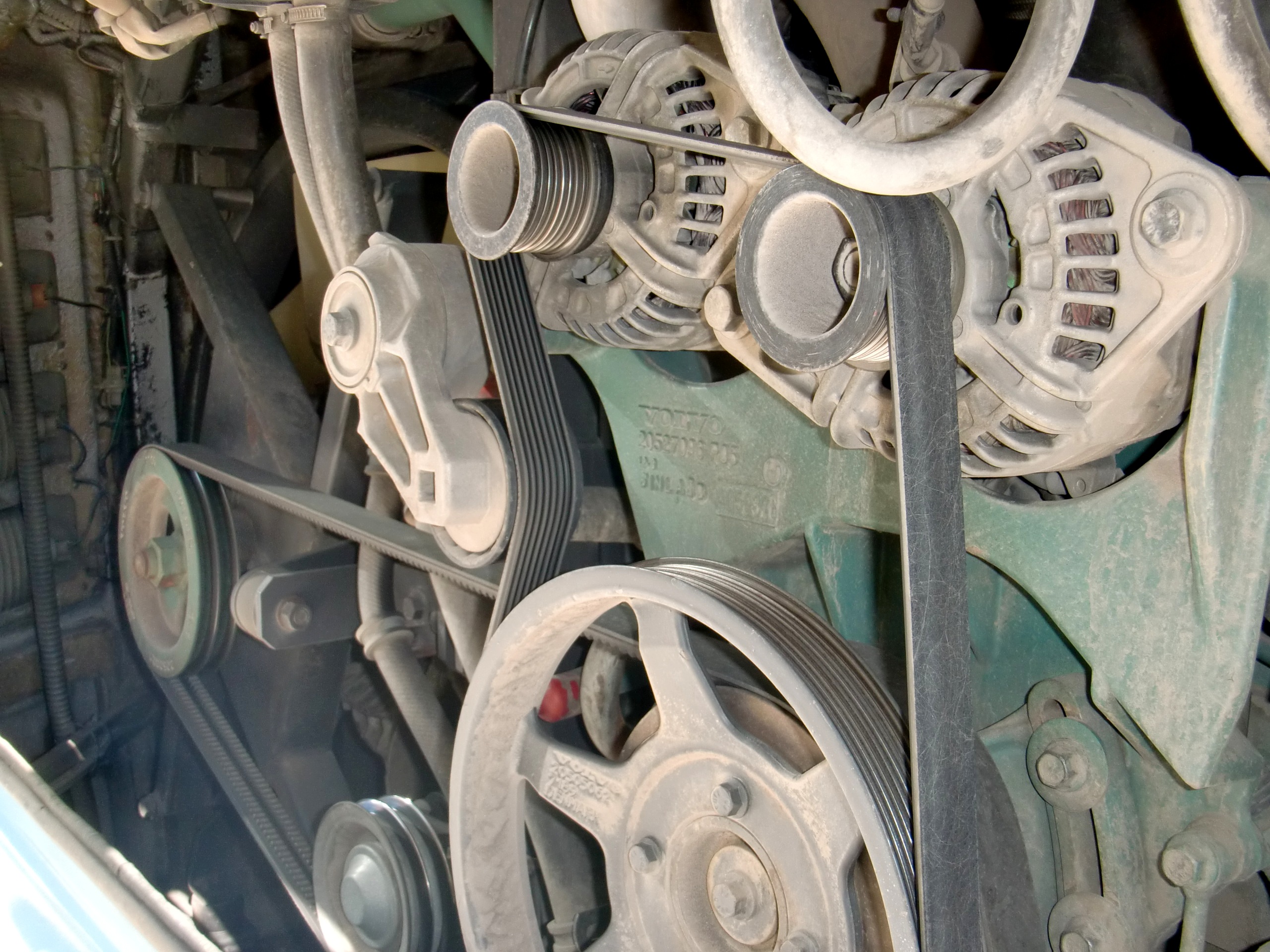
The alternator is driven by the serpentine belt. A loose, cracked, or glazed belt can slip under load, reducing the alternator’s output. Inspect the belt for cracks, fraying, and proper tension. A belt that deflects more than half an inch when pressed with your thumb is too loose.
Belt replacement is a common DIY job. Most engines use a spring-loaded tensioner that releases with a wrench, making belt changes a 15-minute task.

Serpentine Belt Replacement
Check your vehicle’s specifications for the correct size before ordering
When to Replace vs. Rebuild
Rebuilt alternators are available at lower cost than new units and often come with a warranty. They’re a good option for older vehicles where the original alternator design is proven. For newer vehicles, a new unit from a quality brand offers the most reliable performance.
If you’re comfortable with basic hand tools, alternator replacement typically takes 1 to 2 hours. The job involves disconnecting the battery, removing the belt, unbolting the old alternator, and installing the new one.
Regular maintenance can prevent alternator problems. Just like electrical system overloads can cause overheating issues, keeping your electrical system in good shape helps avoid unexpected breakdowns.
Frequently Asked Questions
Can a bad alternator damage the battery?
Yes. An overcharging alternator (above 15V) causes battery fluid to boil off and damages internal plates. An undercharging alternator forces the battery into repeated deep discharge cycles, which shortens its life dramatically.
How long do alternators last?
Most alternators last 100,000 to 150,000 miles. Vehicles with high electrical demands (aftermarket sound systems, auxiliary lighting) may wear out alternators faster. If you’re shopping for used cars built to last, checking the alternator’s condition should be part of your pre-purchase inspection.
Can I drive with a bad alternator?
Only for a short distance. Once the battery charge is depleted, the engine will stall and won’t restart. You might get 30 minutes to an hour of driving on a fully charged battery, depending on electrical load.
Should I test my battery or alternator first?
Always test the battery first with the engine off. A weak or dead battery can make a good alternator appear faulty during testing. Charge or replace the battery if it reads below 12.4 volts before proceeding with alternator tests.
This article contains affiliate links. We may earn a small commission at no extra cost to you.

Leave a Reply