
The 2016–2023 U.S. Tacoma belongs to one body generation, but buying the first and last model years does not give you identical equipment. The most useful milestones include the third-generation launch, the return of TRD Pro, standard Toyota Safety Sense P, the 2020 technology refresh and later special editions.
This guide focuses on meaningful changes that help identify a used truck and shop for accessories. It is not an exhaustive running-production-change list, a reliability ranking or a promise that a feature is fitted to every trim. Use the original window sticker, model-year brochure and owner’s manual for a particular vehicle. The pictured 2018-style truck represents the generation, not every later front or special edition.
2016: the third generation arrives
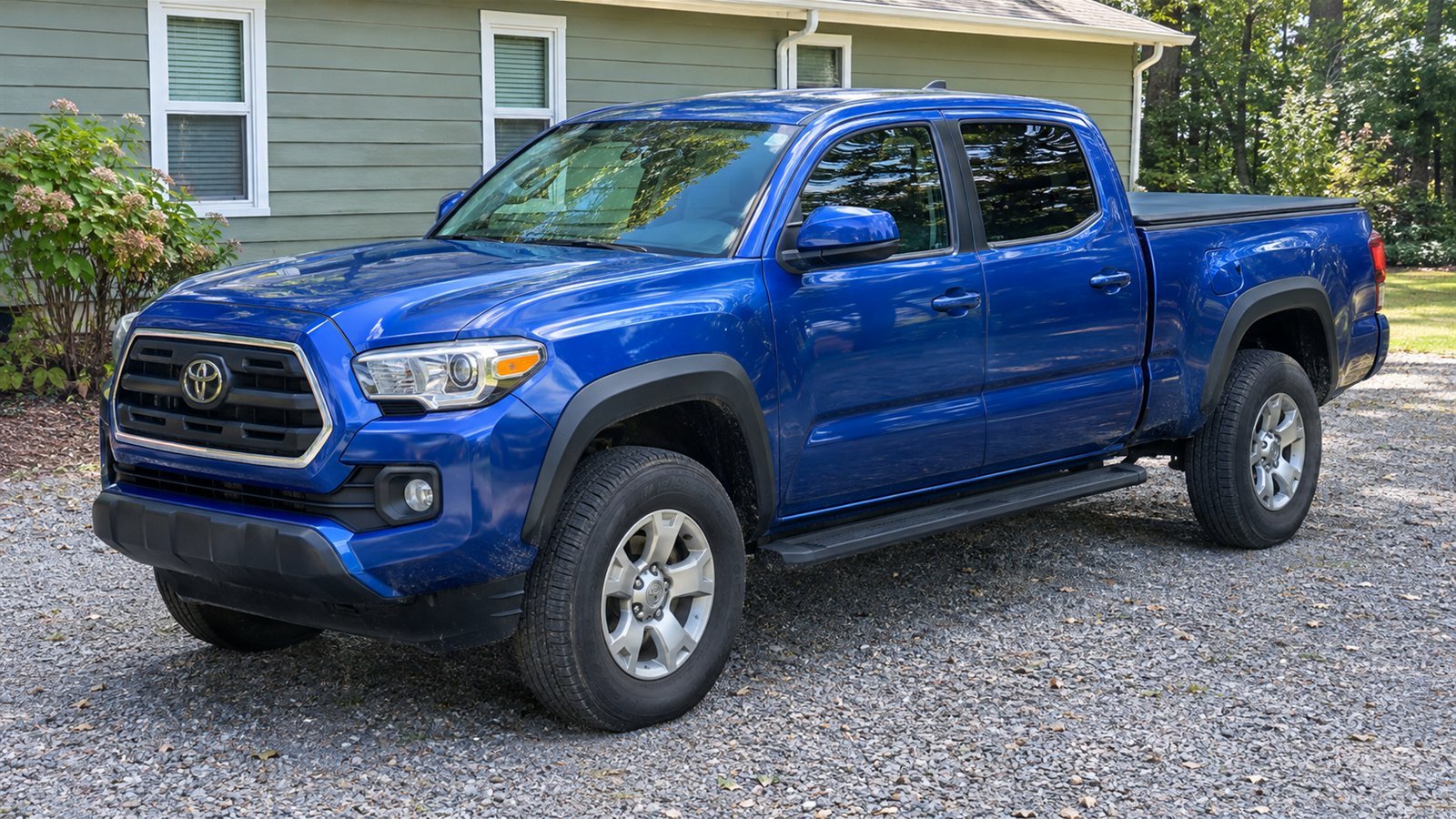
The 2016 redesign established the body and cabin used through 2023. The lineup included a 2.7-liter four-cylinder and a new 3.5-liter V6, with Access Cab and Double Cab arrangements and different bed applications. A generation label alone therefore never describes the complete truck.
For accessory shopping, identify cab and box first. Covers and bed mats depend on the box, while cab steps and some interior storage depend on the cab. Do not transfer a 2005–2015 part listing simply because both trucks are called Tacoma.
2017: TRD Pro returns to the lineup
Toyota added the third-generation TRD Pro for 2017. It was based on a 4WD Double Cab short-bed configuration and brought specific suspension, appearance and equipment changes. TRD Pro and TRD Off-Road are different grades, not interchangeable names.
When a used truck has a heritage-style grille or dark wheels, verify the original grade rather than identifying it by those parts alone. Aftermarket appearance changes do not establish that the factory suspension, cameras or other equipment match a TRD Pro.
2018: Toyota Safety Sense P becomes standard
Toyota made Toyota Safety Sense P standard across the 2018 Tacoma lineup. This is a meaningful boundary when comparing original 2016–2017 equipment with later trucks, although a used vehicle’s actual systems and condition still need to be checked.
Front-end accessory choices deserve extra attention around sensors and fitted equipment. A grille application or decorative component must preserve the vehicle’s required functions. Do not assume a broad generation listing settles camera, radar or trim-specific details.
2019: identify the actual equipment rather than assuming another redesign
The 2019 truck remained part of the same generation before the broader 2020 refresh. For a used example, the practical question is which grade, packages and prior modifications it has. A model-year change does not automatically mean every body accessory became different.
Factory multimedia is an important distinction here: do not assume a 2019 factory radio offers the 2020 integration described below. Check the actual head unit and documentation. A previous owner’s aftermarket radio can make the cabin look different from the original brochure.
2020: the clearest technology milestone
The 2020 refresh brought revised appearance details and Apple CarPlay and Android Auto integration. Toyota’s brochure describes a seven-inch screen on SR and an eight-inch screen on SR5 and higher grades. The exact audio system and options still matter when ordering screen protectors, mounts or electronics accessories.
Power-adjustable driver’s seating and camera/lighting upgrades were also part of the refreshed offering, depending on grade and equipment. Do not read an available feature as standard across every 2020 truck. Compare the actual window sticker and the model-year equipment table.
A wireless adapter does not add CarPlay to an unsupported earlier radio. If the vehicle already has compatible factory integration, choose an appropriate data cable or any adapter only after checking the product’s supported systems.
Compare options on Amazon: Browse short data-capable charging cables
2021: Trail and Nightshade special editions
Toyota introduced Trail and Nightshade special editions for 2021. These added distinct equipment and appearance choices within the existing generation. The Trail setup is particularly relevant when planning bed storage, because factory-installed storage equipment can occupy space that an accessory listing assumes is empty.
Check which components are present rather than treating the edition name as a complete inventory. A used truck may have lost or gained bed equipment. Keep outlet access, cover movement and the usable bed floor in your measurements.
2022: later off-road and comfort changes
Toyota’s 2022 brochure documents a taller TRD Pro suspension, with a 1.5-inch front and 0.5-inch rear lift, along with updated off-road components. It also describes the Trail edition’s storage and bronze-finish appearance. Those specifications should not be applied to a standard SR5 simply because it is the same year.
Dual-zone automatic climate control became standard on V6 Tacomas for 2022, as described in the brochure. That is a more useful cabin distinction than assuming all trucks share the same controls. Verify the engine and trim before ordering interior pieces.
2023: late-generation package changes
For 2023, Toyota offered an SR5 SX package with dark exterior details, and the late-generation lineup retained a range of grade and package differences. Toyota’s 2023 equipment material also identifies Smart Key as standard on SR5 V6 models. These details help distinguish original equipment from later cosmetic additions.
The truck remained in the 2016–2023 generation. The U.S. 2024 Tacoma is a different body and interior family, so a 2024 accessory listing is not a later-year substitute for a 2023 application. Keep the generation boundary in every search.
What these changes mean when buying accessories
| Accessory | Verify before ordering |
|---|---|
| Cab steps and some interior storage | Access Cab versus Double Cab and the actual mounting arrangement. |
| Bed cover, mat or storage box | Measured box length, deck rails and installed factory equipment. |
| Grille or front appearance piece | Exact year, grade, camera/radar equipment and the maker’s exclusions. |
| Console tray or screen accessory | The actual console and multimedia system, especially around 2020. |
| Wheels and tires | Complete wheel/tire specification, brakes, load and clearance; not the pictured finish alone. |
The 2016–2023 Tacoma styling gallery uses a 2018 SR5 Double Cab as a visual reference and explicitly distinguishes other configurations. Its accessory searches are ideas to investigate, not a parts catalog for every truck in this timeline.
For small cabin purchases, compare the actual console and screen rather than buying the first item with ‘third gen’ in its title. A removable tray or fitted sunshade can be useful, but its application must still match the equipment you own.
Compare options on Amazon: Compare console organizers by year and trim · Browse fitted Tacoma sunshades
Choose the feature you need, then verify the individual truck
Use the timeline to narrow your search. If original smartphone integration matters, investigate the 2020-and-later equipment. If a specific off-road grade matters, verify its original configuration and current condition. A newer badge or a replacement grille does not settle either question.
Model year is one part of a used-truck assessment. Service history, inspection, condition and previous modifications remain separate considerations. Once the actual truck is identified, choose accessories around its cab, bed and installed equipment instead of around the broadest generation label.
Leave a Reply